
Scotch Whisky Market Outlook: Size, Share, Trends, Growth Analysis, Competitive Landscape & Forecast, 2026-2033

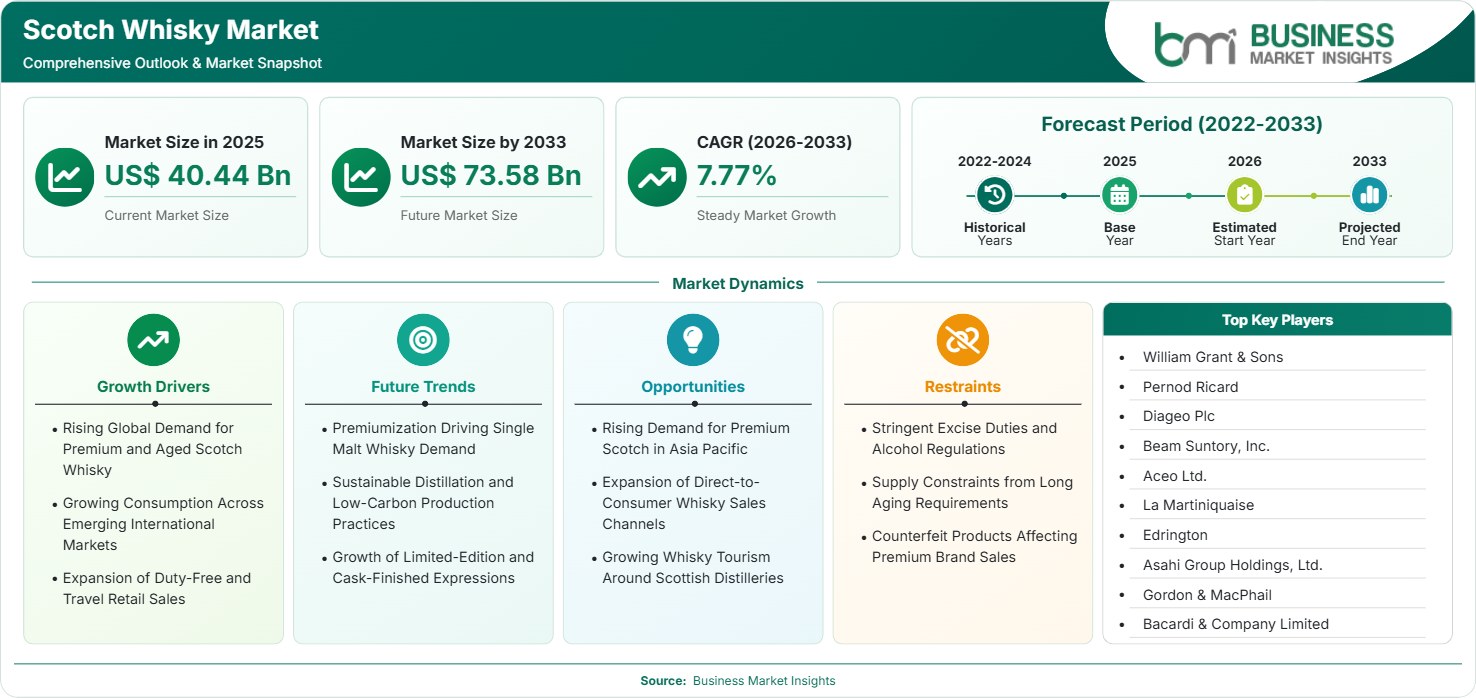
The Scotch Whisky Market size was valued at US$ 40.44 Billion in 2025 and is projected to reach US$ 73.58 Billion by 2033, growing at a CAGR of 7.77% during 2026–2033. Rising premiumization trends, increasing global demand for luxury spirits, expanding cocktail culture, and growing exports across emerging economies are supporting market growth. Opportunities are emerging from premium single malt offerings, travel retail expansion, and rising consumer interest in heritage and craft whisky brands.

Report Coverage
  • Type: Single Malt Scotch Whisky, Blended Scotch Whisky, Others
  • Distribution Channel: On-trade and Off-trade
US$ 40.44 Bn Market size in 2025
US$ 73.58 Bn Market Size by 2033
7.77% CAGR, 2026 - 2033
2026-2033 Forecast Period

01 AI Overview

Scotch Whisky Market Summary

  • North America Region: North America holds a scotch whisky market share of 27%–30% in 2025 and is projected to grow at a CAGR of 7.2%–8.2% during 2026–2033. Strong premium spirits consumption, growing appreciation for aged whisky, and rising demand for luxury alcoholic beverages continue supporting regional growth. The US market is projected to grow at a CAGR of 7.4%–8.4% through 2033.
  • Fastest Growing Region: Asia Pacific accounts for 31%–34% share in 2025 and is expected to grow at a CAGR of 8.5%–9.5% during the forecast period. Expanding middle-class populations, rising disposable incomes, and increasing preference for premium spirits are driving demand.
  • Leading Segment: Blended Scotch Whisky represents 63%–66% share in 2025 and is projected to grow at a CAGR of 7.5%–8.5% through 2033. Broad consumer appeal and affordability continue supporting segment leadership.
  • High Growth Segment: Single Malt Scotch Whisky holds 27%–30% share in 2025 and is projected to grow at a CAGR of 8.8%–9.8% during 2026–2033 due to increasing premiumization and consumer preference for authentic and heritage-rich products.
  • Key Market Opportunity: Growing consumer demand for premium and ultra-premium whisky variants, limited-edition releases, and experiential whisky tourism is creating substantial growth opportunities.
  • Major Market Players: William Grant & Sons, Pernod Ricard, Diageo Plc, Beam Suntory, Inc., Aceo Ltd., La Martiniquaise, Edrington, Asahi Group Holdings, Ltd., Gordon & MacPhail, and Bacardi & Company Limited.
02 Strategic Insights

Scotch Whisky Market: Strategic Insights

Scotch Whisky Market Strategic Framework
FREE PDF
Request your free sample
Request free sample
03 Stakeholder View

Key Takeaways

  • Blended Scotch Whisky remains the largest segment due to broad consumer acceptance and extensive distribution.
  • Single Malt Scotch Whisky is witnessing faster growth driven by premiumization and increasing appreciation for high-quality spirits.
  • Asia Pacific continues to lead growth supported by rising premium alcohol consumption and expanding middle-class populations.
  • On-trade channels remain important for brand visibility and premium product experiences.
  • Premium and ultra-premium product categories continue outperforming mainstream offerings.
  • The scotch whisky market trends suggest that the limited editions, cask-finished variants, and experiential whisky marketing are increasingly influencing purchasing decisions.
  • Travel retail and duty-free channels continue creating additional sales opportunities for premium brands.
  • Sustainability initiatives and premium packaging innovations are strengthening brand differentiation.
04 Geographic Outlook

Scotch Whisky Market Regional Highlights

North America Scotch Whisky Market

North America accounted for a 27%–30% share in 2025 and is projected to expand at a CAGR of 7.2%–8.2% during 2026–2033. This market is one of the most profitable markets for premium alcohol, owing to high consumer spending power, a developed retail sector, and increasing demand for imported whiskies. Increasing consumer demand for premium and ultra-premium alcoholic beverages, together with the prestige of Scotch whisky, makes Scotch an attractive choice. Whisky sampling and tasting events, distillery educational activities, and increased interest in premium cocktails contribute to rising consumer involvement in this category. Premium products' increasing availability at retailers, liquor stores, and online outlets adds to the rising demand. Moreover, demand is fueled by the interest of younger consumers who have reached the legal age and are looking for a premium drinking experience. Innovation in packaging and aging whiskies is on the rise.

  • Consumers are increasingly trading up to premium and super-premium whisky expressions.
  • Growing cocktail culture is supporting demand across bars, lounges, and restaurants.
  • Whisky tasting events and educational initiatives continue increasing category awareness.
  • E-commerce and specialty retail channels are improving accessibility to premium labels.
  • Demand for collectible and limited-edition releases remains strong among enthusiasts.

US Scotch Whisky Market

The US represented a 23%–26% share in 2025 and is estimated to grow at a CAGR of 7.4%–8.4% through 2033. The country continues to be one of the largest importers and consumers of premium whisky globally. Rising disposable incomes, strong premiumization trends, and growing consumer interest in international spirits are contributing to steady demand growth. Consumers are increasingly exploring older age statements, premium single malts, and limited-release variants. Product visibility through hospitality venues, premium retailers, and digital marketing campaigns continues supporting scotch whisky market penetration. The growing culture of whisky appreciation and experimentation is expected to sustain long-term consumption growth.

  • Premium whisky consumption continues to outpace value-category growth.
  • Single malt offerings are gaining popularity among affluent consumers.
  • Digital retail channels are increasing product visibility and accessibility.
  • Hospitality and tourism sectors continue supporting premium brand exposure.

Europe Scotch Whisky Market

Europe held a 29%–32% share in 2025 and is expected to grow at a CAGR of 7.0%–8.0% from 2026–2033. The region benefits from established whisky consumption patterns, strong tourism activity, and widespread appreciation for premium spirits. Mature consumer markets such as the UK, Germany, and France continue generating substantial demand for both blended and single malt categories. Consumers increasingly value provenance, craftsmanship, and premium aging processes when selecting alcoholic beverages. Premium hospitality venues, travel retail channels, and specialty beverage retailers continue supporting higher-value product sales. Growing interest in limited releases, cask-finished expressions, and heritage-focused branding is encouraging premium product adoption. Sustainability initiatives and packaging innovation are also becoming important purchasing considerations among European consumers.

  • Premiumization trends continue supporting sales of aged and specialty expressions.
  • Tourism and travel retail remain important sales channels across major markets.
  • Consumers increasingly seek products with authentic heritage and craftsmanship.
  • Premium hospitality establishments are expanding whisky selections.
  • Sustainability and responsible sourcing are becoming important brand differentiators.

Asia Pacific Scotch Whisky Market

Asia Pacific accounted for a 31%–34% share in 2025 and is projected to register a CAGR of 8.5%–9.5% during 2026–2033. The region represents both the largest and fastest-growing consumption base for premium imported spirits. Rising urbanization, expanding middle-class populations, and increasing disposable incomes are creating strong growth opportunities across major markets. Consumers are becoming increasingly attracted to premium alcoholic beverages as symbols of status, quality, and lifestyle enhancement. The growth of modern retail formats, premium hospitality venues, and digital commerce platforms is improving accessibility to international whisky brands. In addition, gifting culture, corporate celebrations, and social gatherings continue encouraging premium spirits consumption. Strong marketing investments by international producers and growing awareness of whisky heritage are further supporting demand. The region is expected to remain a major growth engine throughout the forecast period.

  • China continues driving significant demand for premium imported spirits.
  • India is emerging as a major growth scotch whisky market due to rising consumer spending.
  • Premium gifting culture supports demand for high-value whisky products.
  • Modern retail and e-commerce platforms are expanding market reach.
  • International brands continue strengthening regional distribution networks.

Rest of World Scotch Whisky Market

Rest of World accounted for a 10%–13% share in 2025 and is expected to grow at a CAGR of 7.3%–8.3% through 2033. Markets across Latin America, the Middle East, and Africa are witnessing increasing demand for premium alcoholic beverages driven by urbanization, expanding hospitality infrastructure, and rising consumer incomes. International whisky brands continue increasing investments in marketing, distribution, and brand-building activities to improve market presence. Growing tourism, nightlife development, and retail modernization are supporting premium beverage consumption across several countries. Consumers are increasingly showing interest in imported spirits that offer strong brand recognition and quality credentials. Rising demand for premium social drinking experiences is expected to create additional opportunities throughout the forecast period.

  • Premium spirits are becoming increasingly popular among younger adult consumers.
  • Hospitality and tourism growth continue supporting on-trade consumption.
  • International brands are expanding regional distribution capabilities.
  • Modern retail networks are improving product availability.
  • Growing urbanization is supporting long-term demand for premium alcoholic beverages.
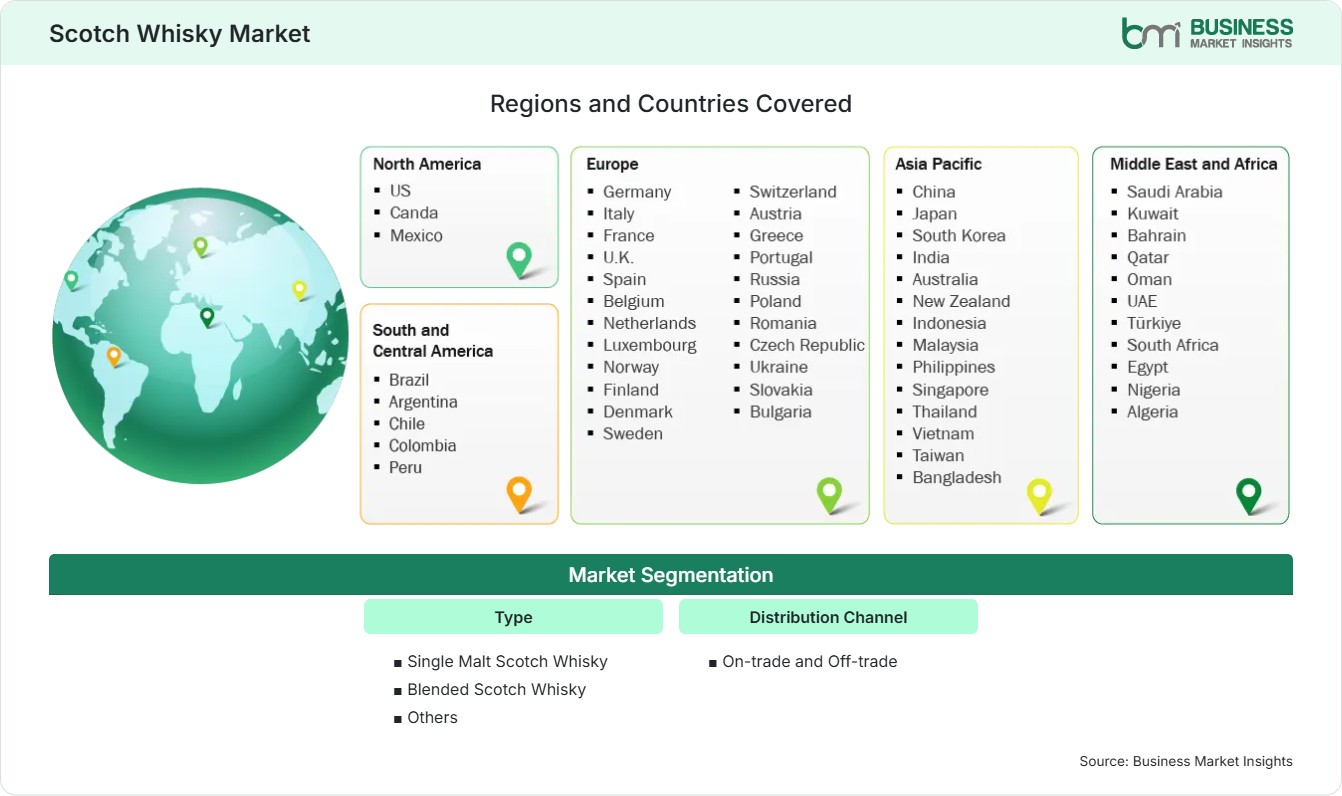
Global Market Geography
FREE PDF
Request your free sample
Request free sample
05 Segment Analysis

Scotch Whisky Market Segmentation

Type

Type-based demand is influenced by consumer preferences, product heritage, premiumization trends, and purchasing power. Blended Scotch Whisky accounted for 63%–66% share in 2025 and is projected to grow at a CAGR of 7.5%–8.5% through 2033 due to its affordability, wide availability, and strong consumer acceptance across both mature and emerging scotch whisky markets. The segment benefits from extensive retail penetration and broad appeal among both new and experienced whisky consumers.

  • Single Malt Scotch Whisky: The fastest-growing segment, holding 27%–30% share in 2025 and projected to expand at a CAGR of 8.8%–9.8% through 2033 due to increasing premiumization and growing appreciation for craftsmanship and authenticity.
  • Blended Scotch Whisky: The dominant segment owing to its balanced flavor profile, accessibility, strong brand recognition, and widespread global distribution.
  • Others: Includes blended malt, single grain, and specialty Scotch whisky variants catering to niche consumer segments and collectors.

Distribution Channel

Distribution channel performance is shaped by consumer purchasing behavior, retail accessibility, tourism activity, and hospitality industry growth. Off-trade accounted for 68%–71% share in 2025 and is projected to grow at a CAGR of 7.8%–8.8% through 2033 owing to expanding retail networks, e-commerce availability, and increasing at-home consumption trends.

  • On-trade: Demand is supported by bars, restaurants, hotels, clubs, and premium hospitality venues offering curated whisky experiences and tasting opportunities.
  • Off-trade: The leading segment due to strong sales through liquor stores, supermarkets, specialty retailers, duty-free outlets, and online platforms.
06 Market Forces

Scotch Whisky Market Dynamics

Key Market Drivers

Rising Global Demand for Premium and Aged Scotch Whisky

Demand for premium and aged whisky products continues to increase as consumers worldwide seek higher-quality alcoholic beverages and more refined drinking experiences. Premiumization remains one of the strongest trends influencing purchasing behavior, with consumers increasingly willing to pay for products that offer superior craftsmanship, heritage, authenticity, and unique flavor profiles. Older age statements, limited releases, and premium packaging have become important purchasing considerations among enthusiasts and high-income consumers. Brands are responding by expanding premium portfolios and introducing exclusive product offerings that emphasize quality and provenance. Growing appreciation for whisky education, tasting experiences, and collector products is further strengthening demand. This ongoing shift toward premium consumption continues supporting scotch whisky market value growth across developed and emerging economies.

Growing Consumption Across Emerging International Markets

The importance of emerging economies for industry growth is increasing on account of increased income levels, urbanization, and lifestyle changes. Increasing middle class numbers have shown increasing willingness to purchase luxury imported spirits especially in Asia Pacific, Latin America and some Middle Eastern regions. Customers are looking at luxury whiskey brands as status, sophistication and lifestyle statements. Better distribution channels, retail developments and awareness of global brands are aiding the acceptance by consumers. Growth in hospitality, nightlife and premium beverage expenditures is adding further impetus to demand. With increased awareness about Scotch whisky’s heritage and quality, emerging economies are poised to make a significant contribution to future consumption growth.

Expansion of Duty-Free and Travel Retail Sales

The Scotch Whisky Market growth is being driven by the recovery and expansion of global travel activity, creating significant opportunities across airport retail stores, duty-free outlets, and travel-exclusive sales channels. Scotch whisky remains one of the leading product categories in travel retail due to its strong global brand recognition, premium positioning, and popularity as a gifting option. Producers are leveraging these channels to introduce exclusive releases, premium packaging, and limited-edition expressions tailored for international travelers. Duty-free retail also enables consumers to access unique products that may not be available through conventional retail outlets. Increasing international tourism, business travel, and airport passenger traffic continue supporting sales volumes, enhancing brand visibility, and driving sustained market growth across global travel retail channels.

Key Market Opportunities

Rising Demand for Premium Scotch in Asia Pacific

Asia Pacific can be regarded as one of the most promising regions due to the presence of a large customer base, growing middle class, and increasing trend of preference for premium imported beverages. The willingness of consumers in countries like China, India, Japan, and South Korea to invest money in premium alcoholic beverages is growing. Premium gifting trends, corporate entertainment, and appreciation for luxury international brands are some other factors driving the market. Companies are making constant efforts to build brand reputation through various marketing programs, initiatives, and strategic alliances. Demand for premium and ultra-premium products is likely to grow at a considerable rate during the forecast period as economic growth and consumer expenditure keep increasing.

Expansion of Direct-to-Consumer Whisky Sales Channels

The emergence of direct-to-consumer models in online commerce is bringing forth fresh avenues for reaching out to consumers. Brands can use digital media to present high-quality offerings, tell heritage stories, and provide exclusive access to customers. Direct selling also provides an avenue through which companies can collect consumer feedback, build brand loyalty, and penetrate new markets beyond existing retail relationships. Virtual tastings, subscription clubs, personalized suggestions, and unique launches are becoming quite common among whisky lovers. With digital engagement growing worldwide, the direct-to-consumer model looks set to play an important role in future growth strategies.

Growing Whisky Tourism Around Scottish Distilleries

The Scotch Whisky Market forecast remains positive as whisky tourism continues to emerge as a significant growth opportunity driven by rising consumer interest in immersive brand experiences and authentic cultural heritage. Distillery tours, tasting events, visitor centers, and educational programs are attracting both domestic and international tourists eager to explore traditional whisky production methods and Scotland's rich whisky legacy. These tourism initiatives strengthen brand loyalty, enhance consumer engagement, and generate additional revenue through direct product sales, premium experiences, and branded merchandise. Continued investments by producers and regional tourism authorities in visitor infrastructure and experiential offerings are expected to support long-term market expansion while increasing the global appeal of Scotch whisky-producing regions.

Market Restraints and Challenges

Stringent Excise Duties and Alcohol Regulations

Factor: Alcoholic beverage producers operate within highly regulated environments characterized by excise taxes, advertising restrictions, import duties, labeling requirements, and sales regulations. Regulatory frameworks vary significantly between countries and can affect pricing, distribution, and market accessibility.

Impact: High taxation and regulatory compliance costs may increase product prices and reduce affordability in certain markets. Regulatory complexities can also slow market entry and expansion efforts for producers seeking growth in new regions. Companies must continuously adapt strategies to address changing policy environments and maintain competitiveness.

Supply Constraints from Long Aging Requirements

Factor: Production requires lengthy maturation periods, often extending for many years before products can be commercialized. Demand growth can therefore outpace available inventory, particularly for aged and premium expressions.

Impact: Limited supply may restrict the availability of high-demand products and create inventory management challenges. Producers must carefully forecast future demand and allocate production capacity accordingly. Insufficient aged stock can constrain revenue growth opportunities and affect the ability to meet increasing global demand for premium offerings.

07 Company Analysis

Competitive Landscape

The Scotch Whisky Market analysis indicates a highly competitive landscape, with global spirits manufacturers, premium beverage companies, and heritage whisky producers competing through product innovation, premiumization, and brand differentiation. Companies are focusing on expanding aged product portfolios, limited-edition releases, sustainable production practices, and strengthening their presence in high-growth international markets. Strategic investments in brand storytelling, whisky tourism, experiential marketing, and direct-to-consumer sales channels continue shaping the competitive landscape. Additionally, producers are expanding across Asia Pacific and travel retail channels to capitalize on rising consumer demand for premium and ultra-premium Scotch whisky, supporting long-term market growth and brand value.

Company Name

Overview

Products and Services Relevant to this Market

William Grant & Sons

Independent family-owned spirits company with a strong Scotch whisky portfolio.

Single malt Scotch whisky, blended Scotch whisky, premium and aged whisky offerings.

Pernod Ricard

Global beverage company with extensive premium spirits brands.

Scotch whisky production, premium whisky brands, global distribution and marketing.

Diageo Plc

One of the world's largest alcoholic beverage manufacturers.

Single malt Scotch whisky, blended Scotch whisky, luxury spirits, and premium releases.

Beam Suntory, Inc.

International spirits company with significant whisky operations.

Scotch whisky portfolio, premium spirits, aged whisky expressions, and global distribution.

Aceo Ltd.

Spirits and alcoholic beverage company serving premium beverage markets.

Scotch whisky products, specialty whisky offerings, and distribution activities.

La Martiniquaise

Major European spirits producer with diverse beverage brands.

Blended Scotch whisky, premium spirits, and international distribution solutions.

Edrington

Premium spirits company known for high-end whisky brands.

Single malt Scotch whisky, luxury whisky expressions, and premium beverage products.

Asahi Group Holdings, Ltd.

Diversified beverage company with international spirits operations.

Premium whisky brands, alcoholic beverages, and consumer beverage products.

Gordon & MacPhail

Specialist Scotch whisky producer and independent bottler.

Aged single malts, rare whisky collections, cask management, and premium whisky releases.

Bacardi & Company Limited

Global spirits company with premium beverage portfolio.

Scotch whisky products, premium spirits, global brand management, and distribution services.

10 Trust & Transparency

Research Methodology

The market analysis combines proprietary research with secondary data from government agencies, company disclosures, regulatory filings, industry databases and expert interviews. Market estimates are validated through data triangulation, cross-market benchmarking and analyst review.

View Full Research Methodology

11 Questions Answered

Frequently Asked Questions

What opportunities exist for Scotch whisky producers?

Major opportunities include premium product expansion in Asia Pacific, direct-to-consumer sales channels, whisky tourism, limited-edition product launches, and growth in travel retail distribution.

Why is Asia Pacific the fastest-growing regional market?

Asia Pacific is experiencing strong growth due to rising disposable incomes, expanding middle-class populations, premium gifting culture, and increasing demand for imported luxury spirits.

Which type segment is growing the fastest?

Single Malt Scotch Whisky is the fastest-growing segment owing to increasing premiumization, consumer interest in authenticity, and demand for artisanal and heritage-driven products.

Which type segment dominates the market?

Blended Scotch Whisky dominates the market due to its wide availability, affordability, strong brand recognition, and broad consumer appeal across global markets.

What is driving growth in the scotch whisky market report?

Growth is driven by rising demand for premium and aged whisky products, increasing consumption across emerging markets, expansion of travel retail channels, and growing consumer interest in heritage spirits.

Access the Full Scotch Whisky Market Report

Get segment-level forecasts, regional estimates, competitive benchmarking, company profiles and downloadable Excel datasets.

Access the full Scotch Whisky Market Report
350 pages PDF & Excel | 2026-08-05