
Regenerative Medicine Market Outlook: Size, Share, Trends, Growth Analysis, Competitive Landscape & Forecast, 2026-2033

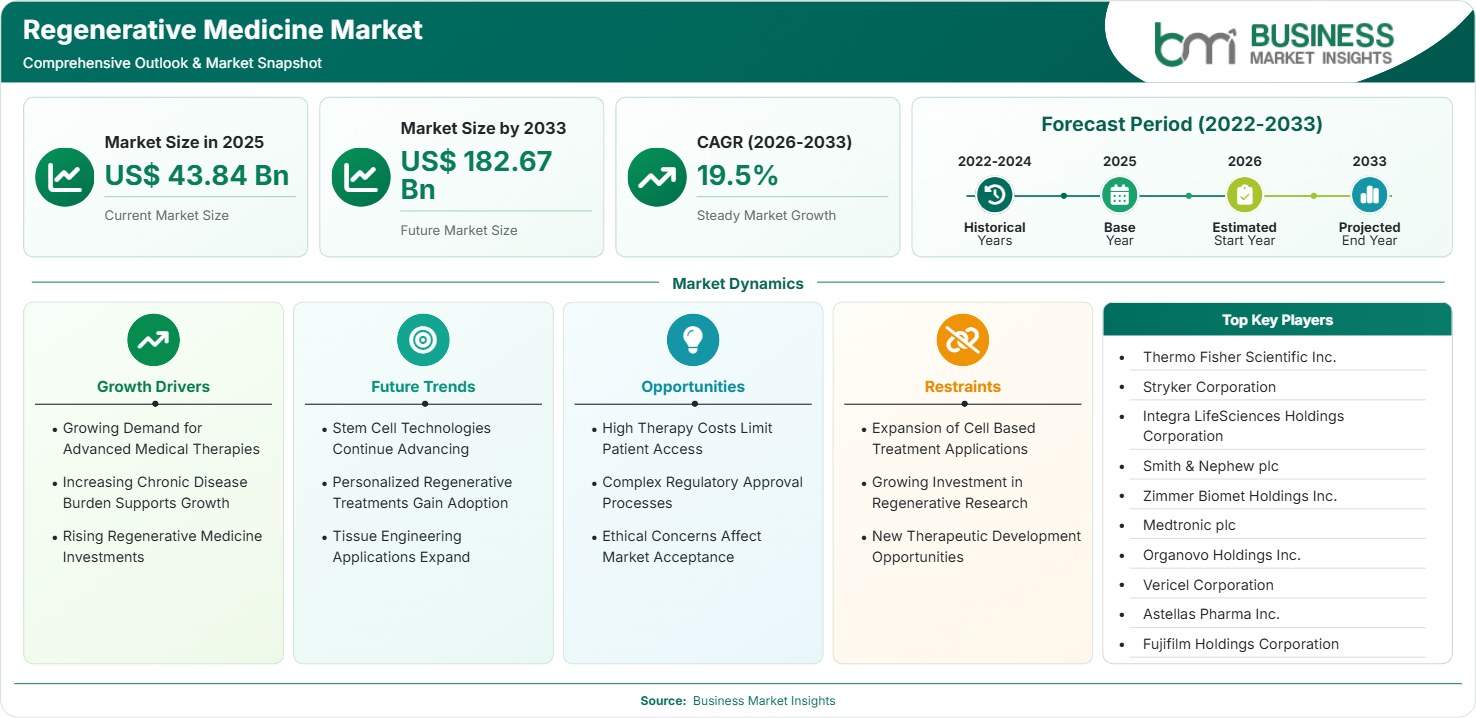
The Regenerative Medicine Market size was valued at US$ 43.84 billion in 2025 and is projected to reach US$ 182.67 billion by 2033, growing at a CAGR of 19.5% during 2026–2033, driven by rising demand for advanced therapies, increasing chronic disease burden, cell therapy innovation, regenerative technologies, and expanding investments in biotechnology research.

Report Coverage
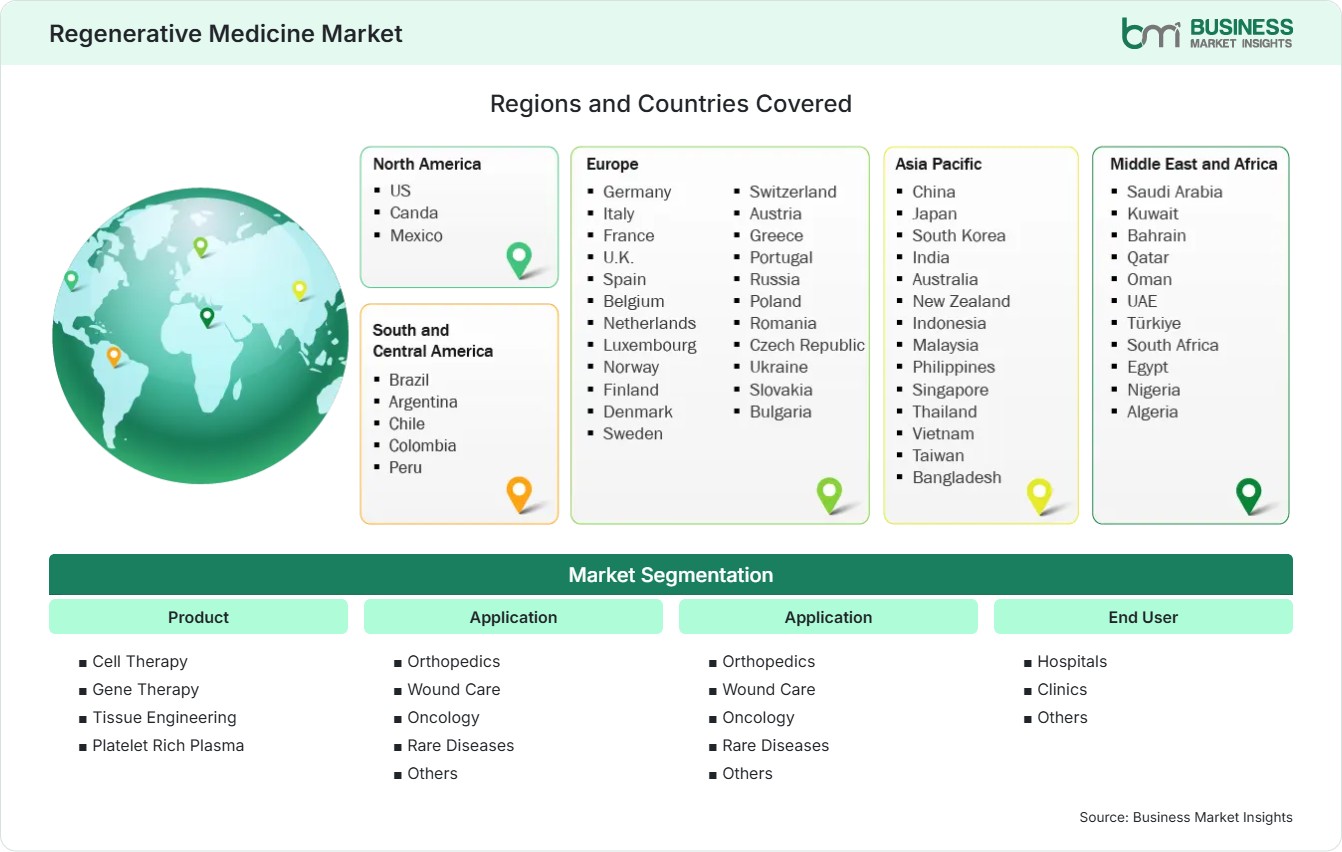
  • Product: Cell Therapy, Gene Therapy, Tissue Engineering, Platelet Rich Plasma
  • Application: Orthopedics, Wound Care, Oncology, Rare Diseases, Others
  • Application: Orthopedics, Wound Care, Oncology, Rare Diseases, Others
  • End User: Hospitals, Clinics, Others
US$ 43.84 Bn Market size in 2025
US$ 182.67 Bn Market Size by 2033
19.5% CAGR, 2026 - 2033
2026-2033 Forecast Period

01 AI Overview

Regenerative Medicine Market Summary

  • North America Region: North America holds market share of 42%–45% in 2025, growing with a CAGR of 18%–20% influenced by advanced healthcare infrastructure, biotechnology investments, and clinical adoption of regenerative therapies. The US market demonstrates strong growth through cell and gene therapy development, registering a CAGR of 18%–20% between 2026–2033.
  • Fastest Growing Region: Asia Pacific accounts for a share of 20%–23% in 2025, expanding with a CAGR of 21%–23% supported by healthcare modernization, regenerative research programs, and increasing biotechnology investments across emerging economies.
  • Leading Segment: Cell Therapy represents the leading product segment with a share of 48%–51% in 2025, expanding at a CAGR of 20%–22% due to growing adoption in oncology, immunotherapy, and tissue repair applications.
  • High Growth Segment: Gene Therapy represents a high growth product segment with a share of 13%–16% in 2025, achieving a CAGR of 22%–24% driven by advanced genetic treatments, rare disease applications, and precision medicine development.
  • Key Market Opportunity: Expansion of advanced cell therapies, gene-based treatments, tissue regeneration solutions, and personalized medicine approaches is creating significant opportunities for regenerative medicine companies worldwide.
  • Major Market Players: Thermo Fisher Scientific Inc., Stryker Corporation, Integra LifeSciences Holdings Corporation, Smith & Nephew plc, Zimmer Biomet Holdings Inc., Medtronic plc, Organovo Holdings Inc., Vericel Corporation, Astellas Pharma Inc., and Fujifilm Holdings Corporation.
02 Strategic Insights

Regenerative Medicine Market: Strategic Insights

regenerative-medicine-market-market-strategic-framework
FREE PDF
Request your free sample
Request free sample
03 Stakeholder View

Key Takeaways

  • The regenerative medicine market ecosystem is evolving through collaboration among cell therapy developers, biotechnology companies, healthcare providers, manufacturing specialists, and research organizations focused on advanced therapeutic solutions.
  • Cell therapy, gene therapy, and tissue engineering applications provide strong growth opportunities as healthcare systems seek alternatives to conventional treatment approaches.
  • Innovation is shifting toward scalable manufacturing, improved cell processing technologies, gene editing platforms, and personalized regenerative therapies.
  • Asia Pacific presents a strong investment opportunity due to expanding biotechnology infrastructure, increasing healthcare spending, and growing clinical research activities.
  • Companies are strengthening market positions through strategic partnerships, acquisitions, clinical advancements, and expansion of regenerative therapy portfolios.
  • Manufacturing optimization and regulatory advancements are becoming critical factors for improving commercial availability of complex regenerative treatments.
04 Geographic Outlook

Regenerative Medicine Market Regional Highlights

North America Regenerative Medicine Market

North America represents the leading regional market with a share of 42%–45% in 2025 and is projected to grow at a CAGR of 18%–20% during 2026–2033. Strong biotechnology infrastructure, advanced clinical research capabilities, and favorable innovation ecosystems support regional dominance. Regenerative Medicine Market share remains concentrated in the United States due to extensive cell and gene therapy development.

  • The United States leads adoption through advanced clinical trials and biotechnology innovation programs.
  • Pharmaceutical companies are increasing investments in cell and gene therapy pipelines.
  • Research institutions are expanding regenerative studies across oncology and chronic diseases.
  • Canada is supporting growth through biotechnology research and healthcare innovation initiatives.

US Regenerative Medicine Market

The US market holds a share of 38%–41% in 2025 and is estimated to register a CAGR of 18%–20% from 2026–2033. The country remains a major contributor due to strong pharmaceutical investment, advanced research infrastructure, and increasing approval of innovative therapies. Expanding clinical applications are supporting broader regenerative treatment adoption.

  • Biotechnology companies are advancing cell therapy and gene therapy development programs.
  • Hospitals are increasing adoption of regenerative approaches for complex medical conditions.
  • Research funding supports innovation in tissue engineering and therapeutic manufacturing.
  • Regulatory pathways are encouraging commercialization of advanced biological therapies.

Europe Regenerative Medicine Market

Europe accounts for a share of 25%–28% in 2025 and is expected to expand at a CAGR of 18%–20% during 2026–2033. The region benefits from strong healthcare systems, established biotechnology research networks, and increasing regenerative therapy development. Germany, the United Kingdom, and France represent leading markets, while Switzerland and the Netherlands show growing biotechnology activity.

  • Germany supports regenerative medicine development through advanced healthcare research infrastructure.
  • The United Kingdom is expanding clinical research in cell and gene therapies.
  • France is increasing investments in biotechnology and advanced medical treatments.
  • Switzerland and the Netherlands continue supporting life science innovation and collaborations.

Asia Pacific Regenerative Medicine Market

Asia Pacific represents the fastest-growing regional market with a share of 20%–23% in 2025 and a projected CAGR of 21%–23% during 2026–2033. Regenerative Medicine Market growth is supported by biotechnology expansion, healthcare modernization, and increasing research investments. China, Japan, India, and South Korea are key contributors, with China and Japan demonstrating significant regenerative technology development.

  • China is expanding regenerative research through biotechnology investments and clinical development programs.
  • Japan supports advanced therapy adoption through regenerative medicine research initiatives.
  • India is increasing biotechnology capabilities through healthcare and research investments.
  • South Korea is strengthening cell therapy innovation through government-backed programs.

Rest of World Regenerative Medicine Market

Rest of World markets represent a share of 7%–10% in 2025 and are projected to grow at a CAGR of 17%–19% during 2026–2033. Latin America, Middle East, and Africa markets are developing through healthcare infrastructure improvements, biotechnology investments, and increasing access to advanced therapies. Brazil, Mexico, UAE, and South Africa represent important regional contributors.

  • Brazil is expanding regenerative research through healthcare modernization and biotechnology development.
  • Mexico is improving access to advanced medical treatments through healthcare investments.
  • UAE is investing in biotechnology infrastructure and advanced healthcare solutions.
  • South Africa is developing regenerative research capabilities through institutional collaborations.
global-market-geography
FREE PDF
Request your free sample
Request free sample
05 Segment Analysis

Regenerative Medicine Market Segmentation

Product

The product segment defines the adoption of regenerative solutions including cell therapy, gene therapy, tissue engineering, and platelet rich plasma across healthcare applications. The segment accounted for a share of 100% in 2025 and is projected to expand at a CAGR of 20%–22% between 2026–2034. Regenerative Medicine Market scope continues expanding as healthcare providers and biotechnology companies develop advanced therapies for tissue repair, disease management, and personalized treatment approaches.

  • Cell Therapy: Cell therapy represents a major regenerative approach using living cells to repair damaged tissues and treat complex diseases. Growing adoption in oncology, orthopedics, and immunotherapy supports segment expansion.
  • Cellular Immunotherapy: Cellular immunotherapy applications are increasing through advanced cancer treatment approaches. Growing research in immune-based therapies is supporting development of innovative treatments targeting specific disease mechanisms.
  • Mesenchymal Stem Cell Therapy: Mesenchymal stem cell therapy is gaining attention due to regenerative properties and applications in tissue repair. Research expansion is supporting adoption across multiple therapeutic areas.
  • Fibroblast Cell Therapy: Fibroblast cell therapy is utilized in regenerative and aesthetic applications. Increasing interest in tissue restoration and cellular-based procedures is supporting technology development.
  • Hematopoietic Stem Cell Therapy: Hematopoietic stem cell therapy supports treatment of blood disorders and immune-related conditions. Established clinical applications continue driving demand for advanced transplantation solutions.
  • Gene Therapy: Gene therapy is expanding through advancements in genetic modification and targeted treatments. Increasing research in rare diseases and inherited disorders is supporting adoption of regenerative technologies.
  • Tissue Engineering: Tissue engineering applications are increasing through development of biomaterials, scaffolds, and engineered tissues. Growing demand for repair solutions supports innovation across regenerative healthcare.
  • Platelet Rich Plasma: Platelet rich plasma applications are growing in orthopedic, dermatology, and wound care procedures. Increasing clinical acceptance is supporting adoption across minimally invasive treatment approaches.

Application

The application segment represents utilization of regenerative technologies across orthopedics, wound care, oncology, rare diseases, and other medical fields. The segment accounted for a share of 100% in 2025 and is expected to grow at a CAGR of 19%–21% during 2026–2034. Rising demand for advanced treatment options is expanding regenerative therapy adoption across healthcare systems.

  • Orthopedics: Orthopedic applications are increasing through regenerative approaches for bone, cartilage, and musculoskeletal repair. Growing demand for improved recovery outcomes is supporting adoption in clinical practices.
  • Wound Care: Wound care applications utilize regenerative solutions to improve healing processes. Rising prevalence of chronic wounds and diabetic complications is increasing demand for advanced treatment methods.
  • Oncology: Oncology applications are expanding through cell-based immunotherapies and personalized cancer treatments. Increasing cancer research activities are supporting regenerative medicine adoption in oncology care.
  • Rare Diseases: Rare disease applications are benefiting from gene therapies and advanced cellular treatments. Growing investment in targeted therapies is supporting development of innovative treatment options.

End User

The end user segment includes hospitals, clinics, and other healthcare facilities adopting regenerative therapies for patient treatment and research applications. The segment represented a share of 100% in 2025 and is projected to grow at a CAGR of 19%–21% during 2026–2034. Increasing clinical adoption and healthcare investments are supporting broader implementation.

  • Hospitals: Hospitals are increasing regenerative therapy adoption through advanced treatment centers and specialized clinical programs. Growing demand for complex disease management supports implementation of regenerative solutions.
  • Clinics: Clinics are adopting regenerative procedures for specialized applications including orthopedics and tissue repair. Increasing patient interest in advanced therapies supports segment growth.
06 Market Forces

Regenerative Medicine Market Dynamics

Key Market Drivers

Growing Demand for Advanced Medical Therapies

The growing need for more effective medical treatment is promoting the use of regenerative technology in the healthcare sector. There is a demand from patients and healthcare specialists for treatments that target the cause of the illness instead of addressing only the symptoms. Cell, gene, and tissue-based therapies are becoming increasingly significant due to their ability to repair damaged tissues and deliver improved outcomes. The development of the market is driven by advancements in technology, validation in clinics, and expanded uses. The regenerative medicine market trends indicate a shift towards personalized medicine, advanced manufacturing methods, and biological innovations.

Increasing Chronic Disease Burden Supports Growth

The increased number of patients suffering from chronic disorders has created an increased need for therapeutic interventions that would be able to manage complicated medical disorders. Cancer, orthopedic disorders, cardiovascular diseases, and degenerative disorders are contributing to the creation of demand for innovative therapies. The potential that exists in regenerative technologies allows for developing innovative treatments that could help to cure diseases by promoting tissue regeneration and altering disease characteristics. Healthcare institutions have shown increased interest in innovative therapies that could benefit patients who are difficult to treat through traditional methods. The increased aging population and growing need for healthcare have additionally contributed to this trend.

Rising Regenerative Medicine Investments

Growth in the field of regenerative medicine R&D investments and commercialization efforts is fueling industry growth. Biotech firms, pharmaceutical corporations, and research institutions are investing in the development of cell therapy, gene-editing techniques, and tissue engineering. Investments from both public and private sources are facilitating further research and the manufacturing process. Collaboration between therapy developers and academic institutions is driving innovations and regulatory approval processes. Moreover, investment growth is also contributing to the development of production facilities for advanced therapy. As regenerative medicines move from research to the commercial stage, businesses are increasingly emphasizing scalability, quality control, and treatment accessibility.

Key Market Opportunities

Expansion of Cell Based Treatment Applications

There have been many developments in cell-based treatment uses that are providing great potential for regenerative medicine companies. Cell therapy is being researched for treating cancer, autoimmune diseases, orthopedic conditions, and tissue repair. With success and development in this sector, healthcare organizations are now motivated to explore cellular treatments for complex diseases. Pharmaceutical firms are creating new platforms to better manage the processes of cell delivery, manipulation, and manufacturing. There has been an increase in demand for individualized treatments, and this is providing great potential for development within the cell therapy market.

Growing Investment in Regenerative Research

The growing focus on regenerative medicine is opening avenues for developers, biotechnology companies, and researchers. The increased funds will help find novel therapeutic methods, better manufacturing processes, and additional clinical studies. Research groups will be finding regenerative treatments for diseases that require urgent treatment solutions. Universities and health care centers are collaborating with industry participants to drive innovation in regenerative medicine. The emerging economies have begun investing in biotechnology facilities to develop therapies. Companies with a research advantage and a good manufacturing process will benefit from increased regenerative medicine efforts.

New Therapeutic Development Opportunities

New developments in regenerative technologies are emerging for treatment across various disease fields. Innovations in gene therapy, tissue engineering, and cellular therapy have made it possible to develop treatments for hard-to-treat diseases. There is growth among pharmaceutical firms in pipeline generation for rare diseases, oncology, and regenerative technologies. Biomaterial advancements, delivery mechanisms, and manufacturing processes are contributing to the development of better treatments. Increased partnership between biotech firms and research institutions is facilitating innovations and clinical applications. Companies engaged in regenerative solutions development stand to gain from the growing opportunities, supporting the regenerative medicine market forecast.

Market Restraints and Challenges

High Therapy Costs Limit Patient Access

Factor: High therapy costs associated with advanced regenerative treatments, specialized manufacturing, and complex clinical procedures create affordability challenges.

Impact: The high costs associated with treatment may prevent the accessibility of such products and their adoption, especially where there is a limited healthcare reimbursement system. Advanced production methods and highly skilled professionals are some of the key factors that increase the cost of treatment. The improvement in reimbursement and reduction in the costs of manufacturing these drugs have been the focus areas of healthcare stakeholders and policymakers. Pharmaceutical companies are also making efforts to reduce costs through improved production processes.

Complex Regulatory Approval Processes

Factor: Complex regulatory approval processes for advanced therapies, including extensive clinical validation and safety assessments, create development challenges.

Impact: The lengthy process involved in the approval of regenerative medicines may result in commercialization delays and additional research expenses. Regulatory processes differ from one region to another, and they include assessment of manufacturing quality, safety of the therapy, and efficacy of the therapy. Developers need to dedicate significant effort to comply with these processes and to develop regulatory knowledge. There is a need to harmonize regulatory processes and guidance for advanced therapies.

07 Company Analysis

Competitive Landscape

The Regenerative Medicine Market analysis highlights a competitive ecosystem comprising biotechnology companies, medical technology providers, pharmaceutical innovators, and regenerative therapy developers. Market participants are focusing on advancing cell therapies, gene therapies, tissue engineering solutions, and manufacturing capabilities. Companies are strengthening their market positions through clinical research, strategic partnerships, acquisitions, and technology development initiatives aimed at improving therapy scalability, treatment outcomes, and commercialization of advanced regenerative solutions.

Company Name

Overview

Products and Services relevant to this market

Thermo Fisher Scientific Inc.

Global life science company providing technologies for research and advanced therapies.

Cell therapy manufacturing solutions, biological processing tools, reagents, and research services.

Stryker Corporation

Medical technology company specializing in surgical and orthopedic solutions.

Regenerative products, orthopedic biologics, tissue repair solutions, and surgical technologies.

Integra LifeSciences Holdings Corporation

Medical device company focused on tissue repair and regenerative solutions.

Tissue technologies, wound care products, regenerative matrices, and surgical solutions.

Smith & Nephew plc

Global medical technology company supporting wound care and orthopedic applications.

Advanced wound care products, biologics, tissue repair solutions, and regenerative technologies.

Zimmer Biomet Holdings Inc.

Musculoskeletal healthcare company providing orthopedic treatment solutions.

Bone regeneration products, biologics, orthopedic implants, and regenerative solutions.

Medtronic plc

Healthcare technology company developing medical devices and therapeutic solutions.

Regenerative technologies, surgical solutions, biologics, and advanced healthcare products.

Organovo Holdings Inc.

Biotechnology company specializing in three-dimensional tissue technologies.

Tissue engineering platforms, bioprinting technologies, and regenerative research solutions.

Vericel Corporation

Biotechnology company focused on advanced cell therapies.

Cell therapy products, regenerative treatments, and advanced biologic therapies.

Astellas Pharma Inc.

Pharmaceutical company investing in innovative healthcare therapies.

Regenerative medicine programs, cell therapy research, and advanced treatment solutions.

Fujifilm Holdings Corporation

Technology company expanding into healthcare and regenerative solutions.

Cell culture products, regenerative medicine technologies, and bioprocessing solutions.

08 Industry Activity

Recent Developments

October 2025

Zimmer Biomet Holdings Inc. received FDA Breakthrough Device Designation for its first-to-market iodine-treated total hip replacement system, incorporating controlled-release iodine surface technology into the iTaperloc Complete and iG7 Hip System. The designation supports the development of innovative solutions for hip replacement procedures.

September 2025

Fujifilm Biosciences (Fujifilm Holdings Corporation) launched BalanCD HEK293 Perfusion A Medium, a new cell culture solution designed to improve scalable production of viral vectors used in gene therapy manufacturing. The product supports high-cell-density and perfusion-based processes, expanding Fujifilm’s life science capabilities supporting advanced therapies, including regenerative medicine and cell/gene therapy applications.

June 2025

Stryker Corporation received FDA 510(k) clearance for the Incompass Total Ankle System, expanding its orthopedic regenerative and restorative care portfolio. The system combines technologies from Stryker’s existing ankle replacement platforms and supports improved surgical outcomes for patients with severe ankle joint damage.

May 2025

Fujifilm Holdings Corporation (FUJIFILM Toyama Chemical Co., Ltd.) submitted an application in Japan for manufacturing and marketing approval of FF-31501, an autologous synovial mesenchymal stem cell (MSC)-based regenerative medicine therapy for patients with meniscus injuries requiring meniscectomy. The application marks progress in developing regenerative treatment options for meniscus repair.

10 Trust & Transparency

Research Methodology

The market analysis combines proprietary research with secondary data from government agencies, company disclosures, regulatory filings, industry databases and expert interviews. Market estimates are validated through data triangulation, cross-market benchmarking and analyst review.

View Full Research Methodology

11 Questions Answered

Frequently Asked Questions

What insights does the Regenerative Medicine Market Report provide?

The report provides analysis of market size, segmentation trends, regional developments, competitive strategies, technology advancements, and factors influencing future industry expansion.

What challenges affect regenerative medicine adoption?

High therapy costs, complex regulatory requirements, manufacturing challenges, reimbursement limitations, and the need for specialized infrastructure can influence adoption across healthcare systems.

How is regenerative medicine transforming healthcare treatment approaches?

Regenerative medicine is enabling development of therapies focused on tissue repair, cellular replacement, and genetic modification, providing new treatment possibilities for complex and previously difficult-to-manage conditions.

Which product segment dominates the market?

Cell therapy represents a leading product segment due to increasing adoption in oncology, immunotherapy, tissue repair, and personalized treatment applications supported by ongoing clinical advancements.

What factors are driving the Regenerative Medicine Market growth?

The market is driven by rising demand for advanced therapies, increasing chronic disease prevalence, growing biotechnology investments, expanding cell and gene therapy applications, and advancements in regenerative research.

Access the Full Regenerative Medicine Market Report

Get segment-level forecasts, regional estimates, competitive benchmarking, company profiles and downloadable Excel datasets.

Access the full Regenerative Medicine Market Report
350 pages PDF & Excel | 2026-07-30