
Herbal Medicine Market Outlook: Size, Share, Trends, Growth Analysis, Competitive Landscape & Forecast, 2026–2033

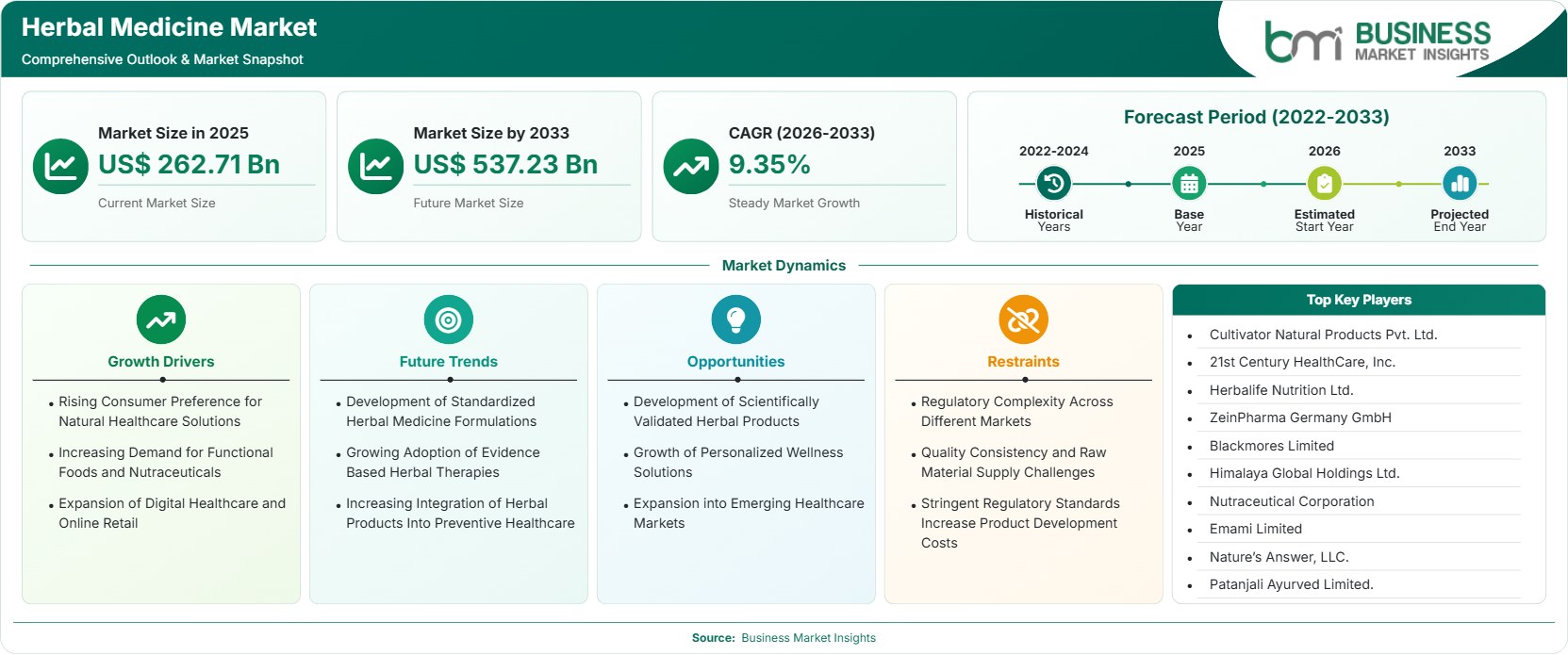
The Herbal Medicine Market size was valued at US$ 262.71 Billion in 2025 and is projected to reach US$ 537.23 Billion by 2033, growing at a CAGR of 9.35% during 2026–2033. Rising consumer preference for natural healthcare, preventive wellness adoption, herbal product innovation, increasing nutraceutical demand, and expansion of digital health channels are driving growth while creating opportunities across pharmaceutical, food, and personal care applications.

Report Coverage
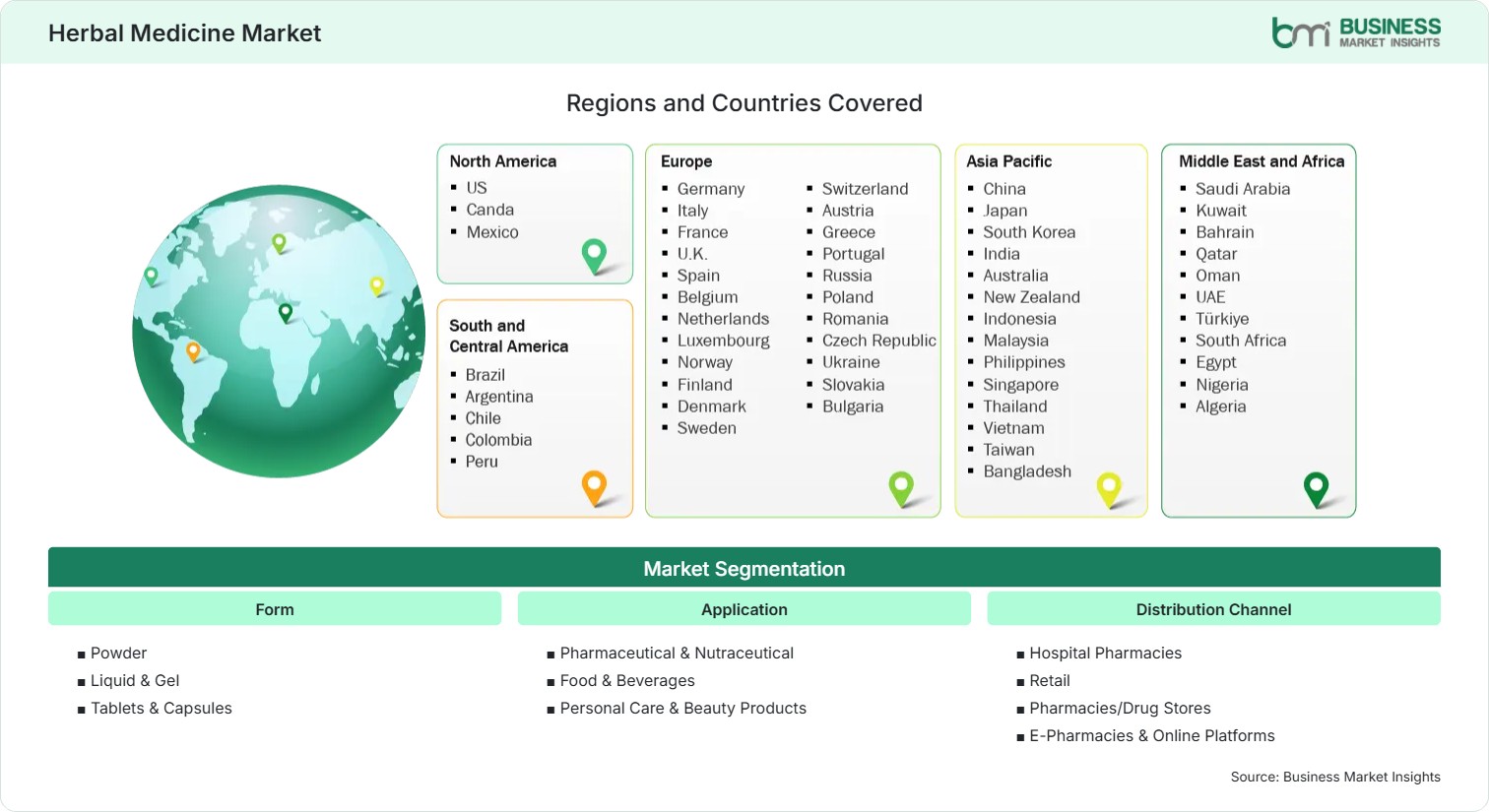
  • Form: Powder, Liquid & Gel, Tablets & Capsules
  • Application: Pharmaceutical & Nutraceutical, Food & Beverages, Personal Care & Beauty Products
  • Distribution Channel: Hospital Pharmacies, Retail, Pharmacies/Drug Stores, E-Pharmacies & Online Platforms
US$ 262.71 Bn Market size in 2025
US$ 537.23 Bn Market Size by 2033
9.35% CAGR, 2026 - 2033
2026-2033 Forecast Period

AI Overview

Herbal Medicine Market Summary

  • North America Region: North America holds 28%–31% market share in 2025 and is expected to grow at a CAGR of 8.7%–9.3% during 2026–2033, supported by increasing wellness awareness, dietary supplement consumption, functional food demand, and growing acceptance of plant-based therapeutic products. The United States represents the regional leader due to strong nutraceutical adoption, retail expansion, and consumer interest in preventive healthcare, achieving a 8.8%–9.4% CAGR through 2033.
  • Fastest Growing Region: Asia Pacific accounts for 36%–39% market share in 2025 and is projected to register the fastest CAGR of 10.1%–10.7% during 2026–2033 due to traditional medicine integration, rising disposable income, expanding pharmaceutical manufacturing, increasing herbal product acceptance, and strong demand across India, China, Japan, and Southeast Asia.
  • Leading Segment: Pharmaceutical & Nutraceutical applications represent 45%–48% market share in 2025 and are forecast to grow at a CAGR of 9.6%–10.2% through 2033, driven by increasing demand for botanical supplements, immunity-support products, functional ingredients, and natural therapeutic solutions.
  • High Growth Segment: E-Pharmacies & Online Platforms account for 22%–25% market share in 2025 and are expected to expand at a CAGR of 11.2%–11.8% during 2026–2033 due to digital healthcare adoption, convenient purchasing, broader product accessibility, and increasing consumer engagement through online wellness platforms.
  • Key Market Opportunity: Expansion of personalized wellness solutions, clean-label products, herbal supplements, and scientifically validated botanical formulations creates significant opportunities for manufacturers targeting global preventive healthcare trends.
  • Major Market Players: Cultivator Natural Products Pvt. Ltd., 21st Century HealthCare, Inc., Herbalife Nutrition Ltd., ZeinPharma Germany GmbH, Blackmores Limited, Himalaya Global Holdings Ltd., Nutraceutical Corporation, Emami Limited, Nature’s Answer, LLC., Patanjali Ayurved Limited.
Strategic Insights

Herbal Medicine Market: Strategic Insights

Herbal Medicine Market Strategic Framework
FREE PDF
Request your free sample
Request free sample
Stakeholder View

Key Takeaways

  • The market value chain includes herbal ingredient suppliers, cultivation companies, extract manufacturers, nutraceutical producers, pharmaceutical companies, distributors, retailers, and digital healthcare platforms supporting global product availability.
  • Pharmaceutical and nutraceutical applications offer strong growth potential as consumers increasingly seek natural supplements, preventive healthcare products, immunity-support formulations, and botanical alternatives.
  • Innovation is shifting toward standardized herbal extracts, clinical validation, combination formulations, sustainable cultivation practices, and advanced delivery formats such as capsules, liquids, and functional beverages.
  • Asia Pacific provides significant investment opportunities due to traditional medicine heritage, expanding consumer markets, increasing healthcare awareness, and growing herbal product manufacturing capabilities.
  • Companies are strengthening competitive positioning through acquisitions, brand expansion, digital commerce strategies, and partnerships focused on natural wellness and nutraceutical innovation.
  • Regulatory modernization and scientific research supporting herbal efficacy are improving consumer confidence while encouraging wider acceptance across pharmaceutical, food, beverage, and personal care industries.
Geographic Outlook

Herbal Medicine Market Regional Highlights

North America Herbal Medicine Market

North America accounted for 28%–31% market share in 2025 and is projected to grow at a CAGR of 8.7%–9.3% during 2026–2033. The region demonstrates strong demand due to rising consumer interest in preventive healthcare, dietary supplements, functional foods, and natural wellness products. The United States represents the largest contributor supported by established nutraceutical brands, advanced retail networks, and increasing adoption of botanical formulations. Canada is also expanding through growing interest in natural therapies and plant-based health products.

  • The United States leads regional demand through strong dietary supplement consumption, expanding herbal product availability, and increasing consumer focus on preventive wellness solutions.
  • Growing preference for clean-label and plant-based products is encouraging manufacturers to introduce innovative herbal supplements with scientifically supported health benefits.
  • Retail pharmacies, specialty wellness stores, and online platforms are improving accessibility of herbal products among mainstream consumers across North America.
  • Increasing research investments in botanical ingredients are supporting product innovation, quality improvement, and greater acceptance among healthcare-oriented consumers.

US Herbal Medicine Market

The United States represented approximately 82%–85% of North America's Herbal Medicine Market share in 2025 and is expected to expand at a CAGR of 8.8%–9.4% through 2033. The country benefits from a mature dietary supplement industry, strong consumer spending on wellness products, and increasing adoption of natural alternatives. Demand is supported by immunity-focused supplements, sports nutrition products, functional ingredients, and personalized wellness solutions. Digital commerce growth is further improving access to herbal products across consumer segments.

  • Rising consumer awareness regarding preventive healthcare is increasing demand for herbal supplements targeting immunity, stress management, and overall wellness.
  • E-commerce platforms are expanding product reach by offering diverse herbal formulations, subscription models, and personalized wellness recommendations.
  • Pharmaceutical and nutraceutical companies are investing in research-backed botanical products to improve credibility and consumer confidence.

Europe Herbal Medicine Market

Europe held 24%–27% market share in 2025 and is estimated to grow at a CAGR of 8.4%–9.0% during 2026–2033. The region maintains strong demand due to established herbal medicine traditions, regulatory frameworks for botanical products, and consumer preference for natural healthcare solutions. Germany leads regional adoption because of its advanced phytotherapy market, while the United Kingdom, France, and Italy contribute through wellness product innovation and expanding nutraceutical consumption. Sustainability and clean-label trends are further supporting market development.

  • Germany remains the leading European market due to strong acceptance of herbal remedies, pharmaceutical-grade botanical products, and scientific research activities.
  • The United Kingdom is witnessing increasing demand for natural supplements through wellness retailers, online platforms, and personalized nutrition services.
  • France and Italy are expanding herbal product consumption through traditional medicine practices, natural cosmetics, and functional food applications.
  • European manufacturers are focusing on sustainable sourcing, quality certification, and standardized herbal extracts to meet consumer expectations.

Asia Pacific Herbal Medicine Market

Asia Pacific accounted for 36%–39% market share in 2025 and is projected to achieve the fastest growth with a CAGR of 10.1%–10.7% during 2026–2033. The region benefits from centuries-old traditional medicine systems, expanding healthcare awareness, rising disposable incomes, and increasing pharmaceutical manufacturing capabilities. India and China represent major markets due to established herbal medicine ecosystems, while Japan and South Korea contribute through advanced functional health product development. Growing export opportunities are strengthening regional production capabilities.

  • India is a major growth hub due to Ayurveda integration, large-scale herbal cultivation, and increasing domestic and international demand for natural health products.
  • China continues expanding through traditional Chinese medicine adoption, herbal pharmaceutical manufacturing, and government-supported healthcare initiatives.
  • Japan and South Korea are increasing investments in functional foods, botanical supplements, and scientifically developed herbal formulations.
  • Southeast Asian countries are witnessing rising demand due to cultural acceptance, wellness tourism, and expanding retail distribution networks.
  • Regional manufacturers are improving production capabilities through advanced extraction technologies, quality control systems, and sustainable cultivation practices.

Rest of World Herbal Medicine Market

The Rest of World region accounted for 7%–9% market share in 2025 and is expected to grow at a CAGR of 8.9%–9.5% during 2026–2033. South and Central America are benefiting from rich biodiversity, traditional herbal practices, and increasing natural healthcare adoption. The Middle East and Africa are experiencing gradual market expansion through rising wellness awareness, improving healthcare access, and growing interest in botanical products. Brazil, Mexico, South Africa, and Gulf countries represent key emerging markets.

  • Brazil is expanding herbal medicine adoption through biodiversity resources, traditional remedies, and increasing consumer interest in natural wellness products.
  • Mexico is witnessing demand growth through herbal traditions, dietary supplements, and expanding health-focused retail channels.
  • Middle Eastern countries are increasing investment in wellness products, natural ingredients, and healthcare diversification initiatives.
  • South Africa is developing herbal product markets through traditional medicine practices and growing consumer awareness of plant-based healthcare.
  • Regional companies are improving distribution networks through online platforms, specialty retailers, and partnerships with international wellness brands.
Global Market Geography
FREE PDF
Request your free sample
Request free sample
Segment Analysis

Herbal Medicine Market Segmentation

Form

The Form segment plays a crucial role in determining consumer preference, product convenience, and therapeutic effectiveness within the Herbal Medicine Market. Tablets and capsules maintain a leading position due to ease of consumption, accurate dosage, longer shelf life, and pharmaceutical acceptance. Increasing innovation in liquid formulations and herbal powders is supporting broader adoption across wellness, nutraceutical, and personal care applications.

  • Powder: Herbal powders are widely adopted due to traditional usage, easy blending with beverages and foods, natural positioning, and applications in wellness supplements and Ayurvedic formulations.
  • Liquid & Gel: Liquid and gel formulations are gaining popularity because of faster absorption, convenient consumption, and increasing use in herbal tonics, beverages, skincare, and therapeutic products.
  • Tablets & Capsules: Tablets and capsules represent the largest segment due to standardized dosage, portability, longer stability, and increasing consumer acceptance across pharmaceutical and nutraceutical applications.

Application

The Application segment demonstrates strong diversification across healthcare, nutrition, food, beverages, and personal care industries. Growing consumer preference for natural ingredients, preventive healthcare, and clean-label products is expanding demand for herbal formulations. The segment is expected to maintain steady growth through 2033 as manufacturers develop innovative botanical products targeting immunity, wellness, beauty, and lifestyle-related health requirements.

  • Pharmaceutical & Nutraceutical: Pharmaceutical and nutraceutical applications represent the dominant segment due to rising demand for botanical supplements, immunity products, functional ingredients, and natural therapeutic formulations.
  • Food & Beverages: Food and beverage companies are increasingly incorporating herbal ingredients into functional drinks, nutritional products, and wellness-focused food items to meet consumer demand for healthier alternatives.
  • Personal Care & Beauty Products: Herbal ingredients are gaining adoption in skincare, haircare, and cosmetic products due to consumer preference for natural formulations, sustainable ingredients, and plant-based beauty solutions.

Distribution Channel

The Distribution Channel segment is evolving rapidly due to digital commerce expansion, changing consumer purchasing behavior, and increasing accessibility of herbal products. Traditional retail channels continue maintaining importance, while online platforms are gaining momentum through wider product selection, convenience, and personalized recommendations. The Herbal Medicine Market is benefiting from improved supply chain networks and stronger brand-to-consumer connections.

  • Hospital Pharmacies: Hospital pharmacies support herbal medicine distribution for integrative healthcare approaches, physician-recommended supplements, and complementary treatment solutions.
  • Retail: Retail channels remain important due to consumer familiarity, physical product availability, brand visibility, and direct customer interaction through wellness stores and supermarkets.
  • Pharmacies/Drug Stores: Pharmacies and drug stores provide trusted access to herbal products through professional guidance, established distribution networks, and increasing consumer acceptance of natural healthcare solutions.
  • E-Pharmacies & Online Platforms: Online platforms represent a rapidly expanding channel due to digital healthcare adoption, convenient purchasing, wider product availability, and increasing consumer engagement through online wellness ecosystems.
Market Forces

Herbal Medicine Market Dynamics

Key Market Drivers

Rising Consumer Preference for Natural Healthcare Solutions

There is a rising inclination among consumers in the global market towards plant-based and natural health care products because of increased consciousness regarding prevention through wellness and health management through lifestyle. There is a rise in demand for herbal supplements, herbal extracts, and remedies due to the preference for alternative natural therapies that are safe and natural. Growth in the Herbal Medicine Market can be attributed to the increasing number of wellness movements, clean label trends, and availability of scientifically proven herbal products. This Herbal Medicine Market trend reflects the move away from the conventional approach of treating symptoms to the prevention of diseases.

Increasing Demand for Functional Foods and Nutraceuticals

With the rising demand for functional nutrition products, there is increasing pressure on food and supplements to utilize herbal ingredients in their daily wellness products. Customers are looking for products that will assist them with improving their immune system, digesting better, gaining more energy, reducing stress, and improving their general well-being. This provides new opportunities to herb and nutraceutical product manufacturers around the world.

Expansion of Digital Healthcare and Online Retail

The rise of digital commerce solutions is changing the way herbal medicines are being distributed through greater access, visibility, and engagement. The use of digital solutions allows manufacturers to reach a broader audience through direct consumer selling, subscriptions, and personalization. Growth in the number of smartphone users and the digitization of healthcare are pushing customers to buy herbal medicines online.

Key Market Opportunities

Development of Scientifically Validated Herbal Products

Increasing demands for scientifically backed natural health care solutions are providing opportunities to the companies that are investing in clinical research, standardization of extracts, and herbal preparations. Scientifically backed solutions may increase consumer confidence, regulatory acceptance, and even be accepted by the medical community. Companies that make research-backed solutions have a competitive edge in the wellness industry.

Growth of Personalized Wellness Solutions

The personalized healthcare and nutrition strategies are opening up avenues for the herbal medicine companies to come up with formulations tailored to the wellness needs of consumers. The evolution of digital health technology, consumer analysis, and personalized recommendations allows herbal medicine firms to develop personalized herbal supplements.

Expansion into Emerging Healthcare Markets

Growing economies present immense opportunities for growth due to the rise in awareness about healthcare, increased disposable income, better distribution facilities, and the cultural acceptability of traditional medicines. Companies growing their manufacturing operations, retail presence, and online presence in developing countries will be able to reach a large customer base in need of economical and natural healthcare solutions.

Market Restraints and Challenges

Regulatory Complexity Across Different Markets

Factor: Different nations have different rules for herbal medicines, which include differences in the process of gaining approval, labeling requirements, quality control procedures, and allowed health claims. Impact: The complexities in regulation may delay the development and marketing of products. International companies need to have an understanding of regulatory issues and mechanisms of successful commercialization of their products.

Quality Consistency and Raw Material Supply Challenges

Factor: Herbs used as ingredients in products are made from agricultural inputs that are subject to climate changes, cultivation methods, and variations in geographical locations. Impact:  Variations in the quality of ingredients can influence the efficacy of products and confidence in the brand. It is essential for companies to build robust supply chain systems that ensure the consistent quality of their products.

Company Analysis

Competitive Landscape

Competitors would include producers of herbal medicines, nutraceutical firms, botanical ingredient producers, and wellness companies emphasizing standardized extracts, dietary supplements, traditional medicines, and natural health products. Based on the Herbal Medicine Market Analysis, the top firms have been making gains through innovations, sustainable sourcing, e-commerce initiatives, research-based formulations, and brand strategies for use in pharmaceutical, food, beverages, and personal care markets.

Company Name

Overview

Products and Services Relevant to this Market

Cultivator Natural Products Pvt. Ltd.

Indian herbal wellness company specializing in organic and natural health products.

Herbal tablets, organic supplements, botanical formulations, natural wellness products, and herbal healthcare solutions.

21st Century HealthCare, Inc.

U.S.-based supplement manufacturer offering vitamins, minerals, and wellness products.

Herbal supplements, nutritional formulations, dietary products, and natural health solutions for consumer wellness.

Herbalife Nutrition Ltd.

Global nutrition company focused on health, wellness, and lifestyle products.

Herbal-based nutritional supplements, botanical ingredients, weight management products, and wellness formulations.

ZeinPharma Germany GmbH

German nutraceutical company developing science-based health supplements.

Herbal extracts, dietary supplements, micronutrients, and specialized wellness formulations.

Blackmores Limited

Australian natural health company with extensive supplement product offerings.

Herbal medicines, vitamins, minerals, nutritional supplements, and natural healthcare products.

Himalaya Global Holdings Ltd.

Indian herbal healthcare company with Ayurveda-based product portfolio.

Herbal medicines, personal care products, supplements, botanical extracts, and wellness solutions.

Nutraceutical Corporation

U.S. health products company focused on natural wellness solutions.

Herbal supplements, nutritional products, specialty health ingredients, and botanical formulations.

Emami Limited

Indian consumer healthcare company offering traditional and natural products.

Herbal healthcare products, Ayurvedic formulations, personal care solutions, and wellness products.

Nature’s Answer, LLC.

U.S. herbal supplement company specializing in botanical products.

Liquid herbal extracts, supplements, vitamins, botanical formulas, and natural wellness products.

Patanjali Ayurved Limited

Indian company focused on Ayurveda-based consumer healthcare products.

Herbal medicines, Ayurvedic supplements, natural foods, personal care products, and wellness formulations.

Trust & Transparency

Research Methodology

The market analysis combines proprietary research with secondary data from government agencies, company disclosures, regulatory filings, industry databases and expert interviews. Market estimates are validated through data triangulation, cross-market benchmarking and analyst review.

View Full Research Methodology

Questions Answered

Frequently Asked Questions

What does the Herbal Medicine Market Report provide?

The report provides market sizing, regional insights, segmentation analysis, competitive landscape evaluation, industry trends, growth factors, challenges, opportunities, and strategic insights for stakeholders.

Why are pharmaceutical and nutraceutical companies investing in herbal products?

According to Herbal Medicine Market Forecasts, Companies are investing in herbal products due to increasing demand for natural therapies, functional supplements, immunity solutions, and consumer preference for scientifically supported botanical formulations.

How are online platforms influencing herbal medicine sales?

E-pharmacies and online platforms are improving accessibility by providing wider product choices, direct brand interaction, convenient purchasing, subscription options, and personalized wellness recommendations.

Which form of herbal medicine is most preferred by consumers?

Tablets and capsules are widely preferred due to convenient usage, accurate dosage, longer shelf stability, and compatibility with pharmaceutical and nutraceutical distribution channels.

What factors are increasing demand for herbal medicines globally?

Growing consumer interest in preventive healthcare, natural wellness products, functional nutrition, traditional medicine systems, and plant-based therapeutic solutions is increasing adoption of herbal medicines across healthcare and lifestyle applications.

Access the Full Herbal Medicine Market Report

Get segment-level forecasts, regional estimates, competitive benchmarking, company profiles and downloadable Excel datasets.

Access the full Herbal Medicine Market Report
350 pages PDF & Excel | 2026-08-24
Similar Research

Related Market Reports