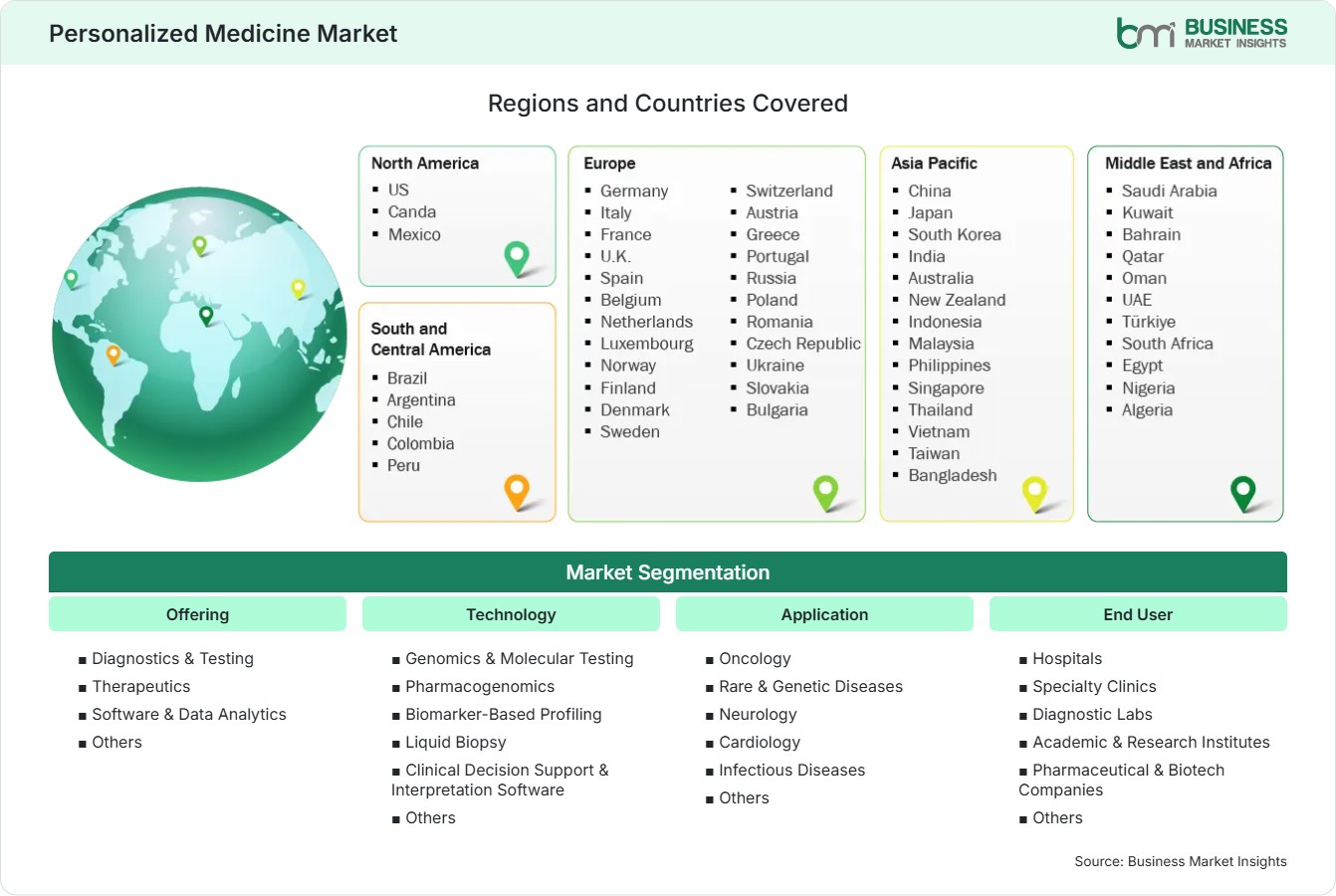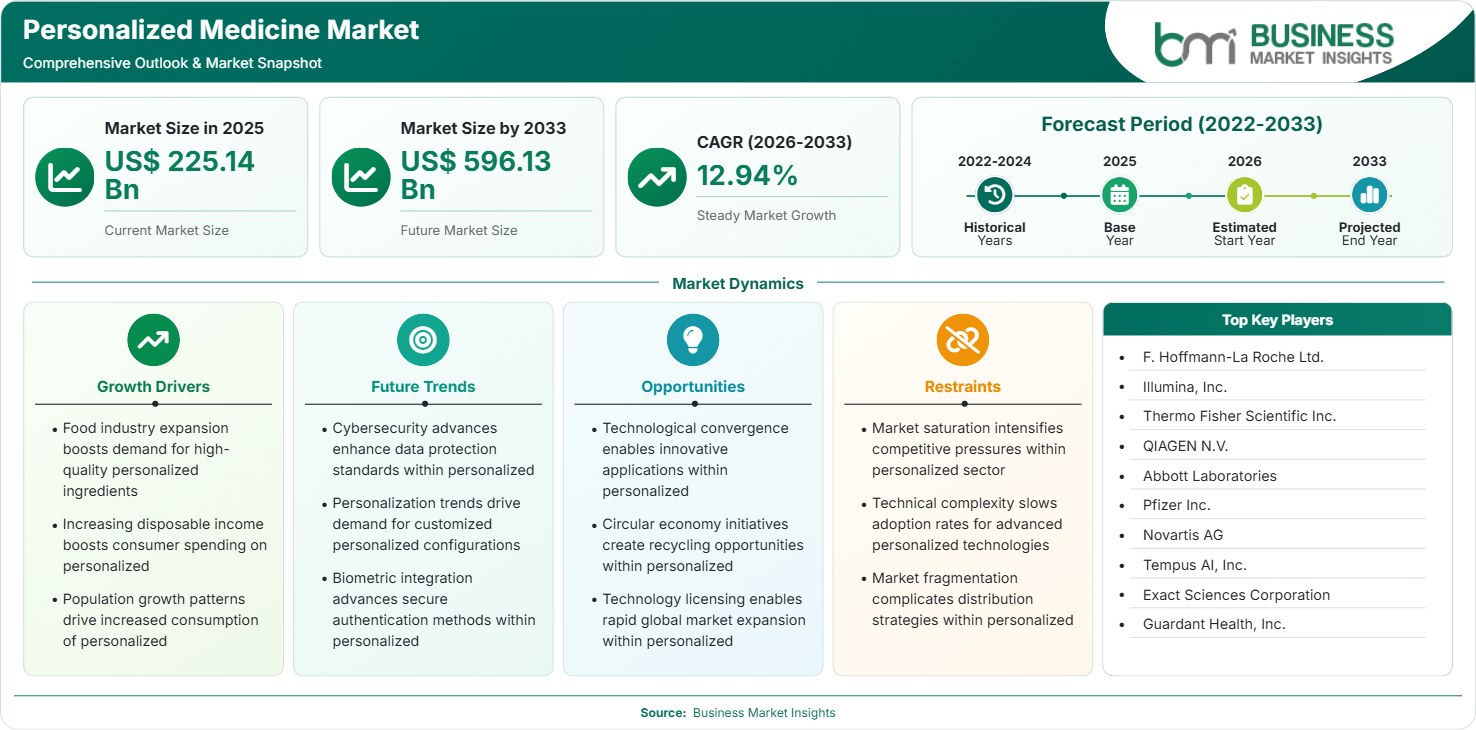
Personalized Medicine Market Regional Highlights
North America Personalized Medicine Market
The North America segment held around 39%–42% of the Personalized Medicine Market share in 2025 and is expected to grow at a CAGR of 11.8%–12.5% from 2026 to 2033. The presence of robust reimbursement policies, large genomic databases, extensive application of precision oncology, and substantial investments in the biotechnology sector have made the region a leader in the industry. Key academic medical centers in the region are continuing their efforts to incorporate molecular diagnostics in patient pathways. Market expansion is also supported by pharmaceutical investments in biomarker research and the growing adoption of pharmacogenomic testing across oncology, cardiology, and rare disease management programs.
- Cancer centers increasingly deploy genomic profiling to guide targeted therapies and improve treatment selection across complex patient populations.
- Companion diagnostics adoption continues expanding due to regulatory alignment and growing precision-drug development pipelines.
- Strategic collaborations between healthcare providers and genomic technology firms accelerate clinical translation and commercialization.
- AI-assisted molecular interpretation platforms improve reporting efficiency and clinician adoption across healthcare networks.
US Personalized Medicine Market
The US accounts for 82% to 86% of the region's revenue and is expected to grow at a CAGR of 12.0% to 12.7% through 2033. Federal support for precision health research, venture capital investments, well-equipped laboratories, and the growing clinical applications of liquid biopsy technology will further drive market growth. The adoption of next-generation sequencing and companion diagnostics in oncology is a key driver of demand.
- Large-scale genomic initiatives support biomarker discovery and facilitate population-level precision medicine implementation.
- Precision oncology programs continue expanding across leading hospital systems and specialty treatment networks.
- Biopharmaceutical companies increasingly incorporate genetic stratification into clinical development strategies.
- Growing payer acceptance of evidence-based molecular testing improves access across disease categories.
Europe Personalized Medicine Market
Europe currently has a market share of 27%-30% in 2025 and is expected to grow with a CAGR of 12.2%-13.0% until 2033. Regional growth is backed by government policies for genomics, digitization of the health care system, and research expertise in academia. Germany and the United Kingdom are major markets owing to existing molecular diagnostic setups, and Spain, along with some Nordic nations, is an early adopter of precision diagnostics. Regulatory frameworks encouraging cross-border health data collaboration continue to support innovation and clinical integration.
- Germany remains a leading revenue contributor due to advanced diagnostics infrastructure and pharmaceutical research activity.
- The United Kingdom benefits from genomics initiatives and growing integration of molecular testing into routine care.
- Spain records above-regional growth driven by hospital modernization and precision-oncology investments.
- Companion diagnostic usage continues rising alongside targeted therapy adoption.
- Academic-industry partnerships strengthen translational research capabilities across multiple therapeutic areas.
Asia Pacific Personalized Medicine Market
Asia Pacific represents 24%-27% of global revenue in 2025 and is expected to grow at a 14.5%-15.5% CAGR, making it the highest growth rate. China and Japan generate revenue for the region through heavy investment in genomics, whereas India is characterized by high growth due to the digitalization of healthcare and cost-effective testing services. The increase in cancer incidence, population genomics projects, and investment in biotechnology are boosting local innovation ecosystems and increasing the adoption of personalized healthcare solutions.
- China continues investing heavily in sequencing technologies, molecular diagnostics, and precision-health infrastructure.
- Japan benefits from advanced healthcare systems and increasing companion diagnostic implementation.
- India demonstrates rapid growth fueled by affordable genomic services and expanding research capacity.
- Government-backed genomics programs encourage broader adoption across healthcare settings.
- Local biotechnology innovation supports commercialization of novel precision medicine applications.
Rest of World Personalized Medicine Market
The Rest of World region accounts for 8%–10% market share in 2025 and is anticipated to expand at a 13.0%–14.0% CAGR through 2033. South and Central America are witnessing increased adoption of molecular diagnostics supported by expanding private healthcare investments.
In the Middle East and Africa, national genomics programs and healthcare facilities are enhancing individualized therapies. In the region, the highest growth is registered in Brazil, Saudi Arabia, and the UAE.
- Brazil leads Latin American demand through expanding laboratory networks and oncology testing adoption.
- Saudi Arabia is investing in genomic medicine and national health transformation initiatives.
- The UAE supports precision-health deployment through advanced healthcare infrastructure programs.
- Growing awareness of rare disease diagnostics strengthens molecular testing demand.
- International partnerships improve technology transfer and specialist training capabilities.