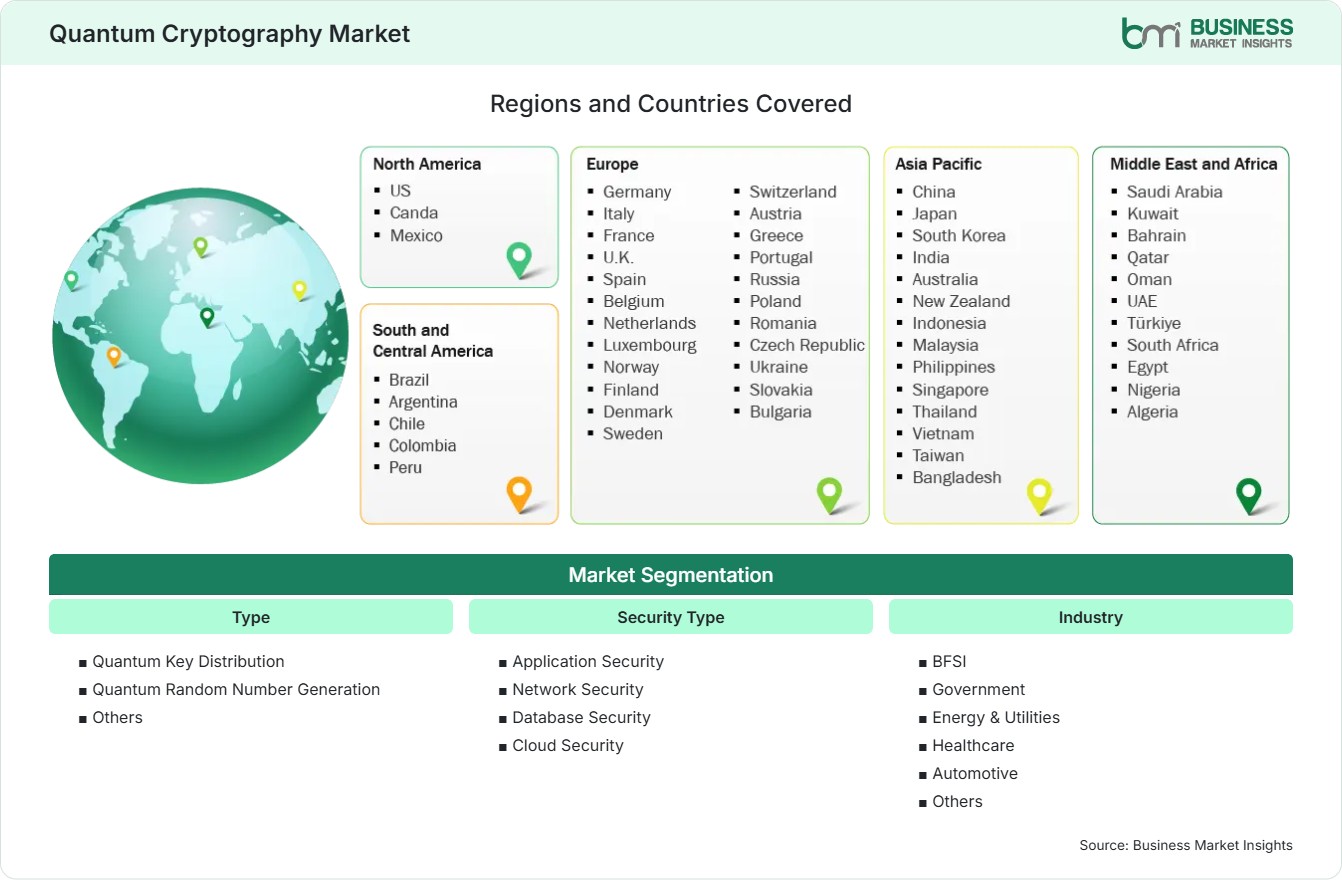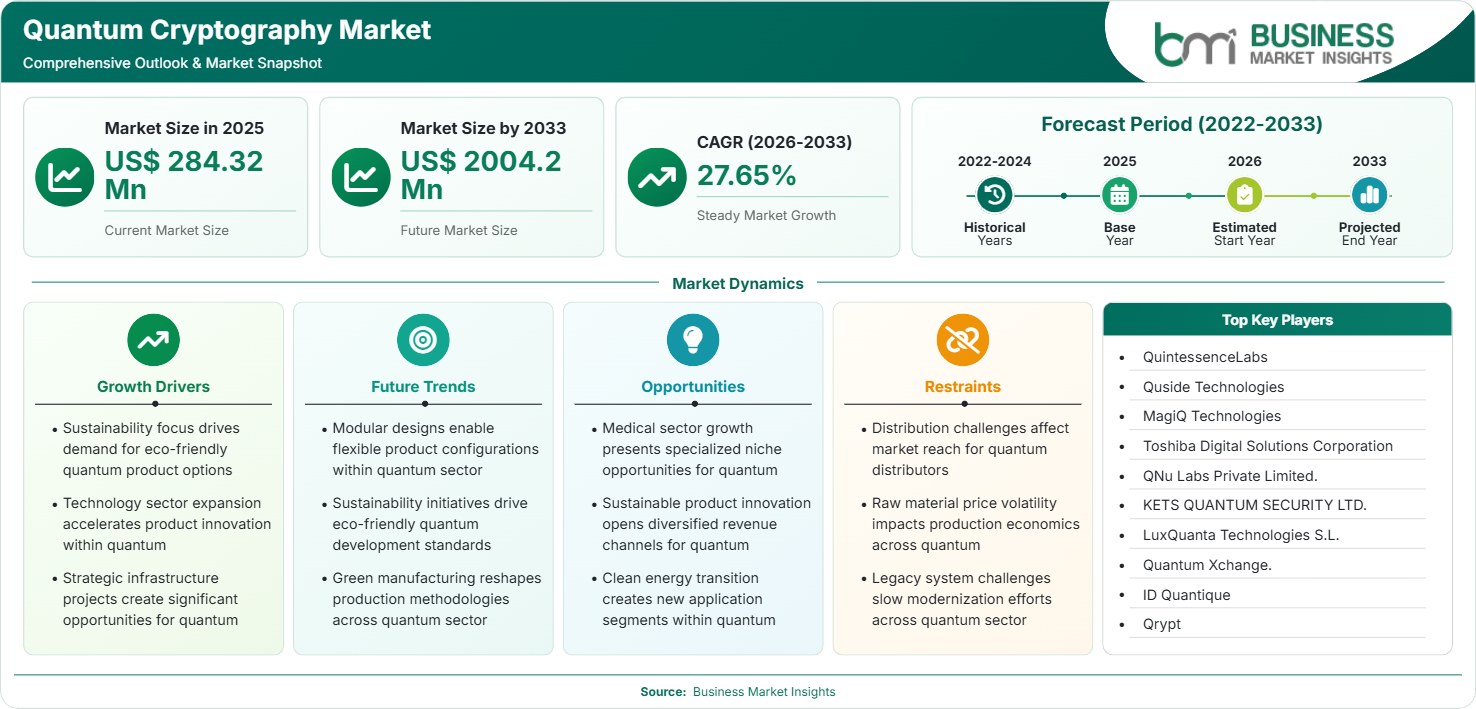
Quantum Cryptography Market Regional Highlights
North America Quantum Cryptography Market
North America accounted for a 34%–37% share in 2025 and is projected to grow at a CAGR of 25%–27% during 2026–2033. The region maintains leadership due to advanced cybersecurity infrastructure, strong quantum research capabilities, and high investment from government and enterprises. The Quantum Cryptography Market share is supported by demand from defense, BFSI, and technology sectors adopting next-generation encryption frameworks.
- The US represents the largest regional contributor due to federal quantum initiatives, cybersecurity modernization programs, and enterprise investments in secure communication technologies.
- Government agencies are increasing quantum research funding to strengthen national security systems and develop advanced cryptographic capabilities for critical applications.
- Financial institutions are adopting quantum security solutions to protect transaction networks, customer data, and digital financial infrastructure against future cyber risks.
- Technology companies are developing quantum-safe platforms integrating quantum key distribution, encryption technologies, and cybersecurity management solutions for enterprise applications.
US Quantum Cryptography Market
The US accounted for a 28%–31% share in 2025 and is expected to register a CAGR of 26%–28% from 2026–2033. The country benefits from strong cybersecurity spending, government-backed quantum technology programs, and early adoption among financial, defense, and technology organizations. The Quantum Cryptography Market growth is driven by increasing awareness of quantum threats and the requirement for secure digital infrastructure.
- Federal initiatives supporting quantum technology development are encouraging collaboration between research institutions, cybersecurity companies, and technology providers.
- Defense organizations are exploring quantum communication systems to enhance protection of sensitive information and strategic communication networks.
- Financial institutions are investing in advanced cryptographic solutions to strengthen transaction security and protect confidential customer information.
- Cloud service providers are evaluating quantum-safe encryption methods to support future-ready enterprise security architectures.
Europe Quantum Cryptography Market
Europe represented a 22%–25% of the Quantum Cryptography Market share in 2025 and is anticipated to expand at a CAGR of 24%–26% during 2026–2033. The region benefits from strong data protection regulations, quantum research programs, and cybersecurity initiatives. Germany, the U.K., France, Switzerland, and the Netherlands are leading markets, supported by government funding and collaborations between universities, technology firms, and research organizations focused on secure digital infrastructure.
- Germany is advancing quantum cybersecurity research through industrial partnerships, government programs, and investments in advanced communication technologies.
- The U.K. is developing quantum-safe security capabilities through national strategies supporting quantum computing research and cybersecurity resilience.
- Switzerland is strengthening its position through quantum technology companies providing secure communication and cryptographic solutions for enterprises.
- France is supporting quantum innovation through research investments and cybersecurity programs targeting critical infrastructure protection.
- European regulations focused on data privacy and digital security are encouraging organizations to evaluate advanced encryption solutions.
Asia Pacific Quantum Cryptography Market
Asia Pacific captured a 25%–28% share in 2025 and is expected to achieve the highest growth rate with a CAGR of 30%–32% during 2026–2033. The region is benefiting from government quantum initiatives, digital transformation programs, and rising cybersecurity requirements. China, Japan, India, and South Korea are major contributors due to investments in quantum communication networks and research infrastructure.
- China is expanding quantum communication capabilities through national programs, research investments, and development of secure quantum networks.
- Japan is advancing quantum security adoption through collaborations between technology companies, government agencies, and academic institutions.
- India is increasing focus on quantum technology development through national missions and growing cybersecurity awareness among enterprises.
- South Korea is investing in quantum research and digital security infrastructure to support future communication technologies.
- Southeast Asian countries are exploring quantum-safe solutions as digital economies expand and cybersecurity requirements increase.
Rest of World Quantum Cryptography Market
Latin America, Middle East, and Africa collectively represented a 10%–13% share in 2025 and are projected to grow at a CAGR of 27%–29% during 2026–2033. These regions are gradually adopting quantum security technologies as governments and enterprises strengthen digital infrastructure. The Quantum Cryptography Market is gaining attention due to increasing cybersecurity concerns, financial digitization, and protection requirements for critical systems.
Middle Eastern countries are investing in advanced cybersecurity frameworks, while Latin American markets are exploring quantum-safe technologies to secure expanding digital ecosystems.
- The UAE is developing advanced digital infrastructure and cybersecurity programs supporting adoption of emerging security technologies.
- Saudi Arabia is investing in technology modernization initiatives that include advanced cybersecurity and digital protection solutions.
- Brazil is improving cybersecurity capabilities through financial technology growth and increasing demand for secure digital communication.
- South Africa is exploring quantum research applications to enhance cybersecurity resilience across important sectors.
- Regional adoption is supported by increasing awareness of quantum threats and partnerships with global technology providers.