SCADA Market Regional Highlights
North America SCADA Market
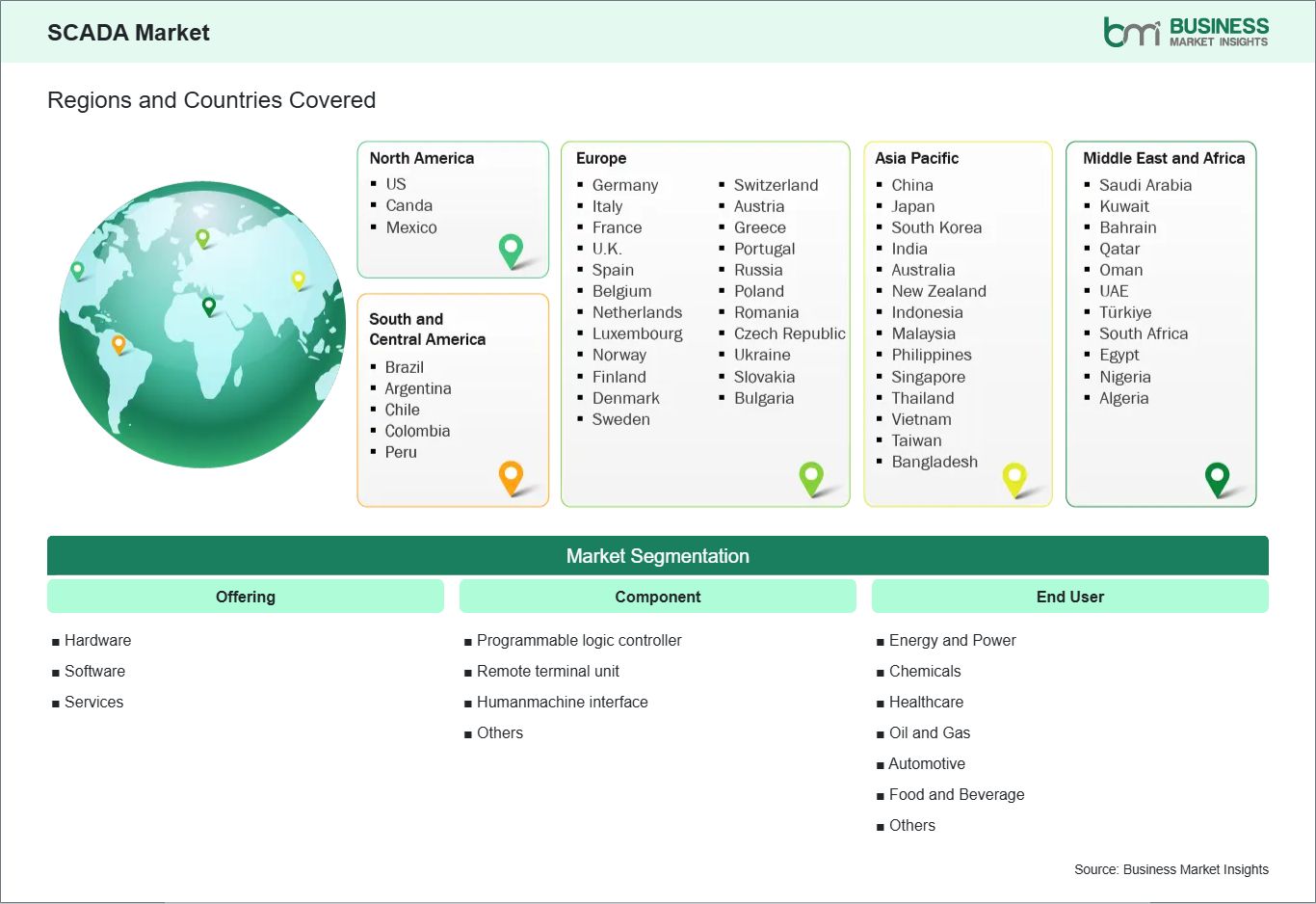
North America accounts for 31.23% SCADA Market share in 2025 and is expected to grow at 7.8% CAGR through 2033. Utility network modernization, pipeline monitoring, industrial cybersecurity spending, and smart manufacturing investments continue supporting adoption. Large installed bases across power, water, and oil infrastructure create sustained upgrade demand.
- Utilities prioritize secure monitoring platforms to support grid digitization initiatives, improve system visibility, and enhance operational reliability.
- Pipeline operators invest in advanced control systems to strengthen operational visibility, improve asset management, and support timely decision-making.
- Manufacturing facilities expand automation programs by integrating real-time analytics to optimize production processes and improve efficiency.
- Cybersecurity regulations encourage the replacement of outdated supervisory technologies with more secure and modern monitoring systems.
- Renewable energy integration increases requirements for centralized operational control to efficiently manage distributed and variable power assets.
US SCADA Market
The United States represents approximately 70.64% share within North America and grows at 7.1% CAGR. Strong investments in electrical grids, industrial modernization, critical infrastructure protection, and energy management solutions support adoption across public and private sectors.
- The power utility industry enhances its digital monitoring to improve reliability and quickly identify problems.
- The industrial manufacturing industry focuses on achieving operational efficiency using centralized control and real-time monitoring.
- The oil and gas industry adopts advanced monitoring solutions to enhance visibility and performance of its remote assets.
- The cloud integration strategy ensures enhanced operational oversight within an organization.
Europe SCADA Market
Europe holds 25.21% share in 2025 and advances at 8.8% CAGR. Germany remains the leading national market, while Eastern European countries demonstrate faster growth. Regulatory focus on energy efficiency, decarbonization, and industrial productivity supports deployment.
- Smart factory projects increase industrial automation investments, supporting demand for advanced monitoring and control solutions.
- Grid modernization programs support utility-sector implementations by improving infrastructure visibility and operational efficiency.
- Germany leads regional spending on industrial digitalization, driven by strong automation and Industry 4.0 initiatives.
- Poland and Romania exhibit accelerated adoption rates as industries increasingly invest in digital transformation.
- Carbon reduction initiatives encourage intelligent infrastructure management to improve energy efficiency and resource utilization.
Asia Pacific SCADA Market
Asia Pacific accounts for 29.05% share in 2025 and records 12.1% CAGR, representing the fastest regional expansion. China leads demand, while India and Southeast Asia deliver high-growth opportunities. Rapid industrialization and infrastructure deployment drive investment activity.
- Manufacturing expansion stimulates large-scale automation projects, increasing demand for centralized monitoring and control solutions.
- China remains the largest regional revenue contributor, supported by extensive industrial automation and digitalization initiatives.
- India demonstrates strong growth from utility modernization programs, driven by investments in smarter and more efficient infrastructure.
- Smart city developments increase demand for centralized monitoring solutions across urban infrastructure and public services.
- Renewable energy investments accelerate platform deployment by supporting efficient monitoring and management of distributed energy assets.
Rest of World SCADA Market
Rest of World represents 14.2% share in 2025 and grows at 7.26% CAGR. Middle East energy investments and South American infrastructure modernization support demand. Digital monitoring of utilities, pipelines, and industrial assets remains a priority.
- GCC countries invest heavily in industrial digital infrastructure, supporting the adoption of advanced monitoring and automation solutions.
- Brazil leads adoption across South America, driven by increasing industrial digitalization and infrastructure investments.
- Water management modernization supports new deployments by improving monitoring, control, and operational efficiency.
- Mining operations increasingly implement remote monitoring platforms to manage geographically dispersed assets and improve safety.
- Energy diversification projects encourage automation investments to enhance operational efficiency and infrastructure management.