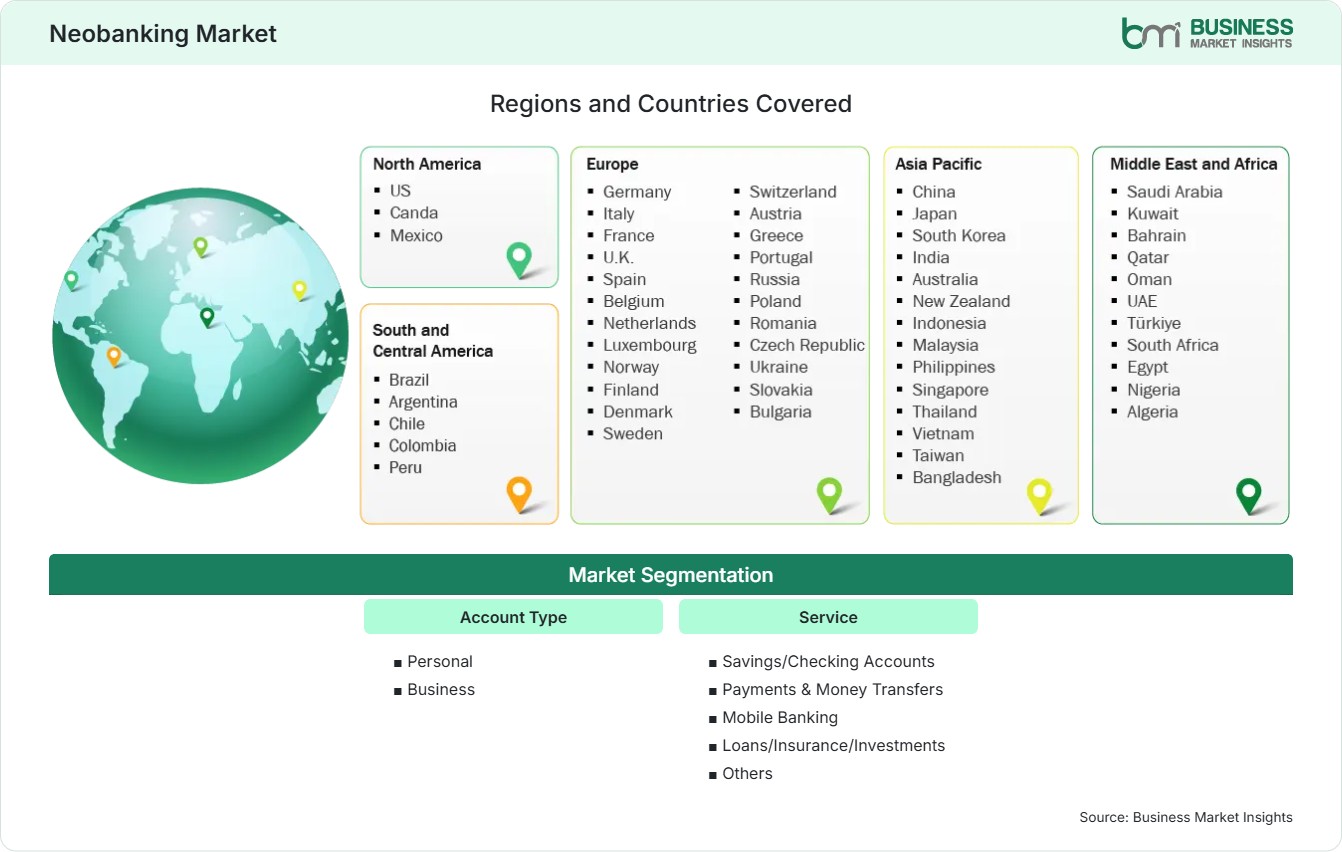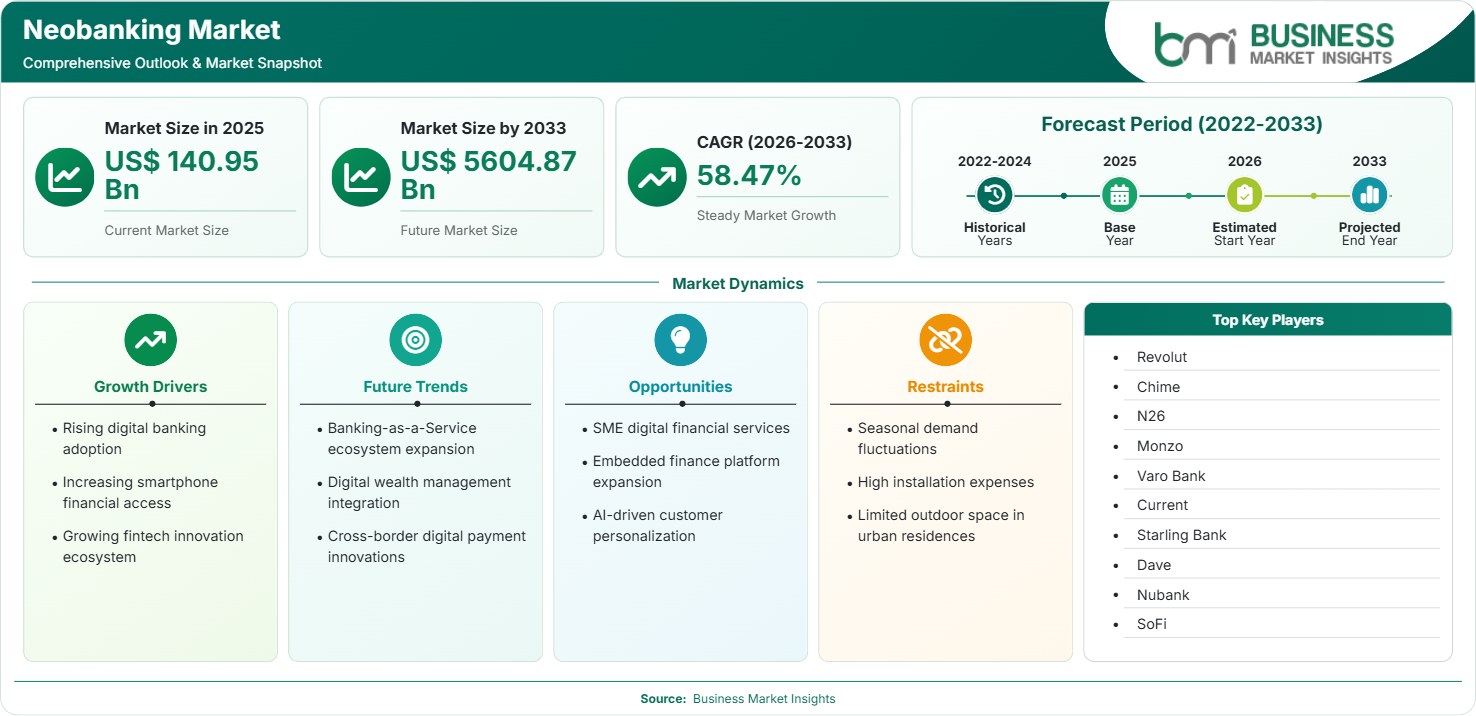
Neobanking Market Regional Highlights
North America Neobanking Market
North America accounted for approximately 31%–34% Neobanking Market share in 2025 and is expected to register a CAGR of 55.8%–57.4% during 2026–2033. Mature digital payment infrastructure, strong fintech investment activity, and widespread smartphone usage continue supporting regional leadership. Rising consumer preference for mobile-first financial services and expanding embedded finance solutions are significantly contributing to market growth across both retail and business banking.
- Strong venture capital investments continue supporting product innovation, digital lending expansion, AI-powered financial management tools, and customer acquisition strategies across leading fintech institutions.
- Increasing demand for fee-free banking, instant payments, and seamless financial experiences is encouraging consumers to transition from traditional banks to fully digital financial platforms.
- Open banking initiatives and cloud-native banking architectures continue enabling rapid deployment of innovative financial products and personalized digital banking services.
- Financial institutions continue strengthening cybersecurity frameworks, biometric authentication, and fraud prevention technologies to improve customer trust and regulatory compliance.
- Growing adoption of embedded finance solutions across retail, healthcare, travel, and e-commerce sectors continues expanding digital banking opportunities.
US Neobanking Market
The United States represented approximately 25%–28% of the global market in 2025 and is projected to grow at a CAGR of 56.4%–58.0% through the forecast period. Strong fintech ecosystems, increasing digital payment volumes, and expanding adoption of AI-powered financial services continue driving rapid Neobanking market growth.
- Consumers increasingly prefer mobile-first financial platforms offering instant account opening, budgeting tools, real-time payment capabilities, and integrated investment services.
- Banking-as-a-Service platforms continue enabling rapid expansion of embedded financial services across technology companies and digital commerce platforms.
- Artificial intelligence improves fraud prevention, customer onboarding, personalized financial recommendations, and automated customer service capabilities.
- Continuous regulatory modernization and digital payment innovation continue strengthening the country's leadership in digital banking transformation.
Europe Neobanking Market
Europe accounted for approximately 29%–32% of the market in 2025 and is projected to expand at a CAGR of 57.6%–59.2% during 2026–2033. Strong open banking regulations, high digital payment adoption, and advanced fintech ecosystems continue supporting sustained regional growth.
- The United Kingdom leads regional demand with a CAGR of 58.0%–59.6%, driven by fintech innovation, supportive regulation, and strong adoption of mobile banking platforms.
- Germany represents the fastest-growing major European market with a CAGR of 58.8%–60.4%, supported by increasing digital banking adoption and expanding fintech investments.
- France, Spain, and the Nordic countries continue strengthening digital banking ecosystems through regulatory support and widespread consumer adoption of mobile financial services.
- PSD2 implementation continues encouraging innovation, competition, and secure third-party financial integrations throughout the European banking ecosystem.
- Growing investments in AI-driven financial technologies continue improving customer engagement and operational efficiency across digital banking platforms.
Asia Pacific Neobanking Market
Asia Pacific accounted for approximately 29%–32% of the market in 2025 and is projected to register the fastest CAGR of 61.2%–62.8% during 2026–2033. Rapid urbanization, increasing financial inclusion, expanding smartphone penetration, and strong government support for digital payments continue driving exceptional regional growth.
- China dominates regional demand with a CAGR of 61.5%–63.1%, supported by advanced digital payment ecosystems, fintech innovation, and extensive mobile financial service adoption.
- India is expected to record the fastest regional growth with a CAGR of 62.8%–64.4%, driven by expanding digital payment infrastructure, fintech startups, and government-backed financial inclusion initiatives.
- Southeast Asian economies continue experiencing rapid adoption of digital wallets, online banking services, and embedded financial platforms across consumer and commercial markets.
- Japan and South Korea continue investing in artificial intelligence, digital identity systems, and cloud banking technologies supporting advanced financial ecosystems.
- Increasing internet connectivity and smartphone ownership continue accelerating customer acquisition for digital-only banking institutions.
Rest of World Neobanking Market
The Rest of World region accounted for approximately 7%–9% of the global market in 2025 and is projected to expand at a CAGR of 58.4%–60.0% during the forecast period. Digital transformation initiatives, expanding mobile payment ecosystems, and growing financial inclusion programs continue supporting market expansion across South & Central America and the Middle East & Africa.
Government-backed digital economy strategies and increasing investments in financial technology infrastructure continue creating favorable opportunities for digital banking providers throughout emerging markets.
- Brazil leads the South & Central American market with a CAGR of 58.8%–60.4%, supported by widespread digital banking adoption and strong fintech investment activity.
- The United Arab Emirates records the highest regional growth with a CAGR of 59.4%–61.0%, driven by digital economy initiatives, smart financial services, and progressive banking regulations.
- Saudi Arabia continues expanding digital financial ecosystems through Vision 2030 initiatives promoting fintech innovation and cashless payment adoption.
- South Africa continues strengthening financial inclusion through mobile banking platforms, digital payment solutions, and expanding access to technology-enabled banking services.