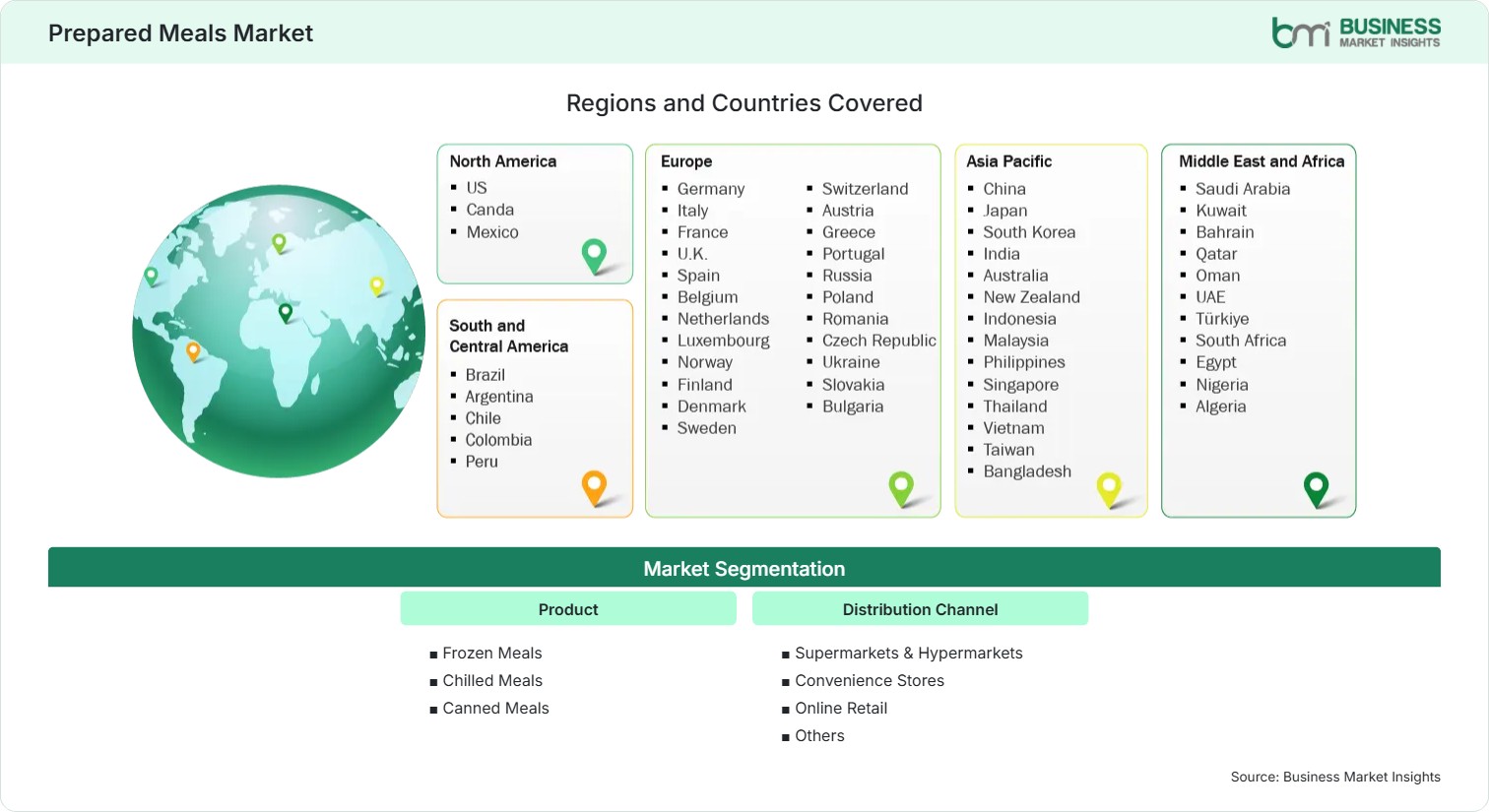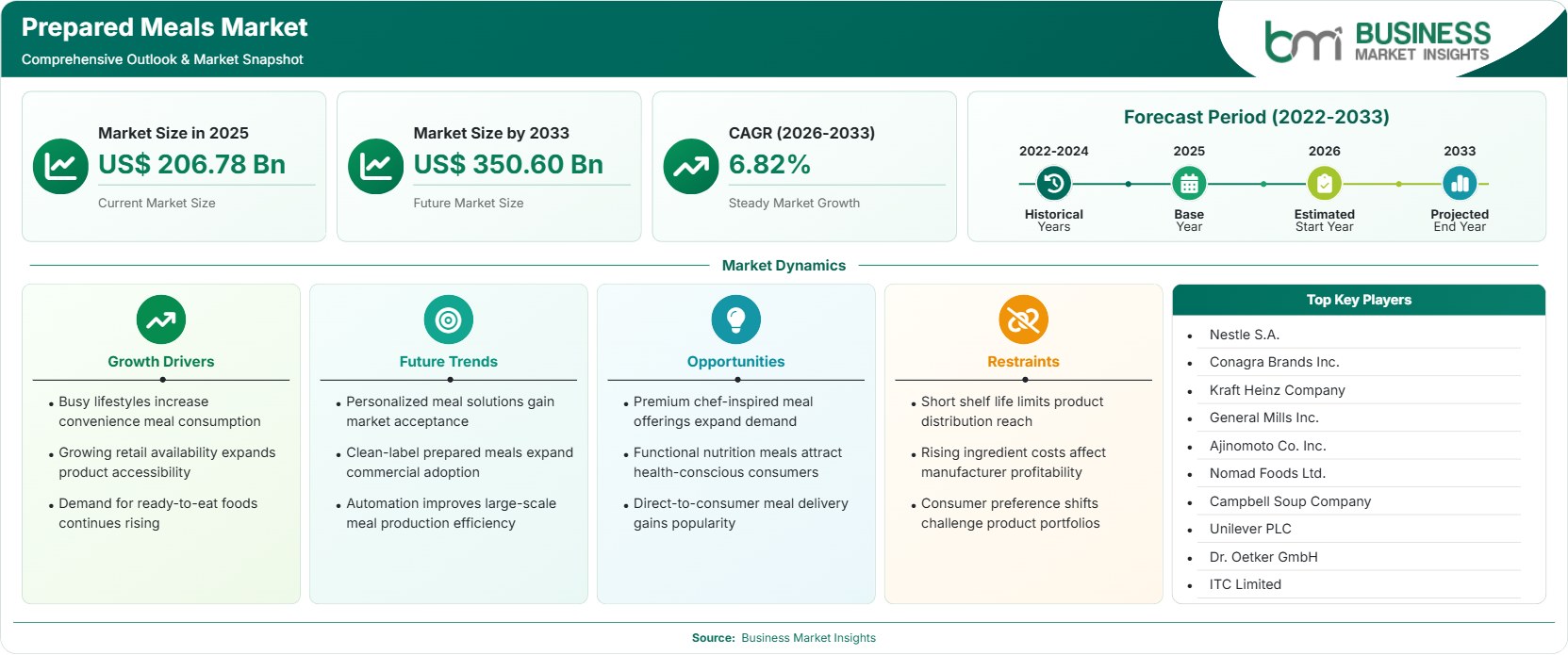
Prepared Meals Market Regional Highlights
North America Prepared Meals Market
North America accounts for 34%–37% Prepared Meals Market share in 2025 and is expected to register a CAGR of 6.2%–6.7% during 2026–2033. Strong consumer demand for convenient meal solutions, advanced cold-chain logistics, high retail penetration, and continuous product innovation continue supporting regional expansion. Manufacturers are investing in premium frozen meals, healthier formulations, and sustainable packaging while responding to evolving dietary preferences and changing purchasing behavior.
- Premium frozen meals continue gaining popularity as consumers seek convenience without compromising product quality or nutritional value.
- Retail chains continue expanding private-label prepared meal offerings to strengthen customer loyalty and competitive positioning.
- Growth in online grocery services improves consumer access to chilled and frozen meal products across urban markets.
- Investments in recyclable packaging technologies support sustainability commitments among leading food manufacturers.
US Prepared Meals Market
The United States contributes 82%–85% of North American revenue and is projected to expand at a CAGR of 6.3%–6.8% throughout the forecast period. High workforce participation, widespread retail availability, and continuous innovation in healthier convenience foods continue supporting stable market development.
- Busy lifestyles continue increasing household demand for convenient ready-to-eat meal products.
- Manufacturers continue launching high-protein, plant-based, and low-calorie meal options.
- Digital grocery platforms strengthen nationwide distribution of premium prepared meals.
- Cold-chain investments improve product quality and shelf availability across retail channels.
Europe Prepared Meals Market
Europe represents 26%–29% market share in 2025 and is expected to grow at a CAGR of 6.0%–6.5% during the forecast period. Consumer preference for premium convenience foods, mature retail infrastructure, and increasing demand for healthier meal options continue supporting market development. The United Kingdom remains the leading regional market, while Poland records the fastest growth owing to expanding food processing capacity and rising convenience food consumption.
- Premium chilled meal offerings continue expanding across supermarkets throughout Western Europe.
- Clean-label product development remains a major innovation focus among regional food manufacturers.
- Growing consumer preference for sustainable packaging influences product development strategies.
- Retail modernization strengthens availability of convenience meal products across Central Europe.
Asia Pacific Prepared Meals Market
Asia Pacific holds 28%–31% market share in 2025 and is projected to register the fastest 7.6%–8.2% CAGR through 2033. Urbanization, increasing disposable income, changing dietary habits, and rapid expansion of organized retail continue supporting regional demand. Japan remains the largest regional market, while India records the fastest growth because of expanding retail infrastructure, increasing working populations, and rising consumption of packaged convenience foods.
- Expanding supermarket chains continue increasing product accessibility across metropolitan areas.
- Busy urban lifestyles encourage greater adoption of frozen and chilled meal products.
- Domestic manufacturers continue introducing localized meal offerings to match regional taste preferences.
- E-commerce food retail platforms accelerate product availability throughout emerging economies.
Rest of World Prepared Meals Market
The Rest of World region accounts for 8%–10% market share in 2025 and is projected to expand at a CAGR of 6.4%–6.9% during 2026–2033. Growing retail investment, expanding cold storage infrastructure, and increasing urban populations continue supporting demand across Latin America, the Middle East, and Africa.
- Brazil leads regional demand through expanding supermarket networks and higher packaged food consumption.
- GCC countries continue investing in modern food processing and cold-chain logistics infrastructure.
- Rising household incomes improve consumer spending on premium convenience food products.
- Food manufacturers continue expanding localized prepared meal portfolios to address changing regional dietary preferences.