Powerships Market Regional Highlights
North America Powerships Market
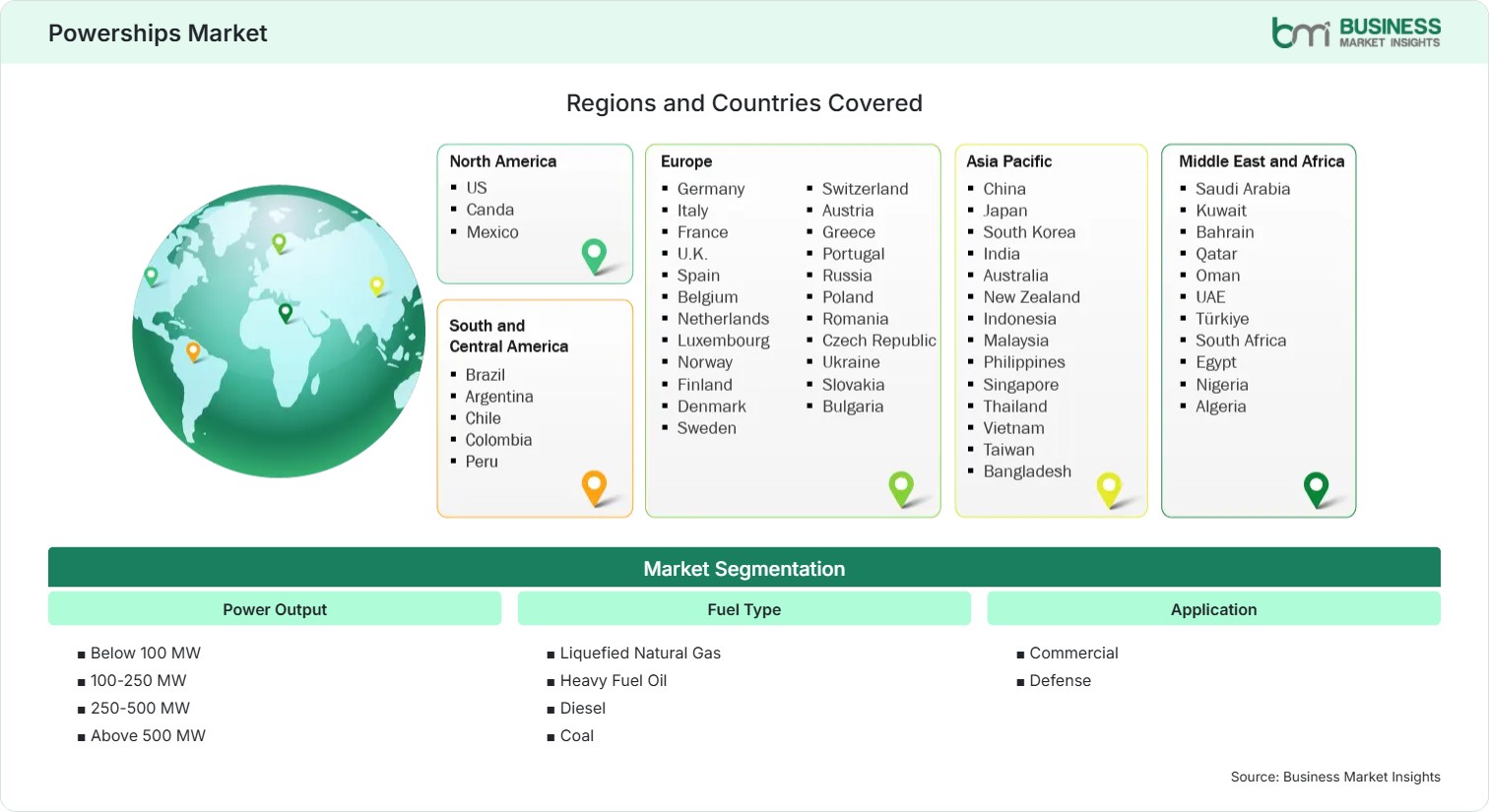
North America accounted for 22%–25% of global revenue in 2025 and is projected to register a 4.4%–4.9% CAGR during 2026–2033. Regional demand is supported by grid resilience initiatives, emergency power preparedness, hurricane recovery programs, and modernization of aging electricity infrastructure. Utilities increasingly deploy floating generation assets for temporary capacity, disaster response, and peak-load balancing. The Powerships Market share remains stable as governments and private utilities emphasize energy security, operational flexibility, and reliable backup power solutions across coastal regions.
- Utility operators continue evaluating floating generation assets for emergency grid stabilization following hurricanes, wildfires, and severe weather events that disrupt conventional electricity infrastructure.
- Increasing investment in LNG import terminals and cleaner marine fuels supports gradual adoption of lower-emission floating power technologies capable of improving environmental performance while maintaining operational flexibility.
- Defense organizations are exploring rapidly deployable marine-based power systems to strengthen energy resilience for strategic coastal installations and humanitarian response operations.
- Digital fleet management, predictive maintenance platforms, and remote operational monitoring continue improving asset utilization, reducing downtime, and lowering lifecycle operating costs.
US Powerships Market
The United States Powerships Market represented 82%–85% of North American revenue in 2025 and is expected to expand at a 4.6%–5.1% CAGR through 2033. Investments in grid modernization, emergency preparedness, coastal infrastructure resilience, and military logistics continue supporting deployment opportunities. Rising weather-related disruptions and increasing demand for flexible backup generation strengthen long-term utilization across public utilities and industrial operators.
- Emergency management agencies increasingly recognize floating generation assets as effective solutions for restoring electricity rapidly following hurricanes, floods, and prolonged transmission outages.
- Utility companies continue investing in flexible generation technologies capable of supporting seasonal demand fluctuations, planned maintenance shutdowns, and critical infrastructure operations.
- LNG infrastructure expansion strengthens opportunities for cleaner floating generation projects while supporting national decarbonization objectives and improved operational efficiency.
- Industrial facilities located near ports increasingly evaluate floating power systems to improve operational continuity while reducing dependence on constrained terrestrial electricity infrastructure.
Europe Powerships Market
Europe held 20%–23% Powerships Market share during 2025 and is forecast to grow at a 4.2%–4.7% CAGR between 2026 and 2033. Energy diversification, LNG infrastructure expansion, and increasing emphasis on temporary power reliability continue supporting market development. Germany remains the largest regional market owing to strong energy infrastructure investments, while Greece records the fastest growth with an estimated 5.2%–5.7% CAGR, supported by maritime energy projects and island electrification initiatives.
- Floating LNG terminals and temporary generation projects increasingly complement renewable energy integration, helping utilities maintain grid reliability during periods of variable electricity production.
- European shipbuilders continue developing more fuel-efficient floating power platforms utilizing advanced engine technologies and lower-emission marine fuels.
- Island electrification initiatives across Southern Europe encourage deployment of modular floating generation systems capable of providing dependable electricity without extensive onshore construction.
- Energy security concerns continue encouraging governments to diversify generation sources through rapidly deployable infrastructure capable of supporting emergency and seasonal electricity demand.
- Collaboration among marine engineering firms, utilities, and technology providers strengthens innovation in hybrid floating power solutions and digital asset management systems.
Asia Pacific Powerships Market
Asia Pacific represented 37%–40% of global demand in 2025 and is anticipated to register the fastest 5.7%–6.3% CAGR during 2026–2033. China leads regional demand through expanding coastal industrialization and energy infrastructure development, while Indonesia demonstrates the highest national growth at approximately 6.4%–6.9% CAGR, supported by island electrification, growing electricity demand, and investments in flexible floating generation capacity.
- Rising electricity consumption across rapidly urbanizing economies continues driving investment in floating generation systems capable of supplying dependable power with shorter deployment timelines.
- Governments increasingly utilize floating power plants to address electricity shortages affecting remote islands, coastal industrial zones, and developing infrastructure projects.
- Expanding LNG import facilities improve fuel availability while encouraging replacement of conventional heavy fuel oil systems with cleaner dual-fuel floating generation technologies.
- Industrial expansion across manufacturing, mining, and processing sectors increases demand for temporary and supplementary electricity generation supporting operational continuity.
- Regional shipbuilding expertise strengthens local production capabilities, reducing project costs while accelerating deployment of advanced floating power solutions.
Rest of World Powerships Market
The Rest of World region accounted for 17%–20% of revenue in 2025 and is expected to expand at a 5.1%–5.6% CAGR through 2033. South & Central America continue investing in emergency electricity infrastructure, while the Middle East & Africa remain important deployment regions because of rising electricity demand, energy diversification initiatives, and limited grid connectivity in several coastal markets.
- Governments increasingly deploy floating generation facilities to stabilize electricity supplies during infrastructure upgrades, seasonal demand peaks, and unexpected power shortages.
- Mining, oil & gas, and industrial processing projects located in remote coastal regions continue utilizing floating generation systems for reliable onsite electricity production.
- Humanitarian assistance programs increasingly evaluate mobile floating power assets for disaster recovery operations and emergency electricity restoration following extreme weather events.
- Investments in LNG import terminals and marine infrastructure improve long-term feasibility for lower-emission floating power projects across developing coastal economies.