
Plastic Waste Management Market Outlook: Size, Share, Trends, Growth Analysis, Competitive Landscape & Forecast, 2022-2033

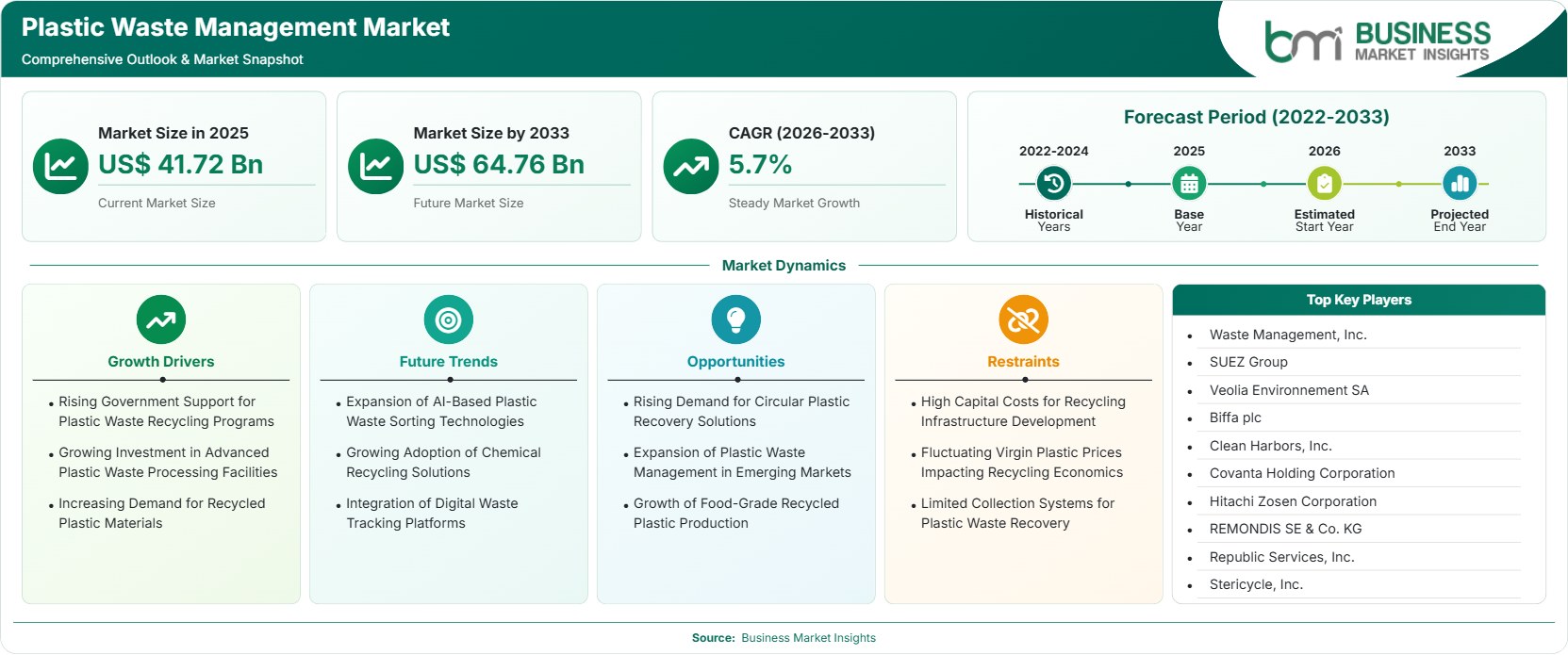
The Plastic Waste Management Market size was valued at US$ 41.72 billion in 2025 and is projected to reach US$ 64.76 billion by 2033, growing at a CAGR of 5.65% during 2026–2033. The increasing amount of plastic waste, stringent environmental laws, developing recycling facilities, and growing efforts on the part of corporations for sustainability have been propelling the growth of the market. Increasing investments in the circular economy and recycling technology have kept providing new opportunities for growth.

Report Coverage
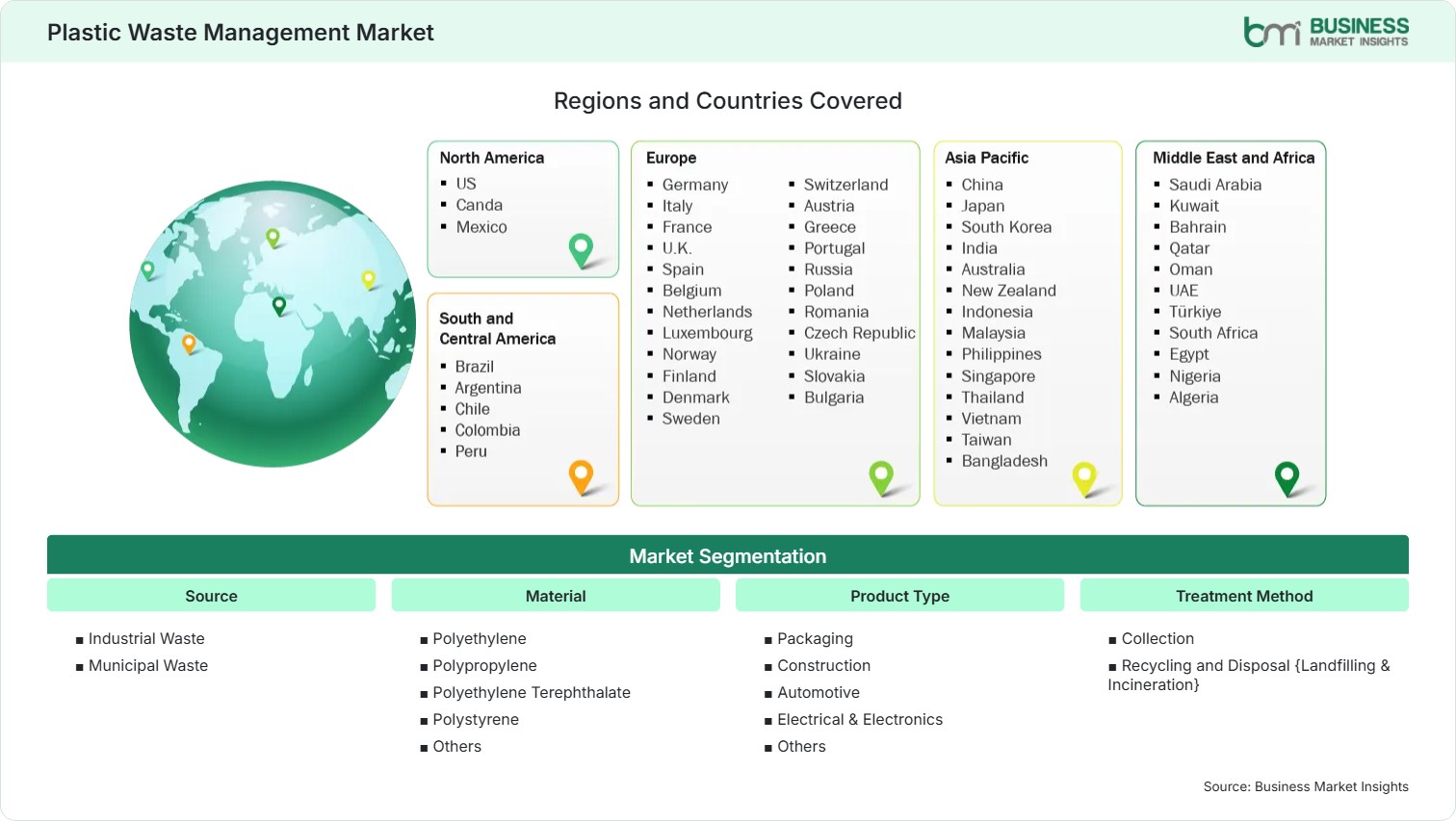
  • Source: Industrial Waste, Municipal Waste
  • Material: Polyethylene, Polypropylene, Polyethylene Terephthalate, Polystyrene, Others
  • Product Type: Packaging, Construction, Automotive, Electrical & Electronics, Others
  • Treatment Method: Collection, Recycling and Disposal {Landfilling & Incineration}
US$ 41.72 Bn Market size in 2025
US$ 64.76 Bn Market Size by 2033
5.7% CAGR, 2026 - 2033
2026-2033 Forecast Period

01 AI Overview

Plastic Waste Management Market Summary

  • North America Region: Holds a plastic waste management market share of 31–34% in 2025 and is projected to grow at a CAGR of 5.1–5.5% during 2026–2033. Strong recycling regulations, increasing investments in waste processing infrastructure, and corporate sustainability programs continue supporting market expansion. The U.S. market dominates the region with a share of 24–27% globally and is anticipated to register a CAGR of 5.2–5.6% through 2033, supported by advanced collection systems and private-sector investments.
  • Fastest Growing Region: Asia Pacific accounts for 27–30% of the global market in 2025 and is expected to register the fastest CAGR of 6.4–6.8% through 2033. Rapid urbanization, increasing municipal waste generation, government recycling initiatives, and expanding waste treatment capacity continue strengthening regional demand.
  • Leading Segment: Municipal Waste holds 56–59% of the market in 2025 and is forecast to grow at a CAGR of 5.8–6.2%. Rising urban populations, higher household plastic consumption, and strengthening municipal waste collection networks continue driving segment growth.
  • High Growth Segment: Recycling accounts for 39–42% of the market in 2025 and is projected to register a CAGR of 6.6–7.0% during the forecast period. Growing circular economy policies, recycled plastic demand, and investments in advanced recycling facilities continue accelerating adoption.
  • Key Market Opportunity: Growing investment in chemical recycling technologies, extended producer responsibility programs, and recycled plastic manufacturing creates long-term opportunities for waste management companies and recycling solution providers globally.
  • Major Market Players: Waste Management, Inc., SUEZ Group, Veolia Environnement SA, Biffa plc, Clean Harbors, Inc., Covanta Holding Corporation, Hitachi Zosen Corporation, REMONDIS SE & Co. KG, Republic Services, Inc., and Stericycle, Inc.
02 Strategic Insights

Plastic Waste Management Market: Strategic Insights

Plastic Waste Management Market Strategic Framework
FREE PDF
Request your free sample
Request free sample
03 Stakeholder View

Key Takeaways

  • The market ecosystem continues integrating waste collection companies, recycling operators, municipalities, packaging manufacturers, material recovery facilities, and downstream plastic processors to improve circular economy outcomes and resource utilization.
  • Recycling infrastructure and municipal waste management projects offer the strongest long-term investment opportunities as governments strengthen environmental regulations and increase funding for sustainable waste treatment.
  • Innovation is shifting toward AI-enabled waste sorting, chemical recycling, robotics, digital waste tracking, and automated material recovery systems that improve recycling efficiency and reduce landfill dependence.
  • Asia Pacific presents the strongest future investment potential due to expanding urban populations, increasing plastic consumption, supportive government policies, and rapid development of recycling infrastructure.
  • The plastic waste management market forecast suggest that the strategic partnerships between waste management companies, consumer goods manufacturers, and recycling technology providers are accelerating closed-loop recycling systems and improving recycled material availability.
  • Increasing demand for recycled plastic feedstock across packaging, construction, automotive, and electronics industries is encouraging continuous investments in advanced material recovery and processing technologies.
04 Geographic Outlook

Plastic Waste Management Market Regional Highlights

North America Plastic Waste Management Market

North America accounted for 31–34% of the global Plastic Waste Management Market share in 2025 and is projected to expand at a CAGR of 5.1–5.5% through 2033. The region benefits from well-developed waste collection infrastructure, stringent environmental regulations, strong private-sector participation, and growing investments in recycling technologies. Rising corporate sustainability commitments and increasing adoption of recycled plastics continue supporting long-term market development.

  • Extended Producer Responsibility policies continue encouraging investments in recycling infrastructure and improving collection efficiency across residential and commercial waste streams.
  • Companies are adopting AI-powered sorting systems and automated material recovery facilities to increase recycling rates while reducing operational costs.
  • Growing consumer preference for sustainable packaging continues driving demand for recycled plastics and supporting expansion of domestic recycling capacity.
  • Public-private partnerships are strengthening municipal waste collection systems while improving resource recovery and landfill diversion.

US Plastic Waste Management Market

The United States represents 24–27% of the global market and is expected to register a CAGR of 5.2–5.6% during the forecast period. Strong investments in recycling infrastructure, increasing state-level sustainability regulations, and expanding demand for recycled resin continue supporting industry growth. Technological advancements in material recovery facilities are further improving collection efficiency and recycling performance.

  • Major waste management companies continue expanding recycling facilities to process increasing volumes of post-consumer plastic waste.
  • Brand owners are increasing procurement of recycled plastics to achieve sustainability targets and comply with packaging commitments.
  • Investments in chemical recycling technologies continue creating opportunities for processing mixed and difficult-to-recycle plastic waste.
  • Digital waste monitoring systems are improving collection planning and operational efficiency across municipalities.

Europe Plastic Waste Management Market

Europe accounted for 25–28% of the global plastic waste management market in 2025 and is projected to grow at a CAGR of 5.6–6.0% through 2033. Ambitious circular economy policies, strict recycling targets, and increasing adoption of recycled plastics across manufacturing industries continue supporting market expansion. Regional investments in advanced recycling technologies and waste collection infrastructure further strengthen long-term growth prospects.

  • Germany remains the leading regional market, expanding at a CAGR of 5.5–5.9%, supported by advanced recycling infrastructure and strong environmental regulations.
  • France is expected to register the fastest growth with a CAGR of 5.9–6.3%, driven by circular economy initiatives and investments in recycling capacity.
  • Extended producer responsibility regulations continue increasing demand for efficient plastic collection and recycling systems.
  • Waste management companies are investing in digital monitoring technologies to improve operational performance and material recovery.
  • Increasing use of recycled polymers across packaging and automotive manufacturing supports higher recycling rates.

Asia Pacific Plastic Waste Management Market

Asia Pacific held 27–30% of the global market in 2025 and is anticipated to register the fastest CAGR of 6.4–6.8% through 2033. Rapid urbanization, growing municipal waste volumes, expanding recycling infrastructure, and supportive government initiatives continue strengthening regional demand. Increasing industrialization and plastic consumption further accelerate investments in waste collection and resource recovery systems.

  • China leads the regional market with a CAGR of 6.3–6.7%, supported by extensive waste management reforms and large-scale recycling investments.
  • India is projected to witness the fastest regional growth at a CAGR of 7.0–7.4%, driven by urban waste management initiatives and expanding recycling capacity.
  • Governments continue strengthening plastic waste regulations while promoting circular economy strategies across multiple industries.
  • Rising investments in automated sorting facilities improve recovery rates and operational efficiency.
  • Private companies continue expanding recycling operations to meet increasing demand for recycled plastic feedstock.

Rest of World Plastic Waste Management Market

The Rest of World accounted for 12–15% of the global market in 2025 and is projected to expand at a CAGR of 5.4–5.8% through 2033. Growing environmental awareness, improving waste collection infrastructure, and increasing government investments continue supporting market development across South & Central America and the Middle East & Africa.

  • Brazil remains the leading South & Central American market with a CAGR of 5.5–5.9%, supported by municipal recycling initiatives and waste infrastructure investments.
  • Saudi Arabia is expected to register the fastest regional growth with a CAGR of 6.1–6.5%, driven by sustainability programs and integrated waste management projects.
  • Governments continue encouraging private investment in recycling and waste treatment facilities to reduce landfill dependence.
  • Modern collection systems and improved public awareness campaigns continue enhancing plastic waste segregation and recycling efficiency.
  • Expansion of industrial recycling facilities creates new opportunities for recovered plastic utilization across manufacturing industries.
Global Market Geography
FREE PDF
Request your free sample
Request free sample
05 Segment Analysis

Plastic Waste Management Market Segmentation

Source

The Source segment defines the origin of plastic waste entering collection and treatment systems across industrial and municipal sectors. Municipal Waste dominated the market with a 56–59% share in 2025 and is projected to register a CAGR of 5.8–6.2% through 2033. Rising urban populations, increasing packaged product consumption, and expanding municipal collection infrastructure continue driving growth. The Plastic Waste Management Market scope is broadening as governments strengthen organized waste segregation and recycling initiatives.

  • Industrial Waste: Generated from manufacturing, processing, and commercial facilities, industrial plastic waste is relatively cleaner and easier to segregate, enabling higher recycling efficiency and greater recovery of valuable polymer materials.
  • Municipal Waste: Household and commercial plastic waste represents the largest waste stream owing to increasing urbanization, consumer packaging usage, and expanding municipal collection programs supporting higher recovery and recycling rates.

Material

Material type significantly influences recycling efficiency, processing technology, and end-use applications within the plastic waste value chain. Polyethylene remained the leading material category with a 34–37% market share in 2025 and is expected to expand at a CAGR of 5.9–6.3% through 2033. Increasing packaging consumption and improvements in sorting technologies continue supporting higher recovery rates. Growing Plastic Waste Management Market trends indicate increasing investments in processing multiple polymer streams through advanced recycling technologies.

  • Polyethylene: Widely recovered from packaging films, containers, and consumer products, polyethylene remains the most recycled polymer due to its high availability and extensive industrial applications.
  • Polypropylene: Demand for polypropylene recycling continues increasing across automotive components, consumer products, and industrial packaging as manufacturers seek sustainable material alternatives.
  • Polyethylene Terephthalate: PET recycling remains a major focus owing to extensive use in beverage bottles and food packaging, supported by growing investments in bottle-to-bottle recycling facilities.
  • Polystyrene: Although recycling remains technically challenging, technological advancements and dedicated collection programs are gradually improving recovery rates across packaging and insulation applications.

Product Type

The Product Type segment reflects end-use industries generating significant volumes of plastic waste requiring organized collection and processing. Packaging accounted for 48–51% of the market in 2025 and is projected to register a CAGR of 5.9–6.3% through 2033. Rising consumption of packaged food, beverages, healthcare products, and e-commerce shipments continues increasing plastic waste generation while strengthening recycling demand across global markets.

  • Packaging: The largest source of recyclable plastics, driven by extensive use of flexible packaging, bottles, containers, films, and protective materials across consumer and industrial applications.
  • Construction: Plastic waste generated from pipes, insulation materials, flooring, and building products creates opportunities for recycling into secondary construction materials and infrastructure applications.
  • Automotive: Vehicle manufacturing and end-of-life vehicle dismantling generate recyclable plastics that are increasingly reused in automotive components and engineering applications.
  • Electrical & Electronics: Recycling of electronic plastic components is expanding with stricter e-waste regulations and increasing recovery of high-value engineering polymers from discarded equipment.

Treatment Method

Treatment Method plays a critical role in improving resource recovery, reducing landfill dependency, and supporting circular economy objectives. Recycling represented 39–42% of the market in 2025 and is anticipated to record the fastest CAGR of 6.6–7.0% during the forecast period. Continuous investments in mechanical and chemical recycling technologies, combined with supportive environmental policies, continue strengthening long-term plastic waste management market growth and improving material recovery efficiency.

  • Collection: Efficient collection systems establish the foundation for successful plastic waste management by improving segregation, transportation, and consistent supply of recyclable materials to processing facilities.
  • Recycling: Mechanical and advanced chemical recycling technologies convert recovered plastic waste into reusable raw materials, supporting circular economy initiatives and reducing dependence on virgin plastic production.
  • Disposal (Landfilling & Incineration): Disposal remains necessary for non-recyclable and contaminated plastic waste, although governments increasingly prioritize waste reduction and recycling over conventional disposal methods.
06 Market Forces

Plastic Waste Management Market Dynamics

Key Market Drivers

Rising Government Regulations Supporting Plastic Waste Recycling

The tightening of regulatory environment in order to control plastic pollution and recover resources is stimulating the need for more effective waste management solutions. Initiatives like Extended Producer Responsibility, mandatory recycled content requirements, bans on single-use plastics, as well as higher landfill diversion targets are encouraging investments in collection, sorting and recycling processes. The regulatory environment is also fostering cooperation between municipalities, manufacturing companies, and waste management businesses to create circular material flows. These policy measures are continuously facilitating the development of the plastic waste management market through increased plastic recovery rates and adoption of new recycling technologies.

Growing Investments in Advanced Plastic Waste Processing Facilities

Investments by the public and private sectors in advanced waste processing plants have revolutionized the plastic waste management process with regard to its efficiency and capacity. Firms are investing in the upgrade of materials recovery plants using optical sorting, robotics, artificial intelligence, and automatic sorting systems in order to increase recycling efficiency and decrease contamination rates. Chemical recycling plants are also being set up for the processing of mixed plastics that cannot be recycled efficiently by mechanical recycling techniques. Such investments ensure supply chain resilience, increased quality of recovered materials, and compliance with environmental standards and demands for recycled plastics.

Increasing Demand for Recycled Plastics Across Manufacturing Industries

Manufacturing industries are increasingly incorporating recycled plastics into production processes to reduce dependence on virgin polymers and achieve sustainability targets. Packaging, automotive, construction, consumer goods, and electrical equipment manufacturers continue increasing procurement of recycled polyethylene, polypropylene, and PET materials to comply with evolving environmental regulations and corporate ESG commitments. Improvements in recycling technologies are enhancing material quality and expanding application opportunities for recycled plastics across high-value products. Growing industrial demand is encouraging continuous investment in recycling infrastructure, strengthening long-term plastic waste management market development while supporting broader circular economy objectives.

Key Market Opportunities

Rising Demand for Circular Economy Plastic Recovery Solutions

Circular economy programs have generated many business opportunities for those firms that specialize in integrated plastic recycling services. The governments, brands, and packagers prefer closed loop recycling facilities that can maximize the recycling rates while reducing landfill usage. With digital tracing of waste, improved sorting techniques, and chemical recycling methods, more efficient waste recovery rates can be achieved by utilizing recycled feedstock. Firms having investment in circular economy programs are well equipped to gain from increased sustainability efforts, higher recycled content demands, and environmental waste management services.

Expansion of Plastic Waste Management in Emerging Economies

Newly emerging economies keep on making investments in organized systems of waste collection, recycling facilities, and environmental management systems in order to cope with the growing production of plastic waste. Increasing urbanization, industrial growth, and high levels of consumption by consumers result in steady need for efficient waste management systems in Asia, Latin America, Africa, and some parts of the Middle East. Encouragement of the private sector by the governments in terms of infrastructural investments, PPPs, and legislation is taking place. This results in considerable growth prospects for firms that provide waste collection and recycling services.

Growing Investments in Food-Grade Recycled Plastic Production

Increasing regulatory approval for food-grade recycled plastics is encouraging investment in advanced recycling technologies capable of producing high-quality recycled resin. Beverage producers, food packaging manufacturers, and consumer goods companies are expanding the use of recycled PET and other food-contact materials to achieve sustainability commitments and comply with recycled content regulations. Advanced decontamination processes, improved sorting technologies, and enhanced quality control systems are supporting commercial production of food-grade recycled plastics. This trend creates attractive opportunities for recyclers and technology providers serving premium packaging and consumer product markets.

Market Restraints and Challenges

High Capital Costs for Advanced Plastic Recycling Infrastructure

Factor: Establishing advanced recycling facilities requires substantial investment in automated sorting systems, chemical recycling technologies, specialized processing equipment, quality control infrastructure, and environmental compliance measures, increasing overall project costs.

Impact: High capital requirements limit investment by small and medium-sized waste management companies, slow expansion of modern recycling capacity, and extend project payback periods. These financial barriers can delay technology adoption and restrict the availability of advanced recycling infrastructure, particularly in developing economies.

Fluctuating Prices of Virgin Plastics Affecting Recycled Materials

Factor: Volatility in crude oil prices directly influences the production cost of virgin plastics, creating unpredictable pricing dynamics between virgin and recycled polymer materials.

Impact: Lower virgin plastic prices reduce the cost competitiveness of recycled materials, discouraging procurement by manufacturers and affecting profitability for recycling companies. Price fluctuations also create uncertainty for long-term investment decisions, making it more challenging to expand recycling capacity and maintain stable demand for recycled plastic products.

07 Company Analysis

Competitive Landscape

The market is characterized by the presence of global environmental service providers, integrated waste management companies, recycling specialists, and technology developers focused on strengthening collection networks, improving recycling efficiency, and advancing circular economy solutions. The Plastic Waste Management Market analysis highlights increasing investments in automated material recovery facilities, chemical recycling technologies, and strategic collaborations to expand recycling capacity and improve resource recovery.

Company Name

Overview

Products and Services Relevant to this Market

Waste Management, Inc.

Leading North American environmental services company with integrated waste management and recycling operations.

Plastic waste collection, recycling services, landfill management, material recovery facilities, and sustainability solutions.

SUEZ Group

Global environmental services provider specializing in resource recovery and sustainable waste management.

Plastic recycling, waste collection, sorting technologies, resource recovery, and environmental consulting services.

Veolia Environment SA

Multinational environmental solutions provider with comprehensive waste treatment and recycling expertise.

Plastic waste management, recycling plants, hazardous waste treatment, material recovery, and circular economy solutions.

Biffa plc

UK-based waste management company serving municipal, commercial, and industrial customers.

Plastic collection, recycling, waste processing, landfill services, and resource recovery operations.

Clean Harbors, Inc.

Environmental and industrial services company with extensive waste treatment capabilities.

Industrial plastic waste collection, hazardous waste treatment, recycling, and environmental management services.

Covanta Holding Corporation

Sustainable waste management company focused on energy recovery and resource optimization.

Waste-to-energy solutions, plastic waste treatment, material recovery, and environmental services.

Hitachi Zosen Corporation

Engineering company providing advanced waste treatment and recycling technologies.

Recycling systems, waste processing equipment, resource recovery technologies, and environmental engineering solutions.

REMONDIS SE & Co. KG

International recycling and waste management company operating integrated resource recovery networks.

Plastic recycling, waste collection, material recovery, environmental services, and circular economy solutions.

Republic Services, Inc.

Major North American provider of waste collection and recycling services.

Plastic waste collection, recycling facilities, landfill operations, and sustainability programs.

Stericycle, Inc.

Environmental services company specializing in regulated and commercial waste management.

Commercial waste collection, plastic waste handling, recycling support, and environmental compliance services.


10 Trust & Transparency

Research Methodology

The market analysis combines proprietary research with secondary data from government agencies, company disclosures, regulatory filings, industry databases and expert interviews. Market estimates are validated through data triangulation, cross-market benchmarking and analyst review.

View Full Research Methodology

11 Questions Answered

Frequently Asked Questions

What does the plastic waste management market report cover?

The market report provides detailed insights into market size, regional performance, competitive landscape, segmentation, emerging trends, growth opportunities, restraints, and strategic developments influencing the industry through 2033.

Which source generates the largest volume of plastic waste?

Municipal waste represents the largest source due to increasing urbanization, higher household consumption of packaged products, and expanding municipal collection systems supporting organized waste management and recycling activities.

Which treatment method is expected to witness the fastest growth?

Recycling is projected to record the fastest growth because of increasing investments in mechanical and chemical recycling technologies, supportive government policies, and growing industrial demand for high-quality recycled plastic materials.

Which region dominates the market?

North America currently leads the market due to its well-developed waste collection infrastructure, advanced recycling facilities, strong regulatory framework, and significant investments by public and private waste management companies.

What are the driving factors for the Plastic Waste Management Market?

Growing plastic waste generation, stricter environmental regulations, increasing recycling investments, rising adoption of circular economy practices, and expanding demand for recycled plastics across manufacturing industries are the primary drivers supporting market growth.

Access the Full Plastic Waste Management Market Report

Get segment-level forecasts, regional estimates, competitive benchmarking, company profiles and downloadable Excel datasets.

Access the full Plastic Waste Management Market Report
350 pages PDF & Excel | 2026-08-03