
Plasma Fractionation Market Outlook: Size, Share, Trends, Growth Analysis, Competitive Landscape & Forecast, 2026-2033

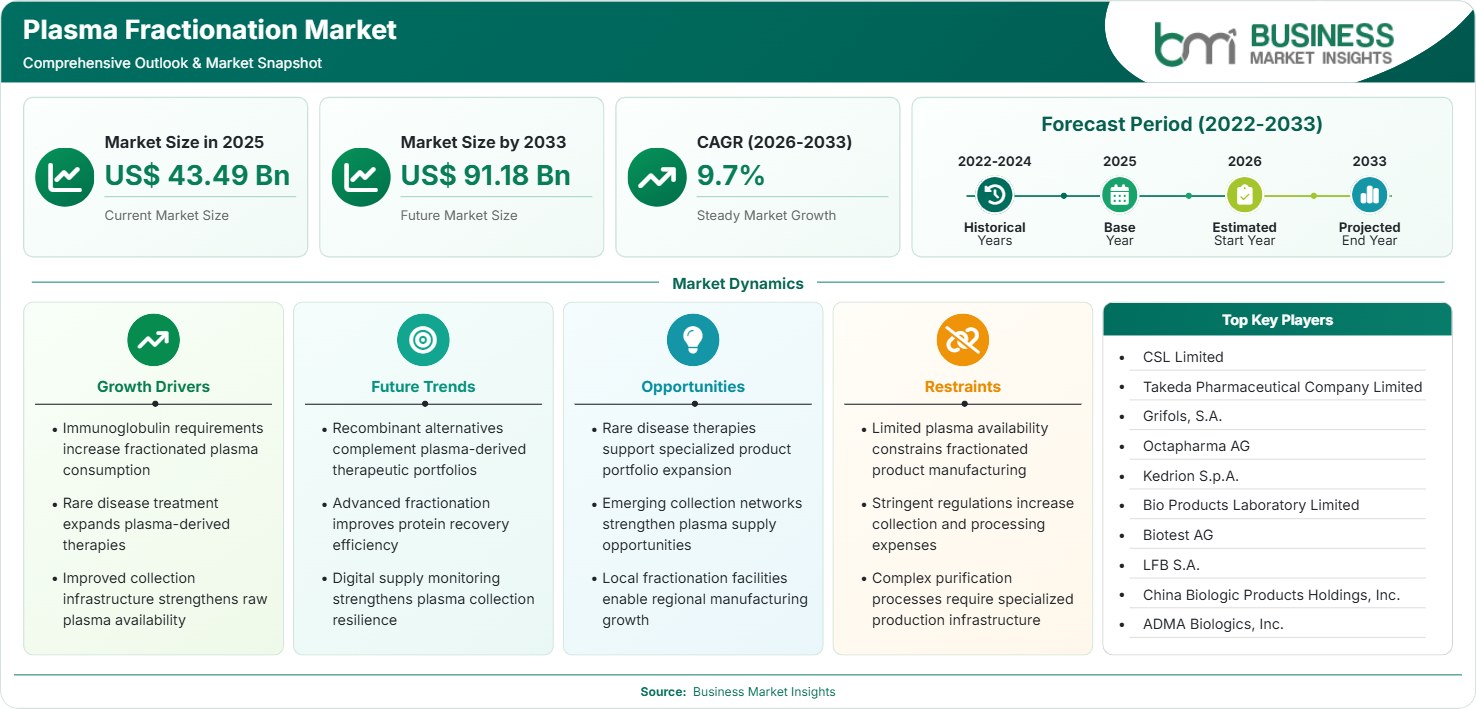
The Plasma Fractionation Market size was valued at US$ 43.49 Billion in 2025 and is projected to reach US$ 91.18 Billion by 2033, growing at a CAGR of 9.70% during 2026–2033, driven by rising immunoglobulin demand, rare disease treatment, plasma collection expansion, manufacturing innovation, and regional self-sufficiency initiatives.

Report Coverage
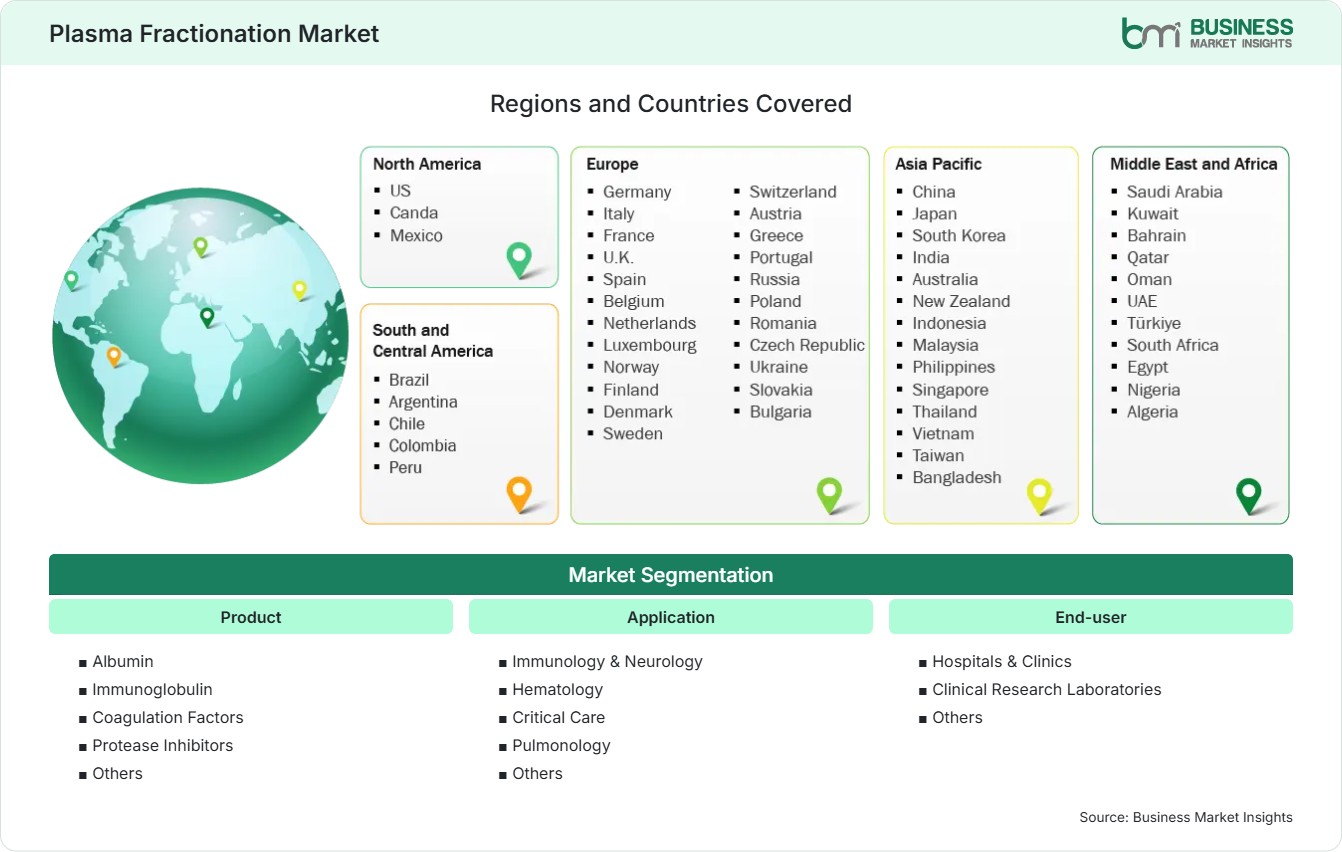
  • Product: Albumin, Immunoglobulin, Coagulation Factors, Protease Inhibitors, Others
  • Application: Immunology & Neurology, Hematology, Critical Care, Pulmonology, Others
  • End-user: Hospitals & Clinics, Clinical Research Laboratories, Others
US$ 43.49 Bn Market size in 2025
US$ 91.18 Bn Market Size by 2033
9.7% CAGR, 2026 - 2033
2026-2033 Forecast Period

AI Overview

Plasma Fractionation Market Summary

  • North America Region: North America holds a 54%–58% Plasma Fractionation Market share in 2025, growing at a 8.8%–9.3% CAGR during 2026–2033, supported by extensive plasma collection networks, high immunoglobulin utilization, sophisticated fractionation infrastructure, rare disease diagnosis, manufacturing investments, and strong healthcare reimbursement frameworks. The US dominates regional demand through established collection infrastructure, advanced manufacturing capacity, specialty-care utilization, and sustained immunoglobulin consumption, supporting an 8.9%–9.4% CAGR during 2026–2033.
  • Fastest Growing Region: Asia Pacific accounts for a 14%–17% share in 2025 and is projected to register a 10.8%–11.4% CAGR during 2026–2033, supported by expanding healthcare access, growing diagnosis of immune disorders, domestic plasma initiatives, rising hospital capacity, technology transfer, and investments in fractionation infrastructure.
  • Leading Segment: Immunoglobulin accounts for a 48%–52% share in 2025 and is expected to expand at a 10.0%–10.7% CAGR during 2026–2033, driven by autoimmune and neurological indications, primary immunodeficiency treatment, broader product availability, home-based administration, and increasing preference for differentiated immunoglobulin formulations.
  • High Growth Segment: Immunology & Neurology represents a 31%–35% Plasma Fractionation Market share in 2025 and is forecast to grow at a 10.2%–10.8% CAGR during 2026–2033, supported by expanding immunoglobulin indications, improved diagnosis, chronic neurological disease management, specialist treatment pathways, and greater awareness of immune-mediated disorders.
  • Key Market Opportunity: Domestic plasma programs, higher collection productivity, next-generation purification, SCIG adoption, and contract fractionation can reduce supply vulnerabilities while creating scalable opportunities across emerging healthcare systems and underserved patient populations.
  • Major Market Players: CSL Limited, Takeda Pharmaceutical Company Limited, Grifols, S.A., Octapharma AG, Kedrion S.p.A., Bio Products Laboratory Limited, Biotest AG, LFB S.A., China Biologic Products Holdings, Inc., and ADMA Biologics, Inc.
Strategic Insights

Plasma Fractionation Market: Strategic Insights

Plasma Fractionation Market Strategic Framework
FREE PDF
Request your free sample
Request free sample
Stakeholder View

Key Takeaways

  • The value chain increasingly favors vertically integrated companies controlling plasma collection, testing, fractionation, manufacturing, and commercialization. This model improves traceability, supply planning, capacity utilization, and responsiveness to shifts in immunoglobulin demand.
  • Immunoglobulin offers the strongest product opportunity because expanding neurological and autoimmune indications create recurring therapeutic demand. SCIG also provides an attractive route toward decentralized administration and improved treatment convenience.
  • Manufacturers are prioritizing higher protein recovery per litre, improved purification efficiency, automation, process analytics, and flexible manufacturing. These technologies can increase output without requiring equivalent growth in plasma collection volumes.
  • Asia Pacific provides a compelling investment case because large patient populations, improving diagnostic infrastructure, and government interest in domestic plasma supply are creating new collection, fractionation, and distribution opportunities.
  • Capital is increasingly directed toward collection networks and manufacturing capacity rather than standalone downstream products. Takeda's Indonesian initiative and CSL's Kankakee expansion illustrate the strategic value placed on supply security and productivity.
  • Supply sustainability will increasingly depend on balancing donor recruitment, collection productivity, manufacturing yield, therapeutic prioritization, and portfolio diversification rather than relying solely on additional collection centers.
Geographic Outlook

Plasma Fractionation Market Regional Highlights

North America Plasma Fractionation Market

North America held a 54%–58% Plasma Fractionation Market share in 2025 and is projected to grow at an 8.8%–9.3% CAGR through 2033. The region benefits from extensive collection infrastructure, mature reimbursement, established manufacturers, and high immunoglobulin utilization. The United States remains the principal regional market, while Canada supports demand through specialized healthcare services. Plasma-derived therapies remain strategically important because collection and manufacturing capabilities are deeply integrated across the regional value chain, strengthening supply responsiveness.

  • Established donor networks provide manufacturers with comparatively strong access to source plasma, supporting continuous production planning and portfolio reliability.
  • Immunoglobulin utilization across immunology and neurology remains a major demand driver, while albumin and coagulation products maintain important hospital applications.
  • Advanced fractionation facilities increasingly emphasize process optimization, yield improvement, automation, and quality-control systems to improve output from available plasma.
  • Regulatory oversight and sophisticated pharmacovigilance systems support product quality, while established reimbursement pathways facilitate adoption of specialty plasma-derived therapies.

US Plasma Fractionation Market

The US accounted for 88% to 91% of North America’s revenue share and is projected to grow at a CAGR of 8.9% to 9.4% in the Plasma Fractionation Market through 2033. These attributes have been made possible by virtue of advanced plasmapheresis systems, specialized treatment centers, a robust biotechnology sector, and established manufacturing chains. The US has remained significant due to its plasma collection system, which helps produce plasma for both domestic consumption and export. CSL Plasma has almost 330 collection centers worldwide.

  • Large-scale plasma collection networks support the country's role as a major source of plasma for fractionation and downstream therapeutic manufacturing.
  • Manufacturers are investing in collection productivity and plant efficiency, including next-generation equipment and process technologies designed to improve yield.
  • Strong demand for immunoglobulin therapies across immune-mediated and neurological conditions supports recurring utilization and sustained manufacturing investment.

Europe Plasma Fractionation Market

Europe accounts for 20%–23% market share in 2025 and is anticipated to grow at a CAGR of 9.0%–9.6% from 2026 to 2033. Germany and France are considered major markets owing to their highly developed healthcare facilities, specialist treatments, and use of plasma therapies. Spain is one of the fastest-growing markets, driven by the development of specialty care. The focus of European companies on collecting domestic plasma is evident in the UK’s plasma medicines scheme.

  • Germany leads regional demand through strong hospital infrastructure, specialist immunology services, and established access to immunoglobulin and albumin therapies.
  • France benefits from sophisticated public healthcare infrastructure and domestic fractionation capabilities, supporting resilient supply for essential plasma-derived medicines.
  • Spain is projected to grow at a 10.0%–10.6% CAGR in the Plasma Fractionation Market, supported by expanding diagnosis, specialist treatment, and investment in healthcare capacity.
  • The UK is strengthening domestic plasma utilization after lifting restrictions on UK plasma for immunoglobulin and albumin manufacturing.
  • Octapharma's appointment as sole fractionator for the UK's plasma-for-medicines program demonstrates growing emphasis on domestic plasma value capture.

Asia Pacific Plasma Fractionation Market

Asia Pacific is expected to account for 14%–17% market share in 2025 and to register a CAGR of 10.8%–11.4% from 2025 to 2033 in the Plasma Fractionation Market, making it the most rapidly growing region. China and Japan dominate the regional market in terms of demand, whereas India and Indonesia have high growth potential. Increasing diagnoses, rising healthcare spending, domestic manufacturing aspirations, and the growth of specialty care facilities are among the factors motivating investments in collection and fractionation.

  • China leads regional consumption through its large patient population, expanding specialist care, and increasing demand for albumin and immunoglobulin-based therapies.
  • Japan combines mature healthcare infrastructure with strong plasma-derived therapy utilization and continued investment in domestic manufacturing capabilities.
  • India is projected to register a 9.8%–10.5% CAGR, supported by growing healthcare access, specialist diagnosis, and demand for immunoglobulin, albumin, and coagulation therapies.
  • Indonesia is emerging as a strategic production location following its 2026 plasma fractionation license and planned national plasma ecosystem investment.

Rest of World Plasma Fractionation Market

The Rest of World accounted for around 7%–9% in 2025 and is projected to register an 8.0%–8.6% CAGR through 2033. South & Central America have benefited from advances in specialty healthcare facilities and rising awareness of plasma-derived products, but the Middle East & Africa continue to lag. Brazil and Saudi Arabia are the dominant countries in their respective regions for the product, but Colombia and the UAE represent greater growth potential.

South & Central America are focusing on improving the availability of immunoglobulins, albumin, and coagulation factors by strengthening procurement and healthcare systems. Brazil remains the leading country, but Colombia will register a 9.2%–9.8% CAGR in the Plasma Fractionation Market. The Middle East & Africa are dominated by Saudi Arabia and the UAE due to their stronger healthcare infrastructure and national healthcare policies that encourage local manufacturing.

  • Brazil benefits from its large healthcare system and increasing need for specialty therapies, making it the principal market across South and Central America.
  • Colombia's specialty-care expansion and improving diagnostic capacity support a projected 9.2%–9.8% CAGR, creating opportunities for suppliers and distributors.
  • Saudi Arabia leads Middle Eastern demand through healthcare modernization, specialist hospital expansion, and government-backed pharmaceutical localization initiatives.
  • The UAE offers a 9.0%–9.6% CAGR opportunity, supported by advanced hospitals, medical tourism, and investment in specialized pharmaceutical infrastructure.
  • African markets remain supply constrained, creating opportunities for regional procurement partnerships, donor programs, contract fractionation, and technology-supported distribution models.
Global Market Geography
FREE PDF
Request your free sample
Request free sample
Segment Analysis

Plasma Fractionation Market Segmentation

Product

The Products segment accounted for 70%–74% market share in 2025 and is anticipated to exhibit a CAGR of 9.4%–10.0% in the Plasma Fractionation Market during 2026–2033. The high popularity of immunoglobulin is attributed to growing applications in neurology and immunology, and albumin continues to be widely used by hospitals. The use of coagulation factors is specific to certain types of bleeding disorders, and that of protease inhibitors is limited to certain lung and hereditary diseases.

  • Albumin: Albumin remains essential in critical care, fluid management, burns, liver-related conditions, and surgery. Demand benefits from hospital utilization and continued need for reliable plasma-derived volume replacement therapies.
  • Immunoglobulin: Immunoglobulin demand spans primary immunodeficiency, autoimmune disease, and neurological disorders. IVIG remains widely used, while SCIG adoption expands through home administration, flexible dosing, and patient convenience.
    • Intravenous Immunoglobulin (IVIG): IVIG supports acute and chronic immune-mediated conditions through hospital and infusion-center administration. Established clinical pathways, broad indications, and recurring treatment cycles sustain demand across specialties.
    • Subcutaneous Immunoglobulin (SCIG): SCIG enables decentralized administration and greater patient autonomy. Smaller-volume formulations, flexible schedules, and home-based treatment models encourage adoption among suitable long-term immunoglobulin users.
  • Coagulation Factors: Coagulation products address inherited and acquired bleeding disorders. Demand remains linked to diagnosis, prophylactic treatment, replacement therapy, surgical management, and improved access to specialized hematology services.
    • Factor IX: Factor IX products support hemophilia B management through replacement therapy and prophylaxis. Increasing diagnosis and long-term disease management encourage reliable availability across specialist treatment networks.
    • Factor VIII: Factor VIII remains important for hemophilia A treatment. Demand is supported by prophylaxis, individualized dosing, pediatric diagnosis, and continued access to replacement therapies within specialized hematology systems.
    • Prothrombin Complex Concentrates: Prothrombin complex concentrates provide rapid coagulation-factor replacement in selected bleeding and anticoagulation-reversal settings. Their hospital use depends on emergency protocols, clinical guidelines, and specialist availability.
    • Fibrinogen Concentrates: Fibrinogen concentrates address acquired or congenital fibrinogen deficiencies and selected bleeding situations. Their value stems from targeted replacement, controlled dosing, and increasing recognition of fibrinogen management.
  • Protease Inhibitors: Protease inhibitors serve selected hereditary and pulmonary disorders. Demand depends on disease recognition, specialty diagnosis, long-term therapy requirements, and availability of plasma-derived replacement treatments.
  • Others: Other products include specialized plasma proteins and emerging fractionated therapies. Their contribution reflects niche clinical requirements, product approvals, and manufacturers' ability to commercialize lower-volume therapeutic proteins.

Application

The Application segment was led by Immunology & Neurology, accounting for 31%-35% market share in 2025 and registering 10.2% -10.8% CAGR from 2026 to 2033. The rise in immunoglobulin applications, the rising incidence of immune-mediated neurological conditions, and expert treatments can be credited with the dominant position. Hematology, critical care, and pulmonology form other drivers through coagulation factors, albumin, and protease inhibitors, respectively.

  • Immunology & Neurology: Immunology and neurology drive immunoglobulin consumption through primary immunodeficiency, autoimmune disease, CIDP, myasthenia gravis, and related immune-mediated neurological conditions.
  • Hematology: Hematology demand centers on coagulation factors and immunoglobulins, supported by hemophilia management, bleeding-disorder diagnosis, prophylaxis, and specialist treatment programs.
  • Critical Care: Critical care applications rely on albumin and selected coagulation products for complex hospital cases, including fluid management, severe bleeding, surgery, trauma, and intensive care.
  • Pulmonology: Pulmonology supports protease inhibitor utilization, particularly in selected hereditary deficiency disorders. Improved diagnosis and long-term specialty management create opportunities for plasma-derived therapies.
  • Others: Other applications include specialized indications where plasma proteins provide targeted clinical value. Demand depends on regulatory approvals, specialist awareness, and healthcare-system treatment protocols.

End-user

In the End-user category, the Hospitals and Clinics sub-segment is the most dominant, accounting for 68%-72% market share in 2025 and growing at a CAGR of 9.1%- 9.7% through 2033 in the Plasma Fractionation Market. Hospitals handle cases in immunology, hematology, critical care, and neurology that require plasma-based therapy. The other end users are becoming increasingly significant because of their association with clinical laboratories.

  • Hospitals & Clinics: Hospitals and clinics remain the principal users because they manage infusion therapies, critical-care interventions, hematology treatment, and complex immune-mediated disorders requiring specialist oversight.
  • Clinical Research Laboratories: Clinical research laboratories support development, characterization, quality testing, and clinical evaluation of plasma-derived products, contributing to improved purification, formulation, and therapeutic innovation.
  • Others: Other users include specialty treatment settings and decentralized care environments. Their role is expanding as SCIG and patient-centric administration models reduce dependence on conventional infusion locations.
Market Forces

Plasma Fractionation Market Dynamics

Key Market Drivers

Rising Immunoglobulin Demand Across Immune and Neurological Disorders

The demand for immunoglobulins is the main structural driver as these products are used to treat primary immunodeficiency, autoimmune diseases, and neurological problems. The 2025 report highlighted increasing demand for immunoglobulins, low plasma supply, and high manufacturing complexity as significant factors affecting the market's supply. The same information sources confirm that CIDP, myasthenia gravis, Guillain-Barré syndrome, and other conditions that require immune-based treatments are now among well-established uses. In addition, with improvements in diagnostics and approval for the treatment of new indications, the number of patients who undergo treatment may increase regardless of population growth. Thus, the Plasma Fractionation Market growth now depends on the use of specialty care services in addition to conventional hospital volume.

Expansion of Plasma Collection and Fractionation Infrastructure

Plasma availability directly determines the quantity of plasma-derived medicines that manufacturers can produce. WHO reported approximately 21.5 million litres of plasma fractionated by 36 reporting countries during the latest reporting period, while only 49 of 168 reporting countries produced plasma-derived medicines using domestically collected plasma. This imbalance creates an incentive to develop collection centers, donor recruitment systems, testing infrastructure, and regional fractionation capacity. Vertically integrated companies will be able to benefit from efficiencies in collection, production, and marketing, thereby increasing supply visibility and reducing dependence on other sources. For example, CSL has a vast network of plasma collection centers and uses plasma collected at its vertically integrated production facilities. Hence, infrastructure expansion is one of the most important issues in the Plasma Fractionation Market, especially for self-reliant countries.

Growing Prevalence and Diagnosis of Rare and Chronic Diseases

The chronic nature of rare and chronic diseases creates a repetitive need for plasma-based therapies, as there is a need for continued treatment rather than a one-time or short-term solution. Some of the key areas of therapy include immunodeficiency, hemophilia, hereditary angioedema, alpha-1 antitrypsin deficiency, and immune-mediated neurological diseases. In a 2025 clinical review, plasma-derived therapies were identified as key treatments in all these disease areas. There has been an increase in specialized diagnostics, which has increased the number of diagnosed patients, especially in developing healthcare systems where underdiagnosis has been a challenge. Increased awareness in neurology, immunology, hematology, and pulmonology will aid referrals and initiate treatment. The Plasma Fractionation Market trends include the development of a specialized product portfolio, a patient support program, and novel administration methods.

Key Market Opportunities

Domestic Plasma Self-Sufficiency Programs

Governments are becoming more aware of the strategic nature of plasma as a healthcare resource, which is creating potential for ecosystems around domestic collection and fractionation. This is because the 2025 policy guidance issued by the WHO explicitly considers the cross-border movement of domestic plasma for processing outside the country through contract and toll fractionation arrangements. This means that a country with limited manufacturing capacity could realize greater value from its domestic plasma by using specific external processing facilities. This includes opportunities throughout the entire process of donor mobilization, building of collection centers, testing, cold chain management, contract manufacturing, and procurement. An example of this comes from Indonesia, where in July 2026, Takeda and the Indonesian government signed an agreement for plasma fractionation and a first investment of $30 million. These developments suggest that Plasma Fractionation Market Forecasts will increasingly incorporate national resilience programs as investment catalysts rather than treating plasma supply solely as a commercial input.

Next-Generation Yield Optimization and Process Automation

Manufacturers can increase therapeutic output by improving recovery from each liter of plasma, making yield optimization an attractive capital-allocation priority. Modern chromatography, process analytics, automation, and improved purification can reduce material losses while supporting consistent product quality. The Company made strides in optimizing immunoglobulin yield per liter in FY2026. This will partly relieve the company of the need to increase collection volume to match demand for its products. Value creation is not limited to immunoglobulin yield alone; value is also created through digitized monitoring, predictive maintenance, automated quality systems, and process-control platforms. Thus, there is value creation beyond pharmaceutical companies, including equipment and technology suppliers. In the long run, increased yield will improve economics, supply resilience, and access to plasma-based products in restricted markets.

Expansion of SCIG and Patient-Centric Administration Models

Subcutaneous immunoglobulin provides an important opportunity to shift selected chronic treatments toward more flexible administration. Home-based treatment can reduce dependence on infusion centers and may improve convenience for patients requiring long-term immunoglobulin therapy. Manufacturers are developing differentiated formulations and delivery approaches that aim to reduce administrative burden, enable flexible scheduling, and improve the patient experience. The Phase 2/3 data on TAK-881 from Takeda in 2026 showed pharmacokinetic and immunogenicity profiles similar to those of HYQVIA in patients with primary immunodeficiency, with potential benefits in injection site, administration frequency, and infusion duration. This advancement in drug development allows decentralized health care delivery and creates opportunities for specialty pharmacies, home care services, adherence technology, and patient services to flourish.

Market Restraints and Challenges

Plasma Supply Constraints and Collection Dependence

Factor: Low plasma availability and reliance on donors. Plasma-based medicines require human plasma as an ingredient; hence, there is always a biological limitation that cannot be overcome by conventional artificial manufacturing methods. WHO observed that of the 168 nations that provided information, 119 either had to import their plasma-based medicines or had none at all during the reporting period. Impact: Unpredictability of supply, prioritization, and manufacturing limitations. In a 2025 assessment, increasing demand, inadequate plasma procurement, difficult regulatory policies, and the complexity of the manufacturing process were cited as some of the causes of the shortage, which includes immunoglobulins. Disruptions in the process of collecting plasma can disrupt the process of manufacturing since purification processes are very lengthy.

Manufacturing Complexity and Regulatory Burden

Factor: Multi-stage fractionation process and high-quality standards. Plasma-based products undergo various tests, purification processes, viral safety precautions, validated processes, traceability, and regulatory approval procedures. Long manufacturing times may arise because biological source material undergoes multiple stages of processing and quality control. Impact: Heavy capital requirements, long production lead times, and challenges in quickly scaling up production. Based on a 2025 study, the production of immunoglobulins takes about 7-12 months, whereas other biological products require much less time. Therefore, any modification to the regulations that relates to donor suitability, plasma transfer, production processes, and product approval will affect the supply chain's economics. Smaller organizations find it hard to meet these regulations, but large firms have already built production facilities and acquired regulatory experience.

Company Analysis

Competitive Landscape

The Plasma Fractionation Market analysis indicates a competitive environment shaped by control over plasma supply, fractionation capacity, therapeutic portfolios, geographic reach, and manufacturing efficiency. Leading companies increasingly emphasize integrated value chains and capacity expansion, while specialists compete through focused product portfolios, regional access, and niche plasma-derived therapies.

Company Name

Overview

Products and Services relevant to this market

CSL Limited

Global biotechnology company with an integrated plasma collection and biotherapy platform serving rare and serious diseases.

Plasma collection, immunoglobulins, albumin, coagulation therapies, protease inhibitors, fractionation, manufacturing, and specialty patient-support services.

Takeda Pharmaceutical Company Limited

Global biopharmaceutical company with an established plasma-derived therapies business and integrated plasma collection capabilities.

Immunoglobulins, albumin, coagulation products, plasma collection, fractionation, manufacturing, clinical development, and patient-support programs.

Grifols, S.A.

Plasma-focused healthcare company with extensive collection, fractionation, diagnostic, and biopharmaceutical operations.

Albumin, immunoglobulins, alpha-1 antitrypsin, coagulation products, plasma collection, fractionation, and specialized diagnostics.

Octapharma AG

Swiss healthcare group specializing in human proteins and plasma-derived and recombinant therapies.

Immunoglobulins, coagulation factors, albumin-related products, plasma fractionation, specialty medicines, and manufacturing services.

Kedrion S.p.A.

Italian biopharmaceutical company focused on plasma-derived therapeutic products and international specialty markets.

Immunoglobulins, albumin, coagulation factors, specialty plasma proteins, fractionation, manufacturing, and distribution.

Bio Products Laboratory Limited

UK-based plasma-derived medicines manufacturer with expertise in immunoglobulin and albumin production.

Human albumin, immunoglobulin products, plasma fractionation, manufacturing, quality systems, and supply to healthcare markets.

Biotest AG

German biopharmaceutical company focused on plasma proteins and therapies for immune and blood-related conditions.

Immunoglobulins, coagulation factors, albumin-related therapies, plasma collection, fractionation, and specialty biological medicines.

LFB S.A.

French biopharmaceutical group specializing in plasma-derived medicines and recombinant therapeutic proteins.

Immunoglobulins, albumin, coagulation factors, specialty plasma proteins, fractionation, and advanced biological manufacturing.

China Biologic Products Holdings, Inc.

Plasma products company focused on collection, processing, and commercialization within the Chinese healthcare ecosystem.

Albumin, immunoglobulins, coagulation products, plasma collection, fractionation, quality testing, and distribution.

ADMA Biologics, Inc.

US-based biopharmaceutical company focused on plasma-derived immune therapies for patients with immune deficiencies.

Specialty immunoglobulin products, plasma sourcing, fractionation, purification, manufacturing, and commercialization for immune disorders.

Trust & Transparency

Research Methodology

The market analysis combines proprietary research with secondary data from government agencies, company disclosures, regulatory filings, industry databases and expert interviews. Market estimates are validated through data triangulation, cross-market benchmarking and analyst review.

View Full Research Methodology

Access the Full Plasma Fractionation Market Report

Get segment-level forecasts, regional estimates, competitive benchmarking, company profiles and downloadable Excel datasets.

Access the full Plasma Fractionation Market Report
350 pages PDF & Excel | 2026-09-21
Similar Research

Related Market Reports