
Pharmaceutical-Grade Probiotics Market Outlook: Size, Share, Trends, Growth Analysis, Competitive Landscape & Forecast, 2026–2033

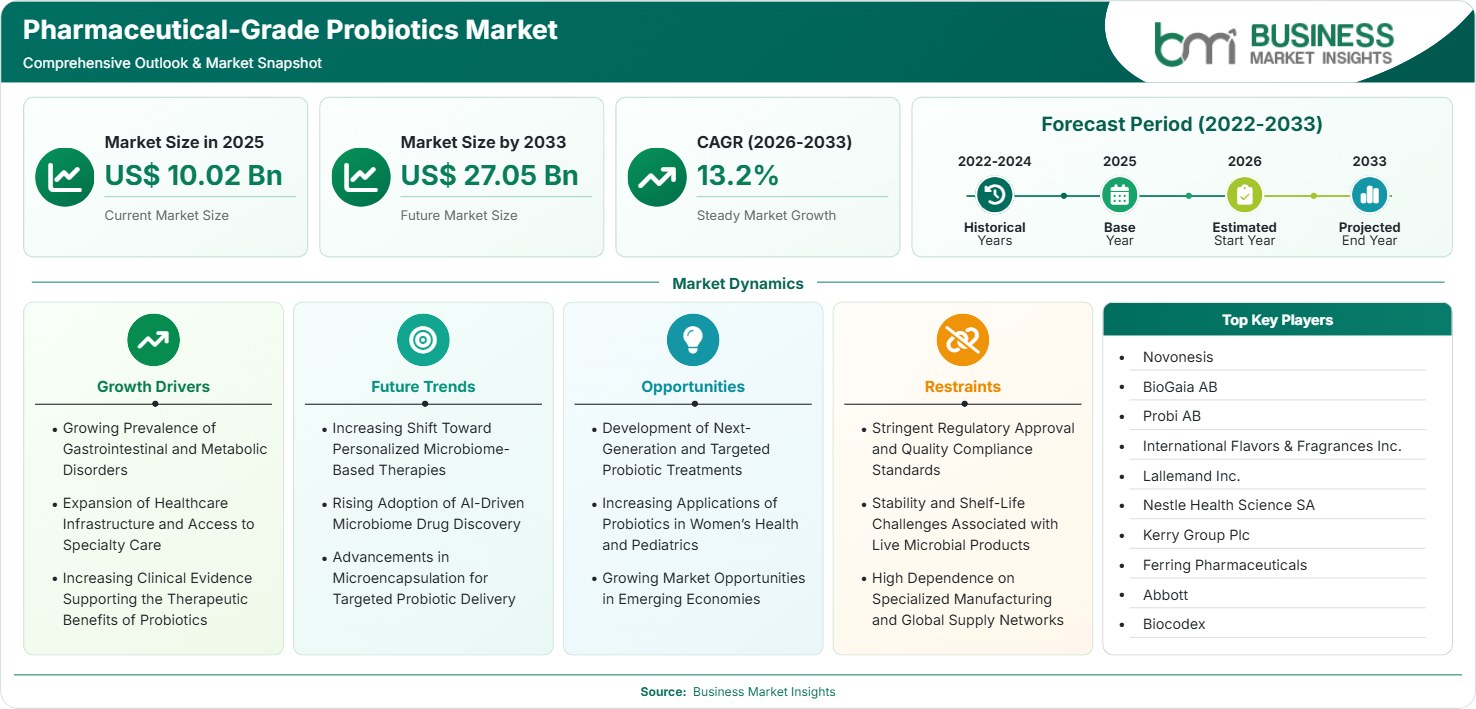
The Pharmaceutical-Grade Probiotics Market size was valued at US$ 10.02 Billion in 2025 and is projected to reach US$ 27.05 Billion by 2033, growing at a CAGR of 13.2% during 2026–2033. Rising gastrointestinal disease prevalence, expanding healthcare infrastructure, growing physician acceptance of microbiome-based interventions, and increasing clinical evidence supporting probiotic efficacy are accelerating demand.

Report Coverage
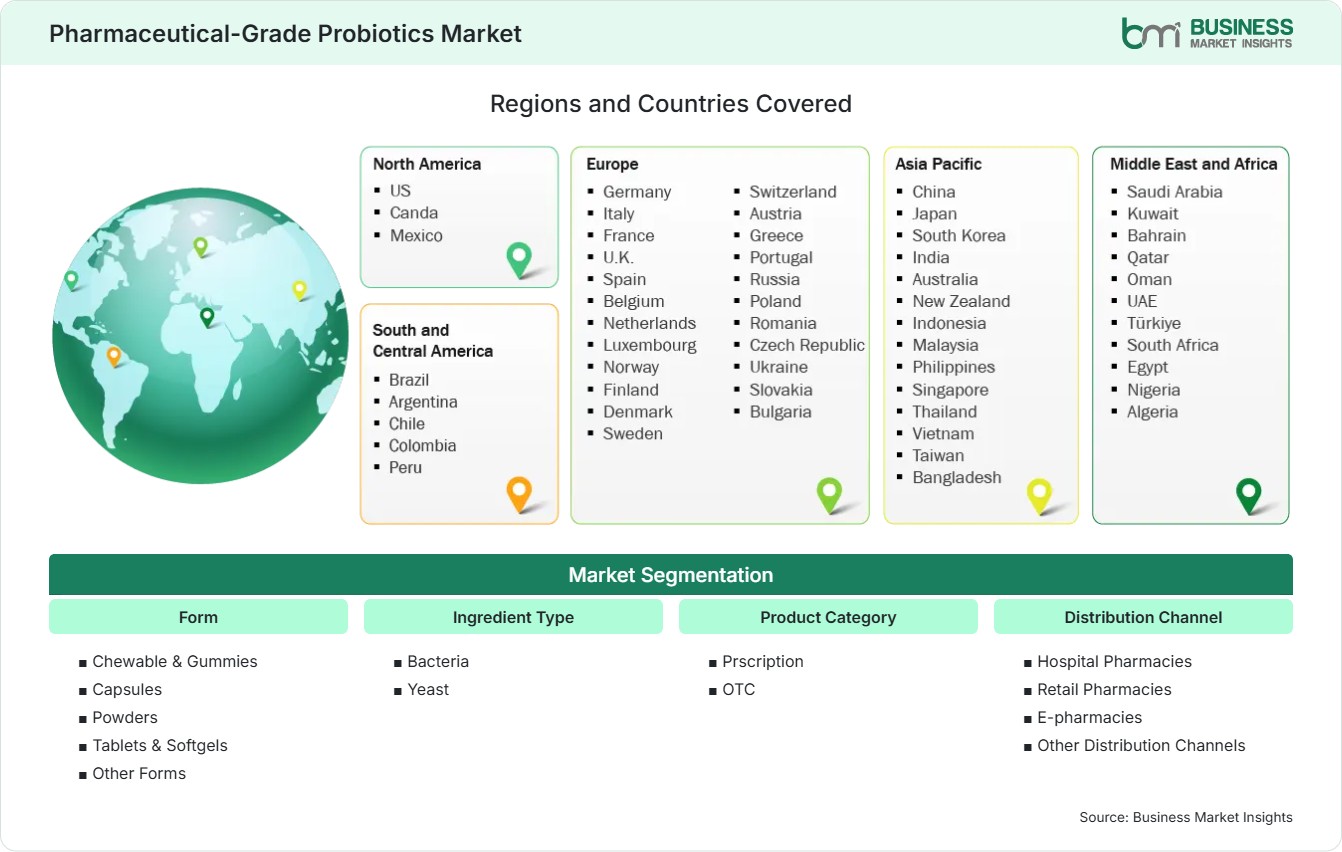
  • Form: Chewable & Gummies, Capsules, Powders, Tablets & Softgels, Other Forms
  • Ingredient Type: Bacteria, Yeast
  • Product Category: Prscription, OTC
  • Distribution Channel: Hospital Pharmacies, Retail Pharmacies, E-pharmacies, Other Distribution Channels
  • Application: Sports Fitness, Antibiotic-associated Dysbiosis Recovery, Energy & Weight Management, General Health, Bone & Joint Health, Gastrointestinal Health, Immunity, Cardiac Health, Diabetes, Anti-Cancer, Other Applications
US$ 10.02 Bn Market size in 2025
US$ 27.05 Bn Market Size by 2033
13.2% CAGR, 2026 - 2033
2026-2033 Forecast Period

AI Overview

Pharmaceutical-Grade Probiotics Market Summary

  • North America Region: North America holds a market share of 20.50% in 2025, growing at a CAGR of 13.2% during 2026–2033. Strong clinical adoption, advanced healthcare infrastructure, microbiome research investments, physician awareness, and increasing prescription utilization continue supporting market expansion and commercialization opportunities. The United States benefits from strong microbiome research activity and expanding therapeutic probiotic adoption, advancing at a CAGR of 12.8 %.
  • Fastest Growing Region: The market share for Asia Pacific in 2025 is 38.53%, and it is expected to witness a CAGR of 13.8% in 2026-2033. Growth in healthcare expenditure, increase in pharmaceutical production, increase in awareness about digestive health, increased access to healthcare facilities, and preventive healthcare are driving growth.
  • Leading Segment: Capsules account for 40.52% share in 2025, advancing at a CAGR of 13.3% during 2026–2033. Superior dosage accuracy, patient compliance advantages, formulation stability, physician preference, and broad therapeutic applicability continue supporting segment leadership across end-use categories.
  • High Growth Segment: Chewable & Gummies account for 7.51% share in 2025, expanding at a CAGR of 17.2% during 2026–2033. Improved consumer acceptance, pediatric suitability, enhanced convenience, product innovation, and expanding OTC availability are accelerating adoption across diverse patient populations.
  • Key Market Opportunity: Development of precision microbiome therapeutics, targeted strain formulations, pediatric probiotic solutions, women's health applications, and expansion across emerging healthcare economies is creating substantial long-term revenue potential for manufacturers.
  • Major Market Players: Novonesis, BioGaia AB, Probi AB, International Flavors & Fragrances Inc., Lallemand Inc., Nestlé Health Science S.A., Kerry Group plc, Ferring Pharmaceuticals, Abbott, and Biocodex.
Strategic Insights

Pharmaceutical-Grade Probiotics Market: Strategic Insights

Pharmaceutical-Grade Probiotics Market Strategic Framework
FREE PDF
Request your free sample
Request free sample
Stakeholder View

Key Takeaways

  • Integration within the industry value chain of strain discovery, clinical testing, formulation, production, and distribution is becoming common, resulting in high barriers to entry and a strong market position for scientifically backed businesses.
  • Applications in gastrointestinal well-being, restoring dysbiosis caused by antibiotics, and immune function are especially promising growth areas because of rising diagnosis and awareness regarding microbiome health.
  • Innovation in products is moving towards precision probiotics, specific microbial formulations, improved encapsulation techniques, and personalization of healthcare based on microbiome science.
  • The region of Asia Pacific presents the most promising regional investment because of healthcare growth, increase in disposable income, preventive healthcare adoption, and enhanced manufacturing capability.
  • It will be increasingly critical for companies to pursue strategic partnerships, licenses, and acquisitions focused on the microbiome to differentiate through strain-specific and clinical evidence.
  • The development of e-pharmacies and the digital healthcare ecosystem improves patients' access to pharmaceutical probiotics.
Geographic Outlook

Pharmaceutical-Grade Probiotics Market Regional Highlights

North America Pharmaceutical-Grade Probiotics Market

North America accounted for 20.50% Pharmaceutical-Grade Probiotics Market share in 2025 and is projected to expand at a CAGR of13.2% during 2026–2033. The region benefits from advanced healthcare systems, strong microbiome research activity, and widespread awareness of digestive and immune health. Strong physician acceptance, favorable healthcare expenditure patterns, and expanding probiotic integration into preventive healthcare programs continue supporting market expansion across the region.

  • Increasing prevalence of gastrointestinal disorders is encouraging healthcare professionals to recommend clinically validated probiotic products for digestive health management and microbiome restoration.
  • Substantial investments in microbiome research, biotechnology innovation, and clinical development programs are strengthening the competitive position of regional manufacturers.
  • Growing demand for evidence-based healthcare products is supporting adoption of pharmaceutical-grade probiotic formulations among patients and healthcare practitioners.
  • Digital healthcare platforms and expanding pharmacy networks are improving accessibility and product awareness across diverse patient populations.
  • Rising interest in preventive healthcare strategies continues encouraging long-term utilization of targeted probiotic solutions.

US Pharmaceutical-Grade Probiotics Market

The United States represents the largest contributor within North America, accounting for roughly 84.50% of regional revenue in 2025, while advancing at a CAGR of 12.8 % through 2033. Strong research funding, advanced pharmaceutical infrastructure, and increasing incorporation of microbiome science into healthcare practices support sustained growth.

  • Clinical research by pharmaceuticals is still growing in relation to strain-based treatments in various medical uses.
  • Market penetration through retail and online pharmacies enables wide market coverage and product availability throughout the country.
  • Increased focus on digestive, immune, and metabolic health creates greater demand for high-quality probiotics.
  • Probiotics are gaining more attention as complimentary treatments by healthcare professionals.

Europe Pharmaceutical-Grade Probiotics Market

Europe held 28.12% share in 2025 and is expected to grow at a CAGR of 12.8%during 2026–2033. The region benefits from high healthcare awareness, strong regulatory oversight, and increasing adoption of clinically validated microbiome products. Germany remains the leading regional market due to advanced healthcare infrastructure and probiotic research activity, while Spain is among the faster-growing countries, supported by expanding preventive healthcare initiatives and increasing consumer interest in digestive health solutions.

  • Strong physician awareness and established healthcare systems support wider utilization of pharmaceutical-grade probiotics for gastrointestinal, metabolic, and immune-related health conditions.
  • Germany maintains regional leadership through extensive clinical research activities, advanced pharmaceutical capabilities, and broad availability of evidence-based probiotic formulations.
  • Spain is witnessing accelerated demand growth supported by preventive healthcare adoption, nutrition awareness, and increased microbiome-focused product availability.
  • Growing preference for scientifically validated probiotic products is encouraging manufacturers to expand clinical studies and regulatory-backed product portfolios.
  • Increasing integration of microbiome health into broader wellness and disease management strategies continues supporting regional expansion.

Asia Pacific Pharmaceutical-Grade Probiotics Market

Asia Pacific accounted for 39.53% share in 2025 and is projected to register the fastest CAGR of 13.8% during 2026–2033. Rapid healthcare infrastructure development, expanding middle-class populations, growing awareness of digestive health, and rising healthcare expenditures are driving demand. China represents the largest regional market due to its substantial patient base and healthcare investments, while India is among the fastest-growing countries owing to rising healthcare accessibility and increasing preventive health adoption.

  • The increased prevalence of gastrointestinal and lifestyle-related health disorders will drive the clinical need for probiotics.
  • China dominates the region by virtue of its modernizing healthcare industry, growth in its pharmaceutical production capacity, and consumer demand.
  • The growth potential for India comes from increasing healthcare penetration, growing awareness of the importance of the gut microbiota, and a rise in the number of pharmacies.
  • Pharmaceutical firms are developing localized products to meet the region's healthcare needs.
  • Digital health solutions and online pharmacies will make the probiotics market accessible to more patients.

Rest of World Pharmaceutical-Grade Probiotics Market

In Rest of World contributes approximately 6.43% Market share in 2025 and is projected to expand at 12.4% CAGR. The MEA accounted for approximately 6.65% share in 2025 and is expected to expand at a CAGR of 12.4% from 2026–2033. In the Middle East & Africa, Saudi Arabia is emerging as a key market, supported by healthcare modernization initiatives and rising preventive healthcare spending.

South & Central America accounted for approximately 6.20% share in 2025 and is expected to expand at a CAGR of 12.4% from 2026–2033. This is benefiting from improving healthcare infrastructure and increasing awareness of digestive wellness, with Brazil leading regional demand

  • Brazil continues to be a significant growth engine, driven by improved healthcare access, higher OTC sales, and greater uptake of preventive healthcare solutions.
  • Saudi Arabia continues to develop itself as an opportunity region through investments into healthcare, development programs for pharmaceuticals, and heightened consumer health consciousness.
  • Growing uptake of retail pharmacy organizations helps expand access to clinically proven probiotics in developing countries.
  • The emphasis on immunity, digestive health, and preventive healthcare drives the uptake of probiotics among different patient groups.
  • Global companies continue to grow their presence through distribution agreements and commercialization activities.
Global Market Geography
FREE PDF
Request your free sample
Request free sample
Segment Analysis

Pharmaceutical-Grade Probiotics Market Segmentation

Form

The form segment plays a critical role in patient compliance, dosage accuracy, product stability, and therapeutic effectiveness. Capsules represented the leading segment with 40.52% share in 2025 and are expected to grow at a CAGR of 13.3% during 2026–2033. The Pharmaceutical-Grade Probiotics Market scope continues to widen through innovations in delivery formats designed to improve strain viability, convenience, and targeted health benefits across different patient groups.

  • Chewable & Gummies: Rapidly gaining popularity among pediatric and wellness-focused consumers due to ease of consumption, improved taste profiles, and increasing availability through retail and online healthcare channels.
  • Capsules: Maintain strong adoption owing to dosage consistency, superior protection of probiotic strains, physician preference, and compatibility with pharmaceutical-grade formulation requirements.
  • Powders: Widely utilized in infant nutrition, clinical supplementation, and digestive health products because of flexible dosing capabilities and suitability for specialized healthcare applications.
  • Tablets & Softgels: Supported by convenience, portability, and growing demand for combination probiotic formulations targeting multiple health conditions and wellness objectives.

Ingredient Type

Ingredient selection significantly influences efficacy, clinical validation, manufacturing complexity, and therapeutic application areas. Bacteria-based formulations accounted for approximately 89.86% share in 2025 and are projected to expand at a CAGR of 13.4% through 2033. Strong clinical evidence, broad applicability, and extensive research activity continue supporting demand across pharmaceutical and healthcare sectors globally.

  • Bacteria: Dominates the industry due to broad clinical support, extensive strain diversity, proven digestive health benefits, and increasing utilization across multiple therapeutic categories.
  • Yeast: Gains traction in gastrointestinal and antibiotic-associated health applications due to unique microbial characteristics and resilience against antibiotic treatment interference.

Product Category

Product category dynamics reflect differences in regulatory requirements, physician involvement, and consumer purchasing behavior. OTC products represented approximately 99.18% share in 2025 and are anticipated to advance at a CAGR of 13.2% during 2026–2033. Growing awareness regarding preventive healthcare and digestive wellness continues supporting strong consumer demand across global markets.

  • Prescription: Expanding steadily as clinical evidence strengthens support for targeted therapeutic applications involving specific probiotic strains and healthcare-supervised intervention strategies.
  • OTC: Benefits from broad consumer accessibility, increasing wellness awareness, established retail availability, and growing demand for preventive healthcare solutions.

Distribution Channel

Distribution networks influence accessibility, patient reach, physician recommendations, and product availability. Retail pharmacies held the leading position with 61.50% share in 2025 and are forecast to grow at a CAGR of 13.4% through 2033. The Pharmaceutical-Grade Probiotics Market trends increasingly highlight the importance of omnichannel distribution strategies supporting both traditional and digital healthcare ecosystems.

  • Hospital Pharmacies: Remain important for clinically recommended probiotic therapies associated with gastrointestinal recovery and specialized healthcare applications.
  • Retail Pharmacies: Lead distribution due to extensive geographic presence, trusted healthcare positioning, and wide availability of pharmaceutical-grade probiotic products.
  • E-pharmacies: Fastest-growing channel driven by digital healthcare adoption, convenience, subscription models, and increasing consumer preference for online purchasing.

Application

Application diversity continues expanding as scientific understanding of the microbiome advances. Gastrointestinal Health represents the fastest-growing application segment with 10.01% share in 2025 and a CAGR of 16.3% during 2026–2033, while General Health remains among the largest demand categories. Growing physician endorsement and increasing clinical validation are supporting broader therapeutic adoption.

  • Sports Fitness: Supports recovery, digestion, nutrient absorption, and active lifestyle wellness.
  • Antibiotic-associated Dysbiosis Recovery: Helps restore gut microbiota balance following antibiotic treatment.
  • Energy & Weight Management: Adoption grows with interest in metabolic and weight health.
  • General Health: Demand is supported by preventive healthcare and wellness awareness.
  • Bone & Joint Health: Growth is driven by emerging microbiome and skeletal health research.
  • Gastrointestinal Health: Strong clinical evidence supports digestive health and gut balance.
  • Immunity: Rising awareness of gut-immune interactions supports segment growth.
  • Cardiac Health: Research advances are encouraging microbiome-based cardiovascular health applications.
  • Diabetes: Interest is growing due to microbiome links with glucose regulation.
  • Anti-Cancer: Research explores probiotic roles in supporting cancer care outcomes.

End Use

End-use demand patterns are shaped by age-specific healthcare needs, immune health requirements, and prevalence of chronic conditions. Adults accounted for 47.51% share in 2025 and are expected to register a CAGR of13.2% during 2026–2033. Higher awareness of digestive health, preventive care, and wellness supplementation continues supporting strong demand across this demographic.

  • Infants: Demand is supported by increasing focus on digestive health, immune development, and pediatric nutrition interventions during early life stages.
  • Children: Growth is driven by rising adoption of chewable formulations and increasing parental awareness regarding microbiome health benefits.
  • Adult: Represents the largest consumer group owing to broad utilization across digestive, immunity, metabolic, and general wellness applications.
  • Geriatric: Increasing prevalence of digestive disorders, chronic diseases, and age-related health challenges supports continued adoption among older populations.
Market Forces

Pharmaceutical-Grade Probiotics Market Dynamics

Key Market Drivers

Growing Prevalence of Gastrointestinal and Metabolic Disorders

The increasing incidence of gastrointestinal disorders, irritable bowel syndrome, inflammatory bowel disease, obesity, and metabolic syndromes is creating substantial demand for clinically validated probiotic therapies. Healthcare providers are increasingly recognizing the role of microbiome balance in digestive and metabolic health management. Pharmaceutical-grade probiotics are being incorporated into preventive and therapeutic care pathways due to their ability to support gut flora restoration and improve digestive function. The Pharmaceutical-Grade Probiotics Market growth outlook remains strongly linked to the growing burden of chronic digestive conditions worldwide.

Expansion of Healthcare Infrastructure and Access to Specialty Care

Healthcare infrastructure investments across developed and emerging economies are increasing patient access to specialized digestive health, pediatric, and preventive care services. Hospitals, specialty clinics, and advanced pharmacy networks are enhancing availability of pharmaceutical-grade probiotic products. Growing healthcare expenditure and broader insurance coverage are improving affordability and encouraging earlier intervention for microbiome-related conditions. The Pharmaceutical-Grade Probiotics Market continues to benefit from the expansion of organized healthcare delivery systems capable of supporting probiotic prescribing and monitoring practices.

Increasing Clinical Evidence Supporting the Therapeutic Benefits of Probiotics

The expanding body of clinical research validating the efficacy of specific probiotic strains is strengthening confidence among healthcare professionals and regulatory stakeholders. Numerous studies have demonstrated benefits related to gastrointestinal health, immune system support, antibiotic-associated dysbiosis recovery, and selected metabolic conditions. These findings are encouraging pharmaceutical companies to invest in strain-specific formulations supported by clinical data. The Pharmaceutical-Grade Probiotics Market trends increasingly reflect the shift toward evidence-based product development and therapeutic positioning.

Key Market Opportunities

Development of Next-Generation and Targeted Probiotic Treatments

Progress in microbiome research is driving the development of next-generation probiotics that can treat certain illnesses with targeted microbial strains. The pharma industry is now allocating more money towards precision medicines backed up by genomics, microbiology, and clinical studies. Such an approach can increase the effectiveness of treatments while broadening their applications. Pharmaceutical-Grade Probiotics Market Forecasts indicate growing commercial opportunities for companies capable of developing differentiated, clinically validated products. Strategic investments in strain discovery, delivery technologies, and personalized medicine approaches are expected to create competitive advantages.

Increasing Applications of Probiotics in Women’s Health and Pediatrics

Women's health and pediatric care are emerging as highly attractive application areas within the pharmaceutical probiotic industry. Increasing research is supporting the role of probiotics in maternal health, infant development, digestive health management, and immune system support. Parents and healthcare professionals are showing greater interest in evidence-based solutions designed to promote long-term health outcomes from early life stages. Pharmaceutical manufacturers are responding through age-specific and condition-focused product development strategies. Expanding awareness regarding microbiome health across female and pediatric populations is supporting demand growth.

Growing Market Opportunities in Emerging Economies

The emerging nations offer substantial potential for growth because of increasing healthcare expenditure, growing middle classes, and improved access to healthcare services. Governments are investing in healthcare modernization initiatives, while private players continue to expand their distribution networks for pharmaceutical products. Growing awareness of preventive healthcare has boosted the consumption of probiotic products. The Pharmaceutical-Grade Probiotics Market is expected to benefit from stronger pharmacy penetration, improving regulatory frameworks, and rising physician acceptance across key developing economies.

Market Restraints and Challenges

Stringent Regulatory Approval and Quality Compliance Standards

Factor: Pharmaceutical-grade probiotics must satisfy rigorous quality, safety, efficacy, manufacturing, labeling, and stability requirements before commercialization. Regulatory expectations vary across jurisdictions, creating complexity for manufacturers seeking multi-country product approvals. Impact: Lengthy approval processes and significant investment requirements may slow product launches and limit participation by smaller companies. Compliance-related expenditures can place pressure on profitability while increasing barriers to market entry. The Pharmaceutical-Grade Probiotics Market therefore faces ongoing challenges associated with regulatory harmonization, documentation requirements, and quality assurance obligations.

Stability and Shelf-Life Challenges Associated with Live Microbial Products

Factor: Probiotic formulations contain living microorganisms that are sensitive to temperature fluctuations, humidity, oxygen exposure, and handling conditions. Impact: Reduced microbial viability may affect therapeutic effectiveness, customer satisfaction, and regulatory compliance. Manufacturers often need advanced encapsulation technologies, specialized packaging systems, and controlled supply-chain management to preserve product integrity. The Pharmaceutical-Grade Probiotics Market continues to face operational complexities associated with storage and distribution requirements, particularly across regions with challenging logistics environments.

Company Analysis

Competitive Landscape

The Pharmaceutical-Grade Probiotics Market analysis is characterized by the presence of established microbiome specialists, pharmaceutical companies, biotechnology innovators, and functional ingredient providers. Market participants compete through proprietary probiotic strains, clinical validation programs, formulation technologies, regulatory expertise, and global distribution capabilities.

Company Name

Overview

Products and Services Relevant to this Market

Novonesis

Global biosolutions company with extensive expertise in microbial science, strain development, and health-focused biotechnology solutions.

Probiotic strains, microbial solutions, pharmaceutical-grade cultures, research and development services, microbiome innovations.

BioGaia AB

Specialized probiotic company recognized for clinically documented probiotic strains and healthcare-focused product development.

Probiotic supplements, pediatric probiotics, gastrointestinal health products, microbiome-based healthcare solutions.

Probi AB

Research-driven probiotic manufacturer focused on scientifically validated strains and targeted health applications.

Probiotic ingredients, strain development, digestive health products, immune-support formulations.

International Flavors & Fragrances Inc.

Global ingredient and biotechnology company with strong probiotic and microbiome solution capabilities.

Pharmaceutical-grade probiotics, functional ingredients, microbial formulations, health and wellness solutions.

Lallemand Inc.

International microbial solutions provider serving pharmaceutical, nutrition, and healthcare industries.

Probiotic cultures, yeast-based probiotic products, microbial technologies, specialty healthcare ingredients.

Nestlé Health Science S.A.

Major health science company focused on nutritional therapies and clinically supported healthcare products.

Medical nutrition products, probiotic supplements, gastrointestinal health solutions, specialized nutrition offerings.

Kerry Group plc

Global taste and nutrition company with significant investments in probiotic and health ingredient technologies.

Probiotic ingredients, microbiome solutions, healthcare nutrition products, specialized formulation services.

Ferring Pharmaceuticals

Research-oriented biopharmaceutical company active in microbiome-based therapeutic development.

Prescription healthcare products, microbiome therapies, gastrointestinal treatment solutions, clinical development programs.

Abbott

Diversified healthcare company with a broad portfolio spanning nutrition, diagnostics, and healthcare solutions.

Probiotic nutritional products, digestive health solutions, clinical nutrition products, healthcare formulations.

Biocodex

Pharmaceutical company known for microbiota-focused healthcare solutions and probiotic innovations.

Probiotic medicines, gastrointestinal health therapies, microbiome solutions, healthcare products.

Trust & Transparency

Research Methodology

The market analysis combines proprietary research with secondary data from government agencies, company disclosures, regulatory filings, industry databases and expert interviews. Market estimates are validated through data triangulation, cross-market benchmarking and analyst review.

View Full Research Methodology

Questions Answered

Frequently Asked Questions

How are pharmaceutical-grade probiotics different from conventional probiotics?

They are supported by stronger clinical validation, stricter quality standards, pharmaceutical-grade manufacturing, and evidence-based therapeutic applications.

What makes e-pharmacies an attractive distribution channel?

E-pharmacies enable convenient purchasing, wider product access, competitive pricing, and expanding digital healthcare engagement.

Why are capsules the dominant product form in Pharmaceutical-Grade Probiotics Market report?

Capsules lead because they provide superior stability, accurate dosing, strong patient compliance, and broad physician acceptance.

Which region represents the largest opportunity for manufacturers?

Asia Pacific offers the strongest opportunity due to rapid healthcare expansion, increasing health awareness, and rising pharmaceutical investments.

What factors are driving demand for pharmaceutical-grade probiotics?

Rising gastrointestinal disorders, preventive healthcare adoption, and growing clinical evidence supporting microbiome-based therapies are driving demand.

Access the Full Pharmaceutical-Grade Probiotics Market Report

Get segment-level forecasts, regional estimates, competitive benchmarking, company profiles and downloadable Excel datasets.

Access the full Pharmaceutical-Grade Probiotics Market Report
350 pages PDF & Excel | 2026-10-06
Similar Research

Related Market Reports