
Probiotic Sports Nutrition Market Outlook: Size, Share, Trends, Growth Analysis, Competitive Landscape & Forecast, 2026-2033

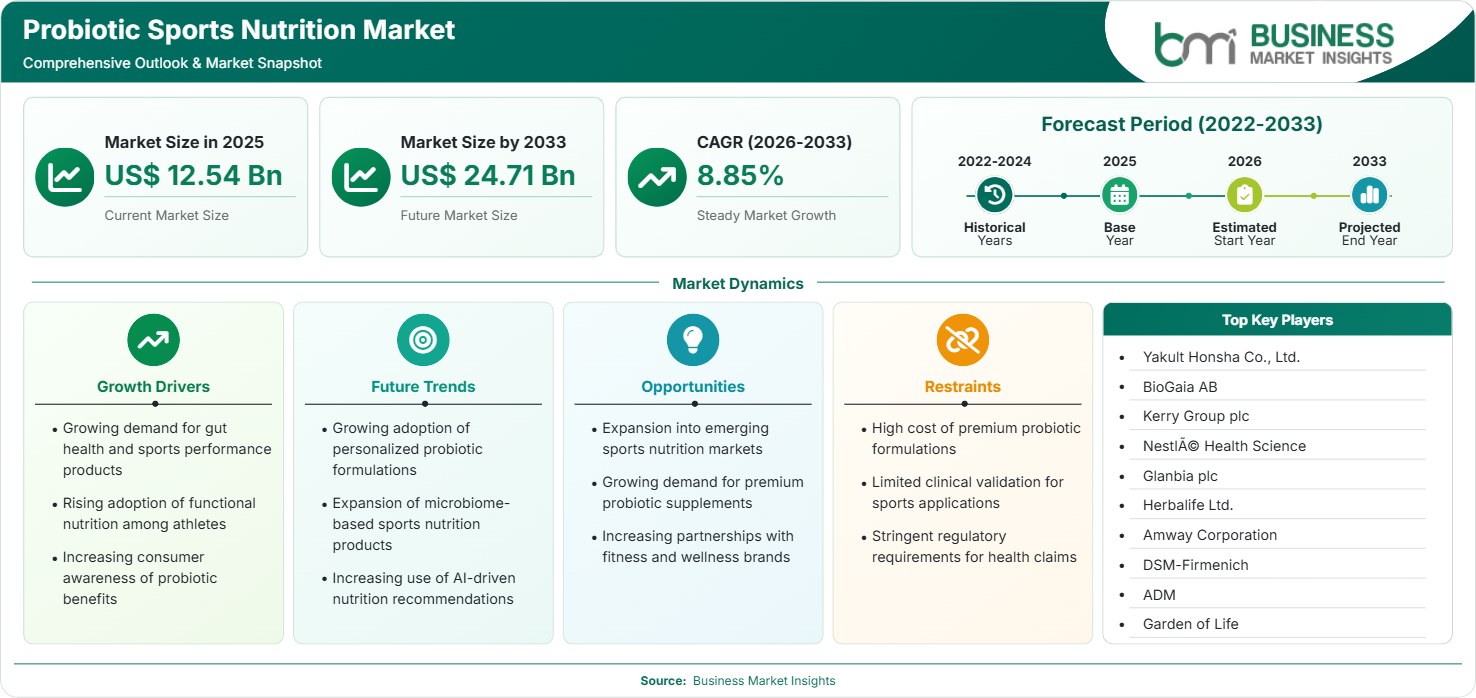
The Probiotic Sports Nutrition Market size was valued at US$ 12.54 Billion in 2025 and is projected to reach US$ 24.71 Billion by 2033, growing at a CAGR of 8.85% from 2026 to 2033. Rising demand for digestive wellness, athlete-focused nutrition, functional supplements, personalized health solutions, and premium probiotic formulations are driving market expansion.

Report Coverage
  • Form: Powder, Tablets/Capsules, Liquid
  • Function: Gut Health & Digestion Support, Immune System Support, Others
  • End-Use: Bodybuilders, Athletes and Lifestyle Users
  • Distribution Channel: Hypermarkets/Supermarkets, Convenience Stores, Drug Stores/Pharmacy, Specialty stores/Fitness Centres, Online Retail
US$ 12.54 Bn Market size in 2025
US$ 24.71 Bn Market Size by 2033
8.85% CAGR, 2026 - 2033
2026-2033 Forecast Period

AI Overview

Probiotic Sports Nutrition Market Summary

  • North America Region: North America holds a 35%–38% market share in 2025, expanding at a 8.1%–8.5% CAGR during 2026–2033, supported by sports participation, supplement adoption, wellness awareness, premium nutrition demand, and strong retail infrastructure. The U.S. market demonstrates steady growth through fitness culture expansion, increasing probiotic supplement usage, and a 8.2%–8.6% CAGR from 2026 to 2033.
  • Fastest Growing Region: Asia Pacific accounts for 27%–30% market share in 2025 and grows at a 10.2%–10.8% CAGR during 2026–2033, driven by rising fitness participation, expanding middle-class consumers, e-commerce penetration, sports nutrition awareness, and increasing demand for functional health products.
  • Leading Segment: Powder form represents 42%–45% market share in 2025 with a 9.0%–9.5% CAGR during 2026–2033, supported by convenience, flexible dosage options, sports shake compatibility, longer shelf stability, and high adoption among athletes and fitness enthusiasts.
  • High Growth Segment: Online Retail represents 25%–28% market share in 2025 and expands at a 10.0%–10.5% CAGR during 2026–2033 due to digital purchasing behavior, subscription models, broader product availability, and increasing consumer preference for convenient supplement delivery.
  • Key Market Opportunity: Manufacturers can capitalize on emerging markets, personalized probiotic blends, athlete-specific formulations, fitness partnerships, and premium products combining gut health benefits with performance-oriented nutrition.
  • Major Market Players: Yakult Honsha Co., Ltd., BioGaia AB, Kerry Group plc, Nestlé Health Science, Glanbia plc, Herbalife Ltd., Amway Corporation, DSM-Firmenich, ADM, and Garden of Life.
Strategic Insights

Probiotic Sports Nutrition Market: Strategic Insights

Probiotic Sports Nutrition Market Strategic Framework
FREE PDF
Request your free sample
Request free sample
Stakeholder View

Key Takeaways

  • The market value chain is evolving through collaboration among probiotic ingredient suppliers, supplement manufacturers, fitness brands, retailers, research organizations, and digital commerce platforms. These interconnected ecosystems are improving product innovation, consumer education, and global distribution capabilities.
  • Powder-based probiotic supplements maintain strong commercial potential due to compatibility with protein shakes, smoothies, and sports beverages. Meanwhile, personalized formulations targeting digestion, immunity, and recovery represent emerging opportunities for premium product development.
  • Innovation is increasingly focused on strain-specific probiotics, improved stability technologies, encapsulation methods, and scientifically supported formulations designed for active consumers seeking measurable wellness and performance benefits.
  • Asia Pacific represents a major expansion opportunity due to increasing sports participation, growing fitness centres, expanding online retail channels, and rising consumer acceptance of functional nutrition products across countries such as China, India, and Japan.
  • Strategic investments, partnerships, and acquisitions are increasing as food, beverage, and nutrition companies seek stronger positions in the growing functional wellness sector. Collaboration with fitness communities is becoming an important strategy for consumer engagement.
  • Digital platforms are transforming supplement purchasing behavior by enabling direct-to-consumer models, personalized recommendations, subscription services, and broader access to international probiotic sports nutrition brands.
Geographic Outlook

Probiotic Sports Nutrition Market Regional Highlights

North America Probiotic Sports Nutrition Market

North America accounts for 35%–38% of the global market in 2025 and is projected to grow at a 8.1%–8.5% CAGR during 2026–2033. Strong fitness participation developed supplement retail networks, high consumer awareness, and demand for premium wellness products support regional leadership. The Probiotic Sports Nutrition Market share remains strong due to advanced sports nutrition adoption, increasing interest in microbiome health, and continuous product launches targeting athletes, bodybuilders, and active lifestyle consumers.

  • Growing gym memberships, endurance sports participation, and wellness-focused lifestyles are increasing demand for probiotic supplements designed to support digestion, immunity, and overall physical performance.
  • The United States maintains regional dominance through established sports nutrition companies, strong e-commerce adoption, and increasing consumer preference for scientifically supported functional supplements.
  • Canada demonstrates steady market expansion due to rising health consciousness, growing fitness communities, and increasing availability of premium nutritional products through specialized retail channels.
  • Ingredient innovation involving clinically studied probiotic strains and improved stability technologies is encouraging manufacturers to introduce differentiated products for performance-oriented consumers.

US Probiotic Sports Nutrition Market

The United States represents 80%–83% of the North American market in 2025 and is expected to expand at a 8.2%–8.6% CAGR during 2026–2033. High supplement consumption established fitness culture, strong online retail penetration, and increasing awareness of gut microbiome benefits support Probiotic Sports Nutrition market development. The country remains a major innovation hub due to extensive product launches, research activities, and consumer demand for personalized nutrition solutions.

  • Increasing adoption of functional supplements among athletes and recreational fitness users is strengthening demand for probiotic products with digestion and recovery benefits.
  • Strong direct-to-consumer brands and online platforms are improving product accessibility while enabling manufacturers to reach targeted consumer groups through personalized marketing.
  • Research collaborations between nutrition companies and scientific institutions are supporting development of evidence-based probiotic formulations for sports applications.
  • Premium supplement demand continues increasing as consumers seek products combining performance enhancement, digestive wellness, and preventive health benefits.

Europe Probiotic Sports Nutrition Market

Europe represents 24%–27% of the market in 2025 and is forecast to expand at a 8.4%–8.9% CAGR during 2026–2033. Increasing health awareness, strong supplement consumption, sports participation, and demand for clean-label nutrition products support regional growth. Germany remains the leading Probiotic Sports Nutrition market, while the United Kingdom and France demonstrate strong growth potential due to expanding fitness communities and rising consumer interest in microbiome-based wellness solutions.

  • Germany benefits from advanced health-conscious consumer behavior, established supplement distribution networks, and increasing demand for scientifically supported probiotic products.
  • The United Kingdom demonstrates strong growth through expanding fitness culture, online supplement purchasing, and increasing awareness of gut health benefits.
  • France continues adopting premium nutrition products as consumers seek natural wellness solutions and functional supplements supporting active lifestyles.
  • European manufacturers are focusing on clean-label formulations, sustainable sourcing, and improved probiotic stability to meet evolving consumer expectations.

Asia Pacific Probiotic Sports Nutrition Market

Asia Pacific accounts for 27%–30% market share in 2025 and is expected to grow at a 10.2%–10.8% CAGR during 2026–2033, making it the fastest-growing regional market. Rising fitness participation, increasing disposable incomes, expanding digital commerce, and growing awareness of preventive health are accelerating adoption. China remains the largest contributor in Probiotic Sports Nutrition Market, while India demonstrates rapid expansion due to increasing sports culture and improving access to nutritional supplements.

  • China is strengthening market growth through expanding fitness centres, rising wellness awareness, and increasing domestic production of functional nutrition products.
  • India demonstrates strong potential due to increasing youth participation in sports, growing gym culture, and rising consumer interest in digestive health supplements.
  • Japan maintains demand through established probiotic consumption habits, advanced food technology capabilities, and consumer preference for scientifically developed wellness products.
  • Southeast Asian markets are gaining traction through e-commerce expansion, urbanization, and increasing adoption of international sports nutrition brands.

Rest of World Probiotic Sports Nutrition Market

The Rest of World region contributes 8%–11% market share in 2025 and is projected to grow at a 8.8%–9.3% CAGR during 2026–2033. South and Central America are experiencing rising demand due to expanding fitness communities and increasing supplement awareness, while Middle East and Africa markets are supported by wellness investments, growing sports participation, and improving retail infrastructure in Probiotic Sports Nutrition Market.

  • Brazil remains a key regional contributor due to increasing fitness participation, expanding supplement distribution, and growing consumer awareness of functional nutrition.
  • Middle Eastern countries are investing in wellness infrastructure and fitness initiatives, encouraging demand for premium sports nutrition products.
  • Expanding online retail platforms are improving access to international probiotic supplement brands across emerging markets.
  • Rising urbanization and lifestyle changes are encouraging consumers to adopt preventive health products supporting digestion and immunity.
  • Partnerships between global nutrition companies and regional distributors are improving product availability and strengthening market penetration.
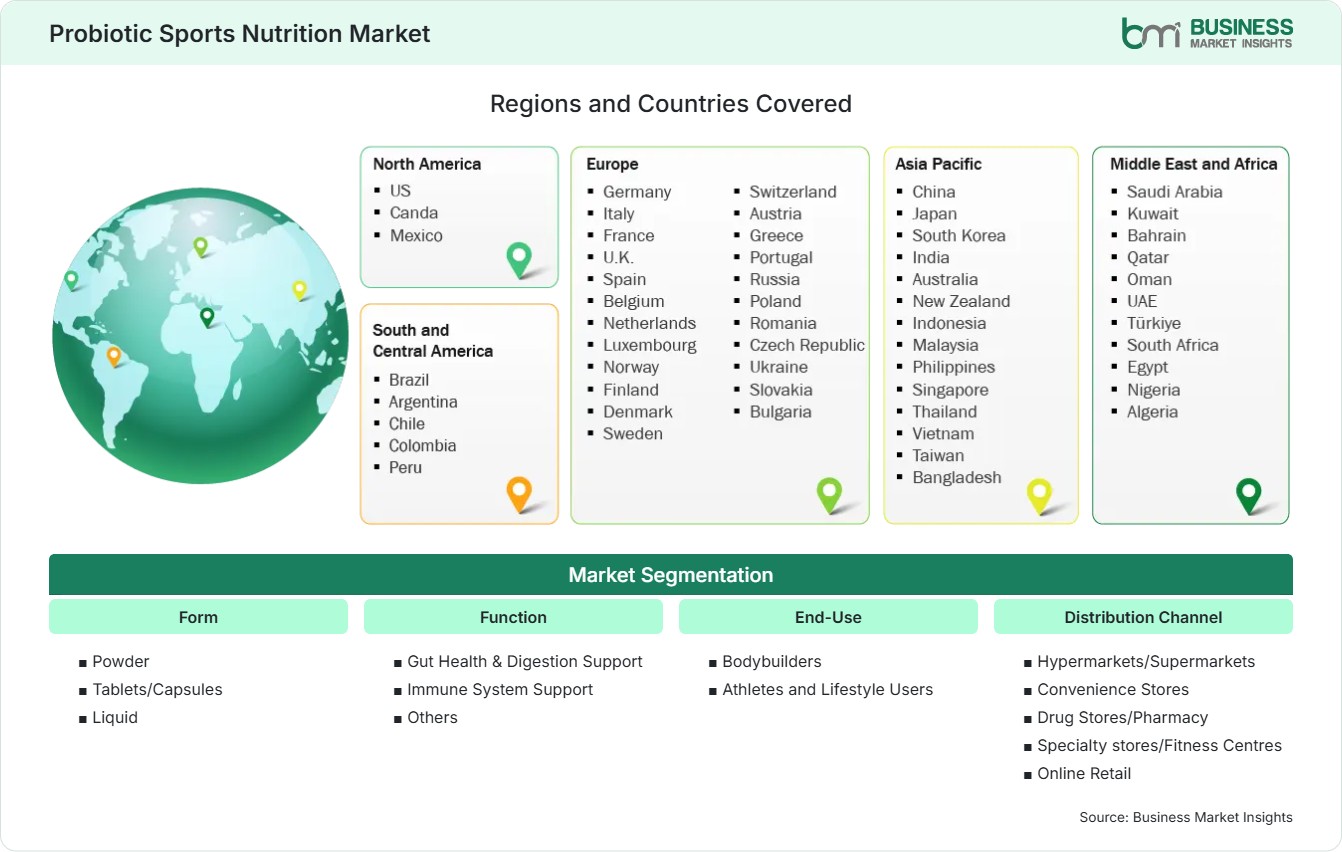
Global Market Geography
FREE PDF
Request your free sample
Request free sample
Segment Analysis

Probiotic Sports Nutrition Market Segmentation

Form

The form segment represents diverse consumer preferences based on convenience, dosage flexibility, and application suitability. The segment accounted for the complete market classification and is expected to grow at an 8.85%–9.2% CAGR during 2026–2033. The Probiotic Sports Nutrition Market scope continues expanding as manufacturers develop improved stability technologies, portable formats, and athlete-focused formulations. Powder products maintain strong adoption due to compatibility with protein beverages, while capsules and liquid formats support consumers seeking convenient supplementation options.

  • Powder: Dominates demand due to easy mixing with sports drinks, protein shakes, and meal replacements, while offering flexible dosage customization for athletes and fitness-oriented consumers.
  • Tablets/Capsules: Gain adoption through portability, precise dosage control, longer shelf stability, and convenience for consumers requiring simple daily probiotic supplementation routines.
  • Liquid: Supports niche demand through rapid consumption, beverage integration, and improved user experience among consumers preferring to ready-to-use functional nutrition products.

Function

The function segment reflects increasing consumer focus on targeted wellness benefits beyond basic supplementation. The segment is projected to expand at an 8.85%–9.3% CAGR during 2026–2033, supported by rising interest in gut microbiome science, immune wellness, and performance-related nutrition. The Probiotic Sports Nutrition Market trends indicate increasing product differentiation through specialized formulations addressing digestive comfort, immunity support, and active lifestyle requirements among diverse consumer groups.

  • Gut Health & Digestion Support: Represents the leading functional application as consumers increasingly recognize microbiome balance as essential for nutrient absorption, digestive comfort, and overall wellness.
  • Immune System Support: Gains momentum among athletes and lifestyle users seeking nutritional products that support immune resilience during intensive training and physically demanding routines.

End-Use

The end-use segment is expanding due to broader adoption of sports nutrition products beyond professional athletes. The segment is expected to grow at an 8.85%–9.4% CAGR during 2026–2033, supported by increasing fitness participation, wellness awareness, and consumer interest in preventive health solutions. Manufacturers are developing targeted formulations for different user groups, improving product relevance and expanding market penetration across recreational and professional fitness communities.

  • Bodybuilders: Represent a significant consumer group due to high supplement usage, performance-focused nutrition requirements, and demand for products supporting training recovery and digestive health.
  • Athletes: Drive demand through increasing interest in optimized nutrition strategies, endurance support, immunity maintenance, and scientifically developed supplementation programs.
  • Lifestyle Users: Experience rapid adoption as consumers integrate probiotics into daily wellness routines focused on digestion, immunity, energy management, and preventive health.

Distribution Channel

Distribution channels are evolving through digital commerce growth, specialty retail expansion, and increasing availability of functional nutrition products. The segment is forecast to grow at an 8.85%–9.5% CAGR during 2026–2033. Online platforms are gaining importance through convenience, wider product selection, and subscription models, while specialty stores and pharmacies continue supporting consumer education and premium supplement sales.

  • Hypermarkets/Supermarkets: Provide broad consumer access through established retail networks, increasing shelf space allocation, and growing acceptance of functional nutrition products among mainstream shoppers.
  • Convenience Stores: Support impulse purchases and accessibility, particularly for ready-to-consume probiotic products targeting active consumers seeking quick nutrition solutions.
  • Drug Stores/Pharmacy: Maintain importance due to consumer trust, professional recommendations, and availability of wellness-focused supplements alongside healthcare products.
  • Specialty stores/Fitness Centres: Drive targeted sales by connecting products with fitness communities, trainers, and consumers seeking performance-oriented nutrition solutions.
  • Online Retail: Represents a rapidly expanding channel due to direct-to-consumer models, digital marketing, personalized recommendations, and convenient home delivery options.
Market Forces

Probiotic Sports Nutrition Market Dynamics

Key Market Drivers

Growing demand for gut health and sports performance products

Consumer awareness of digestive health and performance has increased the demand for sports nutrition supplements containing probiotics. Consumers recognize the importance of balance in their gut microflora for nutrient absorption and athletic performance. Increased consumer involvement in fitness activities and endurance sports has broadened the consumer base, moving from professionals to recreational consumers. This shift toward multifunctional nutrition solutions is strengthening Probiotic Sports Nutrition Market forecasts as brands introduce products that address both performance enhancement and preventive wellness needs. Increasing scientific interest in microbiome research is also supporting innovation in strain selection and formulation development.

Rising adoption of functional nutrition among athletes

The current trend involves athletes and other fitness-minded individuals consuming functional nutrition supplements that offer more than just basic nutritional benefits. The incorporation of probiotics into such products is a developing concept, given their potential contributions to digestive balance, immunity, and health during rigorous physical activity. It is notable that sportspersons, the organizations that work with them, and nutritionists are being urged to use scientifically proven supplementation, thereby building trust in such specialized products. The companies are designing probiotic blends tailored to athletes' needs for endurance and performance.

Increasing consumer awareness of probiotic benefits

Consumer understanding about probiotics is growing due to health education, social media, scientific communication, and the growing focus on preventative medicine. The consumers are more aware of the connection between gut health, immune system, and general wellbeing, which makes them consume probiotics regularly. Fitness groups and wellness personalities on social media also increase the visibility of these products for young consumers. These developments are shaping Probiotic Sports Nutrition Market trends by encouraging broader adoption among athletes, active consumers, and individuals seeking convenient solutions for maintaining digestive and immune health.

Key Market Opportunities

Expansion into emerging sports nutrition markets

Emerging markets offer many growth opportunities, as engagement in fitness activities, disposable income, and health consciousness are on the rise. Markets in Asia Pacific, Latin America, and the Middle East are seeing rapid growth in the establishment of gyms and sports facilities, as well as in e-commerce platforms selling sports nutrition products. International companies are focusing on these emerging markets by launching customized products, forming regional partnerships, and upgrading their distribution systems. Increased consumer interest in health, prevention, and functional nutrition products is driving demand for probiotics among consumers who have not previously been exposed to sports nutrition.

Growing demand for premium probiotic supplements

Premium probiotic dietary supplements appear to be a promising area for further development considering the growing preference of consumers for quality, science-based benefits and individually tailored wellness advantages. Premium products which feature the inclusion of strains which have been scientifically tested, new delivery systems, and special formulations are in demand among affluent consumers. There is a tendency to develop premium supplements which cater to different needs including digestive health, immunity enhancement, and active body performance. Such a tendency will result in the development of innovations in the sphere of encapsulation, stabilization, and formulation combinations.

Increasing partnerships with fitness and wellness brands

Partnerships between probiotic brands, fitness brands, and networks are opening new possibilities for commercializing their products. Partnerships give brands an opportunity to reach targeted audiences, boost their products' credibility, and incorporate them into health packages. Fitness centers, online coaching platforms, and athlete networks will be crucial for reaching consumers and raising awareness of the products. In addition, the partnerships provide a good platform for educating consumers about the benefits of probiotics and the need to use them consistently.

Market Restraints and Challenges

High cost of premium probiotic formulations

Factor: Premium probiotic formulations often require advanced research, specialized strains, controlled manufacturing conditions, and stability technologies that increase production costs. Impact: Higher product pricing can limit adoption among price-sensitive consumers, particularly in developing markets where affordability remains a key purchasing consideration. Expensive formulations may also face stronger competition from conventional supplements with lower price points. Manufacturers must balance innovation investments with cost optimization strategies to improve accessibility while maintaining product quality, efficacy, and consumer confidence.

Limited clinical validation for sports applications

Factor: Although probiotics have established recognition in digestive health applications, sports-specific clinical evidence remains limited for several performance-related claims. Impact: Lack of extensive validation can create challenges in consumer education, regulatory compliance, and marketing communication. Companies may face difficulties differentiating products when scientific evidence varies across probiotic strains and applications. Continued investment in athlete-focused clinical studies, evidence generation, and transparent communication will be important to strengthen market credibility and support wider adoption.

Company Analysis

Competitive Landscape

The Probiotic Sports Nutrition Market analysis highlights a competitive environment driven by probiotic innovation, functional nutrition expansion, strategic partnerships, and increasing investment in microbiome-focused health solutions. Leading companies are developing advanced formulations using clinically studied strains, improved delivery technologies, and targeted products for athletes, bodybuilders, and lifestyle users.

Company Name

Overview

Products and Services relevant to this market

Yakult Honsha Co., Ltd.

Global probiotic-focused company recognized for fermented dairy products and microbiome research with strong consumer awareness.

Provides probiotic products featuring proprietary strains supporting digestive health and wellness applications for active consumers.

BioGaia AB

Swedish biotechnology company specializing in clinically researched probiotic solutions and microbial health innovations.

Develops probiotic ingredients and supplements focused on gut health, immunity support, and functional nutrition applications.

Kerry Group plc

Global ingredient and nutrition company offering science-based solutions for food, beverage, and supplement manufacturers.

Provides probiotic ingredients, nutritional technologies, and formulation solutions for sports and wellness supplement products.

Nestlé Health Science

Healthcare nutrition company focused on science-backed nutritional solutions and personalized health products.

Offers nutritional supplements and wellness solutions incorporating digestive health and functional nutrition concepts.

Glanbia plc

Global nutrition company specializing in sports nutrition, performance products, and health-focused ingredients.

Provides sports nutrition brands, protein products, and functional nutrition solutions targeting active consumers.

Herbalife Ltd.

Nutrition company offering wellness and sports nutrition products through global direct-selling networks.

Provides dietary supplements, sports nutrition products, and wellness formulations supporting active lifestyle users.

Amway Corporation

Global health and wellness company with extensive supplement distribution capabilities.

Offers nutritional supplements and wellness products including probiotic-focused solutions through direct consumer channels.

DSM-Firmenich

Global nutrition, health, and bioscience company developing science-based ingredient solutions.

Supplies probiotic ingredients, nutritional technologies, and microbiome-focused solutions for supplement manufacturers.

ADM

Global nutrition and ingredient company supporting food, beverage, and supplement innovation.

Provides probiotic ingredients, formulation expertise, and nutritional solutions for functional health products.

Garden of Life

Wellness brand specializing in organic, clean-label, and natural nutritional supplements.

Offers probiotic supplements and wellness products emphasizing digestive health, immunity, and clean nutrition positioning.

Trust & Transparency

Research Methodology

The market analysis combines proprietary research with secondary data from government agencies, company disclosures, regulatory filings, industry databases and expert interviews. Market estimates are validated through data triangulation, cross-market benchmarking and analyst review.

View Full Research Methodology

Questions Answered

Frequently Asked Questions

What is driving future probiotic sports nutrition market report?

Future growth is supported by rising fitness participation, increasing awareness of gut health, premium supplement demand, and innovation in personalized probiotic formulations.

How are online channels influencing supplement sales?

Online retail improves product accessibility through wider selections, subscription options, direct-to-consumer models, and convenient delivery services, making probiotic sports supplements easier for consumers to purchase.

Why is powder form popular in probiotic sports nutrition market?

Powder formats are popular because they can be easily mixed with protein shakes, smoothies, and beverages. They offer flexible dosing and convenience for fitness-focused consumers.

How do probiotics support athletes?

Probiotics may help maintain gut balance, support nutrient absorption, and promote immune health during intensive physical activity. Their use is increasing among athletes focused on recovery and wellness management.

What are the key benefits of probiotic sports nutrition products?

Probiotic sports nutrition products support digestive health, immunity, and overall wellness. They are increasingly used by athletes and active consumers seeking functional nutrition solutions alongside regular training and fitness routines.

Access the Full Probiotic Sports Nutrition Market Report

Get segment-level forecasts, regional estimates, competitive benchmarking, company profiles and downloadable Excel datasets.

Access the full Probiotic Sports Nutrition Market Report
350 pages PDF & Excel | 2026-08-31
Similar Research

Related Market Reports