
Non-Surgical Cosmetic Procedures Market Outlook: Size, Share, Trends, Growth Analysis, Competitive Landscape & Forecast, 2026-2033

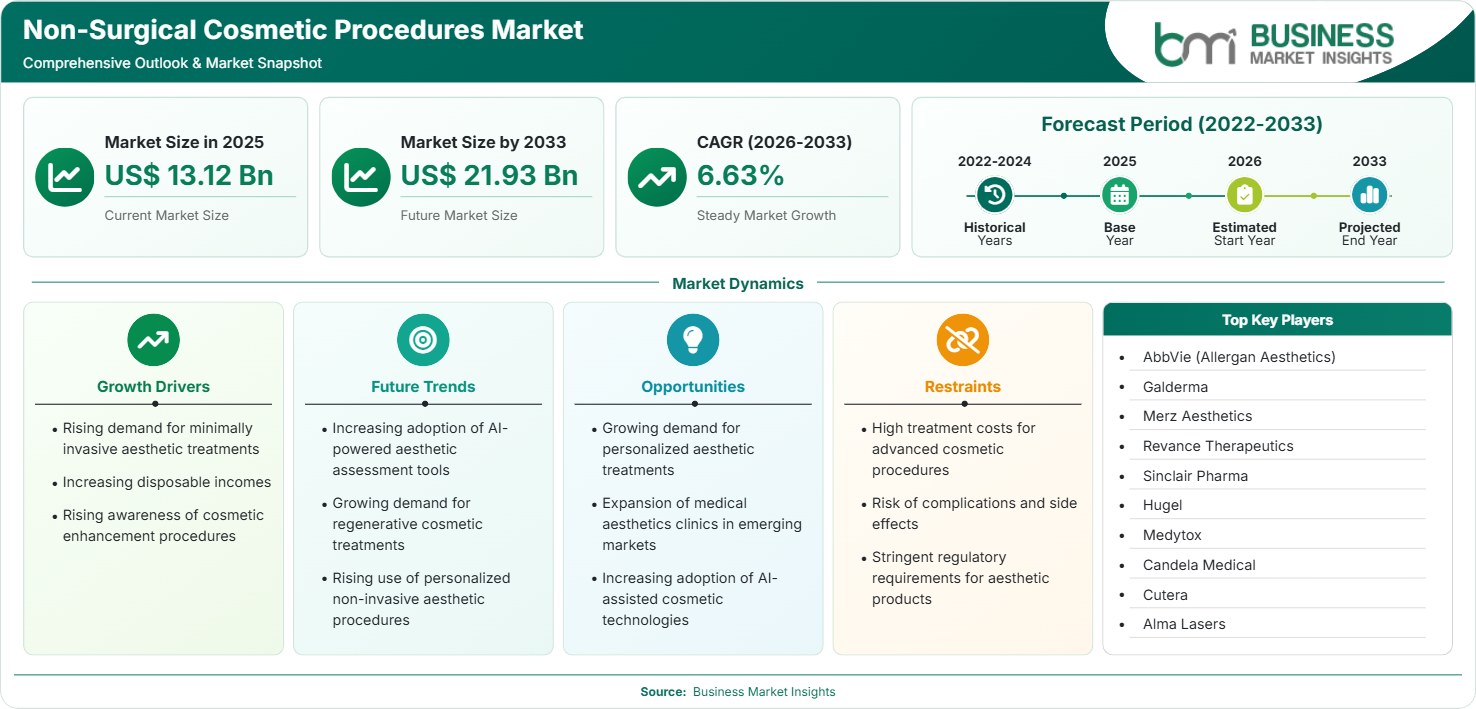
The Non-Surgical Cosmetic Procedures Market size was valued at US$ 13.12 Billion in 2025 and is projected to reach US$ 21.93 Billion by 2033, growing at a CAGR of 6.63% during 2026–2033. Rising preference for minimally invasive aesthetic procedures, increasing disposable incomes, expanding medical aesthetics clinics, and AI-enabled cosmetic technologies are creating sustained growth opportunities across developed and emerging healthcare markets.

Report Coverage
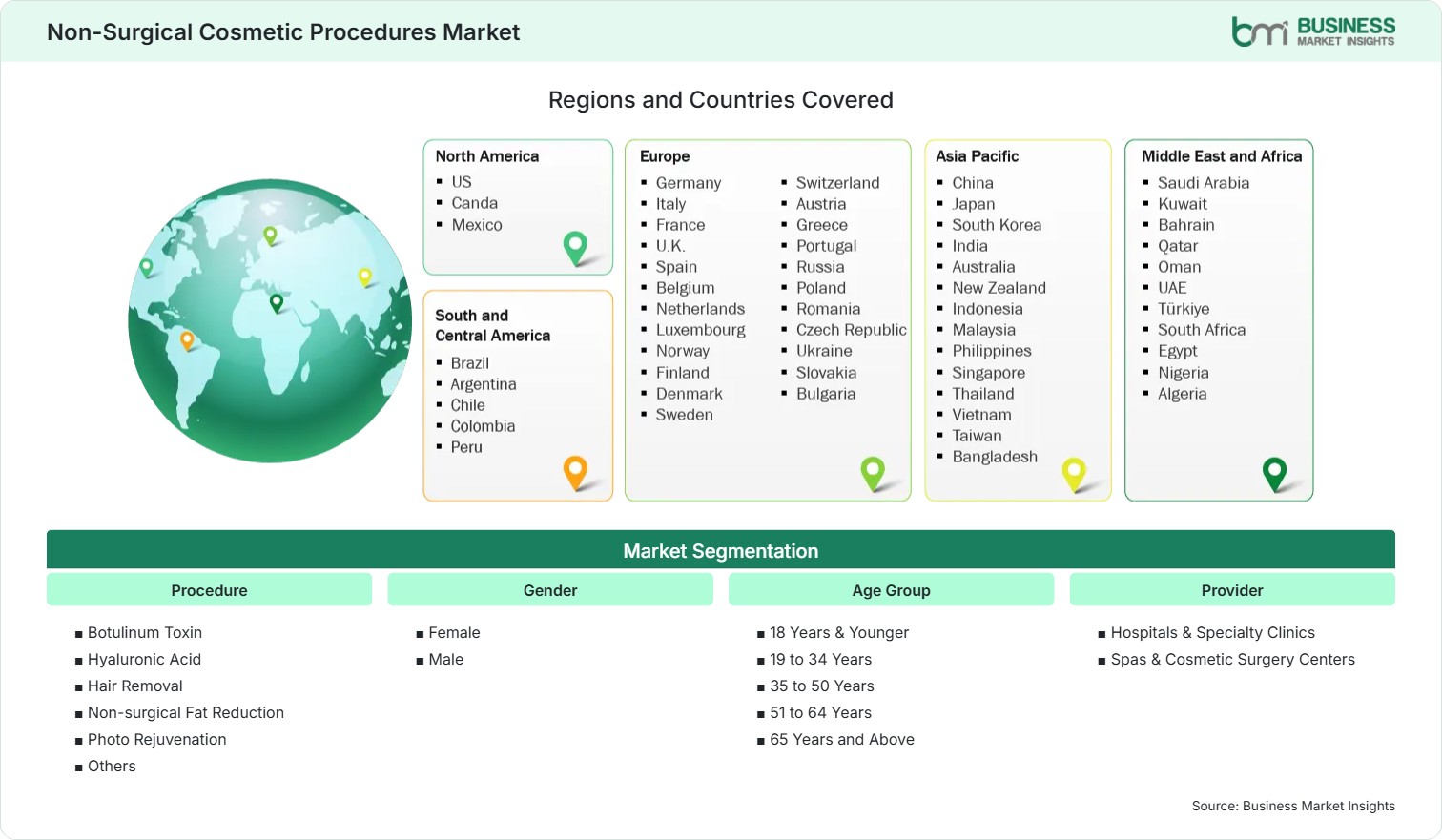
  • Procedure: Botulinum Toxin, Hyaluronic Acid, Hair Removal, Non-surgical Fat Reduction, Photo Rejuvenation, Others
  • Gender: Female, Male
  • Age Group: 18 Years & Younger, 19 to 34 Years, 35 to 50 Years, 51 to 64 Years, 65 Years and Above
  • Provider: Hospitals & Specialty Clinics, Spas & Cosmetic Surgery Centers
US$ 13.12 Bn Market size in 2025
US$ 21.93 Bn Market Size by 2033
6.63% CAGR, 2026 - 2033
2026-2033 Forecast Period

AI Overview

Non-Surgical Cosmetic Procedures Market Summary

  • North America Region: North America holds 38%–41% share in 2025 and is projected to expand at a 6.0%–6.5% CAGR during 2026–2033. Growth is driven by strong consumer spending on aesthetics, advanced healthcare infrastructure, rapid product innovation, and increasing physician adoption of injectable and energy-based cosmetic treatments. The U.S. dominates the regional market through high procedure volumes, technological innovation, and strong medical aesthetics networks, registering a 6.1%–6.6% CAGR.
  • Fastest Growing Region: Asia Pacific accounts for 26%–29% share in 2025 and is expected to grow at a 7.6%–8.2% CAGR through 2033, supported by rising disposable incomes, expanding medical tourism, growing beauty consciousness, and increasing investments in aesthetic clinics.
  • Leading Segment: Botulinum Toxin accounts for 34%–37% share in 2025 and is projected to grow at a 6.5%–7.0% CAGR, supported by high patient acceptance, repeat treatment demand, broad clinical applications, and continuous product innovation.
  • High Growth Segment: Male procedures are expected to expand at a 7.4%–7.9% CAGR, driven by increasing aesthetic awareness, social media influence, and greater acceptance of cosmetic enhancement among male consumers.
  • Key Market Opportunity: Expansion of personalized aesthetic treatments, AI-assisted cosmetic planning, and modern medical aesthetics clinics is improving patient outcomes while creating new revenue opportunities for providers and technology companies.
  • Major Market Players: AbbVie (Allergan Aesthetics), Galderma, Merz Aesthetics, Revance Therapeutics, Sinclair Pharma, Hugel, Medytox, Candela Medical, Cutera, and Alma Lasers.
Strategic Insights

Non-Surgical Cosmetic Procedures Market: Strategic Insights

Non-Surgical Cosmetic Procedures Market Strategic Framework
FREE PDF
Request your free sample
Request free sample
Stakeholder View

Key Takeaways

  • The value chain is shifting toward integrated aesthetic ecosystems combining injectable products, energy-based devices, AI-assisted diagnostics, and specialized cosmetic clinics.
  • Male consumers and younger adults represent major growth opportunities as awareness of minimally invasive cosmetic enhancement continues increasing globally.
  • Innovation is focused on longer-lasting injectables, AI-assisted treatment planning, personalized procedures, and advanced laser technologies that improve safety and patient satisfaction.
  • Asia Pacific presents strong investment opportunities due to rising disposable incomes, expanding medical tourism, increasing aesthetic awareness, and rapid clinic expansion.
  • Strategic partnerships between pharmaceutical companies, device manufacturers, and cosmetic clinics are accelerating commercialization of innovative non-surgical aesthetic solutions.
  • Digital consultations and AI-supported facial assessment are becoming competitive differentiators by improving treatment precision, workflow efficiency, and patient experience.
Geographic Outlook

Non-Surgical Cosmetic Procedures Market Regional Highlights

North America Non-Surgical Cosmetic Procedures Market

North America accounted for 38%–41% share in 2025 and is expected to expand at a 6.0%–6.5% CAGR during 2026–2033. Growth is supported by high consumer spending on aesthetic treatments, advanced healthcare infrastructure, favorable reimbursement for select dermatological procedures, and continuous innovation in injectable products and energy-based devices. Strong physician expertise and widespread availability of certified cosmetic clinics continue to strengthen regional demand in non-surgical cosmetic procedures market.

  • Growing adoption of botulinum toxin, dermal fillers, and laser-based procedures is supported by increasing preference for minimally invasive cosmetic enhancements with shorter recovery periods.
  • Continuous product launches and regulatory approvals are enabling clinics to expand treatment portfolios while improving patient safety, treatment precision, and long-term aesthetic outcomes.
  • Expansion of specialty dermatology and medical aesthetics clinics is improving accessibility to cosmetic procedures across metropolitan and suburban healthcare markets.
  • Rising demand from male consumers and younger adults is encouraging providers to introduce personalized treatment packages targeting preventive and corrective aesthetic procedures.

US Non-Surgical Cosmetic Procedures Market

The United States represents 83%–86% of the North American market in 2025 and is projected to register a 6.1%–6.6% CAGR through 2033. The country maintains leadership through high procedural volumes, continuous innovation in injectables and laser systems, and the presence of leading pharmaceutical and medical device manufacturers. Consumer awareness, disposable income, and qualified aesthetic professionals continue supporting steady non-surgical cosmetic procedures market growth.

  • High procedure volumes across dermatology clinics and medical spas support sustained demand for injectable and energy-based cosmetic treatments.
  • Leading manufacturers continue investing in research, physician education, and product innovation to strengthen their competitive positioning.
  • AI-assisted facial assessment and digital consultation platforms are improving treatment planning and patient engagement across aesthetic practices.
  • Increasing acceptance of preventive cosmetic procedures among younger consumers is supporting long-term procedure demand.

Europe Non-Surgical Cosmetic Procedures Market

Europe accounted for 27%–30% share in 2025 and is expected to grow at a 6.2%–6.8% CAGR during 2026–2033. Rising consumer awareness, favorable regulatory standards, and growing demand for minimally invasive aesthetic procedures support non-surgical cosmetic procedures market trends. Germany leads the regional market through advanced healthcare infrastructure, while the United Kingdom and France represent high-growth countries due to increasing investments in cosmetic medicine and expanding private aesthetic clinics.

  • Germany maintains leadership through a strong network of dermatology clinics and growing adoption of injectable facial rejuvenation procedures.
  • The United Kingdom is witnessing increasing demand for aesthetic injectables, laser treatments, and personalized cosmetic services among younger consumers.
  • France continues expanding premium cosmetic treatment offerings supported by established aesthetic medicine expertise and strong consumer demand.
  • Product innovation and physician training programs continue improving procedural safety and clinical outcomes across European markets.

Asia Pacific Non-Surgical Cosmetic Procedures Market

Asia Pacific accounted for 26%–29% share in 2025 and is projected to grow at a 7.6%–8.2% CAGR during 2026–2033, making it the fastest-growing regional non-surgical cosmetic procedures market. Rising disposable incomes, medical tourism, beauty consciousness, and expansion of cosmetic clinics are accelerating procedure adoption. China leads regional demand, while South Korea and India are recording rapid growth through technological innovation, increasing consumer awareness, and expanding aesthetic healthcare infrastructure.

  • China continues expanding aesthetic medicine services through increasing clinic investments and strong consumer demand for facial rejuvenation procedures.
  • South Korea remains a global innovation hub for cosmetic treatments, supported by advanced clinical expertise and strong medical tourism.
  • India is witnessing rapid adoption due to rising disposable income, expanding urban healthcare facilities, and increasing awareness of minimally invasive cosmetic procedures.
  • Growing adoption of AI-supported treatment planning is improving consultation quality and procedural precision across regional aesthetic clinics.

Rest of World Non-Surgical Cosmetic Procedures Market

The Rest of World accounted for 7%–10% share in 2025 and is expected to grow at a 6.4%–7.0% CAGR during 2026–2033. South America is experiencing increasing demand for aesthetic procedures, particularly in Brazil, supported by strong cosmetic culture and qualified professionals Non-Surgical Cosmetic Procedures market share. The Middle East and Africa are benefiting from expanding private healthcare investments, medical tourism, and growing acceptance of non-invasive aesthetic treatments.

  • Brazil continues leading regional demand through high procedural volumes, experienced cosmetic practitioners, and increasing adoption of injectable aesthetic treatments.
  • Mexico is strengthening its position through expanding private cosmetic clinics and cross-border medical tourism services.
  • The UAE is investing in premium medical aesthetics facilities to attract international patients and support healthcare diversification initiatives.
  • South Africa is witnessing gradual market expansion through increasing urbanization, rising disposable income, and greater awareness of minimally invasive cosmetic procedures.
Global Market Geography
FREE PDF
Request your free sample
Request free sample
Segment Analysis

Non-Surgical Cosmetic Procedures Market Segmentation

Procedure

The procedure segment dominates the non-surgical cosmetic procedures market due to continuous innovation in injectable products and energy-based aesthetic technologies. Botulinum Toxin represents the leading procedure, accounting for 34%–37% share in 2025 and growing at a 6.5%–7.0% CAGR during 2026–2033. High treatment efficacy, repeat procedure demand, expanding cosmetic indications, and increasing physician preference continue supporting segment growth across developed and emerging markets.

  • Botulinum Toxin: Widely used for wrinkle reduction and facial rejuvenation due to proven clinical effectiveness, short treatment duration, and high patient satisfaction with minimal recovery time.
  • Hyaluronic Acid: Dermal fillers remain popular for facial contouring, lip enhancement, and volume restoration, supported by increasing consumer preference for natural-looking aesthetic outcomes.
  • Hair Removal: Laser hair removal continues gaining adoption because of long-lasting results, technological advancements, and increasing demand among both women and men.
  • Non-surgical Fat Reduction: Energy-based body contouring technologies are expanding through growing consumer demand for non-invasive alternatives to traditional liposuction procedures.
  • Photo Rejuvenation: Photo rejuvenation procedures are increasingly utilized for pigmentation correction, skin resurfacing, and improving overall skin appearance using advanced light-based technologies.

Gender

The gender segment is expanding as aesthetic procedures gain wider acceptance among diverse consumer groups. Female patients account for 76%–79% share in 2025 and are projected to grow at a 6.2%–6.7% CAGR during 2026–2033. Increasing beauty awareness, preventive anti-aging treatments, and broader access to minimally invasive cosmetic procedures continue supporting demand across female consumers worldwide in non-surgical cosmetic procedures market.

  • Female: Women remain the primary consumers due to strong demand for facial rejuvenation, dermal fillers, wrinkle reduction, and skin enhancement procedures across different age groups.
  • Male: Male consumers are increasingly adopting aesthetic treatments driven by professional appearance, social acceptance, and growing awareness of minimally invasive cosmetic solutions.

Age Group

The age group segment is driven by increasing awareness of preventive and corrective aesthetic treatments across multiple demographics. The 35 to 50 Years category leads with 36%–39% non-surgical cosmetic procedures market share in 2025 and is expected to register a 6.6%–7.1% CAGR during 2026–2033. Rising concerns regarding facial aging, skin quality, and long-term appearance management continue supporting procedure demand within this population.

  • 18 Years & Younger: Procedures remain limited but are gradually increasing for medically indicated treatments and selected cosmetic corrections under professional supervision.
  • 19 to 34 Years: Younger adults increasingly seek preventive aesthetic procedures, skin enhancement, and minimally invasive treatments influenced by social media and lifestyle trends.
  • 35 to 50 Years: This group represents the largest patient base due to strong demand for wrinkle reduction, facial contouring, and comprehensive anti-aging treatments.
  • 51 to 64 Years: Consumers increasingly adopt injectables and skin rejuvenation procedures to maintain youthful appearance while avoiding invasive surgical interventions.
  • 65 Years and Above: Older adults continue utilizing minimally invasive cosmetic procedures for facial rejuvenation, skin tightening, and age-related aesthetic improvements.

Provider

The provider segment continues expanding as specialized medical aesthetics facilities improve accessibility and treatment quality. Hospitals & Specialty Clinics account for 61%–64% share in 2025 and are projected to grow at a 6.4%–6.9% CAGR during 2026–2033. Availability of qualified professionals, advanced equipment, comprehensive treatment portfolios, and strong patient confidence continue supporting segment leadership in Non-Surgical Cosmetic Procedures market.

  • Hospitals & Specialty Clinics: These facilities offer advanced injectable procedures, laser treatments, and physician-supervised aesthetic services supported by modern medical infrastructure.
  • Spas & Cosmetic Surgery Centers: Medical spas and cosmetic centers continue expanding through personalized aesthetic services, convenient treatment options, and growing consumer preference for outpatient cosmetic procedures.
Market Forces

Non-Surgical Cosmetic Procedures Market Dynamics

Key Market Drivers

Rising Demand for Minimally Invasive Aesthetic Treatments

The trend towards consumer preference for minimally invasive cosmetic procedures that give aesthetic results with reduced recovery time and risk of complications compared to conventional surgery is on the rise. With injectable treatments, laser therapy, and non-invasive body shaping becoming more popular, it has become possible to perform outpatient care without significant downtime. According to data from the American Society of Plastic Surgeons (ASPS), minimally invasive cosmetic procedures have become an ongoing trend, with more than a million procedures done annually, as reported by patients. With ongoing improvements in injectable agents, energy-based treatments, and procedures themselves, future demand for these procedures is expected to grow even further.

Increasing Disposable Incomes

Increased disposable income levels are making it possible for individuals to afford elective aesthetic services which were once regarded as high-end healthcare services. High purchasing power, especially in emerging economies, is driving demand for facial rejuvenation, dermal fillers, laser treatments, and skincare procedures. The growth in the middle class and increase in healthcare expenditure are making consumers consider the preventive and corrective nature of cosmetics. Premium medical aesthetics clinics have recognized this and are offering customized packages, payment plans, and loyalty programs.

Rising Awareness of Cosmetic Enhancement Procedures

Rising awareness through social media, digital marketing, celebrity endorsements, and educational campaigns by physicians has contributed to the growing adoption of non-surgical cosmetic procedures. People are becoming more aware of treatment safety, expected results, and the technology used, thereby prompting them to adopt preventive aesthetic procedures. The use of virtual consultations and digital tools for assessing faces also contributes to increased patient confidence in personalized treatment. Increased access to accredited aesthetic practitioners and cosmetic centers has also contributed to increased treatment adoption.

Key Market Opportunities

Growing Demand for Personalized Aesthetic Treatments

The concept of individualized aesthetic medicine is opening up many new possibilities as more and more individuals become interested in receiving customized treatments tailored to their facial structure, skin condition, age, and cosmetic preferences. The use of digital imaging, facial mapping technology, and personalized consultation protocols at clinics is making treatment more accurate and satisfying for the patients. The development of individualized injectables and combination treatment regimens by manufacturers is another trend gaining traction in the industry, as it can increase clinical success and patient retention through continued treatment.

Expansion of Medical Aesthetics Clinics in Emerging Markets

Emerging countries offer considerable growth opportunities, as private healthcare organizations are expanding their medical aesthetics facilities due to rising disposable incomes and greater awareness of beauty treatments. The regions of Asia Pacific, Latin America, and the Middle East are experiencing rapid growth in outpatient cosmetic centers, driven by demographics and medical tourism. Development of clinics is increasing access to skilled professionals, sophisticated equipment, and innovative injectables. Collaboration of international companies and local healthcare organizations is speeding up technology adoption, and development of distribution channels.

Increasing Adoption of AI-Assisted Cosmetic Technologies

The application of artificial intelligence in aesthetic medicine is evolving through its roles in facial analysis, procedure simulation, process optimization, and personalized procedure planning. With AI-powered software, practitioners can evaluate facial symmetry, simulate procedures, and improve the consultation process to boost patient confidence before performing a procedure. The integration of AI with imaging technology and digital medical files is also helping in decision-making and operational effectiveness. The development of technology providers and aesthetic clinics is also focused on creating intelligent diagnostic platforms to minimize procedural variability.

Market Restraints and Challenges

High Treatment Costs for Advanced Cosmetic Procedures

Factor: Advanced injectable products, laser platforms, and energy-based cosmetic devices require substantial investment by healthcare providers, resulting in higher treatment costs for patients. Impact: Premium pricing can limit procedure adoption among price-sensitive consumers, particularly in developing countries where aesthetic treatments are largely paid out-of-pocket. Clinics also face ongoing costs related to equipment maintenance, physician training, and product procurement. Although financing options and promotional packages are improving affordability, treatment costs remain an important barrier to broader market penetration, especially for advanced multi-session cosmetic procedures.

Risk of Complications and Side Effects

Factor: Non-surgical cosmetic procedures may occasionally result in adverse effects such as bruising, swelling, allergic reactions, asymmetry, pigmentation changes, or unsatisfactory aesthetic outcomes when treatments are improperly administered. Impact: Patient safety may reduce the confidence of patients and increase regulation of treatments, which in turn will require the providers to engage in investing in the training of practitioners and standardization of treatment procedures. Manufacturers continue to enhance products to improve safety, but clinical skills remain crucial for reducing complications.

Company Analysis

Competitive Landscape

The Non-Surgical Cosmetic Procedures Market analysis reflects strong competition among pharmaceutical manufacturers, injectable product developers, and aesthetic device companies focused on innovation, geographic expansion, physician training, and strategic collaborations. Leading players continue investing in research and development to introduce advanced fillers, neurotoxins, laser platforms, and AI-enabled aesthetic technologies while strengthening distribution networks and expanding clinic partnerships.

Company Name

Overview

Products and Services Relevant to this Market

AbbVie (Allergan Aesthetics)

Global leader in medical aesthetics with an extensive portfolio of injectable and facial rejuvenation products supported by continuous innovation.

Botulinum toxin products, hyaluronic acid fillers, body contouring systems, breast aesthetics, physician training, and aesthetic treatment solutions.

Galderma

International dermatology company offering science-based injectable aesthetics and skincare solutions across global markets.

Dermal fillers, botulinum toxin products, skincare solutions, aesthetic injectables, and physician education programs.

Merz Aesthetics

Develops innovative aesthetic medicine products focused on facial rejuvenation and non-invasive cosmetic enhancement.

Botulinum toxin, dermal fillers, skin rejuvenation products, and aesthetic treatment solutions.

Revance Therapeutics

Biopharmaceutical company specializing in innovative neuromodulators and advanced aesthetic treatment technologies.

Long-lasting botulinum toxin products, injectable therapies, and facial aesthetic solutions.

Sinclair Pharma

Focuses on regenerative aesthetics and minimally invasive cosmetic treatment technologies for global healthcare providers.

Dermal fillers, collagen stimulation products, body contouring solutions, and aesthetic medical devices.

Hugel

South Korean manufacturer expanding its global presence through innovative neurotoxin and aesthetic product offerings.

Botulinum toxin products, dermal fillers, aesthetic injectables, and cosmetic treatment solutions.

Medytox

Biotechnology company engaged in developing premium botulinum toxin formulations for cosmetic and therapeutic applications.

Neurotoxin products, injectable aesthetic treatments, research, and product development services.

Candela Medical

Leading developer of energy-based medical aesthetic devices for dermatology and cosmetic applications.

Laser systems, body contouring devices, skin rejuvenation platforms, hair removal, and vascular treatment technologies.

Cutera

Provides advanced energy-based aesthetic technologies for physicians and cosmetic treatment centers worldwide.

Laser platforms, radiofrequency devices, body sculpting systems, and skin revitalization technologies.

Alma Lasers

Global provider of aesthetic medical technologies with diversified energy-based treatment solutions.

Laser systems, radiofrequency devices, ultrasound technologies, skin tightening, hair removal, and body contouring solutions.

Trust & Transparency

Research Methodology

The market analysis combines proprietary research with secondary data from government agencies, company disclosures, regulatory filings, industry databases and expert interviews. Market estimates are validated through data triangulation, cross-market benchmarking and analyst review.

View Full Research Methodology

Questions Answered

Frequently Asked Questions

What are the major challenges facing market participants?

High treatment costs, procedure affordability, regulatory compliance, and the risk of treatment-related complications remain important challenges affecting wider adoption across global markets.

How is artificial intelligence influencing aesthetic medicine in non-surgical cosmetic procedures market report?

AI improves facial assessment, treatment planning, patient consultations, workflow efficiency, and outcome prediction, enabling clinics to deliver more personalized and accurate cosmetic procedures.

Why is Asia Pacific the fastest-growing regional non-surgical cosmetic procedures market forecasts?

The region benefits from rising beauty consciousness, increasing medical tourism, expanding healthcare infrastructure, higher disposable incomes, and rapid growth of specialized medical aesthetics clinics.

Which procedure segment holds the largest market share?

Botulinum toxin remains the leading procedure segment due to its proven effectiveness for wrinkle reduction, broad cosmetic applications, repeat treatment demand, and high patient satisfaction.

What is driving the growth of the market?

Growth is primarily supported by increasing demand for minimally invasive treatments, rising disposable incomes, technological advancements in injectables and laser devices, and expanding awareness of aesthetic procedures among both women and men.

Access the Full Non-Surgical Cosmetic Procedures Market Report

Get segment-level forecasts, regional estimates, competitive benchmarking, company profiles and downloadable Excel datasets.

Access the full Non-Surgical Cosmetic Procedures Market Report
350 pages PDF & Excel | 2026-08-06
Similar Research

Related Market Reports