
Muffins Market Outlook: Size, Share, Trends, Growth Analysis, Competitive Landscape & Forecast, 2026-2033

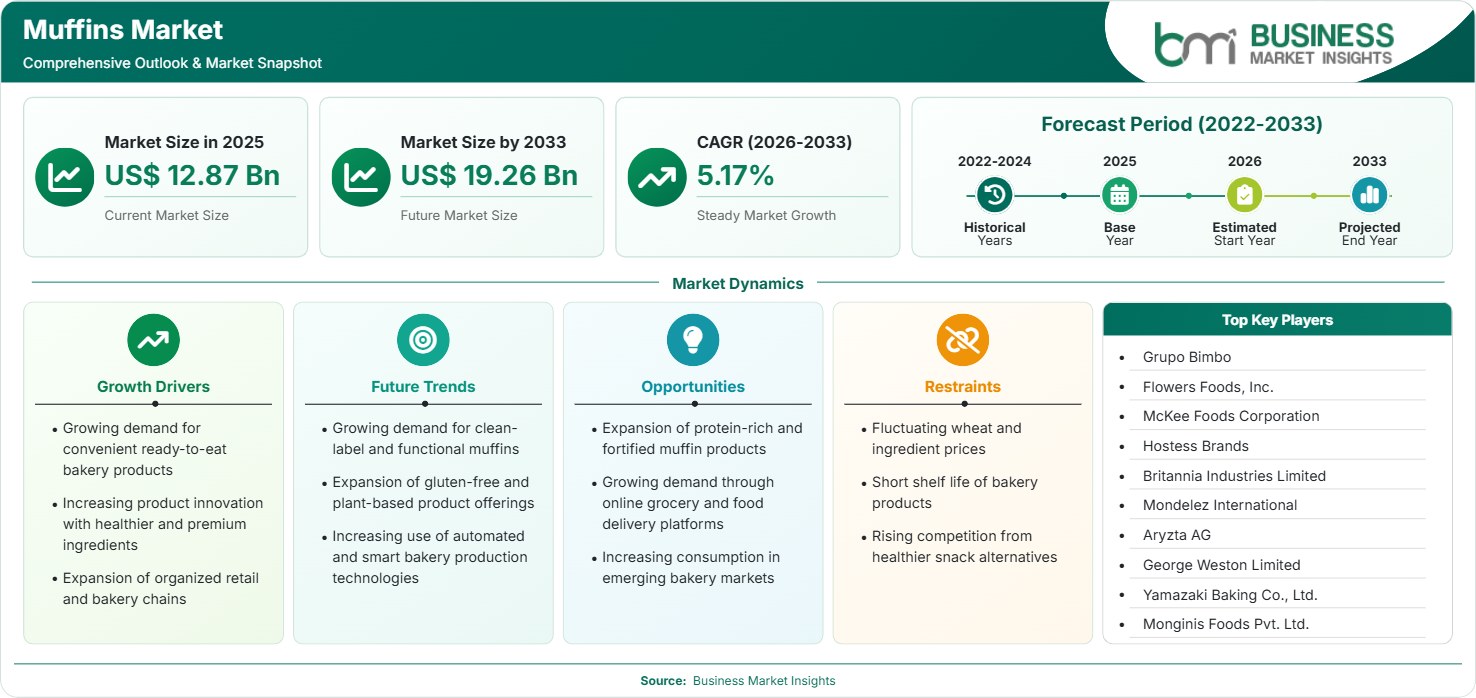
The Muffins Market size was valued at US$ 12.87 Billion in 2025 and is projected to reach US$ 19.26 Billion by 2033, growing at a CAGR of 5.17% during 2026–2033. Growth is supported by rising demand for convenient bakery products, increasing preference for premium and healthier ingredients, and expansion of organized retail, bakery chains, and digital food delivery platforms.

Report Coverage
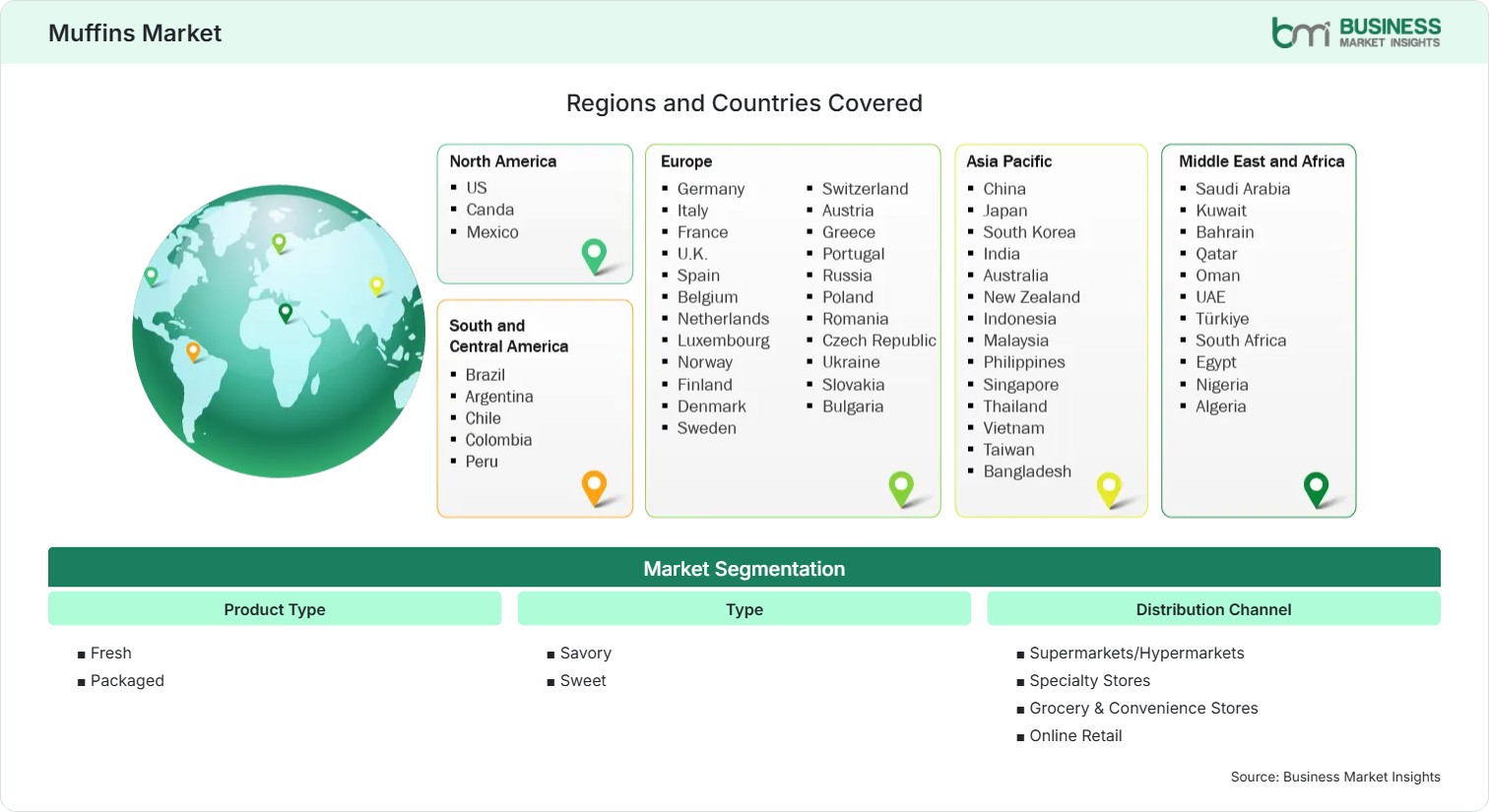
  • Product Type: Fresh, Packaged
  • Type: Savory, Sweet
  • Distribution Channel: Supermarkets/Hypermarkets, Specialty Stores, Grocery & Convenience Stores, Online Retail
US$ 12.87 Bn Market size in 2025
US$ 19.26 Bn Market Size by 2033
5.17% CAGR, 2026 - 2033
2026-2033 Forecast Period

AI Overview

Muffins Market Summary

  • North America Region: North America holds a 34%–38% share in 2025, growing at a CAGR of 4.8%–5.3% during 2026–2033, supported by strong bakery consumption, established retail networks, premium product launches, and demand for convenient breakfast and snack options. The U.S. market is expanding at a CAGR of 4.9%–5.4% during 2026–2033, driven by packaged bakery demand, healthier muffin variants, and innovation in portion-controlled products.
  • Fastest Growing Region: Asia Pacific accounts for a 24%–28% share in 2025 and is projected to register a CAGR of 5.8%–6.4% during 2026–2033, supported by urbanization, changing eating habits, expanding bakery chains, rising disposable income, and increasing acceptance of Western-style baked products.
  • Leading Segment: Sweet Muffins represent a 68%–72% share in 2025 and are projected to grow at a CAGR of 4.9%–5.4% during 2026–2033, supported by broad consumer preference, product variety, established demand patterns, and availability across multiple retail channels.
  • High Growth Segment: Packaged Muffins account for a 42%–46% share in 2025 and are expected to grow at a CAGR of 5.6%–6.1% during 2026–2033, driven by longer shelf stability, convenience, branded product availability, and expanding retail penetration.
  • Key Market Opportunity: Increasing demand for fortified, protein-rich, and functional muffins, combined with growth in online grocery platforms and emerging bakery markets, is creating opportunities for manufacturers to diversify product portfolios.
  • Major Market Players: Grupo Bimbo, Flowers Foods, Inc., McKee Foods Corporation, Hostess Brands, Britannia Industries Limited, Mondelez International, Aryzta AG, George Weston Limited, Yamazaki Baking Co., Ltd., and Monginis Foods Pvt. Ltd.
Strategic Insights

Muffins Market: Strategic Insights

Muffins Market Strategic Framework
FREE PDF
Request your free sample
Request free sample
Stakeholder View

Key Takeaways

  • The muffin value chain is evolving through stronger integration between ingredient suppliers, industrial bakeries, retail networks, and digital commerce platforms to improve product availability and consumer reach.
  • Packaged and functional muffin products offer strong growth opportunities as consumers increasingly seek convenient snacks with added nutritional benefits, including protein, fiber, and fortified ingredients.
  • Product innovation is shifting toward healthier formulations, clean-label ingredients, alternative sweeteners, premium flavors, and customized offerings targeting health-conscious consumers.
  • Asia Pacific provides significant expansion potential due to rising urban populations, increasing bakery consumption, growing retail infrastructure, and wider acceptance of ready-to-eat food products.
  • Companies are strengthening competitive positions through new product launches, bakery chain expansion, strategic partnerships, and investments in efficient production capabilities.
  • Digital retail and food delivery platforms are becoming important growth channels by improving convenience, expanding brand visibility, and supporting direct consumer engagement.
Geographic Outlook

Muffins Market Regional Highlights

North America Muffins Market

North America accounted for 34%–38% of the market share in 2025 and is projected to grow at a CAGR of 4.8%–5.3% during 2026–2033. The region maintains a strong position due to high bakery product consumption, established packaged food brands, and widespread availability through supermarkets, convenience stores, and online platforms. The United States represents the largest contributor, supported by demand for convenient breakfast items, premium bakery products, and healthier muffin formulations. The Muffins Market share remains influenced by innovation in flavors, portion sizes, and nutritional improvements.

  • Consumer demand for convenient breakfast and snack options continues supporting muffin consumption across households, workplaces, and foodservice establishments throughout North American markets.
  • Manufacturers are introducing healthier products featuring reduced sugar, whole grains, protein enrichment, and clean-label ingredients to attract health-conscious consumers.
  • Organized retail networks provide strong product visibility through promotional campaigns, seasonal launches, and extensive bakery product assortments.
  • Premium and specialty muffins are gaining attention as consumers seek differentiated flavors, indulgent experiences, and higher-quality bakery products.

US Muffins Market

The United States represented 82%–86% of North America's market share in 2025 and is expected to expand at a CAGR of 4.9%–5.4% during 2026–2033. Strong consumer preference for ready-to-eat bakery products, established packaged food manufacturers, and expanding digital grocery channels continue supporting market development. The country benefits from high demand for breakfast snacks, convenience foods, and innovative muffin varieties targeting different dietary preferences in Muffins Market.

  • Packaged muffin products are gaining popularity due to portability, longer shelf life, and suitability for busy consumers seeking convenient meal alternatives.
  • Bakery companies are investing in healthier product lines including protein-rich, reduced-sugar, and functional ingredient-based muffin offerings.
  • Online grocery platforms are expanding consumer access to diverse muffin brands while supporting direct-to-consumer bakery sales strategies.
  • Foodservice demand from cafes, restaurants, and institutional buyers continues contributing to overall muffin consumption growth.

Europe Muffins Market

Europe held 22%–26% of the market share in 2025 and is projected to register a CAGR of 4.6%–5.1% during 2026–2033. The region benefits from mature bakery consumption patterns, strong retail infrastructure, and increasing demand for premium and healthier baked products. Germany, the United Kingdom, and France remain important markets due to established bakery cultures and rising demand for convenient snack products. European consumers are increasingly interested in clean-label ingredients, sustainable packaging, and premium bakery experiences in muffins market.

  • Germany continues supporting market development through strong bakery consumption, organized retail networks, and increasing demand for packaged premium muffins.
  • The United Kingdom market benefits from growing interest in convenient breakfast products, online grocery purchasing, and innovative bakery formats.
  • France is witnessing increasing demand for premium bakery products with improved ingredient quality and differentiated flavor profiles.
  • European manufacturers are focusing on sustainable sourcing, healthier formulations, and packaging improvements to align with consumer expectations.

Asia Pacific Muffins Market

Asia Pacific represented 24%–28% of the market share in 2025 and is expected to achieve the fastest CAGR of 5.8%–6.4% during 2026–2033. Rising disposable income, urbanization, expanding bakery chains, and increasing adoption of Western-style bakery products are supporting regional growth. China, India, Japan, and Southeast Asian countries are emerging as important markets as consumers increasingly seek convenient snacks and ready-to-eat food products muffins market.

  • China is experiencing rising demand through expanding retail channels, growing bakery consumption, and increased preference for packaged convenience foods.
  • India offers strong growth potential due to urban lifestyle changes, increasing bakery product acceptance, and expansion of organized food retail.
  • Japan maintains steady demand through premium bakery products, quality-focused consumers, and innovation in portion-controlled snack formats.
  • Southeast Asian markets are benefiting from rising disposable income, modern retail expansion, and increasing consumer exposure to international bakery brands.

Rest of World Muffins Market

The Rest of the World accounted for 8%–12% of the market share in 2025 and is projected to grow at a CAGR of 4.2%–4.8% during 2026–2033. Latin America is supported by expanding bakery consumption, improving retail infrastructure, and increasing demand for convenient snack products. The Middle East and Africa are developing through urbanization, hospitality sector growth, and increasing availability of international bakery brands. The Muffins Market growth across these regions is influenced by changing dietary preferences and improving access to packaged bakery products.

  • Brazil and Mexico represent key Latin American markets due to expanding middle-class populations, bakery consumption growth, and wider supermarket penetration.
  • Middle Eastern countries are experiencing demand through hospitality expansion, premium bakery offerings, and increasing consumer preference for convenient food options.
  • African markets are gradually developing as urban consumers gain improved access to packaged bakery products and modern retail channels.
  • Manufacturers are focusing on affordable formats, localized flavors, and distribution partnerships to improve market penetration across developing economies.
Global Market Geography
FREE PDF
Request your free sample
Request free sample
Segment Analysis

Muffins Market Segmentation

Product Type

Product Type segmentation is influenced by consumer preference for convenience, freshness, portability, and longer shelf stability. Packaged Muffins represented the leading segment with a 42%–46% share in 2025 and are projected to grow at a CAGR of 5.6%–6.1% during 2026–2033, supported by extended shelf life, wider retail availability, and increasing demand for ready-to-eat bakery products in muffins market.

  • Fresh: Fresh muffins attract consumers seeking superior taste, texture, and bakery-style experiences, with demand supported by cafes, bakeries, foodservice outlets, and local specialty stores.
  • Packaged: Packaged muffins gain traction through convenience, longer storage duration, branded availability, and suitability for supermarkets, online retail, and on-the-go consumption occasions.

Type

Type segmentation reflects changing consumer preferences for indulgent flavors, nutritional variety, and diverse consumption occasions. Sweet Muffins represented the leading segment with a 68%–72% share in 2025 and are projected to grow at a CAGR of 4.9%–5.4% during 2026–2033, supported by strong consumer familiarity, broad flavor options, and established demand across retail and foodservice channels muffins market forecasts.

  • Savory: Savory muffins are gaining interest among consumers seeking alternative snack and breakfast options, supported by ingredient innovation, vegetable-based recipes, and changing eating habits.
  • Sweet: Sweet muffins maintain strong demand through traditional flavors, premium variants, seasonal offerings, and widespread availability across household and commercial consumption channels.

Distribution Channel

Distribution Channel segmentation is evolving due to retail expansion, changing purchasing behavior, and increasing digital adoption. Supermarkets/Hypermarkets represented the leading segment with a 36%–40% share in 2025 and are projected to grow at a CAGR of 4.7%–5.2% during 2026–2033, supported by extensive product assortment, consumer accessibility, promotional activities, and established grocery shopping patterns.

  • Supermarkets/Hypermarkets: These channels provide broad consumer reach through organized retail networks, attractive displays, promotional campaigns, and availability of multiple muffin brands.
  • Specialty Stores: Specialty stores support premium muffin sales by offering artisanal products, unique flavors, fresh bakery options, and differentiated consumer experiences.
  • Grocery & Convenience Stores: Grocery and convenience stores support frequent purchases through accessibility, neighborhood presence, and availability of packaged muffins for immediate consumption.
  • Online Retail: Online retail is expanding through food delivery platforms, digital grocery services, wider product selection, and convenient ordering options for consumers seeking bakery products at home.
Market Forces

Muffins Market Dynamics

Key Market Drivers

Growing Demand for Convenient Ready-to-Eat Bakery Products

Changing lifestyles, increasing workplace commitments, and demand for quick meal options are supporting the adoption of ready-to-eat bakery products, including muffins. Consumers are increasingly choosing portable snacks that require minimal preparation while offering taste and convenience. Packaged muffins are benefiting from longer shelf life, easy storage, and availability across supermarkets, convenience stores, and online platforms. The growth is supported by expanding urban populations, rising demand for breakfast alternatives, and increasing consumption among younger consumers. The Muffins Market trends indicate stronger focus on convenient formats, portion-controlled products, and bakery items suitable for on-the-go consumption. Manufacturers are responding through flavor innovation, improved packaging, and diversified product offerings.

Increasing Product Innovation with Healthier and Premium Ingredients

Consumer expectations are shifting toward bakery products that combine indulgence with improved nutritional value. Muffin manufacturers are introducing products with whole grains, high-protein ingredients, reduced sugar, functional additives, and premium flavors to attract health-conscious and premium-seeking consumers. The clean-label positioning and ingredient transparency have now become significant purchasing considerations, especially in the urban market. Seasonal flavors, specialty blends, and diets-based products are being tried by the companies as well in order to make their products stand out amidst stiff competition in the market. This innovation trend helps companies reach more people through their products without compromising the classic baking experience.

Expansion of Organized Retail and Bakery Chains

Supermarket expansion, hypermarkets, bakery chains, and convenience store developments are increasing muffin availability in both developed and developing nations. Organized retailing is helping manufacturers expand their distribution networks, gain greater brand recognition, and participate in promotional campaigns. Bakery chains have played an instrumental role in promoting market development with innovations in muffin types and customization. Modernization of the retail industry is taking place in developing nations, thus enabling foreign and local brands to target new customer segments. Expansion of organized food distribution networks will aid product availability and also promote competition among manufacturers.

Key Market Opportunities

Expansion of Protein-Rich and Fortified Muffin Products

Rising emphasis on functional nutrition is resulting in increased prospects for protein-packed, vitamin-enhanced and fortified muffins. Health-conscious consumers are increasingly looking for snacks that deliver some health benefits along with convenience and great taste. Manufacturers can leverage this trend by producing alternatives featuring proteins, fiber and functional components which cater to fitness-conscious and health-aware consumers. Such initiatives can assist companies in distinguishing their products amidst other bakery products and tap into new customers. Development of fortified muffins is especially significant in developed countries where consumers tend to analyze the nutritional worth of food products. New emerging consumer preference for healthier indulgences offers manufacturers chances to develop value-added products.

Growing Demand Through Online Grocery and Food Delivery Platforms

The use of digital technology in commerce is presenting growth prospects for the bakery by providing easy access to muffins, both fresh and packaged, through non-traditional means. Online food stores and food delivery apps allow customers to discover greater variety of products, compare different brands, and make purchases. Digital technology is also being used increasingly by manufacturers and bakeries in marketing and selling their goods to customers. This is particularly useful for premium and specialized kinds of muffins which might not be available physically. It is also anticipated that the development of online food ecosystem in emerging markets will help in gaining more market share as well as generating extra revenue.

Increasing Consumption in Emerging Bakery Markets

There is an abundance of promising opportunities emerging from emerging markets due to rising disposable incomes, urbanization, shifts in food tastes, and increased acceptance of bakery products across the international spectrum. Consumers in emerging economies are shifting towards packaged and bakery products as retail infrastructure expands. Food companies are producing food products with different flavors and regional taste to tap into the growing market potential. The growth of bakeries and cafes will also increase the demand for muffins in urban environments.

Market Restraints and Challenges

Fluctuating Wheat and Ingredient Prices

Factor: Muffin production depends heavily on wheat, sugar, dairy ingredients, oils, eggs, and other raw materials that experience price fluctuations due to agricultural conditions, supply chain disruptions, and commodity market volatility. Impact: Rising ingredient costs can increase production expenses, reduce profit margins, and create challenges in maintaining competitive pricing. Manufacturers may have to change their formulas, improve their sourcing methods, or even raise product prices, which will affect how consumers buy them. Small-scale bakers are likely to be more affected since they lack bargaining powers and are more exposed to changes in raw material prices. Companies are emphasizing supplier diversification, inventory control, and efficiency to minimize the effects of fluctuating input costs.

Short Shelf Life of Bakery Products

Factor: Fresh muffins have limited shelf stability due to moisture content, ingredient composition, and susceptibility to quality deterioration over time. Impact: Short shelf life creates challenges related to inventory management, transportation efficiency, product wastage, and distribution planning. Manufacturers must invest in improved packaging technologies, preservation methods, and supply chain optimization to maintain freshness and reduce losses. Another constraint on the ability to reach the market is the limitation of fresh products when compared to packaged goods. Manufacturers are now coming up with better packaging systems and growing localized production systems to ensure that the goods remain available and fresh at the same time.

Company Analysis

Competitive Landscape

The Muffins Market analysis reflects a competitive landscape influenced by product innovation, bakery chain expansion, brand diversification, and increasing focus on healthier and premium bakery offerings. Major corporations are focusing on flavor innovation, formulation fortification, sustainable packaging, and enhanced distribution channels to gain an advantage. In addition to that, the food manufacturers are using the power of digital retail channels and partnerships to make their products accessible to consumers.

Company Name

Overview

Products and Services relevant to this market

Grupo Bimbo

Global bakery company with extensive operations across multiple regions and a diverse portfolio of packaged baked goods.

Packaged muffins, sweet bakery products, snack cakes, breakfast bakery items, and branded bakery solutions.

Flowers Foods, Inc.

U.S.-based bakery manufacturer known for packaged bakery products and strong retail distribution capabilities.

Muffins, sweet baked goods, snack products, packaged bread items, and bakery products for retail channels.

McKee Foods Corporation

Family-owned bakery company recognized for snack cakes and baked convenience products.

Muffins, snack cakes, packaged bakery products, and individually portioned bakery snacks.

Hostess Brands

Established bakery company specializing in iconic snack and convenience bakery products.

Packaged muffins, snack cakes, sweet bakery items, and ready-to-eat bakery products.

Britannia Industries Limited

Indian food company with a strong presence in bakery products and expanding international markets.

Muffins, cakes, biscuits, bakery snacks, and packaged food products.

Mondelez International

Global snacking company operating across multiple bakery and snack categories.

Muffins, sweet bakery snacks, packaged baked goods, and consumer snack products.

Aryzta AG

International bakery supplier serving retail, foodservice, and hospitality customers worldwide.

Muffins, frozen bakery products, specialty bakery items, and foodservice bakery solutions.

George Weston Limited

Canadian food company with operations in bakery manufacturing and consumer food categories.

Packaged bakery products, muffins, baked snacks, and retail-focused bakery offerings.

Yamazaki Baking Co., Ltd.

Japanese bakery manufacturer offering fresh and packaged bakery products across Asian markets.

Muffins, bread products, pastries, packaged bakery items, and convenience bakery solutions.

Monginis Foods Pvt. Ltd.

Indian bakery brand with strong retail presence and consumer-focused bakery offerings.

Muffins, cakes, pastries, bakery desserts, and customized bakery products.

Trust & Transparency

Research Methodology

The market analysis combines proprietary research with secondary data from government agencies, company disclosures, regulatory filings, industry databases and expert interviews. Market estimates are validated through data triangulation, cross-market benchmarking and analyst review.

View Full Research Methodology

Questions Answered

Frequently Asked Questions

What does the Muffins Market Report cover?

The report covers market size, regional analysis, segmentation insights, competitive landscape, industry trends, growth drivers, opportunities, restraints, and forecasts from 2026 to 2033.

How are manufacturers improving muffin products?

Companies are introducing protein-rich, fortified, reduced-sugar, clean-label, and premium ingredient-based muffins to meet changing consumer preferences for healthier and differentiated bakery products.

Why are packaged muffins gaining popularity?

Packaged muffins are gaining traction because of longer shelf life, portability, convenience, improved packaging solutions, and availability through supermarkets, convenience stores, and online platforms.

Which muffin segment holds the largest Muffins market share?

Sweet Muffins represent the leading segment due to strong consumer familiarity, wide flavor availability, established consumption patterns, and extensive presence across retail and foodservice channels.

What is driving demand for muffins globally?

Demand is increasing due to consumer preference for convenient bakery snacks, ready-to-eat breakfast options, premium flavors, and improved product formulations with healthier ingredients.

Access the Full Muffins Market Report

Get segment-level forecasts, regional estimates, competitive benchmarking, company profiles and downloadable Excel datasets.

Access the full Muffins Market Report
350 pages PDF & Excel | 2026-08-06
Similar Research

Related Market Reports