Microalgae Based Aquafeed Market Regional Highlights
North America Microalgae-Based Aquafeed Market
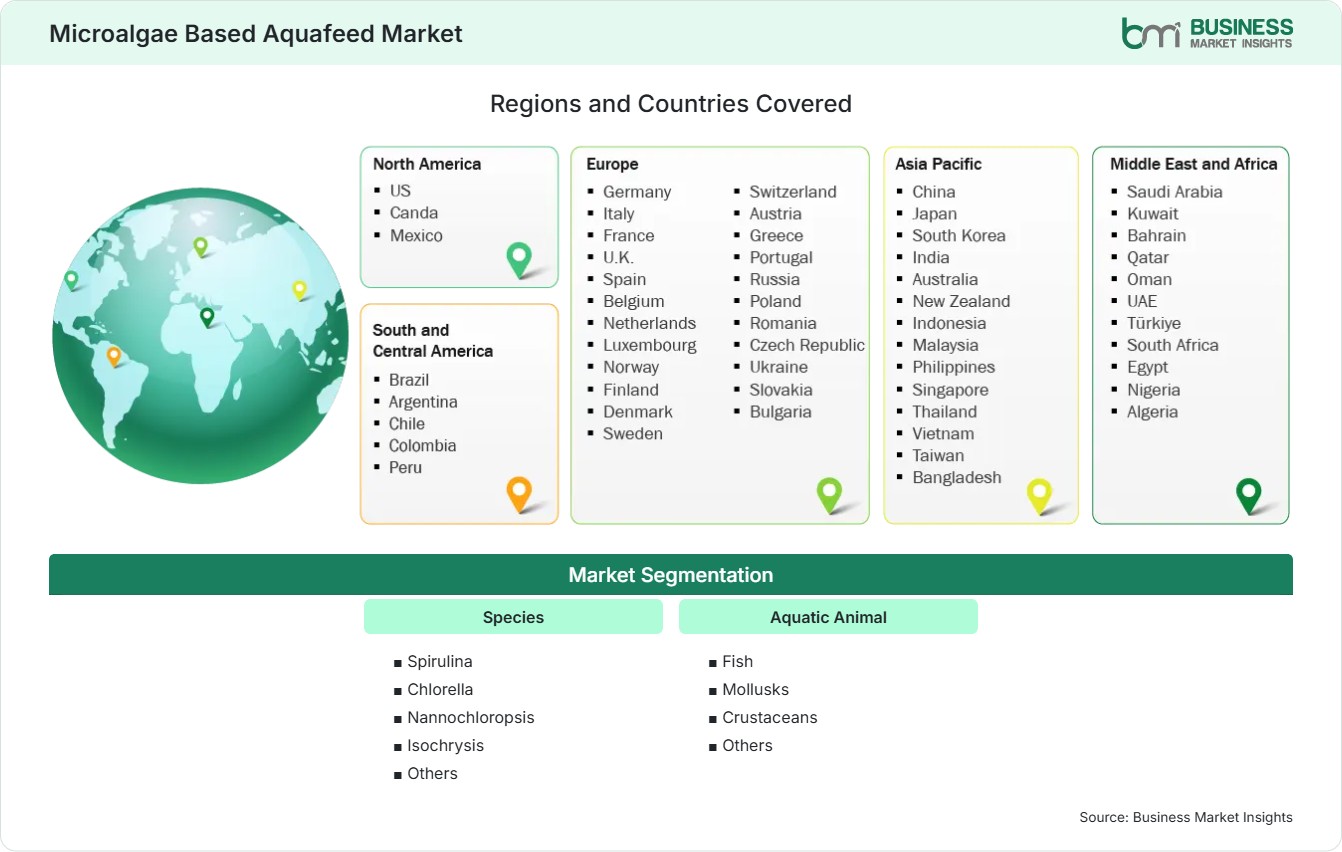
North America accounted for a 33%–36% share in 2025 and is projected to expand at a CAGR of 8.1%–8.6% during 2026–2033. The region benefits from advanced biotechnology capabilities, established aquaculture research infrastructure, and increasing demand for sustainable feed ingredients. The Microalgae-Based Aquafeed Market share in North America is strengthened by commercial investments in algae cultivation and alternative omega-3 production technologies.
- The United States remains the primary contributor, supported by biotechnology companies developing algae-based nutritional solutions for aquaculture and animal feed applications through advanced cultivation platforms.
- Canada is witnessing increased interest in sustainable aquaculture practices, with research institutions exploring algae-derived ingredients for improving aquatic animal nutrition and reducing marine resource dependency.
- Biotechnology investments across North America are supporting innovation in photobioreactor systems, algae harvesting technologies, and scalable biomass production for commercial feed applications.
- Increasing consumer preference for sustainably produced seafood is encouraging aquaculture producers to adopt alternative feed ingredients with improved nutritional profiles and environmental benefits.
US Microalgae-Based Aquafeed Market
The US accounted for a 27%–30% share of North America in 2025, growing at a CAGR of 8.2%–8.7% during 2026–2033. Strong biotechnology expertise, research funding, and established aquaculture feed companies support market expansion. The country continues to attract investments in algae cultivation, sustainable nutrition solutions, and functional feed ingredient development. Increasing demand for environmentally responsible seafood production is accelerating adoption among commercial aquaculture operators.
- The US aquaculture sector is adopting algae-derived ingredients to improve feed sustainability while maintaining nutritional quality and production efficiency across different aquatic species.
- Research collaborations between universities, biotechnology companies, and feed manufacturers are accelerating development of high-value algae-based proteins, lipids, and functional nutritional compounds.
- Growing interest in omega-3 alternatives is encouraging manufacturers to integrate microalgae-derived oils into premium aquafeed formulations for improved aquatic animal health.
Europe Microalgae-Based Aquafeed Market
Europe represented a 28%–31% share in 2025 and is expected to register a CAGR of 8.3%–8.8% during 2026–2033. The region benefits from strong sustainability regulations, biotechnology expertise, and investments in alternative feed ingredients. The Microalgae-Based Aquafeed Market growth across Europe is supported by countries such as Germany, France, Spain, and Portugal, where algae cultivation research and sustainable aquaculture initiatives are expanding.
- France and Portugal are emerging as important algae biotechnology hubs due to advanced cultivation infrastructure and commercial development of sustainable biomass solutions.
- Germany is supporting innovation through research-driven algae applications focused on nutritional improvement, resource efficiency, and sustainable feed production technologies.
- Spain is strengthening its position through marine biotechnology research and increasing application of microalgae ingredients in aquaculture nutrition programs.
- European sustainability regulations are encouraging feed manufacturers to reduce reliance on fishmeal and fish oil through renewable ingredient alternatives.
Asia Pacific Microalgae-Based Aquafeed Market
Asia Pacific accounted for a 27%–30% share in 2025 and is projected to achieve the highest growth rate with a CAGR of 9.4%–10.0% during 2026–2033. The region dominates global aquaculture production, creating strong demand for sustainable feed solutions. China, India, Indonesia, and Vietnam are major contributors due to expanding fish and shrimp farming activities. The Microalgae-Based Aquafeed Market growth is supported by rising seafood consumption and technological investments.
- China represents a major opportunity due to its extensive aquaculture industry and increasing adoption of advanced feed ingredients for intensive farming systems.
- India is witnessing growing investments in sustainable aquaculture technologies as producers seek improved feed efficiency and environmentally responsible production methods.
- Indonesia and Vietnam are expanding algae-based feed applications to support shrimp and fish farming while improving production sustainability.
- Regional governments are encouraging biotechnology development through initiatives focused on food security, aquaculture modernization, and alternative protein sources.
Rest of World Microalgae-Based Aquafeed Market
Rest of World accounted for an estimated 8%–10% share in 2025 and is projected to grow at a CAGR of 7.8%–8.4% during 2026–2033. South and Central America are benefiting from expanding aquaculture activities, while Middle East and Africa are exploring sustainable feed solutions to support emerging seafood production systems. Brazil, Chile, UAE, and Egypt represent promising markets due to increasing investment in aquaculture infrastructure and biotechnology applications.
The region is gradually adopting algae-based feed ingredients as producers focus on improving resource efficiency and reducing dependency on imported marine-based feed materials.
- Brazil and Chile are increasing adoption of sustainable aquaculture practices, supported by expanding seafood exports and demand for high-quality feed formulations.
- Middle Eastern countries are investing in aquaculture technologies to enhance food security and reduce dependence on seafood imports.
- African aquaculture markets are exploring algae-based nutrition solutions to improve fish farming productivity and support local food supply chains.
- Growing biotechnology partnerships are creating opportunities for localized algae cultivation and sustainable feed production across developing markets.
- Increasing private investment in aquaculture infrastructure is supporting long-term adoption of alternative feed ingredients and advanced nutritional technologies.