
Aquafeed Additives Market Outlook: Size, Share, Trends, Growth Analysis, Competitive Landscape & Forecast, 2026-2033

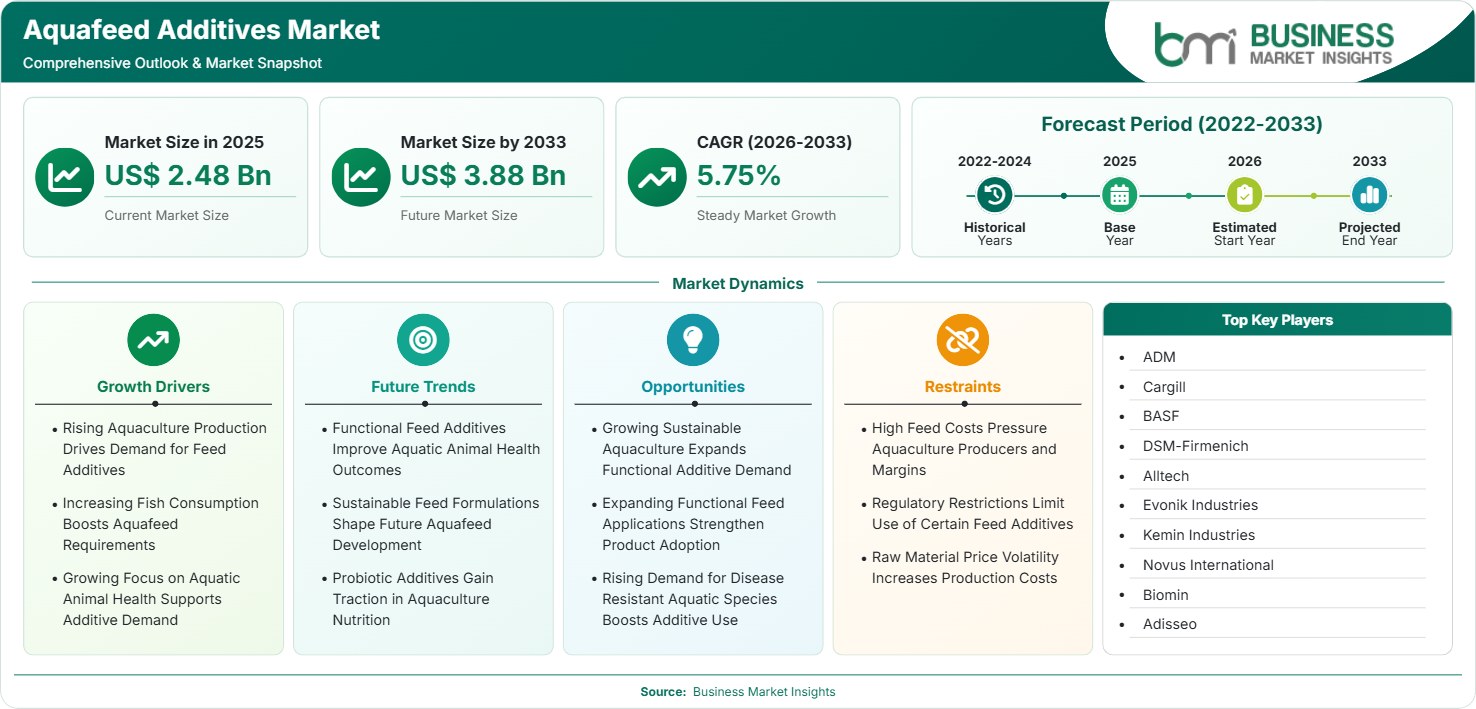
The Aquafeed Additives Market size was valued at US$ 2.48 billion in 2025 and is projected to reach US$ 3.88 billion by 2033, growing at a CAGR of 5.75% during 2026–2033, driven by expanding aquaculture production, rising fish consumption, aquatic animal health priorities, sustainable feed development, and functional nutrition adoption.

Report Coverage
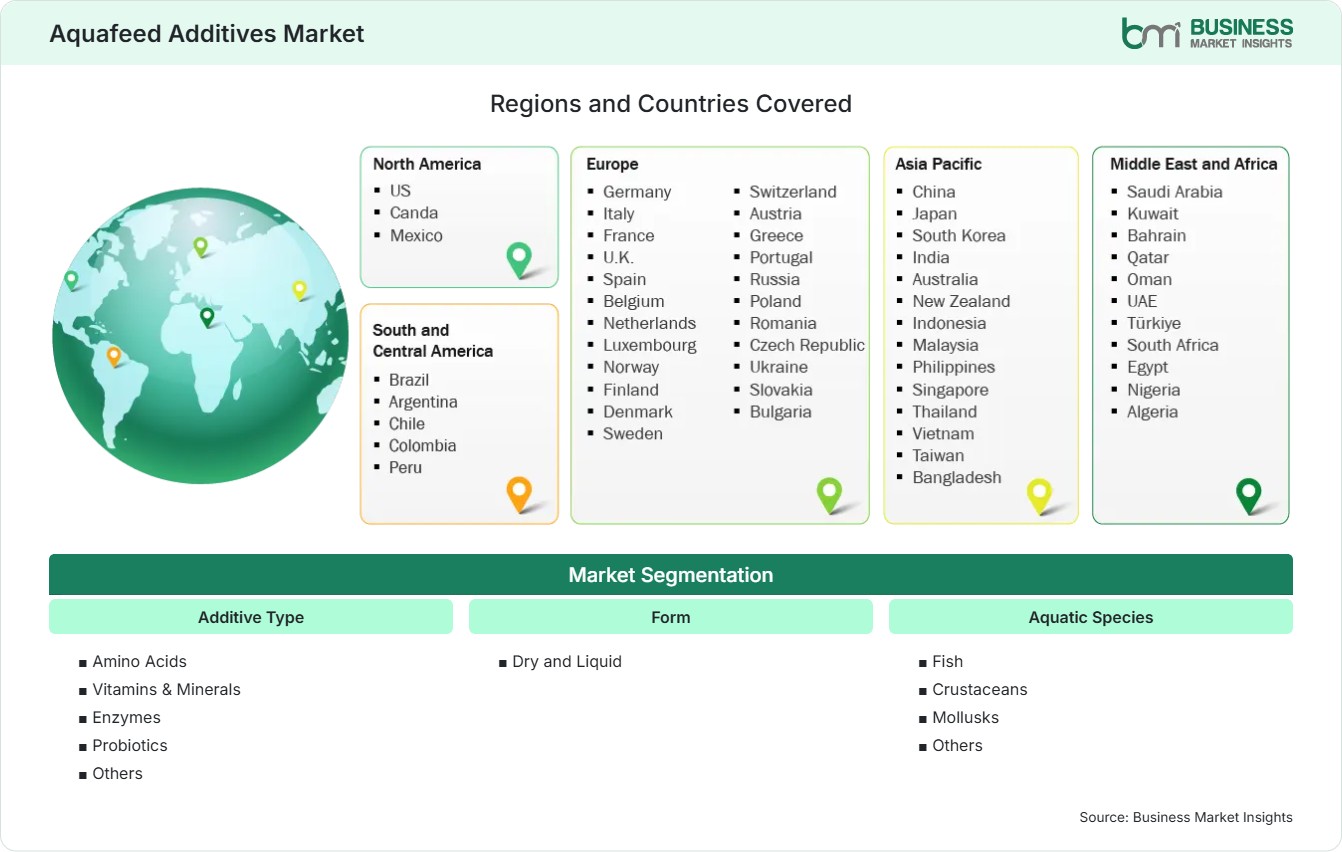
  • Additive Type: Amino Acids, Vitamins & Minerals, Enzymes, Probiotics, Others
  • Form: Dry and Liquid
  • Aquatic Species: Fish, Crustaceans, Mollusks, Others
US$ 2.48 Bn Market size in 2025
US$ 3.88 Bn Market Size by 2033
5.75% CAGR, 2026 - 2033
2026-2033 Forecast Period

01 AI Overview

Aquafeed Additives Market Summary

  • North America Region: North America holds a 16%–21% share in 2025, growing at a 4.8%–5.8% CAGR during 2026–2033, supported by commercial aquaculture, feed innovation, health-focused nutrition, regulatory compliance, and demand for sustainable aquatic production. The US Aquafeed Additives Market is expanding at a 5.0%–6.0% CAGR, supported by increasing seafood consumption, domestic aquaculture development, specialized feed formulations, and interest in functional additives.
  • Fastest Growing Region: Asia Pacific accounts for a 52%–57% share in 2025 and is projected to expand at a 6.5%–7.5% CAGR, supported by extensive aquaculture production, rising seafood consumption, feed intensification, disease management needs, and growing adoption of functional and sustainable feed additives.
  • Leading Segment: Amino Acids represent a 25%–30% share in 2025 and are projected to grow at a 5.8%–6.8% CAGR, supported by protein utilization, growth performance, feed efficiency, nutritional balancing, and increasing demand for optimized aquatic animal diets.
  • High Growth Segment: Probiotics represent a 13%–18% share in 2025 and are expected to grow at a 7.0%–8.0% CAGR, supported by gut health management, disease prevention strategies, reduced antibiotic dependence, and increasing interest in sustainable aquaculture production.
  • Key Market Opportunity: Functional nutrition, sustainable aquaculture, probiotic formulations, disease management, and species-specific feed solutions create opportunities for additive suppliers to develop higher-value products.
  • Major Market Players: Archer Daniels Midland Company, Cargill, Incorporated, BASF SE, dsm-firmenich AG, Alltech, Inc., Evonik Industries AG, Kemin Industries, Inc., Novus International, Inc., Biomin Holding GmbH, Adisseo France SAS.
02 Strategic Insights

Aquafeed Additives Market: Strategic Insights

Aquafeed Additives Market Strategic Framework
FREE PDF
Request your free sample
Request free sample
03 Stakeholder View

Key Takeaways

  • The value chain connects additive manufacturers with premix suppliers, compound feed producers, aquaculture farms, distributors, and aquatic health specialists, creating opportunities for integrated nutritional solutions.
  • Functional additives offer attractive upside as producers increasingly seek feed products that support digestion, immunity, growth performance, and resilience under intensive farming conditions.
  • Probiotics and other functional ingredients are gaining strategic importance as the industry explores alternatives to routine antibiotic use and seeks improved aquatic animal health management.
  • Asia Pacific remains the most compelling regional investment opportunity because of its dominant aquaculture base, extensive seafood production, and increasing adoption of commercial feed technologies.
  • Product differentiation is increasingly shaped by species-specific formulations, demonstrated efficacy, sustainability credentials, regulatory compliance, and technical support provided to feed manufacturers and producers.
04 Geographic Outlook

Aquafeed Additives Market Regional Highlights

North America Aquafeed Additives Market

North America holds a 16%–21% share in 2025 and is projected to expand at a 4.8%–5.8% CAGR during 2026–2033. The US represents the leading regional market, supported by commercial aquaculture development, seafood demand, advanced feed formulation, and growing interest in sustainable production. Canada contributes through salmon and other aquaculture activities. Aquafeed Additives Market share benefits from specialized feed technologies and health-focused nutrition. Market growth is supported by functional additives, feed efficiency, and disease management.

  • Commercial producers increasingly use specialized feed formulations to improve growth, feed conversion, and animal health, supporting demand for amino acids, enzymes, vitamins, minerals, and probiotics.
  • Sustainability objectives are encouraging feed manufacturers to evaluate additives that improve nutrient utilization and reduce waste, helping producers manage environmental impacts associated with intensive aquaculture.
  • Functional nutrition is gaining attention as producers seek practical tools to strengthen aquatic animal resilience and reduce production losses associated with disease and poor feed utilization.

US Aquafeed Additives Market

The US represents a 13%–17% share of the global market in 2025 and is projected to grow at a 5.0%–6.0% CAGR through 2033. Demand is supported by increasing seafood consumption, development of domestic aquaculture, specialized feed manufacturing, and interest in sustainable production. Producers are increasingly evaluating additives that improve nutritional efficiency and aquatic animal health. Growth opportunities are strongest in functional feeds, probiotics, and formulations designed for species-specific requirements across emerging commercial aquaculture applications.

  • Growing attention to domestic seafood production is encouraging investment in aquaculture systems and supporting demand for nutritionally optimized feed products.
  • Feed manufacturers are exploring functional ingredients that can improve digestion and animal resilience while supporting consistent performance under controlled production conditions.
  • Probiotic and enzyme applications provide opportunities for suppliers offering documented benefits in feed utilization, gut health, and nutrient availability.

Europe Aquafeed Additives Market

Europe accounts for a 19%–24% share in 2025 and is forecast to expand at a 4.5%–5.5% CAGR during 2026–2033. Norway, Spain, the UK, France, and Greece represent leading Aquafeed Additives Markets, while Poland provides additional growth potential. Norway is projected to grow at a 4.8%–5.8% CAGR, while Poland could reach a 6.0%–7.0% CAGR. Sustainable aquaculture, strict regulatory oversight, feed efficiency, and innovation in functional nutrition support regional demand.

  • Norway remains a major aquaculture market where salmon production supports demand for advanced feed formulations, nutritional additives, and solutions targeting health and production efficiency.
  • Southern European Aquafeed Additives Markets provide opportunities across seabass, seabream, and other farmed species, creating demand for species-specific nutritional strategies and functional feed ingredients.
  • Regulatory emphasis on sustainability encourages producers to consider additives that improve nutrient utilization, support animal health, and reduce environmental impacts from aquaculture production.

Asia Pacific Aquafeed Additives Market

Asia Pacific represents a 52%–57% share in 2025 and is projected to register a 6.5%–7.5% CAGR during 2026–2033, making it the fastest-growing region. China, India, Vietnam, Indonesia, Thailand, and Japan lead regional demand, while emerging Southeast Asian markets provide further opportunities. India is estimated to grow at a 7.5%–8.5% CAGR, while Vietnam could reach a 7.0%–8.0% CAGR. Aquaculture scale, seafood consumption, and feed intensification support adoption.

  • China provides substantial demand because of its extensive aquaculture industry, large feed manufacturing base, and increasing emphasis on productivity and aquatic animal health.
  • India offers strong growth potential as aquaculture expands and producers increasingly adopt commercial feed systems and nutritional solutions designed to improve farm productivity.
  • Southeast Asian markets are strengthening opportunities for functional additives as intensive shrimp and fish production increases demand for disease management and improved feed performance.

Rest of World Aquafeed Additives Market

South and Central America account for a 9%–13% share in 2025 and are projected to grow at a 5.5%–6.5% CAGR, supported by shrimp, salmon, tilapia, and other aquaculture activities. Brazil, Chile, Ecuador, and Mexico represent leading opportunities. The Middle East and Africa account for a 5%–9% share and are expected to expand at a 4.5%–5.5% CAGR, supported by aquaculture development.

Brazil and Ecuador provide opportunities through expanding shrimp and fish production, while Chile remains important for salmon feed demand. Middle Eastern countries are developing aquaculture as part of food security strategies, while African markets offer longer-term potential as commercial fish farming expands. Adoption depends on feed affordability, producer knowledge, additive availability, regulatory requirements, and the ability to demonstrate measurable improvements in aquatic animal performance.

  • Brazil provides opportunities through expanding fish farming and increasing commercial feed use, supporting demand for nutritional additives that improve growth, feed efficiency, and production economics.
  • Ecuador remains an important shrimp-producing market where disease management and functional nutrition create demand for additives supporting animal resilience and consistent production.
  • Middle Eastern and African aquaculture development creates longer-term opportunities as governments and private producers seek to improve domestic seafood production and strengthen food security.
Global Market Geography
FREE PDF
Request your free sample
Request free sample
05 Segment Analysis

Aquafeed Additives Market Segmentation

Additive Type

Amino Acids represent the leading additive category, accounting for a 25%–30% share in 2025 and a 5.8%–6.8% CAGR during 2026–2034. Their role in balancing diets, supporting growth, and improving protein utilization sustains demand. The Aquafeed Additives Market scope includes nutritional and functional additives used across commercial fish, crustacean, and mollusk production.

  • Amino Acids: Amino acids help balance aquatic diets, support protein synthesis, and improve nutritional efficiency, making them important ingredients in formulated feeds for intensive production.
  • Vitamins & Minerals: Vitamins and minerals support metabolism, skeletal development, immunity, and overall health, with demand influenced by species requirements and feed formulation practices.
  • Enzymes: Enzymes improve nutrient availability and digestion, helping producers optimize feed utilization and potentially reduce nutrient losses associated with intensive aquaculture.
  • Probiotics: Probiotics support digestive health and microbial balance, attracting interest as producers seek functional alternatives for disease management and improved aquatic animal resilience.

Form

Dry products represent a 70%–75% share in 2025 and are projected to grow at a 5.2%–6.2% CAGR during 2026–2034. Their ease of storage, transportation, blending, and incorporation into commercial feeds supports broad adoption. Liquid products provide specialized opportunities where rapid application, formulation flexibility, or targeted feed processing requirements influence producer preferences.

  • Dry: Dry additives are widely used in premixes and compound feeds because they offer convenient handling, storage stability, transportation efficiency, and consistent formulation.
  • Liquid: Liquid additives provide formulation flexibility and can be incorporated through coating or post-processing applications, supporting targeted nutritional and functional feed strategies.

Aquatic Species

Fish represent a 55%–60% share in 2025 and are projected to grow at a 5.5%–6.5% CAGR during 2026–2034. Extensive global fish farming and established commercial feed systems support demand. Crustaceans provide strong functional additive opportunities because shrimp production faces significant disease and health management requirements. Mollusks offer additional applications.

  • Fish: Fish farming represents a major additive application area, with producers using nutritional and functional ingredients to support growth, feed efficiency, immunity, and production performance.
  • Crustaceans: Crustacean farming increasingly uses functional additives to support gut health, disease resilience, and performance in intensive shrimp and other crustacean production systems.
  • Mollusks: Mollusk aquaculture provides specialized opportunities for nutritional solutions supporting growth and health across oysters, mussels, clams, and other commercially farmed species.
06 Market Forces

Aquafeed Additives Market Dynamics

Key Market Drivers

Rising Aquaculture Production Drives Demand for Feed Additives

The expansion of aquaculture production results in growing demands for formulated feeds and the feed additives required to enhance their nutritional quality. With the intensification of farm operations, it becomes necessary to develop diets that ensure efficient, reliable growth and feed conversion and promote animal well-being. Amino acids, vitamins, minerals, enzymes, and probiotics enable the development of feeds tailored to the needs of individual species and particular farming conditions. Increased stocking levels may also pose additional challenges to the health of aquatic animals, thus making the utilization of functional additives beneficial. The transition from extensive to commercial production facilities is especially significant in the Asia Pacific and Latin America regions. With growing aquaculture volumes in global fish supplies, feed additive companies have an opportunity to benefit from increased demand for their products.

Increasing Fish Consumption Boosts Aquafeed Requirements

The increasing consumption of seafood drives the growth of aquaculture and, in turn, the demand for aquafeed. Fish remains a significant source of animal protein in many places, and with a growing population and shifting dietary trends, demand is likely to continue. The producers need feed that will help maintain the efficiency of growth and production. Additives will play a crucial role in altering nutrient content and catering to the needs of certain species. The development of fish farming in developing countries is also driving the usage of formulated feeds against uncontrolled feeding systems. It is likely that demand for additives will remain closely tied to increases in aquafeed consumption.

Growing Focus on Aquatic Animal Health Supports Additive Demand

The health status of aquatic animals has become a critical issue, as diseases in intensive systems can have severe economic impacts. Feed manufacturers are increasingly interested in providing additive ingredients in feed that ensure gut health, improved immunity, digestion, and overall resilience. Various probiotics, enzymes, vitamins, minerals, and functional ingredients are now included in feed management programs to ensure a healthy production environment. It could be used alongside other management programs on farms, such as biosecurity and water management. Interest in demand is especially relevant for shrimp and fish farming, which face problems associated with intensive production.

Key Market Opportunities

Growing Sustainable Aquaculture Expands Functional Additive Demand

There is potential in sustainable aquaculture operations for feed additives that would improve feed efficacy and the general well-being of the animals. Producers are looking for ways to enhance their productions without a proportional increase in the environmental impact and resource use. Enzymes can be used to enhance nutrient utilization, while nutritional additives can help optimize feed. Functional additives could also help with animal well-being and more stable production. Suppliers can make a difference by demonstrating results related to feed conversion efficiency, nutrient absorption, and production efficiency. With growing sustainability demands from regulators and customers, there will be a greater focus on feed additives that improve production efficiency.

Expanding Functional Feed Applications Strengthen Product Adoption

Functional feed applications offer more than just nutritional supplements, as they address specific health and production goals. Probiotics, enzymes, and nutrient premixes can be designed to enhance digestion, immunity, stress control, or disease resistance. Such functional feed uses are especially important for the intensive farming of fish and shrimp because the success of these operations hinges on achieving top-notch performance in the animals involved. Companies that design formulations tailored to specific animal species will have an edge over others in meeting specific needs and developing competitive products. Companies could partner with feed manufacturers, universities, and producers to verify the efficacy of their products.

Rising Demand for Disease Resistant Aquatic Species Boosts Additive Use

As aquaculture strives for healthier, more disease-resistant production, there is room for growth in the Aquafeed Additives Market. Selective breeding and effective farm management can increase resistance; however, nutrition still plays a role in promoting animal health. Nutritional additives that help animals digest food and develop a proper immune system are additional tools alongside genetic and biosecurity measures. Probiotics and other nutritional additives will be most useful in cases where disease risk affects production profitability. Manufacturers will be able to create specialized products for specific species and farm practices, thereby bringing value-added goods to market. As producers focus on survival rates and steady production volume, additive-based health programs will attract more users.

Market Restraints and Challenges

High Feed Costs Pressure Aquaculture Producers and Margins

Factor: In addition to being an important operational cost, feed constitutes a major part of operational expenditure for many aquaculture producers, and the inclusion of additives may increase formulation costs, especially as raw and specialized ingredient prices rise. Impact: Financial pressure may prompt farmers or feed manufacturers to minimize the use of costly additives or to opt for those with well-established positive financial implications. Small producers can be highly sensitive to price increases due to their relatively low purchasing power. They will require products that offer clear benefits, such as improved feed conversion rates or faster growth rates.

Regulatory Restrictions Limit Use of Certain Feed Additives

Factor: Feed additives must comply with regulations covering safety, efficacy, permitted ingredients, labeling, and environmental considerations, with requirements varying between countries. Impact: Complex approval processes can increase product development costs and delay commercialization, particularly for novel functional ingredients. Manufacturers entering multiple markets may need to conduct additional evaluations and maintain different regulatory documentation. Restrictions can also affect formulations containing certain compounds or ingredients where authorities require stronger evidence of safety. Companies with regulatory expertise and established compliance systems can manage these requirements more effectively. Nevertheless, regulatory complexity remains a challenge for suppliers seeking rapid international expansion and broad product adoption.

07 Company Analysis

Competitive Landscape

The Aquafeed Additives Market analysis reflects competition among global feed ingredient companies, specialty nutrition providers, and animal health specialists. Competitive differentiation increasingly depends on product efficacy, species-specific formulation, sustainability credentials, technical support, regulatory compliance, and research capabilities. Large companies benefit from broad distribution networks and integrated portfolios, while specialized providers can compete through targeted functional solutions and application expertise.

Company Name

Overview

Products and Services relevant to this market

Archer Daniels Midland Company

Global agricultural processor and nutrition company with extensive expertise in animal feed ingredients and formulation.

Amino acids, vitamins, minerals, specialty nutrition ingredients, feed additives, and aquaculture nutrition solutions.

Cargill, Incorporated

Global food and agricultural company with extensive animal nutrition and aquaculture feed capabilities.

Aquafeed, nutritional additives, premixes, functional ingredients, and species-specific feed solutions.

BASF SE

Global chemical and nutrition company supplying specialty ingredients to animal nutrition markets.

Vitamins, carotenoids, enzymes, nutritional ingredients, and functional feed solutions for aquatic species.

dsm-firmenich AG

Global nutrition and bioscience company offering science-based ingredients for animal health and nutrition.

Vitamins, enzymes, nutritional solutions, probiotics, specialty ingredients, and aquaculture feed technologies.

Alltech, Inc.

Animal nutrition company focused on technologies supporting livestock, poultry, and aquaculture production.

Yeast-based additives, organic minerals, probiotics, enzymes, nutritional supplements, and aquaculture health solutions.

Evonik Industries AG

Specialty chemicals company with strong expertise in amino acids and sustainable animal nutrition.

Amino acids, specialty nutritional ingredients, feed efficiency solutions, and aquaculture nutrition products.

Kemin Industries, Inc.

Global ingredient manufacturer providing solutions for animal nutrition, health, and feed preservation.

Functional additives, antioxidants, enzymes, specialty ingredients, and aquatic animal health solutions.

Novus International, Inc.

Animal nutrition company developing science-based feed additives and nutritional technologies.

Amino acids, trace minerals, nutritional additives, and specialty solutions for aquaculture feed applications.

Biomin Holding GmbH

Animal nutrition specialist recognized for functional feed additives and mycotoxin management expertise.

Probiotics, phytogenic additives, feed enzymes, gut health solutions, and functional aquaculture nutrition products.

Adisseo France SAS

Global animal nutrition company specializing in amino acids, vitamins, and feed additives.

Methionine, vitamins, specialty nutritional ingredients, functional additives, and feed solutions for aquatic species.

10 Trust & Transparency

Research Methodology

The market analysis combines proprietary research with secondary data from government agencies, company disclosures, regulatory filings, industry databases and expert interviews. Market estimates are validated through data triangulation, cross-market benchmarking and analyst review.

View Full Research Methodology

11 Questions Answered

Frequently Asked Questions

What information is included in an Aquafeed Additives Market Report?

The report includes market size, growth projections, segmentation analysis, regional insights, competitive landscape, additive types, aquatic species, key drivers, opportunities, restraints, industry trends, company profiles, and strategic market factors.

What challenges affect aquafeed additive adoption?

High feed costs, additive price sensitivity, regulatory requirements, product approval complexity, and the need for demonstrated commercial efficacy can influence purchasing decisions among aquaculture producers and feed manufacturers.

How are probiotics influencing aquafeed demand?

Probiotics are gaining attention for their potential role in supporting gut health, microbial balance, digestion, and aquatic animal resilience, particularly in intensive fish and shrimp farming.

Which additive type leads the market?

Amino acids represent the leading additive category because they support protein synthesis, growth, nutritional balancing, and feed efficiency across commercial fish and other aquatic species production.

What factors are supporting Aquafeed Additives Market growth?

Expanding aquaculture production, rising seafood consumption, increasing commercial feed use, greater attention to aquatic animal health, sustainable production goals, and demand for functional nutrition are supporting market development.

Access the Full Aquafeed Additives Market Report

Get segment-level forecasts, regional estimates, competitive benchmarking, company profiles and downloadable Excel datasets.

Access the full Aquafeed Additives Market Report
350 pages PDF & Excel | 2026-08-06