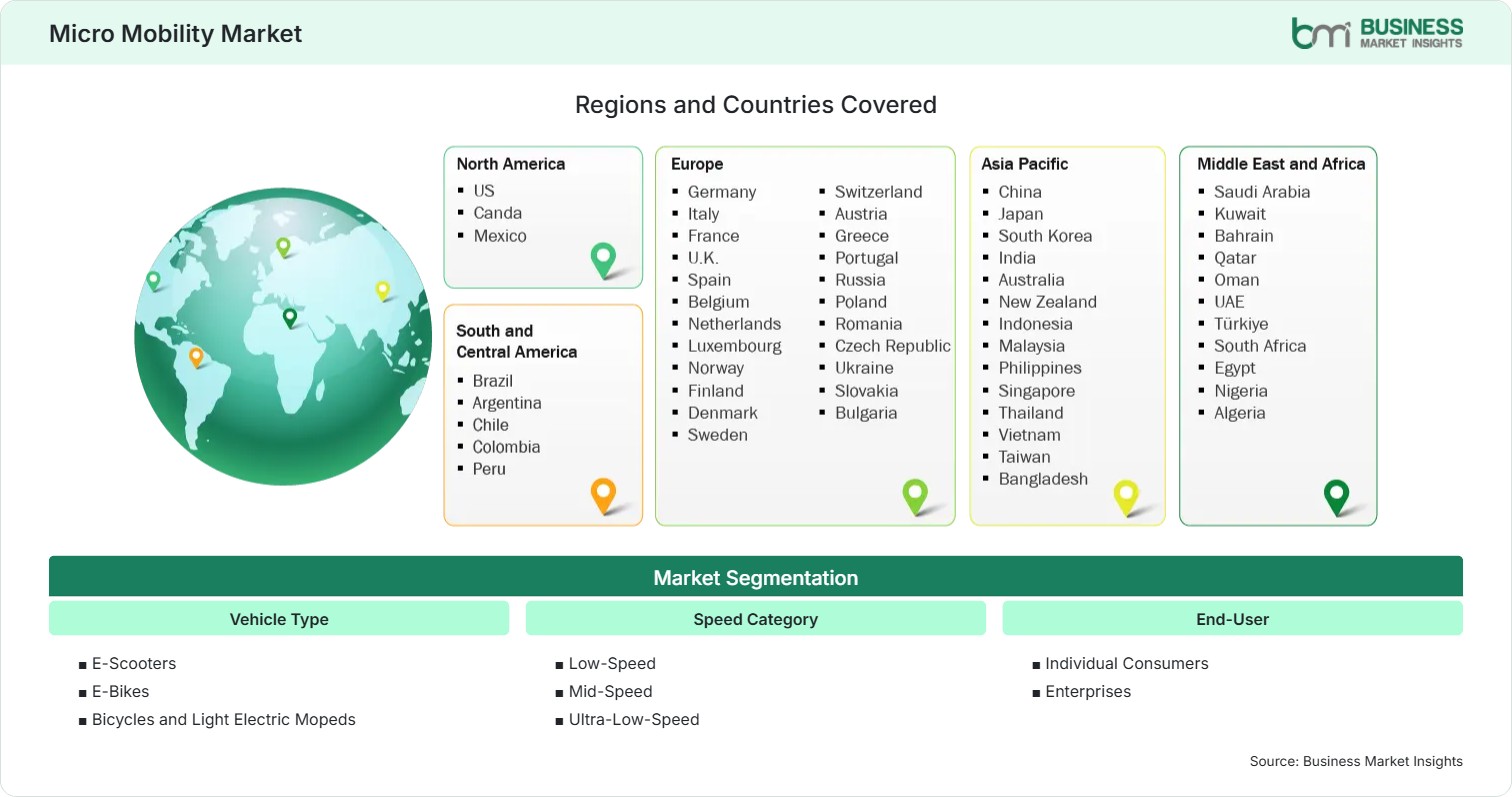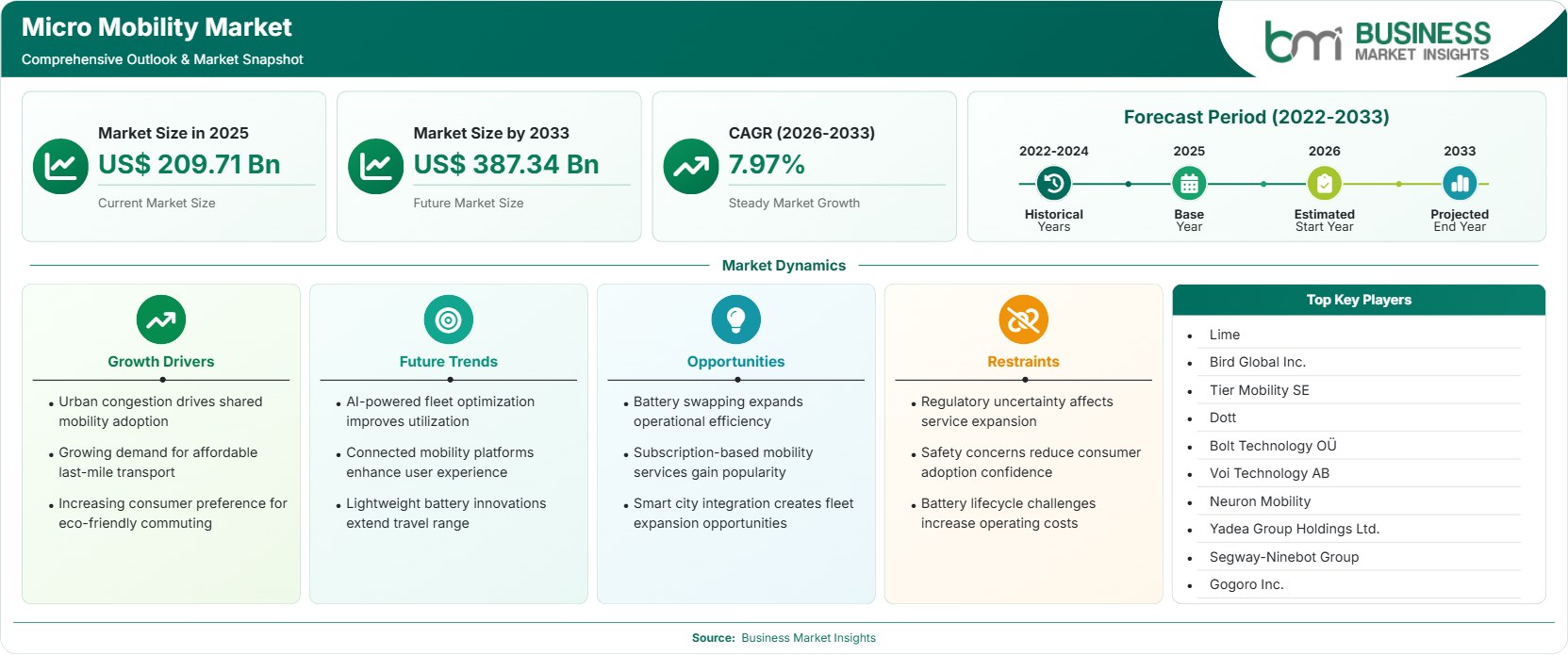
Micro Mobility Market Regional Highlights
North America Micro Mobility Market
North America accounts for 27%–30% Micro Mobility Market share in 2025 and is expected to expand at a CAGR of 7.4%–7.9% during 2026–2033. The region benefits from increasing adoption of shared mobility services, supportive urban transportation programs, and growing consumer interest in sustainable commuting. Cities are investing in cycling infrastructure and mobility platforms to reduce congestion and improve first-mile and last-mile connectivity.
- Shared e-scooter programs continue expanding across metropolitan areas to address short-distance transportation needs.
- Fleet operators are investing in connected technologies to improve vehicle tracking and operational efficiency.
- Government sustainability programs encourage adoption of electric mobility alternatives.
- Urban commuters increasingly prefer flexible transportation options over private vehicle ownership.
US Micro Mobility Market
The United States contributes 78%–82% of North American revenue and is projected to grow at a CAGR of 7.5%–8.0% through 2026–2033. Growing urban mobility challenges, increasing shared transportation adoption, and investments in electric infrastructure continue supporting market expansion.
- Major cities continue expanding shared scooter and bike programs to improve urban connectivity.
- Technology platforms enhance fleet management and user accessibility.
- Universities and business districts represent important adoption areas for compact mobility solutions.
- Consumer preference for affordable transportation supports personal electric vehicle demand.
Europe Micro Mobility Market
Europe represents 25%–28% market share in 2025 and is forecast to grow at a CAGR of 7.8%–8.3% during the forecast period. Strong sustainability regulations, established cycling infrastructure, and government efforts to reduce urban emissions support regional expansion. Germany leads regional adoption, while France and Spain show strong growth through shared mobility investments and urban transportation reforms.
- Climate policies encourage replacement of short vehicle trips with low-emission mobility alternatives.
- Cities are developing dedicated lanes and infrastructure for bicycles and e-scooters.
- Shared mobility operators are expanding partnerships with municipalities.
- Rising consumer awareness supports adoption of sustainable transportation solutions.
Asia Pacific Micro Mobility Market
Asia Pacific holds 36%–39% market share in 2025 and is projected to register the fastest 8.5%–9.1% CAGR through 2026–2033. Dense urban populations, increasing traffic congestion, and rapid smart city development are driving demand across major economies. China leads regional adoption, while India and Southeast Asian countries demonstrate strong growth potential due to expanding urban mobility requirements.
- Growing urban populations increase demand for affordable and efficient transportation solutions.
- Government electric mobility programs support deployment of shared and personal vehicles.
- Expanding digital payment ecosystems improve mobility service accessibility.
- Local manufacturers continue developing affordable electric mobility products.
Rest of World Micro Mobility Market
The Rest of World region accounts for 5%–8% market share in 2025 and is expected to expand at a CAGR of 7.6%–8.2% during 2026–2033. Latin America, the Middle East, and Africa are gradually adopting micro mobility solutions due to increasing urbanization, transportation challenges, and improving digital infrastructure.
- Brazil and Mexico are expanding shared mobility services across major urban centers.
- Middle Eastern cities are investing in smart transportation projects and sustainable mobility solutions.
- African markets show increasing interest in affordable electric transportation alternatives.
- Tourism-focused regions are adopting rental-based micro mobility services for short-distance travel.