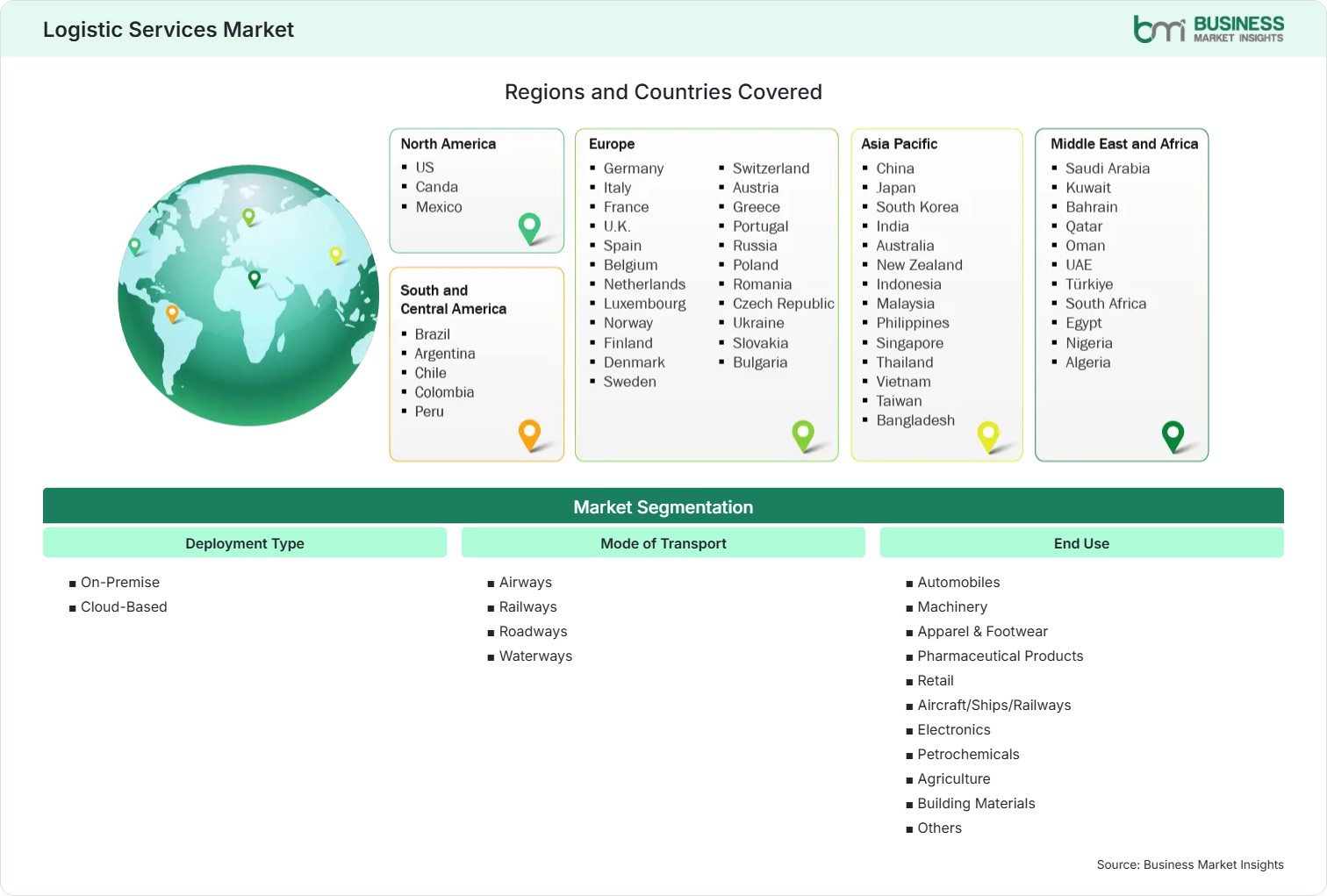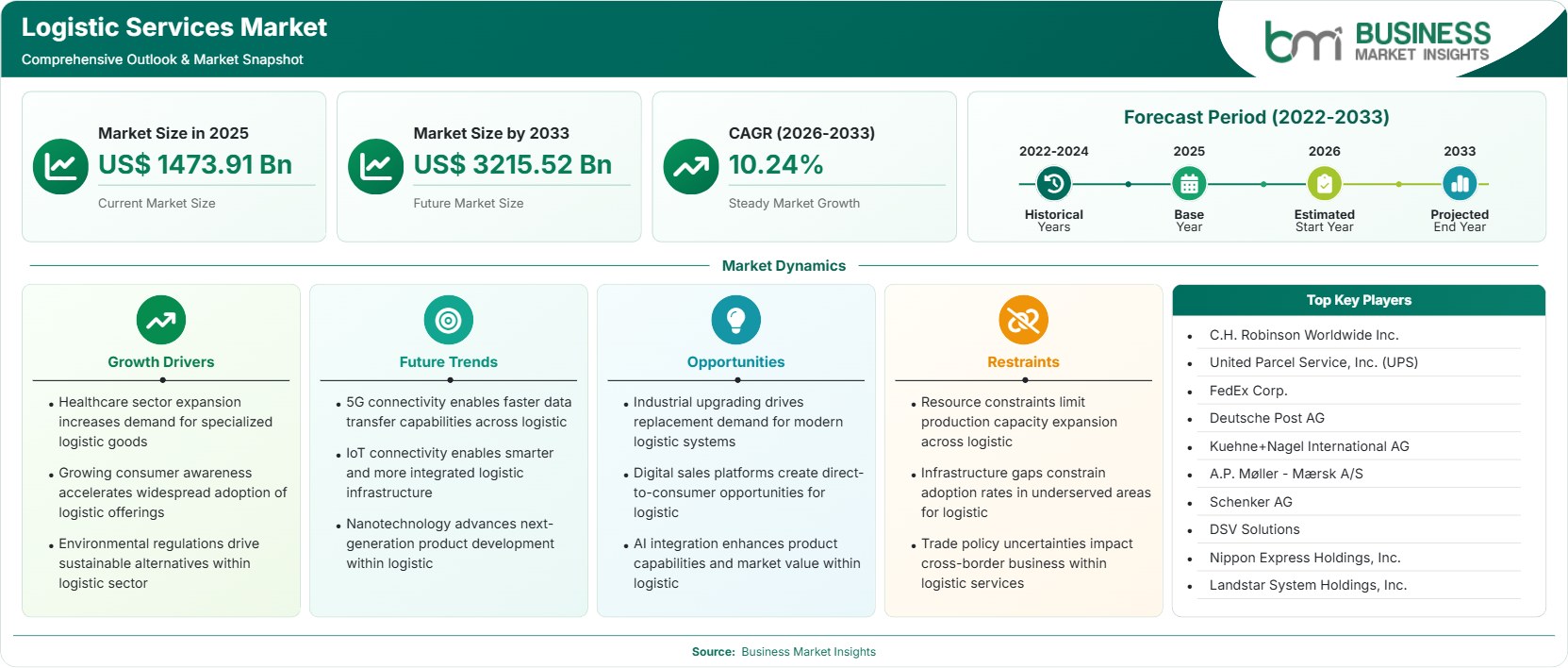
Logistic Services Market Regional Highlights
North America Logistic Services Market
North America accounted for 34%–37% of the global market in 2025 and is projected to expand at a CAGR of 9.2%–9.8% during 2026–2033. The region benefits from mature freight infrastructure, extensive interstate highway systems, advanced warehouse automation, and high e-commerce penetration. Continuous investments in AI-driven transportation management systems, cold-chain logistics, and cross-border trade under the USMCA framework strengthen operational efficiency. Logistic Services Market share remains highest in North America because enterprises increasingly prioritize resilient supply chains, digital freight visibility, and integrated multimodal transportation networks.
- Strong adoption of warehouse robotics, automated sorting systems, and AI-powered route optimization enhances delivery efficiency while reducing transportation costs for retail, healthcare, manufacturing, and consumer goods supply chains across the region.
- Growing investment in electric commercial vehicles, fleet telematics, predictive maintenance platforms, and sustainable logistics initiatives supports corporate decarbonization goals while improving long-term operational productivity and transportation network resilience.
- Rising pharmaceutical production and healthcare distribution increase demand for temperature-controlled logistics, validated cold-chain infrastructure, and real-time shipment monitoring to maintain product integrity throughout domestic and international transportation.
- Third-party logistics providers continue expanding value-added warehousing, inventory optimization, customs brokerage, and integrated fulfillment solutions, enabling enterprises to improve service flexibility and respond effectively to fluctuating customer demand.
- Cross-border freight movement between the United States, Canada, and Mexico continues strengthening multimodal logistics operations through customs modernization, digital documentation, and infrastructure upgrades supporting regional manufacturing and industrial supply chains.
US Logistic Services Market
The United States represented approximately 76%–79% of North American Logistic Services Market revenue in 2025 and is expected to register a CAGR of 9.3%–9.9% through 2033. Expanding omnichannel retail, manufacturing reshoring initiatives, digital freight brokerage, and large-scale distribution networks continue supporting transportation demand. Major logistics providers are investing in robotics, predictive analytics, autonomous warehouse technologies, and cloud-enabled transportation platforms to enhance shipment visibility and strengthen nationwide logistics performance.
- E-commerce fulfillment centers continue expanding near metropolitan regions, supporting same-day and next-day delivery capabilities while encouraging automation investments in parcel handling, warehouse management, and transportation scheduling technologies.
- Federal investments in transportation infrastructure, ports, highways, rail modernization, and airport cargo facilities improve freight capacity, supporting industrial production, international trade, and resilient domestic supply chain operations.
- Pharmaceutical, food, and healthcare logistics remain strong investment areas as companies expand temperature-controlled storage facilities, validated transportation services, and digital compliance monitoring across nationwide distribution networks.
- Manufacturing recovery in automotive, electronics, aerospace, and industrial equipment sectors strengthens demand for integrated freight forwarding, contract logistics, and inventory optimization services supported by digital supply chain technologies.
Europe Logistic Services Market
Europe accounted for 26%–29% of the global Logistic Services Market revenue in 2025, and the Logistics Services Market Forecast indicates growth at a CAGR of 9.5%–10.2% during 2026–2033. The region benefits from integrated transportation corridors, advanced rail freight connectivity, and harmonized trade regulations supporting efficient cross-border logistics. Germany remains the leading market due to its industrial manufacturing strength, while Poland demonstrates the fastest regional expansion with an estimated CAGR of 10.8%–11.4%, supported by warehousing investments and strategic distribution hubs.
- Germany continues leading regional logistics activity through advanced manufacturing, export-oriented industries, automated fulfillment centers, and integrated multimodal freight networks connecting Western and Central European economies.
- Poland experiences rapid logistics infrastructure development as multinational companies establish distribution centers serving European retail, industrial, and e-commerce supply chains through strategically located transportation corridors.
- Sustainability regulations encourage logistics providers to adopt electric delivery fleets, alternative fuels, rail transportation, and carbon reporting systems, improving environmental performance while maintaining competitive freight operations.
- Digital customs processing, warehouse automation, and AI-enabled transportation planning improve shipment reliability, inventory visibility, and cross-border logistics efficiency for manufacturers and retailers throughout the European Union.
- Pharmaceutical logistics and cold-chain transportation continue expanding as healthcare demand, biotechnology production, and regulatory compliance requirements increase investment across specialized logistics infrastructure.
Asia Pacific Logistic Services Market
Asia Pacific accounted for 28%–31% of global revenue in 2025 and is anticipated to record the fastest expansion with a CAGR of 11.8%–12.6% through 2033. Rapid industrialization, manufacturing diversification, digital commerce, and government investments in transport infrastructure continue accelerating Logistic Services Market growth across the region. China remains the largest national market, while India is projected to register the fastest growth with a CAGR of 12.9%–13.6%, supported by logistics modernization and multimodal connectivity initiatives.
- China continues dominating regional freight activity through extensive manufacturing capacity, smart port development, integrated rail networks, and expanding cross-border e-commerce supporting domestic and international logistics demand.
- India experiences accelerating logistics transformation through dedicated freight corridors, digital logistics platforms, warehousing expansion, GST-driven supply chain optimization, and increasing investment in multimodal transportation infrastructure.
- Southeast Asian economies strengthen regional logistics competitiveness through industrial relocation, export diversification, port modernization, and regional trade agreements encouraging cross-border manufacturing supply chains.
- Rising investments in automated warehouses, AI-enabled transportation management systems, and IoT-based shipment tracking improve operational visibility while supporting scalable logistics services for expanding industrial production.
- Growing demand for electronics, automotive components, pharmaceuticals, and consumer goods encourages logistics providers to establish regional fulfillment centers and specialized transportation solutions across Asia Pacific.
Rest of World Logistic Services Market
The Rest of World region represented 8%–11% of global Logistic Services Market revenue during 2025 and is projected to expand at a CAGR of 10.4%–11.1% through 2033. South & Central America continues benefiting from agricultural exports, mining logistics, and expanding retail distribution. Meanwhile, the Middle East and Africa experience increasing investments in smart ports, logistics free zones, and international trade corridors. Brazil remains the leading South American market, while Saudi Arabia demonstrates the fastest regional growth owing to large-scale logistics infrastructure modernization initiatives.
Governments across the Gulf Cooperation Council and selected African economies continue promoting logistics diversification through industrial parks, customs modernization, multimodal freight corridors, and digital trade facilitation. These developments improve regional connectivity while encouraging international logistics providers to expand warehousing capacity, transportation networks, and value-added distribution services.
- Brazil strengthens regional logistics demand through agricultural exports, mining operations, industrial production, and transportation infrastructure investments connecting domestic manufacturers with international export markets.
- Saudi Arabia accelerates logistics sector expansion through Vision 2030 initiatives, smart logistics hubs, integrated ports, digital customs modernization, and significant investment supporting international trade and supply chain diversification.
- The United Arab Emirates continues enhancing global logistics competitiveness by expanding multimodal transportation facilities, free trade zones, advanced warehousing, and digital freight management supporting regional distribution activities.
- African economies invest in port modernization, road connectivity, railway development, and digital customs systems to improve freight efficiency while strengthening regional trade integration and industrial development.
- Increasing foreign direct investment in manufacturing, energy, agriculture, and consumer goods continues encouraging third-party logistics providers to establish regional transportation, warehousing, and integrated supply chain operations.