
Light Sport Aircraft Market Outlook: Size, Share, Trends, Growth Analysis, Competitive Landscape & Forecast, 2026-2033

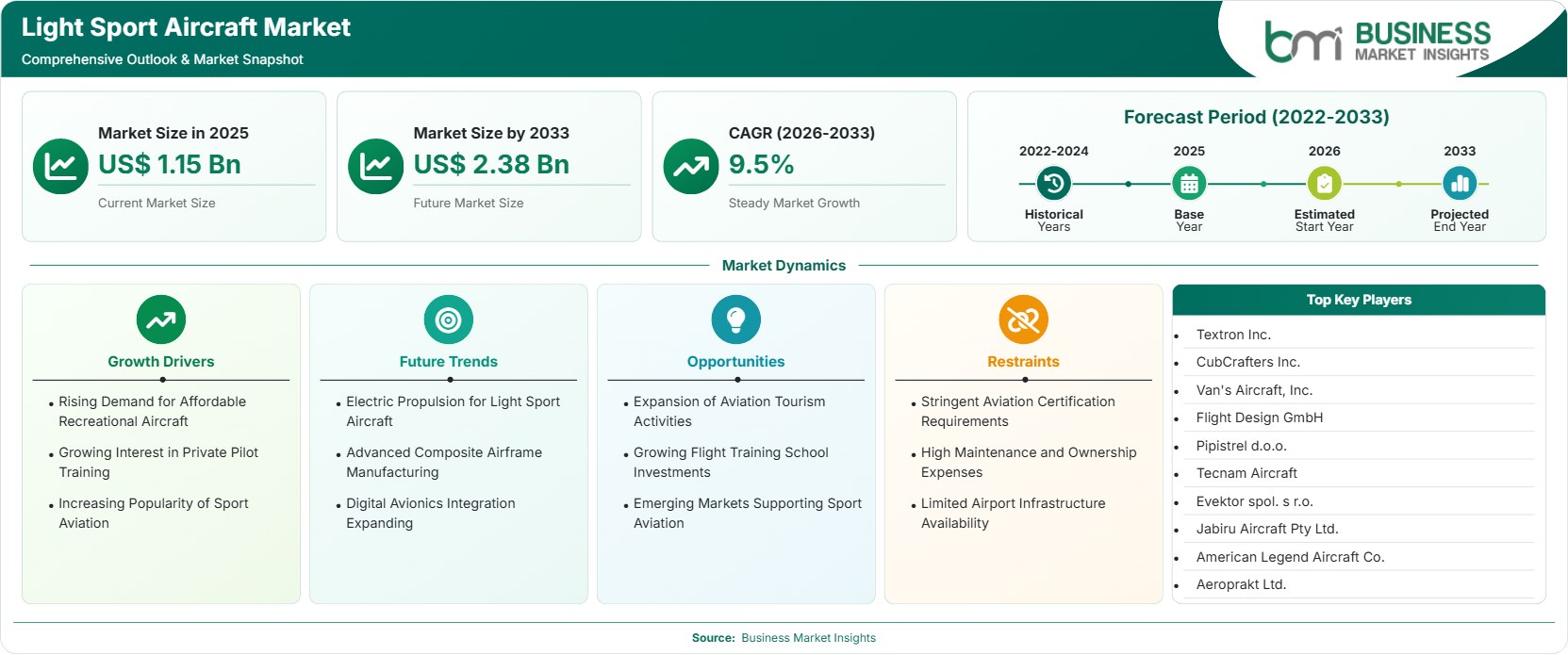
The Light Sport Aircraft Market size was valued at US$ 1.15 billion in 2025 and is projected to reach US$ 2.38 billion by 2033, growing at a CAGR of 9.5% from 2026 to 2033, driven by rising recreational aviation participation, expanding private pilot training programs, increasing demand for affordable aircraft ownership, and continuous advancements in lightweight airframe technologies.

Report Coverage
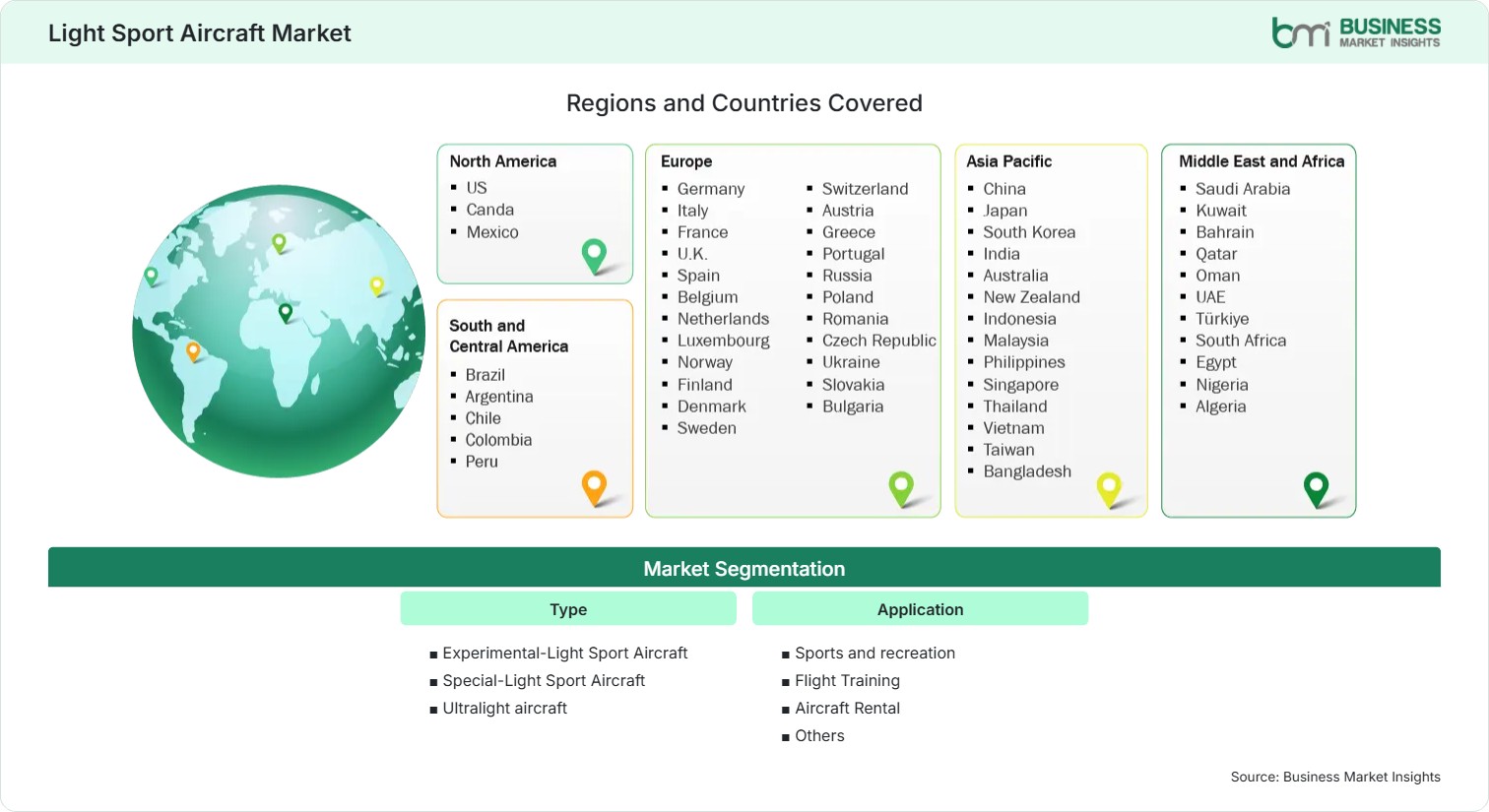
  • Type: Experimental-Light Sport Aircraft, Special-Light Sport Aircraft, Ultralight aircraft
  • Application: Sports and recreation, Flight Training, Aircraft Rental, Others
US$ 1.15 Bn Market size in 2025
US$ 2.38 Bn Market Size by 2033
9.5% CAGR, 2026 - 2033
2026-2033 Forecast Period

01 AI Overview

Light Sport Aircraft Market Summary

  • North America Region: North America held 41%–44% share in 2025 and is projected to grow at a CAGR of 8.9%–9.4% from 2026–2033. Growth is supported by a mature recreational aviation ecosystem, increasing pilot certification activities, strong flying club participation, and continuous investments in general aviation infrastructure. The US market is expected to register a CAGR of 9.0%–9.6% during the forecast period, supported by FAA-recognized sport pilot programs and rising recreational aircraft ownership.
  • Fastest Growing Region: Asia Pacific accounted for 19%–22% share in 2025 and is anticipated to expand at a CAGR of 10.3%–11.0%, driven by growing disposable incomes, expanding aviation academies, rising aviation tourism, and supportive recreational aviation regulations.
  • Leading Segment: Special-Light Sport Aircraft (S-LSA) represented 46%–50% share in 2025 and is projected to grow at a CAGR of 9.3%–9.8%, supported by factory-built certification, operational reliability, and increasing demand from training organizations.
  • High Growth Segment: Flight Training accounted for 28%–32% share in 2025 and is expected to register a CAGR of 10.1%–10.8%, driven by increasing pilot shortages, expanding aviation academies, and cost-effective flight training platforms.
  • Key Market Opportunity: Expansion of aviation tourism, increased investment in pilot training infrastructure, and growing demand for economical recreational aircraft continue creating attractive long-term opportunities for manufacturers and aviation service providers.
  • Major Market Players: Textron Inc., CubCrafters Inc., Van's Aircraft, Inc., Flight Design GmbH, Pipistrel d.o.o., Tecnam Aircraft, Evektor spol. s r.o., Jabiru Aircraft Pty Ltd., American Legend Aircraft Co., and Aeroprakt Ltd.
02 Strategic Insights

Light Sport Aircraft Market: Strategic Insights

light-sport-aircraft-market-market-strategic-framework
FREE PDF
Request your free sample
Request free sample
03 Stakeholder View

Key Takeaways

  • The industry value chain includes aircraft manufacturers, component suppliers, avionics companies, engine manufacturers, flight schools, distributors, maintenance providers, and recreational aviation operators.
  • The strongest growth opportunities are emerging across pilot training academies, aviation tourism operators, aircraft rental businesses, and recreational flying clubs seeking affordable aircraft solutions.
  • Manufacturers are increasingly investing in composite materials, digital avionics, lightweight propulsion systems, and simplified maintenance technologies to improve operational efficiency and customer experience.
  • Asia Pacific presents significant investment potential due to expanding aviation infrastructure, growing middle-class participation in recreational aviation, and increasing government support for general aviation development.
  • Strategic partnerships between manufacturers, aviation academies, and aircraft rental operators are strengthening distribution networks while expanding pilot training capacity worldwide.
  • Future competitiveness will depend on aircraft affordability, fuel efficiency, regulatory compliance, product reliability, and technological innovation supporting safer recreational aviation.
04 Geographic Outlook

Light Sport Aircraft Market Regional Highlights

North America Light Sport Aircraft Market

North America accounted for 41%–44% share in 2025 and is projected to grow at a CAGR of 8.9%–9.4% from 2026–2033. The region benefits from well-established recreational aviation, advanced flight training infrastructure, favorable sport pilot regulations, and strong general aviation participation. High disposable income and widespread flying club memberships continue supporting sustained aircraft demand across the United States and Canada.

  • The United States continues leading recreational aviation activities through FAA-recognized sport pilot certification programs and widespread airport accessibility.
  • Flight schools are increasingly adopting light sport aircraft because of lower operating costs and simplified maintenance requirements.
  • Recreational pilots are driving demand for technologically advanced aircraft featuring digital avionics and fuel-efficient engines.
  • Manufacturers continue expanding dealer networks and after-sales support services across North America to strengthen customer engagement.

US Light Sport Aircraft Market

The US represented 36%–39% share in 2025 and is expected to expand at a CAGR of 9.0%–9.6% from 2026–2033. Strong recreational aviation participation, favorable sport pilot regulations, increasing investments in flight training, and growing demand for affordable aircraft ownership continue supporting market expansion. Modern flight schools and aviation clubs remain major contributors to sustained aircraft procurement across the country.

  • FAA sport pilot licensing programs continue supporting growth in recreational aviation participation nationwide.
  • Flying clubs are investing in modern light sport aircraft to reduce operating expenses and expand training capacity.
  • Aircraft manufacturers continue introducing upgraded avionics, lightweight structures, and enhanced safety features.
  • Aviation tourism operators are increasingly incorporating light sport aircraft into recreational flight experiences.

Europe Light Sport Aircraft Market

Europe accounted for 28%–31% share in 2025 and is projected to grow at a CAGR of 9.2%–9.8% from 2026–2033. The region benefits from a well-established recreational aviation culture, advanced aircraft manufacturing capabilities, and supportive sport aviation regulations. Germany, Italy, the Czech Republic, and France remain key markets owing to strong flight training activity, aviation clubs, and leading light aircraft manufacturers.

  • Germany continues supporting recreational aviation through established flying clubs, general aviation infrastructure, and increasing investments in pilot development programs.
  • Italy benefits from a strong light aircraft manufacturing ecosystem and growing demand for affordable recreational aviation platforms.
  • The Czech Republic remains an important production hub with globally recognized manufacturers supplying training and sport aviation aircraft.
  • France is witnessing rising participation in private pilot training supported by modern aviation academies and improved regional airport connectivity.
  • European manufacturers continue investing in composite airframes, digital avionics, and fuel-efficient propulsion systems to improve aircraft performance.

Asia Pacific Light Sport Aircraft Market

Asia Pacific represented 19%–22% share in 2025 and is forecast to register a CAGR of 10.3%–11.0% during Light Sport Aircraft Market Forecasts, making it the fastest-growing regional market. Rising disposable income, aviation tourism, expanding flight academies, and increasing government support for general aviation are accelerating market growth. China, Australia, India, Japan, and South Korea are emerging as important markets for recreational and training aircraft.

  • China is strengthening recreational aviation infrastructure through airport expansion and supportive policies encouraging general aviation development.
  • Australia continues witnessing steady demand owing to strong recreational flying communities and extensive pilot training activities.
  • India is expanding flight training infrastructure to address growing pilot demand across commercial and recreational aviation sectors.
  • Japan is increasing investments in aviation education and recreational aviation activities supported by modern training facilities.
  • South Korea is encouraging aviation innovation and expanding opportunities for private pilot certification and sport aviation.

Rest of World Light Sport Aircraft Market

Rest of World accounted for 8%–11% of the Light Sport Aircraft Market share in 2025 and is expected to grow at a CAGR of 9.6%–10.2% from 2026–2033. Latin America, the Middle East, and Africa are gradually expanding recreational aviation through investments in pilot training, tourism development, and regional airport infrastructure. Growing interest in affordable personal aviation is creating new opportunities for aircraft manufacturers across these emerging markets.

Countries across the Middle East are investing in aviation tourism and flight training facilities, while Latin America continues expanding private aviation participation. African markets are witnessing gradual development supported by aviation education initiatives and improved regulatory frameworks.

  • Brazil continues strengthening recreational aviation through expanding flying clubs and growing investments in aviation training infrastructure.
  • The United Arab Emirates is supporting aviation tourism and pilot education through modern aviation facilities and favorable investment initiatives.
  • Saudi Arabia is encouraging general aviation development under broader aviation diversification strategies.
  • South Africa remains an important regional aviation hub supporting recreational flying and flight training activities.
  • Growing airport modernization projects are improving access to sport aviation across emerging economies.
global-market-geography
FREE PDF
Request your free sample
Request free sample
05 Segment Analysis

Light Sport Aircraft Market Segmentation

Type

Type segmentation forms the core of the Light Sport Aircraft Market and reflects varying certification standards, operational flexibility, and user preferences. The segment accounted for 100% share in 2025 and is projected to grow at a CAGR of 9.5% from 2026–2033. Technological advancements, lightweight composite structures, and increasing recreational aviation participation continue supporting demand across all aircraft categories.

  • Experimental-Light Sport Aircraft (E-LSA): Experimental-Light Sport Aircraft are increasingly adopted by aviation enthusiasts seeking aircraft customization, lower acquisition costs, and flexible maintenance options while complying with recreational aviation regulations.
  • Special-Light Sport Aircraft (S-LSA): Special-Light Sport Aircraft dominate commercial demand because they are factory-built, fully certified, widely accepted by flight schools, and suitable for rental operations.
  • Ultralight Aircraft: Ultralight aircraft continue attracting recreational users through simple operation, lightweight construction, affordability, and lower regulatory requirements in several aviation jurisdictions.

Application

Application segmentation reflects the expanding use of light sport aircraft across recreational flying, aviation education, rental operations, and specialized aviation activities. The segment accounted for 100% share in 2025 and is expected to register a CAGR of 9.5% from 2026–2033. Increasing recreational participation, aviation tourism, and pilot shortages continue supporting broader aircraft utilization.

  • Sports and Recreation: Recreational flying remains the largest application due to increasing leisure aviation participation, flying club memberships, and affordable private aircraft ownership.
  • Flight Training: Flight schools increasingly utilize light sport aircraft because of lower operating costs, fuel efficiency, simplified maintenance, and suitability for primary pilot instruction.
  • Aircraft Rental: Rental operators are expanding fleets of light sport aircraft to meet growing demand for affordable recreational flying experiences and aviation tourism services.
  • Others: Additional applications include aerial photography, personal transportation, surveillance support, and specialized aviation missions requiring lightweight and economical aircraft.
06 Market Forces

Light Sport Aircraft Market Dynamics

Key Market Drivers

Rising Demand for Affordable Recreational Aircraft

The growing popularity of recreational flying is significantly increasing demand for affordable light sport aircraft among aviation enthusiasts and first-time aircraft owners. Compared with conventional general aviation aircraft, light sport aircraft offer lower acquisition costs, reduced fuel consumption, simplified maintenance, and lower pilot licensing requirements in several countries. Manufacturers are introducing modern composite airframes, digital avionics, and fuel-efficient engines to further enhance affordability and operational efficiency. Increasing participation in leisure aviation, flying clubs, and private ownership continues to strengthen long-term demand, making recreational aviation one of the strongest growth contributors to the Light Sport Aircraft Market.

Growing Interest in Private Pilot Training

The expansion of commercial aviation and the global shortage of qualified pilots are encouraging greater investment in private pilot training programs. Flight schools increasingly prefer light sport aircraft because they provide economical flight hours, lower maintenance expenses, and excellent handling characteristics for beginner pilots. Aviation academies across North America, Europe, and Asia Pacific are expanding their training fleets to accommodate rising enrollment. Continued modernization of aviation training infrastructure, together with supportive sport pilot licensing regulations in several countries, is expected to sustain demand for training aircraft throughout the forecast period.

Increasing Popularity of Sport Aviation

Sport aviation is becoming increasingly popular due to rising disposable incomes, expanding aviation communities, and improved accessibility to recreational flying. National aviation associations and flying clubs continue organizing aviation events, competitions, and recreational activities that encourage new participants to enter the market. Technological improvements in aircraft safety, cockpit automation, lightweight materials, and fuel efficiency are making light sport aircraft more attractive to recreational users. Growing awareness of personal aviation experiences and aviation tourism is expected to further accelerate demand across developed and emerging markets.

Key Market Opportunities

Expansion of Aviation Tourism Activities

The rapid expansion of aviation tourism is creating new growth opportunities for light sport aircraft manufacturers and service providers. Adventure tourism operators, scenic flight companies, and private aviation clubs are increasingly using light sport aircraft for their operational flexibility and cost-effectiveness. Countries promoting experiential tourism are investing in regional airports, recreational aviation infrastructure, and pilot training facilities to support tourism growth. These Light Sport Aircraft Market Trends are expected to increase aircraft procurement while expanding commercial opportunities for flight operators, rental companies, and maintenance service providers worldwide.

Growing Flight Training School Investments

Increasing investment in aviation academies and pilot training schools presents a significant opportunity for aircraft manufacturers. The continuing shortage of commercial pilots is encouraging governments and private organizations to expand aviation education infrastructure. Light sport aircraft are widely selected for primary pilot instruction because they offer lower acquisition costs, reduced fuel consumption, and simplified maintenance compared with conventional trainer aircraft. Expanding training capacity across North America, Europe, Asia Pacific, and the Middle East is expected to sustain long-term fleet replacement and procurement activities.

Emerging Markets Supporting Sport Aviation

Emerging economies are gradually strengthening their general aviation ecosystems through airport modernization, regulatory reforms, and investment incentives supporting recreational aviation. Rising middle-class income levels and growing interest in private flying are encouraging greater adoption of light sport aircraft across Asia Pacific, Latin America, and parts of the Middle East. Manufacturers are expanding dealer networks, localized maintenance capabilities, and customer support services to capitalize on these opportunities. Continued regulatory improvements and infrastructure development are expected to accelerate market penetration across developing regions.

Market Restraints and Challenges

Stringent Aviation Certification Requirements

Factor: Aircraft certification requires extensive regulatory compliance, rigorous safety testing, documentation, and continuous oversight by national aviation authorities before commercial deployment. Lengthy approval timelines and high certification costs can delay new product introductions, increase development expenditure, and create barriers for smaller manufacturers seeking to introduce innovative aircraft designs into global markets.

High Maintenance and Ownership Expenses

Factor: Although light sport aircraft are less expensive than conventional aircraft, owners still incur ongoing costs related to maintenance, inspections, insurance, hangar storage, spare parts, and pilot licensing. High lifetime ownership costs may discourage first-time buyers and recreational users, particularly in price-sensitive markets, thereby slowing aircraft purchases despite growing interest in personal and recreational aviation.

07 Company Analysis

Competitive Landscape

The Light Sport Aircraft Market analysis indicates a competitive landscape comprising established aircraft manufacturers, recreational aviation specialists, and pilot training aircraft suppliers. Companies are emphasizing lightweight composite airframes, fuel-efficient engines, advanced glass cockpit avionics, and improved safety features to strengthen their competitive positions. Strategic priorities include expanding dealer networks, enhancing aftermarket support, developing electric propulsion technologies, and increasing production capacity to address growing global demand for recreational and training aircraft.

Company Name

Overview

Products and Services relevant to this market

Textron Inc.

Global aerospace company with diversified general aviation and defense aircraft portfolio.

Light aircraft, trainer aircraft, aviation services, aftermarket support, and aircraft technologies.

CubCrafters Inc.

Manufacturer specializing in backcountry and light sport aircraft.

Light sport aircraft, trainer aircraft, aircraft customization, and maintenance support.

Van's Aircraft, Inc.

Leading producer of kit-built and recreational aircraft for sport aviation.

Experimental aircraft kits, light sport aircraft, engineering support, and aviation components.

Flight Design GmbH

European aircraft manufacturer focused on composite light sport aircraft.

Composite light sport aircraft, pilot training aircraft, avionics integration, and technical support.

Pipistrel d.o.o.

Aircraft manufacturer recognized for innovative and electric aviation technologies.

Light sport aircraft, electric aircraft, training aircraft, and advanced aviation solutions.

Tecnam Aircraft

Global manufacturer of training and recreational aircraft.

Light sport aircraft, flight training aircraft, commuter aircraft, and aviation services.

Evektor spol. s r.o.

Czech aircraft manufacturer serving recreational and training aviation markets.

Sport aircraft, trainer aircraft, engineering services, and aircraft development solutions.

Jabiru Aircraft Pty Ltd.

Australian manufacturer of lightweight recreational aircraft and engines.

Light sport aircraft, aircraft engines, recreational aircraft, and aviation support services.

American Legend Aircraft Co.

Manufacturer specializing in classic-style light sport aircraft.

Certified light sport aircraft, recreational aircraft, aircraft upgrades, and maintenance services.

Aeroprakt Ltd.

Aircraft manufacturer producing light sport and utility aircraft.

Light sport aircraft, utility aircraft, pilot training aircraft, and technical support services.

08 Industry Activity

Recent Developments

July 2026

CubCrafters Inc. announced the new Carbon Cub ULT, an innovative turboprop-powered evolution of the company’s popular Carbon Cub UL platform. Designed to combine the simplicity and efficiency of modern sport aviation with the smooth power.

March 2026

Tecnam Aircraft announced the successful completion of a comprehensive technical training and support program for the country’s premier Flight Training Organizations (FTOs).

February 2025

Piper Aircraft reported its strongest annual performance since 2001, delivering 291 aircraft in 2024 and highlighting growth in its training aircraft portfolio, including the Pilot 100i, which supports the light aircraft training segment.

January 2025

Pipistrel (Textron eAviation) successfully completed the first hover flight of the Nuuva V300 hybrid-electric VTOL aircraft, demonstrating continued investment in sustainable light aviation technologies and advanced aircraft development.

10 Trust & Transparency

Research Methodology

The market analysis combines proprietary research with secondary data from government agencies, company disclosures, regulatory filings, industry databases and expert interviews. Market estimates are validated through data triangulation, cross-market benchmarking and analyst review.

View Full Research Methodology

11 Questions Answered

Frequently Asked Questions

What does the Light Sport Aircraft Market Report cover?

The Light Sport Aircraft Report provides detailed analysis of market size, regional outlook, segmentation, competitive landscape, growth drivers, opportunities, restraints, technological developments, and forecasts through 2033.

How are manufacturers improving light sport aircraft?

Manufacturers are introducing composite airframes, digital avionics, fuel-efficient engines, improved safety systems, and electric propulsion technologies to enhance aircraft performance while lowering operating costs.

Why is Asia Pacific the fastest-growing region?

Asia Pacific is experiencing rapid growth because of increasing disposable incomes, expanding aviation infrastructure, growing pilot training investments, supportive government initiatives, and rising interest in recreational aviation.

Which aircraft type dominates the market?

Special-Light Sport Aircraft (S-LSA) account for the largest market share due to factory certification, operational reliability, strong adoption by flight schools, and suitability for commercial rental operations.

What factors are driving the Light Sport Aircraft Market growth?

The market is driven by increasing recreational aviation participation, rising demand for affordable aircraft ownership, expanding flight training activities, growing aviation tourism, and continuous advancements in lightweight aircraft technologies.

Access the Full Light Sport Aircraft Market Report

Get segment-level forecasts, regional estimates, competitive benchmarking, company profiles and downloadable Excel datasets.

Access the full Light Sport Aircraft Market Report
350 pages PDF & Excel | 2026-07-28