Market Summary
Executive Summary and Global Market Analysis
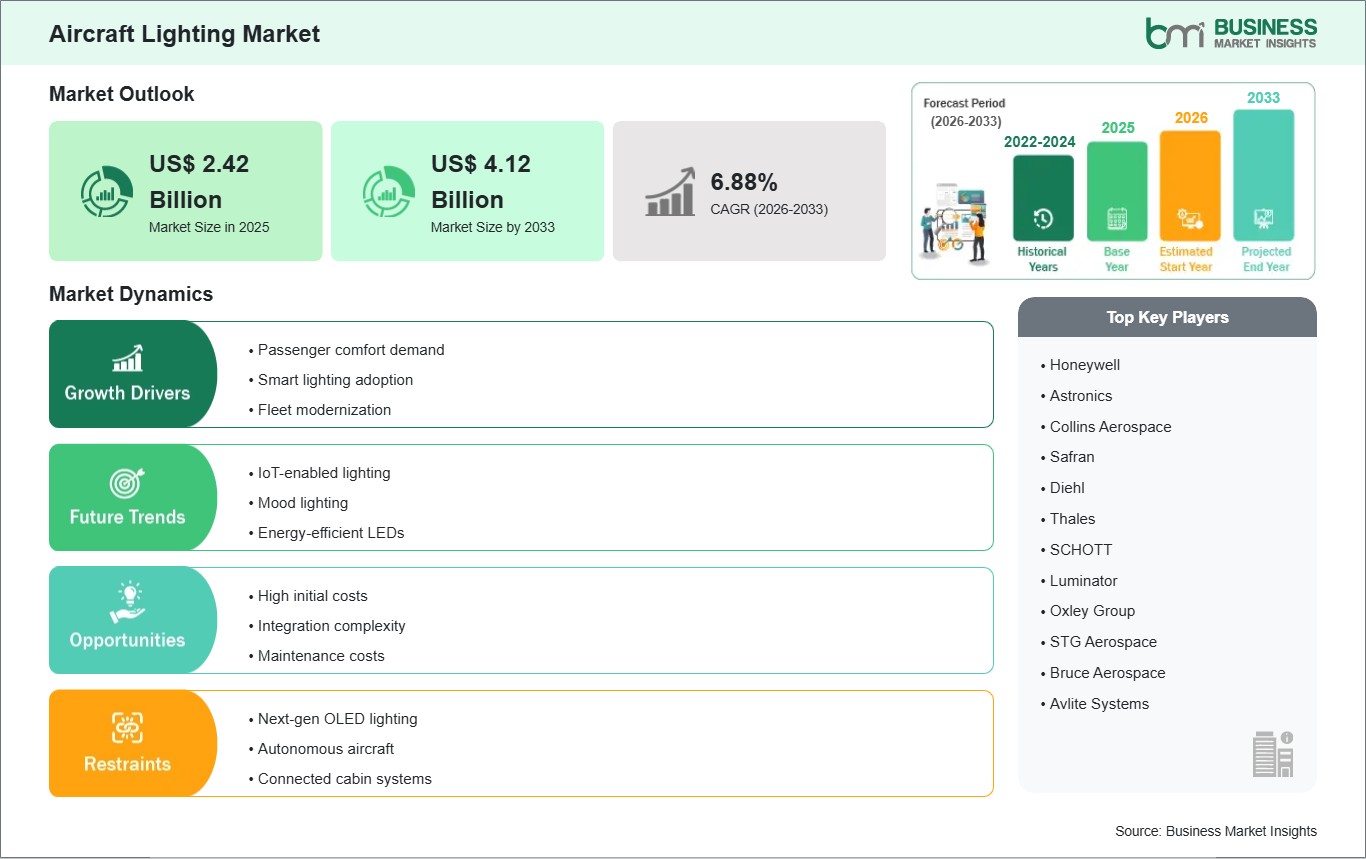
Aircraft lighting systems are used to improve visibility, safety, and passenger comfort during aircraft operations. These systems include interior cabin lighting, cockpit lighting, landing lights, navigation lights, and emergency lighting. They assist pilots in flying safely in various weather conditions while also making the journey more comfortable for the passengers. The market is witnessing growth as airline operators are upgrading their fleets, aircraft manufacturers are becoming more environmentally friendly by adopting efficient lighting technology, and there is an increasing focus on safety from aviation authorities.
There are several challenges that could affect market growth. The certification requirements for aircraft lighting systems are strict and can increase development timelines and costs. Retrofitting existing aircraft with more sophisticated lighting technology may require changes in existing electrical systems, which will lead to increased costs for the airlines using them. Aircraft manufacturers as well as airlines need to consider that these systems be durable and reliable enough to perform under adverse conditions.
Despite these challenges, the market is expected to benefit from continued technological advancements and fleet modernization programs. Opportunities are emerging through smart cabin lighting systems, connected aircraft technologies, and next-generation LED technology advancements, providing better efficiency and customizability features. The increasing number of investments made in new air mobility aircraft and electric aircraft will create a need for more lightweight and efficient lighting systems. The growing importance given to the passenger experience and sustainability solutions should lead to growth in the Aircraft Lighting market.
Segment Analysis
Aircraft Lighting Market Segmentation
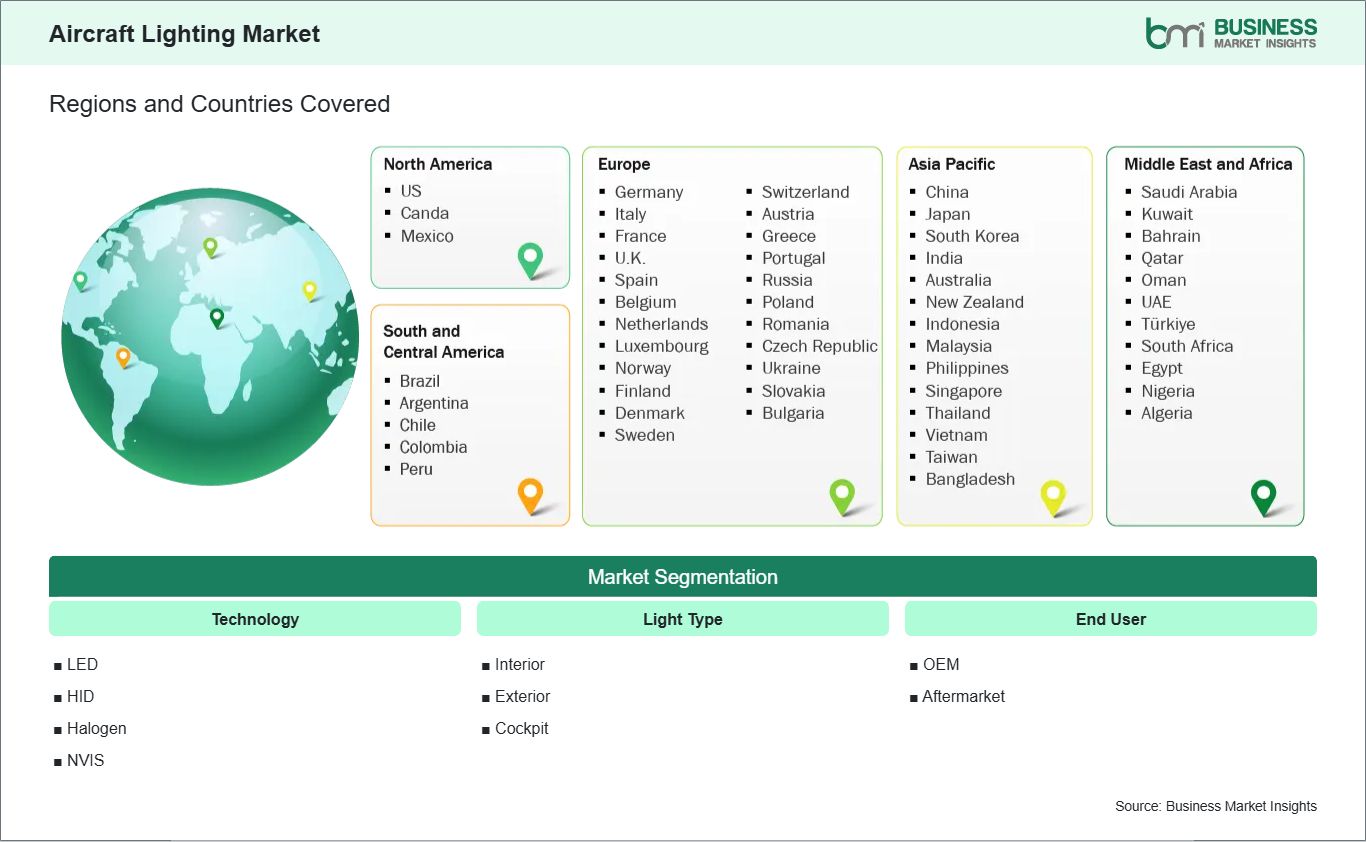
The Aircraft Lighting Market is segmented based on technology, light type, and end user. Continuous advancements in aviation safety systems and passenger cabin enhancements are supporting demand across these segments.
By Technology
- LED: Widely adopted due to energy efficiency, long lifespan, lightweight design, and reduced maintenance requirements.
- HID: Used in applications requiring high-intensity illumination, particularly for landing and exterior lighting functions.
- Halogen: Continues to be utilized in legacy aircraft platforms due to established infrastructure and compatibility.
- NVIS: Designed for military and specialized aircraft operations requiring night vision compatibility.
By Light Type
- Interior: Supports passenger comfort, cabin ambiance, emergency guidance, and operational visibility within aircraft cabins.
- Exterior: Includes navigation, landing, taxi, anti-collision, and position lighting systems used during flight operations.
- Cockpit: Enhances pilot visibility and instrument readability under different operating conditions.
By End User
- OEM: Driven by new aircraft production and integration of advanced lighting technologies during manufacturing.
- Aftermarket: Supported by fleet modernization programs, cabin refurbishments, and replacement of legacy lighting systems.
Market Forces
Aircraft Lighting Market Drivers and Opportunities
Growing Adoption of Energy-Efficient LED Aviation Lighting
The aviation industry is increasingly shifting toward LED-based lighting technologies to improve operational efficiency and reduce maintenance requirements. Conventional lighting equipment tends to be more energy-intensive and prone to failure, thereby increasing the costs of maintenance on the part of airplane owners. LEDs provide an effective alternative due to their extended lifespan, reduced energy expenditure, and enhanced performance in harsh environments.
Aircraft manufacturers and airlines are integrating LED lighting across cabins, cockpits, and exterior applications to support efficiency goals and improve passenger experience. Mood lighting systems in cabins are becoming more prevalent as airlines try to create comfortable surroundings during flights. There are also other factors such as regulatory requirements relating to aviation safety and performance that have contributed to the popularity of lighting innovations. The transition toward lighter and more efficient aircraft components further supports demand for LED lighting systems. As aviation operators continue to focus on operational cost reduction and sustainability initiatives, the adoption of advanced lighting technologies is expected to remain a significant factor supporting the growth of the Aircraft Lighting Market.
Emerging Opportunities in Smart Cabin and Advanced Lighting Systems
The increasing digitalization of aircraft cabins is creating new opportunities for advanced lighting solutions. Airlines are investing in smart cabin technologies that enhance passenger comfort, improve operational efficiency, and support personalized travel experiences. Lighting systems are becoming integrated with cabin management platforms, allowing automated adjustments based on flight phases, passenger activities, and environmental conditions. Advanced mood lighting solutions are gaining attention because they can help reduce passenger fatigue and improve overall travel comfort during long-haul flights. The development of intelligent lighting controls and connected cabin systems is creating opportunities for manufacturers to introduce more sophisticated lighting products.
Growing investments in next-generation aircraft, electric aviation platforms, and advanced air mobility vehicles are also creating demand for lightweight and highly efficient lighting systems. Military aviation applications continue to require specialized lighting technologies that support night operations and mission effectiveness. As aviation technology evolves, innovations in smart lighting, adaptive illumination, and connected aircraft systems are expected to create substantial opportunities within the Aircraft Lighting Market.
Size and Share Analysis
Aircraft Lighting Market Size and Share Analysis
The Aircraft Lighting Market is projected to grow from US$ 2.42 Billion in 2025 to US$ 4.12 Billion by 2033 , registering a CAGR of 6.88% from 2026 to 2033.
By technology, LED lighting accounts for a significant share due to its superior energy efficiency, longer operational life, and lower maintenance requirements compared to conventional lighting systems. HID lighting continues to be used in applications requiring high-intensity illumination, while halogen lighting remains present in several legacy aircraft platforms. NVIS-compatible lighting is gaining importance in military aviation applications where night-vision compatibility is required.
By light type, exterior lighting holds a substantial share because of its critical role in navigation, landing, taxiing, and aircraft visibility during operations. Interior lighting is witnessing increasing adoption as airlines focus on passenger comfort and cabin modernization programs. Cockpit lighting continues to evolve with the integration of advanced flight deck systems. By end user, OEM demand is supported by new aircraft production activities, while the aftermarket segment benefits from retrofit programs, maintenance requirements, and fleet refurbishment initiatives.
Report Coverage
Aircraft Lighting Market Report Coverage and Deliverables
The "Aircraft Lighting Size and Forecast (2022-2033)" report provides a detailed analysis of the market covering below areas:
- Aircraft Lighting Market size and forecast at global, regional, and country levels for all the key market segments covered under the scope
- Aircraft Lighting Market trends, as well as market dynamics such as drivers, restraints, and key opportunities
- Aircraft Lighting Market analysis covering key market trends, global and regional framework, major players, regulations, and recent market developments
- Industry landscape and competition analysis covering market concentration, heat map analysis, prominent players, and recent developments for the market
- Detailed company profiles, including SWOT analysis
Geographic Insights
Aircraft Lighting Market Geographic Insights
The Aircraft Lighting Market shows diverse regional adoption patterns influenced by aircraft production activities, aviation safety requirements, fleet modernization programs, and advancements in lighting technologies.
North America represents a mature market with strong adoption of advanced aircraft lighting systems. The region includes the United States and Canada, where commercial aviation, defense aviation, and business aviation sectors contribute significantly to demand. Airlines continue investing in cabin modernization programs that incorporate advanced LED lighting and passenger experience enhancements. The presence of established aerospace manufacturing infrastructure and strict aviation safety regulations supports the continuous integration of modern lighting solutions across new and existing aircraft fleets.
Asia Pacific is witnessing significant growth due to expanding air travel, increasing aircraft procurement, and airport infrastructure development. The region includes China, India, Japan, and several Southeast Asian countries where airlines are expanding fleets to accommodate rising passenger demand. Growing investments in commercial aviation and aircraft maintenance activities are supporting the adoption of advanced lighting technologies. Airlines across the region are increasingly implementing cabin lighting upgrades to improve passenger comfort and operational efficiency. Government support for aviation sector development and modernization initiatives is also contributing to market growth.
Both regions continue to support the expansion of the Aircraft Lighting Market through fleet modernization activities, technological advancements, infrastructure development, and increasing emphasis on aviation safety and passenger experience enhancement.
Industry Activity
Recent Developments
The Aircraft Lighting Market is analyzed using a mix of primary and secondary research sources, including corporate publications, industry associations, and verified databases. This approach ensures accurate tracking of innovation trends and strategic developments influencing the market.
- In April 2025, STG Aerospace introduced its "Eco Everything" lighting concept during Aircraft Interiors Expo 2025. The initiative focuses on expanding the use of recycled and sustainable materials across its aircraft photoluminescent lighting products. The development highlights the growing industry emphasis on environmentally responsible aircraft lighting solutions and sustainable cabin technologies.
- In February 2024, IFPL Group announced that WAMOS Air selected its Cobalt Spectrum LED mood lighting system for the airline's Airbus A330 cabin refresh program. The lighting solution was designed to improve passenger experience while offering reduced weight, lower maintenance requirements, and improved operational efficiency. The development reflects the growing adoption of LED-based cabin lighting upgrades across commercial aircraft fleets.
Trust & Transparency
Research Methodology
The market analysis combines proprietary research with secondary data from government agencies, company disclosures, regulatory filings, industry databases and expert interviews. Market estimates are validated through data triangulation, cross-market benchmarking and analyst
review.
View Full Research Methodology
Key Sources Referred:
World Bank - Global Trade Indicators
World Trade Organization (WTO)
International Monetary Fund (IMF)
International Trade Administration (ITA)
Company Websites
Company Annual Reports
Company Investor Presentations