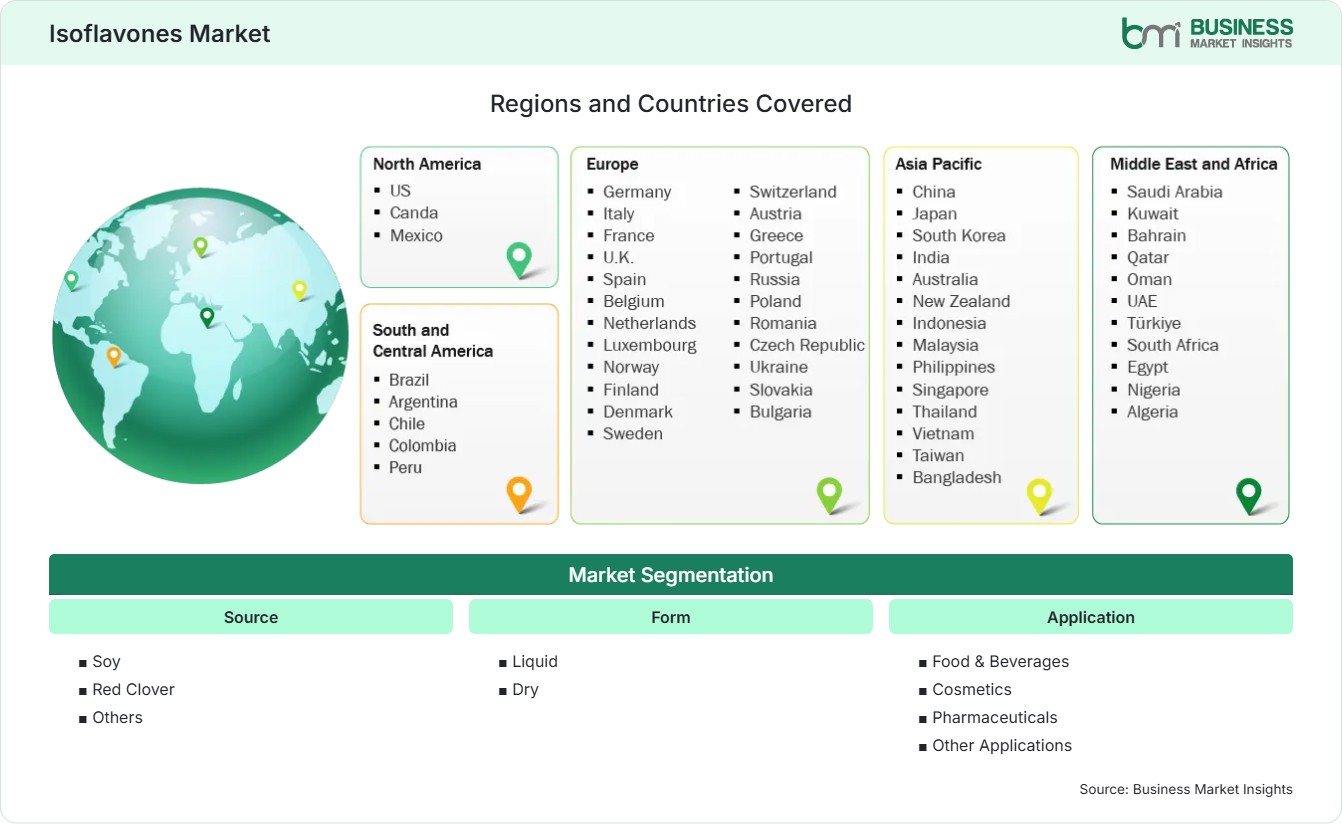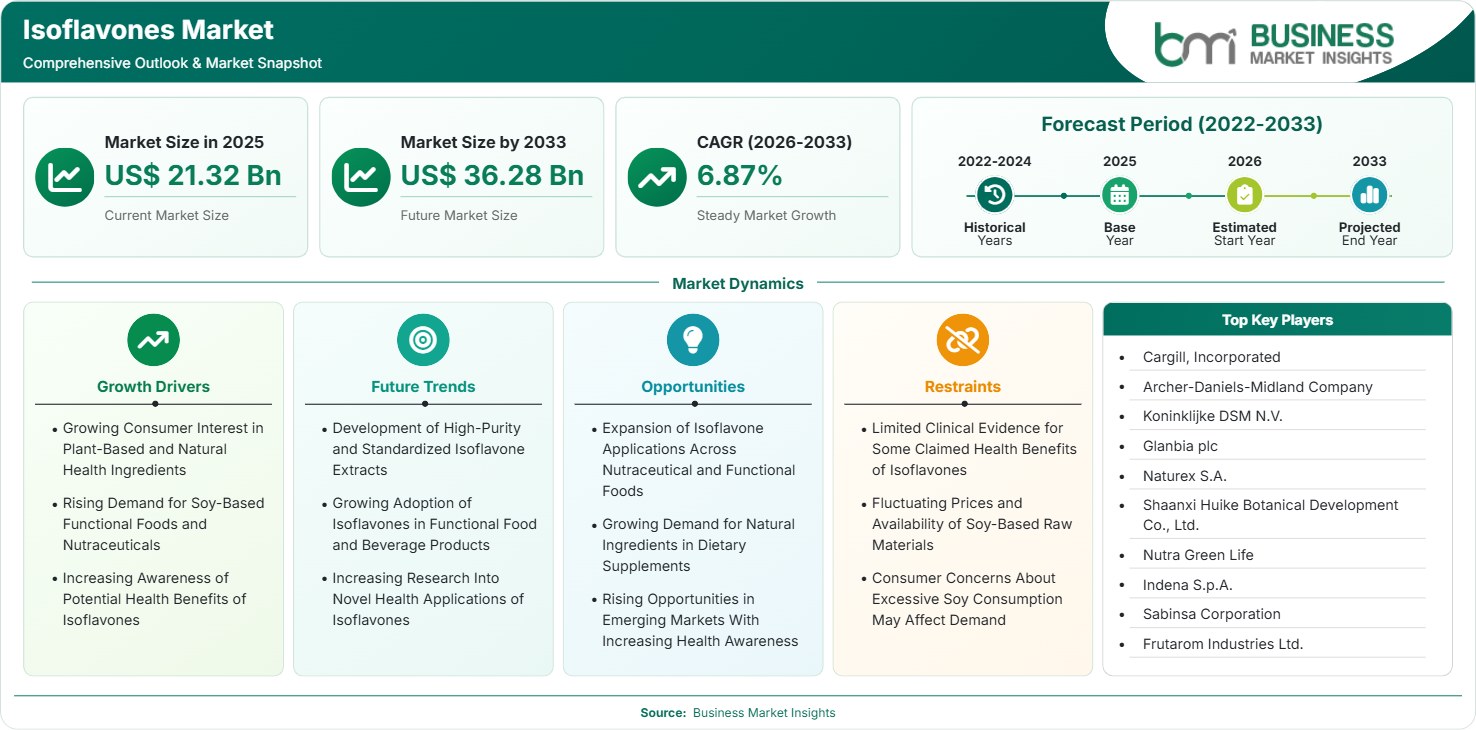
Isoflavones Market Regional Highlights
North America Isoflavones Market
North America represents a market share of 28%–32% in 2025 and isoflavones market forecast to grow at CAGR of 6.3%–7.3% during 2026–2033. The region benefits from established dietary supplement consumption, functional food innovation, plant-based nutrition, and growing interest in women's health. The US dominates regional demand, supported by sophisticated nutraceutical distribution and strong consumer awareness of botanical ingredients. Canada contributes through natural health products and functional nutrition.
- The US remains the regional demand center as consumers increasingly purchase botanical supplements and functional foods addressing healthy aging, women's health, and preventive wellness.
- Canada's natural health products sector provides opportunities for standardized botanical ingredients, particularly as consumers seek plant-based alternatives and products with transparent ingredient sourcing.
- Functional food innovation is expanding opportunities as manufacturers incorporate botanical extracts into beverages, nutrition bars, fortified foods, and specialized wellness products.
- Regulatory compliance and scientific substantiation remain competitive differentiators as companies seek to support product claims while maintaining consumer confidence in botanical ingredients.
US Isoflavones Market
The US accounts for a Isoflavones Market share of 23%–27% in 2025 and records a CAGR of 6.5%–7.5% through 2033. Demand is supported by dietary supplement consumption, plant-based nutrition, women's health products, and functional food development. Consumers increasingly evaluate ingredient transparency and scientific evidence when selecting supplements. Research-driven product development is strengthening opportunities across healthy aging and preventive health applications.
- Women's health represents an important application area as manufacturers explore standardized isoflavone formulations targeting consumers seeking plant-based approaches to healthy aging and wellness.
- Supplement innovation is increasing demand for higher-purity extracts, standardized active compounds, clean-label formulations, and botanical combinations with complementary nutritional ingredients.
- E-commerce enables specialized brands to reach consumers directly, supporting product education and expanding access to botanical supplements beyond traditional retail channels.
Europe Isoflavones Market
Europe represents an Isoflavones Market share of 24%–28% in 2025 and records a CAGR of 5.8%–6.8% through 2033. Germany, France, Italy, and the UK represent leading markets, while Spain and the Netherlands provide attractive growth opportunities. Regulatory requirements surrounding health claims remain influential, encouraging manufacturers to invest in clinical evidence and carefully controlled formulations for nutraceutical and functional food applications.
- Germany remains a leading market, supported by strong consumer interest in natural health products, functional nutrition, botanical supplements, and plant-based dietary solutions.
- France provides a CAGR of 6.2%–7.2%, supported by nutraceutical innovation, natural cosmetics, healthy aging products, and demand for botanical ingredients with transparent sourcing.
- The UK offers a CAGR of 6.3%–7.3%, driven by supplement consumption, wellness trends, functional foods, and expanding consumer interest in plant-derived ingredients.
- Spain and Italy provide opportunities through Mediterranean nutrition trends, functional food development, dietary supplements, and growing interest in natural ingredients for health and wellness.
Asia Pacific Isoflavones Market
Asia Pacific accounts for an Isoflavones Market share of 34%–38% in 2025 and achieves a CAGR of 7.5%–8.5% through 2033. China, Japan, and South Korea represent leading markets, while India and Southeast Asia provide high-growth opportunities. Longstanding soy consumption creates consumer familiarity with isoflavone-rich foods, while expanding nutraceutical industries are increasing demand for concentrated extracts.
- China remains a leading market due to extensive soy consumption, botanical ingredient production, nutraceutical manufacturing, and expanding demand for functional foods and dietary supplements.
- Japan provides a CAGR of 7.0%–8.0%, supported by established soy-based diets, healthy aging priorities, functional food innovation, and strong consumer acceptance of botanical ingredients.
- India offers a CAGR of 8.0%–9.0%, driven by rising health awareness, expanding nutraceutical consumption, increasing disposable incomes, and growing availability of plant-based wellness products.
- Southeast Asia provides a CAGR of 8.5%–9.5%, supported by urbanization, wellness trends, functional food development, dietary supplement adoption, and expanding modern retail and e-commerce channels.
Rest of World Isoflavones Market
South and Central America represent approximately 7%–10% of global demand in 2025 and record a CAGR of 6.0%–7.5%. Brazil and Mexico lead regional demand, supported by growing nutraceutical consumption, and increasing interest in plant-based nutrition. Soy production also strengthens regional sourcing opportunities. The Middle East and Africa represent approximately 5%–8% share in 2025 and achieve a CAGR of 6.5%–8.0%. The UAE, Saudi Arabia, and South Africa provide leading opportunities as health awareness and premium wellness consumption expand.
- Brazil remains a leading market, supported by soy availability, expanding functional food production, nutraceutical consumption, and increasing consumer interest in plant-based health ingredients.
- Mexico offers growth opportunities through dietary supplements, functional beverages, wellness products, and expanding consumer awareness of natural ingredients and preventive nutrition.
- The UAE provides a CAGR of 7.5%–8.5%, supported by premium wellness consumption, expanding supplement distribution, and demand for imported botanical and nutraceutical ingredients.
- South Africa provides a CAGR of 7.0%–8.0%, supported by natural health products, nutritional supplements, growing wellness awareness, and increasing availability of botanical formulations.