
Intravenous Immunoglobulins Market Outlook: Size, Share, Trends, Growth Analysis, Competitive Landscape & Forecast, 2026-2033

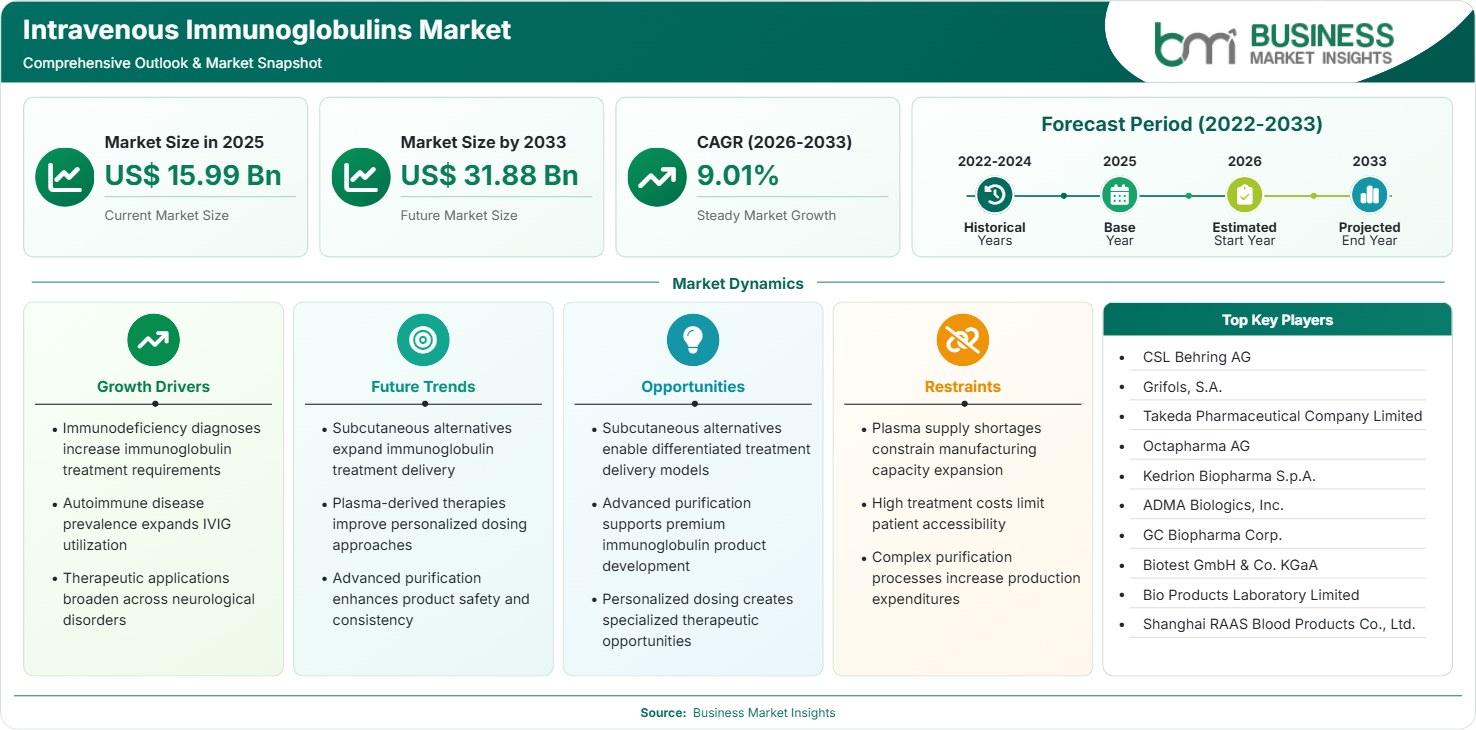
The Intravenous Immunoglobulins Market size was valued at US$ 15.99 Billion in 2025 and is projected to reach US$ 31.88 Billion by 2033, growing at a CAGR of 9.01% during 2026–2033, driven by immunodeficiency diagnosis, neurological applications, plasma capacity expansion, formulation innovation, homecare adoption, and broader access to plasma-derived therapies.

Report Coverage
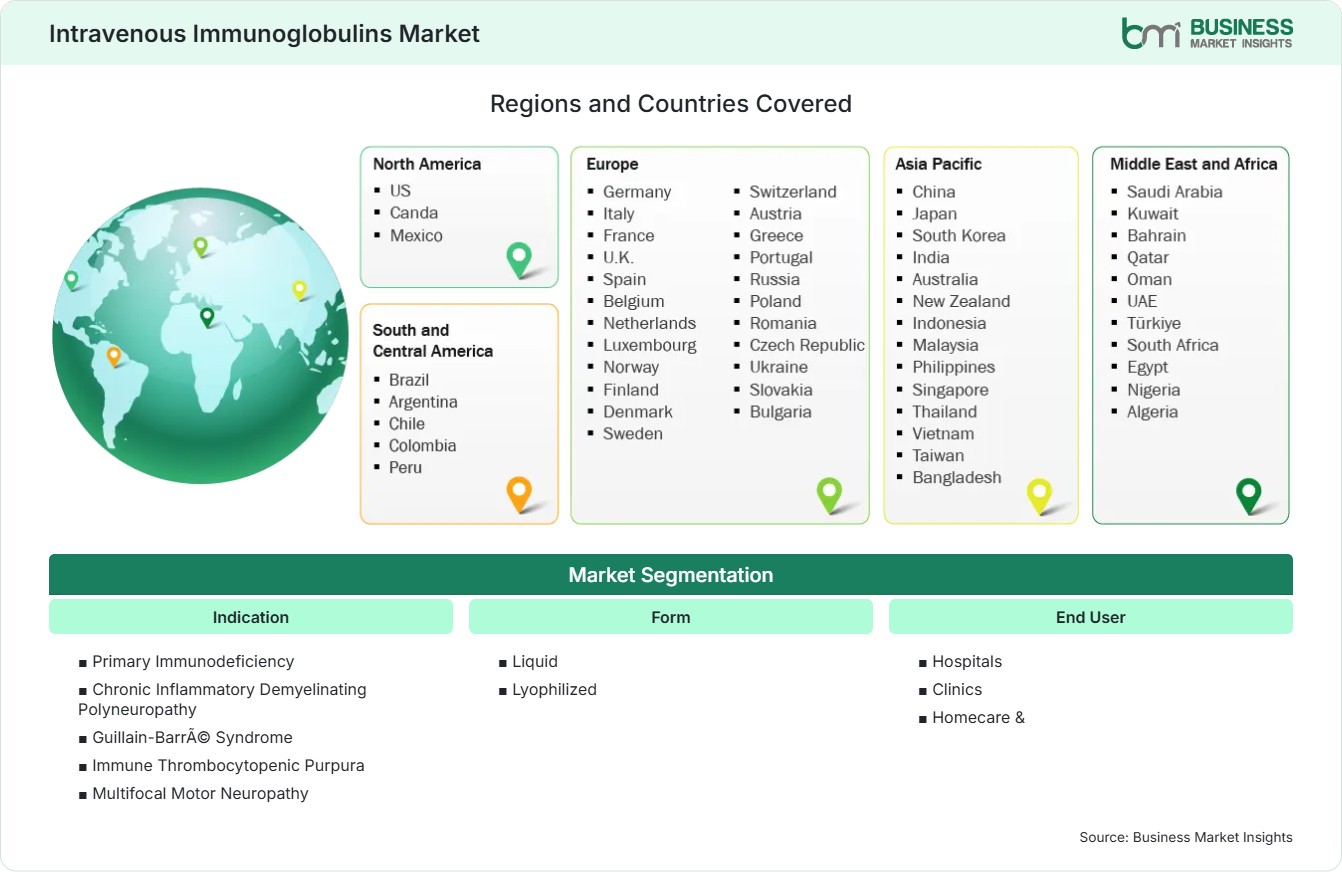
  • Indication: Primary Immunodeficiency, Chronic Inflammatory Demyelinating Polyneuropathy , Guillain-Barré Syndrome , Immune Thrombocytopenic Purpura , Multifocal Motor Neuropathy
  • Form: Liquid, Lyophilized
  • End User (Hospitals, Clinics, Homecare) &
US$ 15.99 Bn Market size in 2025
US$ 31.88 Bn Market Size by 2033
9.01% CAGR, 2026 - 2033
2026-2033 Forecast Period

AI Overview

Intravenous Immunoglobulins Market Summary

  • North America Region: North America holds a 38%–42% share in 2025, growing at a 8.2%–9.2% CAGR, influenced by strong diagnosis, established reimbursement, plasma collection infrastructure, neurological indications, specialty infusion capacity, and expanding patient support programs. US market growth is supported by mature immunology services and broader product availability, with a modeled 8.5%–9.3% CAGR during 2026–2033.
  • Fastest Growing Region: Asia Pacific holds a 20%–24% share in 2025, growing at a 10.2%–11.5% CAGR, supported by expanding plasma programs, rising diagnosis, hospital investment, local manufacturing, improved specialist access, and broader immunology treatment availability.
  • Leading Segment: Primary Immunodeficiency leads with a 32%–36% share in 2025, growing at a 8.4%–9.4% CAGR, supported by lifelong replacement therapy, improved diagnosis, pediatric care, recurring treatment demand, and specialist immunology networks.
  • High Growth Segment: Chronic Inflammatory Demyelinating Polyneuropathy leads growth with a 10.0%–11.5% CAGR, supported by treatment expansion, neurological diagnosis, maintenance regimens, clinical evidence, predictable infusion protocols, and wider specialist recognition of immune-mediated neuropathies.
  • Key Market Opportunity: Capacity expansion, yield improvement, indication development, home infusion, regional plasma self-sufficiency, and differentiated formulations create opportunities for suppliers combining secure sourcing, efficient fractionation, patient support, and scalable distribution.
  • Major Market Players: CSL Behring AG; Grifols, S.A.; Takeda Pharmaceutical Company Limited; Octapharma AG; Kedrion Biopharma S.p.A.; ADMA Biologics, Inc.; GC Biopharma Corp.; Biotest GmbH & Co. KGaA; Bio Products Laboratory Limited; Shanghai RAAS Blood Products Co., Ltd.
Strategic Insights

Intravenous Immunoglobulins Market: Strategic Insights

Intravenous Immunoglobulins Market Strategic Framework
FREE PDF
Request your free sample
Request free sample
Stakeholder View

Key Takeaways

  • Supply economics are governed by plasma availability, donor recruitment, fractionation yield, purification capacity, quality systems, cold-chain logistics, and reimbursement, making vertical integration a major competitive advantage.
  • Primary immunodeficiency remains the largest application pool, while CIDP provides strong upside because recurrent maintenance treatment and improved neurological diagnosis support durable product utilization.
  • Manufacturers are prioritizing higher IgG recovery, formulation stability, shorter infusion protocols, patient-centric administration, digital support, and manufacturing analytics to increase usable output from constrained plasma resources.
  • Asia Pacific offers the strongest expansion potential as domestic plasma collection, hospital infrastructure, specialist diagnosis, and government interest in pharmaceutical supply security develop simultaneously.
  • Capital is moving toward collection networks and fractionation capacity. Kedrion announced approximately €150 million for its Bolognana expansion, targeting a rise from 1.1 million to 3.3 million liters of plasma processed annually.
Geographic Outlook

Intravenous Immunoglobulins Market Regional Highlights

North America Intravenous Immunoglobulins Market

North America represents the largest regional pool, with a 38%–42% share in 2025 and a 8.2%–9.2% CAGR through 2033. Intravenous Immunoglobulins Market share is reinforced by mature immunology services, extensive plasma collection, established reimbursement, and broad product availability. The United States remains the principal contributor, while Canada benefits from structured plasma procurement and specialist treatment pathways. Product approvals across PID, CIDP, and ITP sustain recurring utilization. Strong manufacturer presence also supports faster adoption of higher-concentration and patient-oriented formulations.

  • US providers benefit from established specialty pharmacies, hospital infusion centers, neurologists, immunologists, and reimbursement pathways, supporting recurring treatment volumes and faster commercialization of newly approved immunoglobulin therapies.
  • Plasma collection remains strategically important because North American manufacturers can integrate donor recruitment with fractionation, improving visibility over raw-material availability and reducing dependence on external plasma suppliers.
  • Regulatory approvals continue broadening product choice. FDA records include Privigen, Panzyga, Octagam, Gamunex-C, Gammagard, Gammaplex, Bivigam, Asceniv, Alyglo, and other immunoglobulin products.
  • The region is also shifting toward efficiency, with manufacturers investing in yield improvement, capacity expansion, patient support, and differentiated administration approaches to protect supply while managing high treatment costs.

US Intravenous Immunoglobulins Market

The US accounts for the majority of demand in North America, comprising 31%-35% of the worldwide market in 2025 and an 8.5%-9.3% CAGR. The Intravenous Immunoglobulins Market has been growing due to high diagnostic rates, a strong specialist presence, a broad product portfolio, and a favorable reimbursement structure. PID, CIDP, and ITP have ensured continued clinical demand. There has also been a robust domestic supply capacity being built by the manufacturers. ADMA Biologics has been following an integrated approach towards production in the US, while product launches are increasing therapy options.

  • CSL Behring maintains a broad IVIg footprint through Privigen, while its 2025 disclosures emphasize plasma yield improvement, smarter plasma allocation, and operational efficiency as supply priorities.
  • New launches are increasing competitive intensity. Kedrion received US FDA approval for QIVIGY in September 2025 and made the product available nationally in March 2026.
  • Patient support, specialty pharmacy distribution, home infusion, and outpatient treatment models will increasingly influence product selection as providers balance clinical efficacy, administration burden, and total treatment economics.

Europe Intravenous Immunoglobulins Market

The Europe market has a market share of 28%-32% and a CAGR of 8.0%-9.0% till 2033. The key market players in Europe include Germany, France, Italy, the UK, and Spain, owing to well-established infrastructure in immunology and expertise in plasma-derived medicines. In addition, Italy and Germany have manufacturing bases. Germany will grow at a CAGR of 8.5%-9.5%, whereas Italy is poised for growth of 8.8%-9.8%. The Regional Intravenous Immunoglobulins market share is influenced by centralized purchasing, plasma policies, and supply security concerns.

  • Germany benefits from established fractionation capabilities and Biotest’s Yimmugo platform, strengthening domestic expertise in next-generation immunoglobulin manufacturing and supporting broader European product availability.
  • Italy remains strategically important because Kedrion combines domestic plasma processing, manufacturing infrastructure, international distribution, and investments aimed at expanding fractionation capacity.
  • The United Kingdom and France continue supporting specialist immunology and neurology services, although procurement frameworks place greater emphasis on appropriate utilization and supply continuity.
  • European manufacturers increasingly emphasize production yield, indication expansion, product quality, and supply-chain resilience as demand for plasma-derived medicines rises across multiple therapeutic areas.

Asia Pacific Intravenous Immunoglobulins Market

Asia Pacific region accounts for 20% - 24% of market share by 2025 and boasts the highest growth rate, at a 10.2%- 11.5% CAGR. The leading countries in terms of demand include China, Japan, South Korea, Australia, and India, while China and South Korea are expanding their domestic manufacturing capabilities. China is estimated at 10.5%-11.8%, and India at 11.0%-12.3% CAGR. The Intravenous Immunoglobulins Market is experiencing increased diagnoses, improved hospital care, greater specialist availability, and growing government interest.

  • China combines substantial plasma collection infrastructure with domestic fractionation capabilities. Shanghai RAAS reported five production bases and 55 plasma donation centers by July 2025, illustrating the scale of local infrastructure.
  • Japan offers a mature treatment environment, supported by specialist hospitals, established reimbursement systems, and sustained clinical use of plasma-derived therapies.
  • India presents high structural upside because diagnosis and specialist access remain uneven, creating room for broader immunology screening, treatment availability, and domestic manufacturing.
  • South Korea combines local plasma-product manufacturing with established biologics capabilities, while Australia continues emphasizing sustainable national immunoglobulin supply and appropriate utilization.

Rest of World Intravenous Immunoglobulins Market

Rest of World holds an 8%–11% share by 2025, experiencing a CAGR of 9.0%–10.5% until 2033. Latin America benefits from growing specialist capabilities, but Brazil and Mexico still dominate as the key markets. Brazil grows at a rate of 9.2%–10.4% CAGR. Markets in the Middle East are emerging thanks to investment in hospitals, specialty drug imports, and increased rare disease diagnostics. Saudi Arabia and the UAE are growing at a 9.5%–10.8% CAGR, aided by advanced hospitals.

Latin America's development will depend on the budgets allocated for procurement, import capacity, plasma product registration, and specialty diagnostics. The suppliers in this region are increasingly reliant on partnerships and distributors to access the hospital market.

The Middle East is developing its capabilities in delivering specialized care, offering great potential for multinational corporations with experience in regulations and cold chain logistics.

  • Government interest in plasma self-sufficiency is increasing as countries recognize the strategic importance of domestic plasma-derived medicine supply and reduced dependence on imported therapies.
  • Specialty distributors remain important because fragmented healthcare systems require localized reimbursement expertise, hospital relationships, pharmacovigilance support, and product availability management.
  • Neurological indications can broaden utilization where specialist diagnosis improves, particularly in markets expanding access to advanced neurology and immunology services.
  • Investment opportunities are strongest where healthcare modernization, rare-disease awareness, specialist workforce development, and pharmaceutical supply-security programs progress simultaneously.
Global Market Geography
FREE PDF
Request your free sample
Request free sample
Segment Analysis

Intravenous Immunoglobulins Market Segmentation

Indication

Indication is the key demand driver, with Primary Immunodeficiency the largest indication, accounting for 32%-36% market share in 2025 and an 8.4%-9.4% CAGR. The Intravenous Immunoglobulins Market share is driven by repeated treatments, while neurologic and hematologic indications generate demand through immunomodulation.

  • Primary Immunodeficiency: Represents recurring replacement demand across pediatric and adult patients, with improved diagnosis and lifelong treatment requirements supporting stable utilization across specialist immunology networks.
  • Chronic Inflammatory Demyelinating Polyneuropathy (CIDP): Benefits from established IVIg treatment pathways, maintenance dosing, neurological diagnosis, and growing evidence supporting long-term management of immune-mediated peripheral nerve dysfunction.
  • Guillain-Barré Syndrome (GBS): Generates acute-care demand because rapid immune modulation is central to treatment pathways, with utilization concentrated in hospitals equipped for neurological monitoring and infusion management.
  • Immune Thrombocytopenic Purpura (ITP): Supports demand where rapid platelet response is clinically required, particularly before procedures or during severe bleeding-risk episodes managed within hospital settings.
  • Multifocal Motor Neuropathy (MMN): Represents a specialized neurological application where repeated immunoglobulin therapy can support functional maintenance, creating a focused but durable demand base.

Form

Formulation influences storage, handling, administration, and the economics of production and patient administration. Liquids lead the market with a share of 78%-82% and a CAGR of 9.0%-9.8% in 2025, while lyophilized products continue to have importance in niche applications.

  • Liquid: Offers ready-to-use administration, reducing preparation requirements and supporting hospitals, clinics, specialty infusion centers, and increasingly decentralized treatment environments.
  • Lyophilized: Provides formulation flexibility and selected storage advantages, serving markets and institutions where reconstitution capability, transport conditions, and product-handling protocols influence procurement decisions.

End User

Hospitals still lead among end users, with a market share of 55%–59% in 2025 and a CAGR of 8.3%–9.2%, owing to acute neurological care, immunodeficiency, and infusion facilities. The Intravenous Immunoglobulins Market sees a preference for outpatient care and home-based care whenever possible.

  • Hospitals: Remain central for acute GBS, severe ITP, complex PID management, and neurologic infusions requiring monitoring, pharmacy coordination, and multidisciplinary clinical oversight.
  • Clinics: Benefit from growing outpatient infusion models, particularly for stable patients receiving scheduled therapy outside traditional inpatient environments and seeking lower treatment disruption.
  • Homecare: Gains relevance as administration technologies, nursing services, patient education, specialty pharmacy coordination, and remote support make decentralized treatment increasingly practical for selected patients.
Market Forces

Intravenous Immunoglobulins Market Dynamics

Key Market Drivers

Growing Diagnosis of Primary and Secondary Immune Deficiencies

Improved recognition of antibody deficiencies is expanding the treated patient population, particularly where recurrent infections previously remained undiagnosed. The commercial impact is greatest since replacement therapy creates repeat business rather than a single-use application. CSL sees consistent worldwide demand for immunoglobulins and cites the enhanced diagnosis of primary immunodeficiency as an important factor in the long-term market. Hence, market growth will be aided by increased referrals, pediatric screening, education on immunology, and patient support groups. The Intravenous Immunoglobulins Market trends now show a stronger relationship among diagnosis, continuity of treatment, payer approval, infusion scheduling, and patient support services.

Expanding Use in Immune-Mediated Neurological Disorders

CIDP, GBS, and MMN provide an important second demand engine because neurological applications require specialized treatment pathways and, in several conditions, repeated administration. Privigen, FDA-approved, treats CIDP in addition to primary immunodeficiency and chronic ITP, thereby showing the market significance of multi-indication products. There is potential for increased usage based on clinical data and specialist awareness, even in the presence of variable diagnoses. Intravenous Immunoglobulins Market growth is thus driven by the availability of neurologists, guidelines, maintenance therapies, and patient follow-up. The market trend is also towards products that offer predictable infusions, tolerability, stability, and dosing flexibility.

Higher Plasma Yield and Integrated Manufacturing

The availability of plasma determines output, and yield optimization is a direct means of growth. CSL is working on analytics, better plasma management, and operational excellence to optimize immunoglobulin yield, while ADMA received FDA approval in 2025 for a process designed to increase yield by about 20% from the same volume of plasma. These are examples of how process innovation helps enhance supply without necessarily increasing donor numbers. The Intravenous Immunoglobulins Market will come to rely on fractionation, process optimization, recovery, and the utilization of collection networks.

Key Market Opportunities

Expansion of Plasma Collection and Fractionation Capacity

Supply expansion can be seen as a structural opportunity due to limited access worldwide. According to WHO statistics, only 49 of 168 reporting countries manufacture pharmaceutical products from plasma sourced in their own country. Kedrion’s €150 million expansion plan in Bolognana, which aims to increase plasma fractionation capacity from 1.1 to 3.3 million liters annually, indicates the type of investment required. Thus, the Intravenous Immunoglobulins Market Forecasts favor companies that can build collection facilities, fractionation capacity, technology collaborations, and self-sufficiency programs.

Growth of Decentralized and Patient-Centric Infusion Models

Healthcare professionals need to explore treatment pathways that reduce unnecessary hospital use while maintaining oversight. HyHub and HyHub Duo devices, approved by the FDA in 2025 for HYQVIA by Takeda, are among the ways innovation in the device industry can simplify and make the administration of plasma-derived products more convenient. There are opportunities in patient education, nursing care services, coordination of specialty pharmacies, adherence software, and infusion scheduling. Product development, together with the infrastructure, can lead to differentiation from competing products through non-price methods and better patient retention.

Indication Expansion and Evidence-Led Product Differentiation

Incremental value may be created for manufacturers through indication expansion, real-world evidence generation, and improved positioning of their therapy within specialized neurological and immunological patient populations. Biotest is pursuing Yimmugo development initiatives in primary immunodeficiency and ITP, whereas Kedrion has identified additional avenues for research in the immunological and neurological disease areas. Differentiation can happen through tolerability, infusion time, concentration, excipient content, availability, and evidence strength. The approaches enable companies to compete based on value in the clinic, not just on capacity and geography.

Market Restraints and Challenges

Limited Plasma Availability and Collection Dependence

Factor: IVIg production is derived from human plasma, and its supply relies on sustained donor commitment, dedicated facilities, testing capabilities, and stringent quality controls. Impact: Limited supply could constrain the amounts that can be manufactured, put pressure on procurement, and subject health systems to shortages or allocation decisions. According to the WHO, there are considerable variations in the volume of plasma produced domestically by countries, and many of them rely on imported plasma products. Building up plasma acquisition capabilities entails investment, licensing, and other complexities. As a result, smaller producers will have a higher sourcing risk than vertically integrated firms.

High Treatment Costs and Reimbursement Pressure

Factor: IVIg is an expensive treatment due to the need for plasma collection, purification, and administration. Impact: Payers and hospitals could impose utilization constraints on this product, especially where other immune treatments are available. National authorities on blood products are placing greater focus on governance and the sustainable use of immunoglobulins due to their scarcity and high cost. Cost pressures may affect product choice despite similar efficacy. Companies must ensure that their products have a good track record of availability, use, and value generation, among other considerations.

Company Analysis

Competitive Landscape

The competitive environment combines integrated plasma operators, specialty biologics manufacturers, regional blood-product companies, and diversified pharmaceutical groups. Intravenous Immunoglobulins Market analysis indicates that competitive differentiation increasingly depends on collection capacity, yield, product breadth, regulatory reach, indication coverage, and supply reliability.

Company Name

Overview

Products and Services relevant to this market

CSL Behring AG

Major plasma-derived medicines producer with extensive global immunoglobulin capabilities and integrated collection operations.

Privigen IVIg, plasma collection, fractionation, immunoglobulin manufacturing, specialty distribution, and patient-support services.

Grifols, S.A.

Global plasma-focused healthcare company with substantial collection, fractionation, and immunoglobulin manufacturing infrastructure.

Gamunex-C, Flebogamma DIF, Xembify, Yimmugo commercialization, plasma collection, fractionation, and diagnostics.

Takeda Pharmaceutical Company Limited

Diversified biopharmaceutical company with a major plasma-derived therapy portfolio and global commercial reach.

Gammagard, HyQvia, immunoglobulin manufacturing, infusion devices, patient support, and specialty distribution.

Octapharma AG

Privately held plasma-product specialist with a broad immunoglobulin portfolio and neurological treatment focus.

Panzyga, Octagam, Cutaquig, plasma fractionation, immunoglobulin R&D, and specialist clinical support.

Kedrion Biopharma S.p.A.

Italian plasma-derived medicines specialist expanding US collection, manufacturing, and commercial infrastructure.

QIVIGY, Gammaplex, plasma fractionation, immunoglobulin development, manufacturing, and international distribution.

ADMA Biologics, Inc.

US-based vertically integrated specialty biologics company focused on immune globulin products.

ASCENIV, BIVIGAM, plasma collection, fractionation, yield enhancement, fill-finish, and specialty biologics services.

GC Biopharma Corp.

South Korean blood-product manufacturer with established plasma-derived medicine capabilities and international reach.

ALYGLO, immunoglobulin manufacturing, plasma processing, biologics development, and international commercialization.

Biotest GmbH & Co. KGaA

German plasma-protein specialist developing next-generation immunoglobulin and other plasma-derived therapies.

Yimmugo, Pentaglobin, immunoglobulin R&D, plasma processing, and specialty plasma-derived products.

Bio Products Laboratory Limited

UK plasma-derived medicines manufacturer and Kedrion group company with established IVIg production.

Gammaplex 5% and 10%, immunoglobulin manufacturing, plasma fractionation, and specialty distribution.

Shanghai RAAS Blood Products Co., Ltd.

Major Chinese blood-products producer with extensive plasma collection and multiple production bases.

Human intravenous immunoglobulin, albumin, coagulation factors, plasma collection, fractionation, and blood-product manufacturing.

Trust & Transparency

Research Methodology

The market analysis combines proprietary research with secondary data from government agencies, company disclosures, regulatory filings, industry databases and expert interviews. Market estimates are validated through data triangulation, cross-market benchmarking and analyst review.

View Full Research Methodology

Questions Answered

Frequently Asked Questions

How can manufacturers improve competitive positioning?

Manufacturers can strengthen positioning through plasma collection investment, higher IgG yield, diversified manufacturing, indication development, reliable distribution, differentiated formulations, shorter infusion protocols, and patient-support programs that improve treatment continuity and healthcare-provider confidence.

What does the Intravenous Immunoglobulins Market report indicate about regional expansion?

North America remains the largest regional market, while Asia Pacific provides the strongest growth opportunity. Expansion across Asia Pacific is supported by domestic plasma programs, healthcare infrastructure, diagnosis, local manufacturing, and government interest in supply security.

Which indication offers the strongest long-term commercial opportunity?

Primary immunodeficiency provides the largest recurring demand base because many patients require lifelong replacement therapy. CIDP offers strong incremental upside because diagnosis, specialist treatment, and maintenance therapy are expanding across established and emerging healthcare systems.

How will plasma availability influence future production?

Plasma availability will remain a core capacity constraint. Manufacturers with integrated collection networks, diversified sourcing, higher fractionation yields, and strategic inventories should have greater ability to maintain supply and support geographic expansion.

What factors will shape demand through 2033?

Improved diagnosis of primary immunodeficiency, expanding neurological applications, greater plasma availability, manufacturing yield improvements, and wider outpatient treatment access will shape demand. Supply security will remain equally important because IVIg production depends on human plasma and complex fractionation infrastructure.

Access the Full Intravenous Immunoglobulins Market Report

Get segment-level forecasts, regional estimates, competitive benchmarking, company profiles and downloadable Excel datasets.

Access the full Intravenous Immunoglobulins Market Report
350 pages PDF & Excel | 2026-09-22
Similar Research

Related Market Reports