
Immunoglobulins Market Outlook: Size, Share, Trends, Growth Analysis, Competitive Landscape & Forecast, 2026-2033

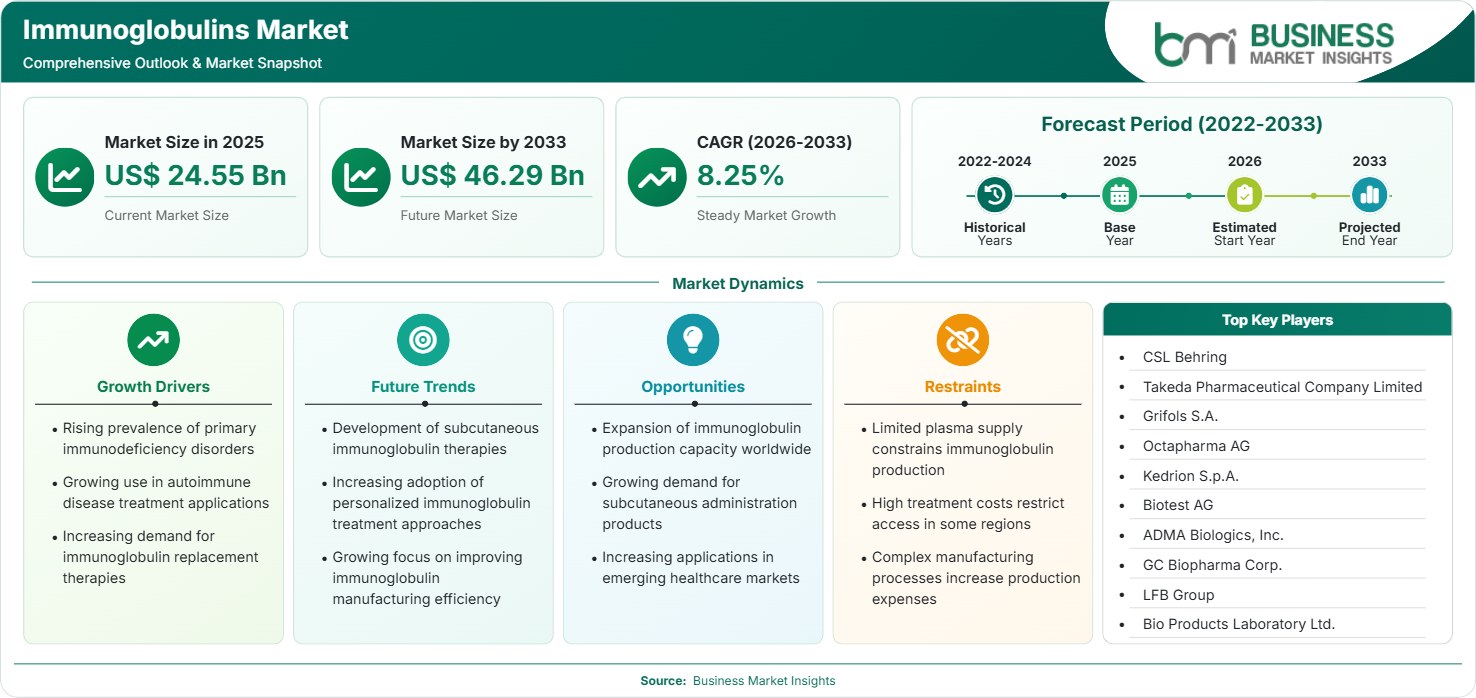
The Immunoglobulins Market size was valued at US$ 24.55 Billion in 2025 and is projected to reach US$ 46.29 Billion by 2033, growing at a CAGR of 8.25% during 2026–2033. Rising prevalence of primary immunodeficiency disorders, increasing diagnosis rates of autoimmune diseases, growing demand for plasma-derived therapies, expanding geriatric population, and advancements in immunoglobulin formulations are driving market growth globally.

Report Coverage
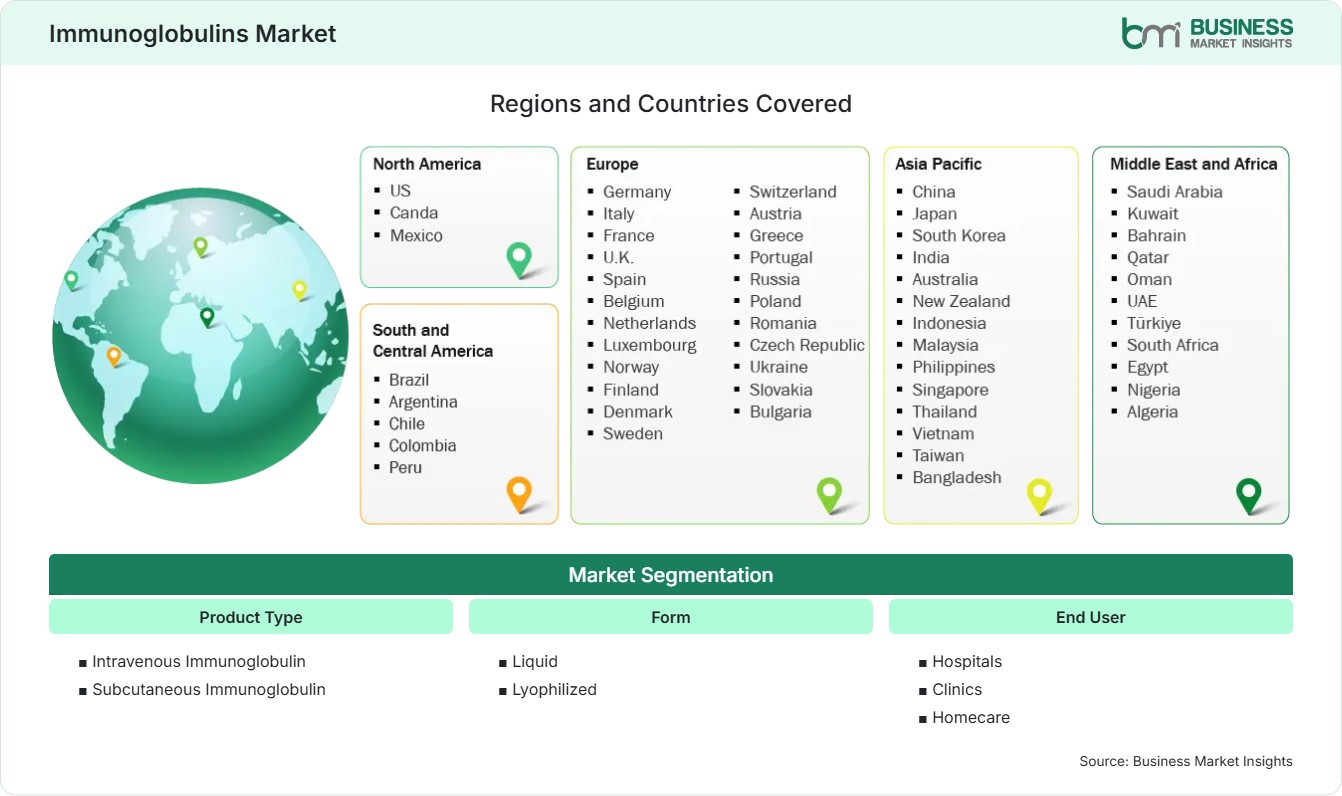
  • Product Type: Intravenous Immunoglobulin, Subcutaneous Immunoglobulin
  • Form: Liquid, Lyophilized
  • End User: Hospitals, Clinics, Homecare
US$ 24.55 Bn Market size in 2025
US$ 46.29 Bn Market Size by 2033
8.25% CAGR, 2026 - 2033
2026-2033 Forecast Period

AI Overview

Immunoglobulins Market Summary

  • North America Region: North America holds a market share of 38%–42% in 2025 and is projected to grow at a CAGR of 7.8%–8.4% during 2026–2033. Growth is supported by advanced healthcare infrastructure, high diagnosis rates, strong plasma collection networks, favorable reimbursement policies, and widespread adoption of immunoglobulin therapies. The U.S. remains the dominant market, advancing at a CAGR of 7.9%–8.5%.
  • Fastest Growing Region: Asia Pacific accounts for 21%–25% share in 2025 and is expected to register a CAGR of 9.5%–10.2% through 2033. Growth is fueled by improving healthcare access, increasing awareness of immune disorders, rising healthcare expenditure, and expanding treatment accessibility.
  • Leading Segment: Intravenous Immunoglobulin (IVIG) accounts for 78%–82% share in 2025 and is anticipated to grow at a CAGR of 8.3%–8.9% through 2033. Demand is supported by widespread utilization in immunodeficiency disorders, neurological diseases, autoimmune conditions, and hospital-based treatment settings.
  • High Growth Segment: Homecare captures 18%–22% share in 2025 and is forecast to expand at a CAGR of 9.8%–10.6% during 2026–2033. Growth is driven by increasing adoption of home-based therapies, patient convenience, healthcare cost optimization, and growing usage of subcutaneous immunoglobulin products.
  • Key Market Opportunity: Growing demand for self-administration therapies, expansion of plasma collection capacity, development of high-concentration formulations, and increasing treatment penetration in emerging markets are creating significant opportunities across the market.
  • Major Market Players: CSL Behring, Takeda Pharmaceutical Company Limited, Grifols S.A., Octapharma AG, Kedrion S.p.A., Biotest AG, ADMA Biologics, Inc., GC Biopharma Corp., LFB Group, and Bio Products Laboratory Ltd.
Strategic Insights

Immunoglobulins Market: Strategic Insights

Immunoglobulins Market Strategic Framework
FREE PDF
Request your free sample
Request free sample
Stakeholder View

Key Takeaways

  • The immunoglobulins market is experiencing strong growth due to increasing prevalence of primary immunodeficiency disorders, autoimmune diseases, neurological conditions, and chronic inflammatory disorders.
  • Intravenous Immunoglobulin (IVIG) remains the dominant product category due to widespread clinical use, established treatment protocols, and broad therapeutic applications.
  • Homecare is emerging as the fastest-growing end-user segment owing to greater patient convenience, reduced hospitalization costs, and increasing adoption of self-administered therapies.
  • Asia Pacific is the fastest-growing regional market driven by improving healthcare infrastructure, rising diagnosis rates, and expanding access to specialty biologic treatments.
  • Expanding plasma collection networks and advancements in fractionation technologies are improving product availability and manufacturing efficiency.
  • Increasing acceptance of subcutaneous immunoglobulin therapies is supporting the shift toward decentralized and patient-centered care models.
Geographic Outlook

Immunoglobulins Market Regional Highlights

North America Immunoglobulins Market

North America accounted for 38%–42% of global immunoglobulins market revenue in 2025 and is projected to grow at a CAGR of 7.8%–8.4% through 2033. The region benefits from advanced healthcare infrastructure, robust plasma collection networks, favorable reimbursement systems, and widespread awareness of immunodeficiency disorders. The Immunoglobulins Market share remains dominant due to strong adoption of plasma-derived therapies and established treatment protocols.

  • Extensive plasma collection infrastructure supports reliable raw material supply, enabling large-scale immunoglobulin production and ensuring consistent treatment availability across healthcare systems.
  • Healthcare providers actively utilize immunoglobulin therapies across neurological, autoimmune, and immunodeficiency indications due to strong clinical evidence and therapeutic effectiveness.
  • Favorable reimbursement frameworks improve patient access to costly biologic treatments while supporting long-term uptake across hospitals, clinics, and homecare environments.
  • Ongoing investments in plasma fractionation technologies continue enhancing manufacturing efficiency, product quality, and production scalability for leading industry participants.
  • Growing prevalence of chronic immune-related conditions continues driving demand for advanced immunoglobulin therapies and personalized treatment approaches.

US Immunoglobulins Market

The United States represents 84%–88% of North American demand and is expected to grow at a CAGR of 7.9%–8.5% through 2033. Growth is supported by extensive plasma collection activities, strong clinical adoption, favorable reimbursement structures, and increasing diagnosis of immune-related disorders.

  • Hospitals and specialty clinics continue expanding use of immunoglobulin therapies for a growing range of approved and off-label treatment applications.
  • Ongoing demand for IVIG products remains strong due to established treatment standards and broad clinician familiarity across therapeutic areas.
  • Homecare adoption is increasing as patients seek convenient treatment options that reduce hospitalization requirements and support long-term disease management.
  • Pharmaceutical companies continue investing in product development and manufacturing expansion to meet rising domestic demand.

Europe Immunoglobulins Market

Europe held 27%–31% of global revenue in 2025 and is expected to register a CAGR of 8.0%–8.6% through 2033. Growing awareness of immunological disorders, improving healthcare access, and increasing use of plasma-derived therapies continue supporting market growth. Germany remains the leading market, while Italy represents a strong growth market with a CAGR of 8.7%–9.3%.

  • Healthcare systems continue prioritizing early diagnosis and treatment of immunodeficiencies, increasing demand for immunoglobulin therapies across multiple disease areas.
  • Manufacturers are expanding plasma processing capacities and strengthening supply networks to support growing regional treatment requirements.
  • Demand for subcutaneous immunoglobulin therapies is increasing as healthcare providers focus on patient convenience and flexible administration options.
  • Supportive healthcare policies and reimbursement mechanisms continue facilitating broader treatment accessibility throughout the region.
  • Increasing research activities are contributing to expanded use of immunoglobulins in emerging therapeutic indications.

Asia Pacific Immunoglobulins Market

Asia Pacific accounted for 21%–25% of global revenue in 2025 and is expected to record the fastest CAGR of 9.5%–10.2% through 2033. Rising healthcare expenditure, improving diagnostic capabilities, growing awareness of immune disorders, and increasing access to specialty treatments are driving regional growth. China, Japan, South Korea, and India remain key markets.

  • Governments and healthcare providers are investing in advanced treatment capabilities to address increasing prevalence of immune-related diseases.
  • Expanding hospital infrastructure and specialist care networks are improving patient access to immunoglobulin therapies across urban and secondary markets.
  • Rising awareness among healthcare professionals is supporting earlier diagnosis and broader adoption of biologic treatment approaches.
  • Domestic and international manufacturers are increasing investments in regional distribution networks and plasma processing capabilities.
  • Growing middle-class populations and healthcare spending continue creating substantial opportunities for market expansion.

Rest of World Immunoglobulins Market

Rest of World accounted for 5%–9% of global revenue in 2025 and is forecast to grow at a CAGR of 7.6%–8.2% through 2033. Market growth is supported by expanding healthcare infrastructure, increasing diagnosis rates, and improving access to specialized biologic therapies.

  • Healthcare modernization initiatives are contributing to increased diagnosis and treatment of immunological disorders across emerging markets.
  • International collaborations are helping improve access to advanced plasma-derived therapies and specialized treatment programs.
  • Governments are strengthening healthcare investments to improve availability of life-saving biologic products and specialty medicines.
  • Expanding private healthcare sectors are supporting adoption of premium therapeutic solutions among eligible patient populations.
  • Growing awareness regarding primary immunodeficiencies and autoimmune diseases continues supporting long-term market development.
Global Market Geography
FREE PDF
Request your free sample
Request free sample
Segment Analysis

Immunoglobulins Market Segmentation

Product Type

Intravenous Immunoglobulin (IVIG) accounts for 78%–82% share in 2025 and is expected to grow at a CAGR of 8.3%–8.9% through 2033. The segment dominates due to extensive use in primary immunodeficiency disorders, autoimmune diseases, neurological conditions, and hospital-based treatment settings. The Immunoglobulins Market scope continues to expand as healthcare providers increasingly utilize IVIG therapies across a broad spectrum of immune-mediated and inflammatory disorders requiring long-term treatment support.

  • Intravenous Immunoglobulin (IVIG): Leads the market owing to established clinical efficacy, broad indication approvals, and widespread hospital adoption.
  • Subcutaneous Immunoglobulin (SCIG): Represents the fastest-growing segment with a CAGR of 9.6%–10.3% through 2033 due to growing preference for self-administration, enhanced patient convenience, and expansion of home-based treatment models.

Form

Liquid immunoglobulins account for 72%–76% share in 2025 and are projected to grow at a CAGR of 8.5%–9.1% through 2033. Growth is supported by ease of administration, reduced preparation requirements, improved patient convenience, and increasing adoption across hospitals and homecare settings.

  • Liquid: Preferred because of ready-to-use formulations, shorter preparation times, and increasing utilization in outpatient and homecare environments.
  • Lyophilized: Maintains demand due to longer shelf life, storage flexibility, and suitability in regions with varied cold-chain infrastructure requirements.

End User

Hospitals account for 54%–58% share in 2025 and are expected to grow at a CAGR of 8.0%–8.6% through 2033. The segment benefits from high patient volumes, specialist care availability, comprehensive monitoring capabilities, and strong adoption of intravenous immunoglobulin therapies. Current Immunoglobulins Market trends indicate increasing integration of advanced immunoglobulin therapies into specialized treatment pathways for immunological, neurological, and autoimmune disorders.

  • Hospitals: Lead due to extensive treatment infrastructure, specialist supervision, and management of complex indications requiring controlled administration.
  • Clinics: Support growing utilization of immunoglobulin therapies through outpatient treatment services and specialty healthcare delivery.
  • Homecare: Represents the fastest-growing end-user segment with a CAGR of 9.8%–10.6% through 2033 owing to increasing adoption of SCIG therapies, convenience benefits, and cost-effective long-term patient management.
Market Forces

Immunoglobulins Market Dynamics

Key Market Drivers

Growing Prevalence of Immunodeficiency and Autoimmune Disorders

A rise in the prevalence of cases of primary immunodeficiency disorders, autoimmune diseases, neurological diseases, and chronic inflammatory diseases is one of the major factors responsible for driving the demand for immunoglobulin treatments. Immunoglobulin-based treatments offer necessary immune protection and are effective in disease modification across numerous medical applications. Advancements in diagnostic tools and an increase in awareness regarding the various diseases have been aiding in the discovery of more number of eligible patients in the global healthcare market. The use of immunoglobulin treatment is increasing among healthcare practitioners due to its effectiveness and safety profile.

Expansion of Plasma Collection and Fractionation Capacity

With greater investments being made into infrastructure for plasma collection and fractionation, the capacity of immunoglobulin production is being improved around the world. In order to meet rising clinical needs, manufacturers are investing in plasma collection centers and effective donor recruitment initiatives as well as more efficient processing techniques. The greater availability of plasma allows for higher levels of production and a more dependable supply chain. Efficiency and innovations in manufacturing are other areas that companies are focusing on in order to optimize plasma usage.

Increasing Adoption of Home-Based Treatment Models

Healthcare systems worldwide are increasingly supporting home-based care models to improve patient outcomes and optimize healthcare resource utilization. Subcutaneous immunoglobulin therapies make home administration feasible while reducing the need for frequent hospital visits. Patients benefit from greater convenience, improved treatment adherence, and enhanced quality of life. Healthcare providers also gain operational advantages through reduced facility burdens and lower treatment costs. The continued transition toward patient-centered care models is expected to significantly contribute to future immunoglobulin market growth.

Key Market Opportunities

Expansion of Subcutaneous Immunoglobulin Therapies

The increasing acceptance of subcutaneous immunoglobulin (SCIG) therapies creates significant opportunities for manufacturers and healthcare providers. SCIG products offer greater treatment flexibility, support self-administration, and reduce dependence on hospital-based infusion services. Advancements in delivery devices, infusion systems, and high-concentration formulations are improving treatment convenience and supporting wider adoption. Growing preference for home-based and decentralized healthcare is further strengthening demand for SCIG therapies among suitable patients. Manufacturers can capitalize on this opportunity by developing user-friendly delivery technologies, improving product formulations, and expanding patient-support programs. These developments can help increase treatment accessibility and strengthen long-term adoption across established and emerging healthcare markets.

Increasing Treatment Penetration in Emerging Markets

Emerging healthcare markets present opportunities for immunoglobulin manufacturers due to underdiagnosis, limited treatment access, and growing awareness of immunological disorders. Improvements in healthcare infrastructure, diagnostic capabilities, specialist availability, and healthcare spending are supporting broader identification and management of eligible patients. Pharmaceutical companies are expanding distribution networks and developing partnerships with healthcare providers and authorities to improve product availability. Increasing adoption of modern diagnostic practices can also support earlier disease identification and treatment initiation. As healthcare systems continue to modernize, manufacturers can address unmet treatment needs by strengthening local supply chains, improving physician awareness, and supporting initiatives that expand access to immunoglobulin therapies.

Development of Advanced High-Concentration Formulations

Manufacturers are increasingly focusing on high-concentration immunoglobulin formulations that improve administration efficiency and patient convenience. These advanced products can reduce infusion times, enhance tolerability, and support broader implementation of home-based treatment programs. Ongoing innovation in formulation science and delivery technologies is expected to improve treatment experiences while supporting clinical effectiveness. Immunoglobulins Market Forecast analysis indicates that continued advancements in formulation technologies and patient-centric delivery systems will create substantial opportunities for manufacturers throughout the forecast period.

Market Restraints and Challenges

Limited Plasma Supply and Dependence on Human Donors

Factor: Immunoglobulin production relies entirely on human plasma collected from eligible donors. Plasma collection capacity is influenced by donor availability, collection infrastructure, regulatory requirements, and geographic limitations. Increasing global demand for plasma-derived therapies continues placing pressure on existing collection networks and manufacturing capacities.

Impact: Supply constraints can create treatment shortages, increase product costs, and limit access in certain regions. Manufacturers may encounter difficulties meeting rising demand, while healthcare providers can experience delays in therapy availability for eligible patients, potentially affecting overall market growth.

High Treatment Costs and Reimbursement Challenges

Factor: Immunoglobulin therapies involve complex plasma collection, fractionation, purification, quality control, and distribution processes, resulting in relatively high treatment costs. In several markets, reimbursement coverage remains limited or varies substantially across healthcare systems and patient populations.

Impact: High therapy costs can restrict patient access, particularly in developing regions and cost-sensitive healthcare environments. Healthcare providers and payers may implement utilization controls, potentially slowing adoption rates and creating barriers to widespread treatment access despite strong clinical demand.

Company Analysis

Competitive Landscape

The Immunoglobulins Market analysis highlights strong competition among plasma-derived therapy manufacturers, biopharmaceutical companies, and specialty biologics providers. Market participants are focusing on plasma collection expansion, advanced fractionation technologies, high-concentration formulations, subcutaneous immunoglobulin development, and global supply chain strengthening to enhance market position and address growing patient demand.

Company Name

Overview

Products and Services Relevant to this Market

CSL Behring

Global biotechnology company specializing in plasma-derived therapies.

IVIG products, SCIG therapies, plasma collection services, and immunology treatment solutions.

Takeda Pharmaceutical Company Limited

Global biopharmaceutical company with a strong plasma-derived product portfolio.

Immunoglobulin therapies, plasma-derived biologics, rare disease treatments, and specialty care products.

Grifols S.A.

Leading producer of plasma-derived medicines and diagnostic products.

Intravenous immunoglobulins, subcutaneous immunoglobulins, plasma collection, and fractionation services.

Octapharma AG

Human protein therapeutics manufacturer serving global healthcare markets.

Immunoglobulin therapies, plasma-derived medicines, and immune disorder treatment solutions.

Kedrion S.p.A.

Plasma-derived products company focused on rare and serious diseases.

Immunoglobulin products, plasma fractionation, and specialty biologic therapies.

Biotest AG

Biotechnology company specializing in plasma proteins and immunology products.

Intravenous immunoglobulins, specialty plasma-derived medicines, and therapeutic proteins.

ADMA Biologics, Inc.

Biopharmaceutical company focused on plasma-derived therapies.

Immunoglobulin products, plasma collection operations, and immune deficiency treatments.

GC Biopharma Corp.

Biopharmaceutical manufacturer with expertise in blood and plasma products.

IVIG therapies, plasma derivatives, immunology treatments, and biologic products.

LFB Group

Pharmaceutical company specializing in plasma-derived and recombinant proteins.

Immunoglobulins, plasma fractionation services, and biologic treatment solutions.

Bio Products Laboratory Ltd.

Plasma protein therapeutics manufacturer.

Immunoglobulin therapies, specialty plasma-derived medicines, and immune disorder treatments.

Trust & Transparency

Research Methodology

The market analysis combines proprietary research with secondary data from government agencies, company disclosures, regulatory filings, industry databases and expert interviews. Market estimates are validated through data triangulation, cross-market benchmarking and analyst review.

View Full Research Methodology

Questions Answered

Frequently Asked Questions

What does this Immunoglobulins Market Report evaluate?

The market report evaluates product type trends, formulation preferences, end-user adoption patterns, regional opportunities, competitive developments, growth drivers, market opportunities, and industry challenges through 2033.

Which end-user segment is growing the fastest?

Homecare is the fastest-growing end-user segment due to rising adoption of subcutaneous immunoglobulin therapies, improved patient convenience, and increasing preference for home-based treatment models.

Why is Asia Pacific the fastest-growing region?

Asia Pacific benefits from increasing healthcare expenditure, improving healthcare infrastructure, expanding disease awareness, growing diagnosis rates, and improving access to specialty biologic therapies.

Which product type segment dominates the market?

Intravenous Immunoglobulin (IVIG) dominates the market due to its broad therapeutic applications, established clinical efficacy, and widespread utilization across hospitals and specialty treatment centers.

What is driving growth in the Immunoglobulins Market?

Growth is driven by increasing prevalence of immunodeficiency disorders, autoimmune diseases, neurological conditions, improving diagnosis rates, and growing adoption of plasma-derived therapies.

Access the Full Immunoglobulins Market Report

Get segment-level forecasts, regional estimates, competitive benchmarking, company profiles and downloadable Excel datasets.

Access the full Immunoglobulins Market Report
350 pages PDF & Excel | 2026-09-20
Similar Research

Related Market Reports