Market Summary
Executive Summary and Global Market Analysis
The High Speed Train Seat market comprises seating systems specifically designed for high-speed rail networks, focusing on passenger comfort, safety, durability, and space optimization. These seats are engineered using lightweight materials, ergonomic structures, and advanced cushioning technologies to withstand long-distance travel while ensuring compliance with strict railway safety standards. The market includes standard class, business class, reclining, modular, and smart seating solutions used across intercity and cross-border rail systems worldwide.
The growing adoption of high-speed rail transportation is a major factor driving market expansion. Governments across Asia-Pacific, Europe, and the Middle East are investing heavily in railway modernization projects to reduce traffic congestion and carbon emissions. Rising passenger expectations for enhanced travel comfort, onboard connectivity, and premium travel experiences are also accelerating demand for technologically advanced train seating systems. Additionally, increasing urbanization and the shift toward sustainable transportation infrastructure continue to support long-term market growth.
From a segmentation perspective, the market is categorized by seat type, train type, material, and region. Recliner and modular seating segments are witnessing strong demand due to their ability to improve passenger comfort and maximize cabin efficiency. By material, lightweight aluminum and composite-based seating solutions are gaining popularity because they improve fuel efficiency and reduce operational costs. Asia-Pacific remains the leading regional market due to rapid rail infrastructure expansion in countries such as China, Japan, and India.
Technological advancements are transforming the industry through the integration of smart seating features, including USB charging ports, wireless connectivity, occupancy sensors, and adjustable ergonomic configurations. Manufacturers are increasingly focusing on sustainable production methods and recyclable materials to align with environmental regulations. Innovations in fire-resistant fabrics, vibration reduction systems, and lightweight seat frames are further improving passenger safety and operational efficiency.
The competitive landscape is characterized by the presence of established global manufacturers and specialized railway seating providers competing through product innovation, strategic partnerships, and long-term rail contracts. Companies are emphasizing customized seating solutions, enhanced passenger amenities, and compliance with evolving international railway standards to strengthen their market position in an increasingly competitive environment.
Segment Analysis
High Speed Train Seat Market Segmentation
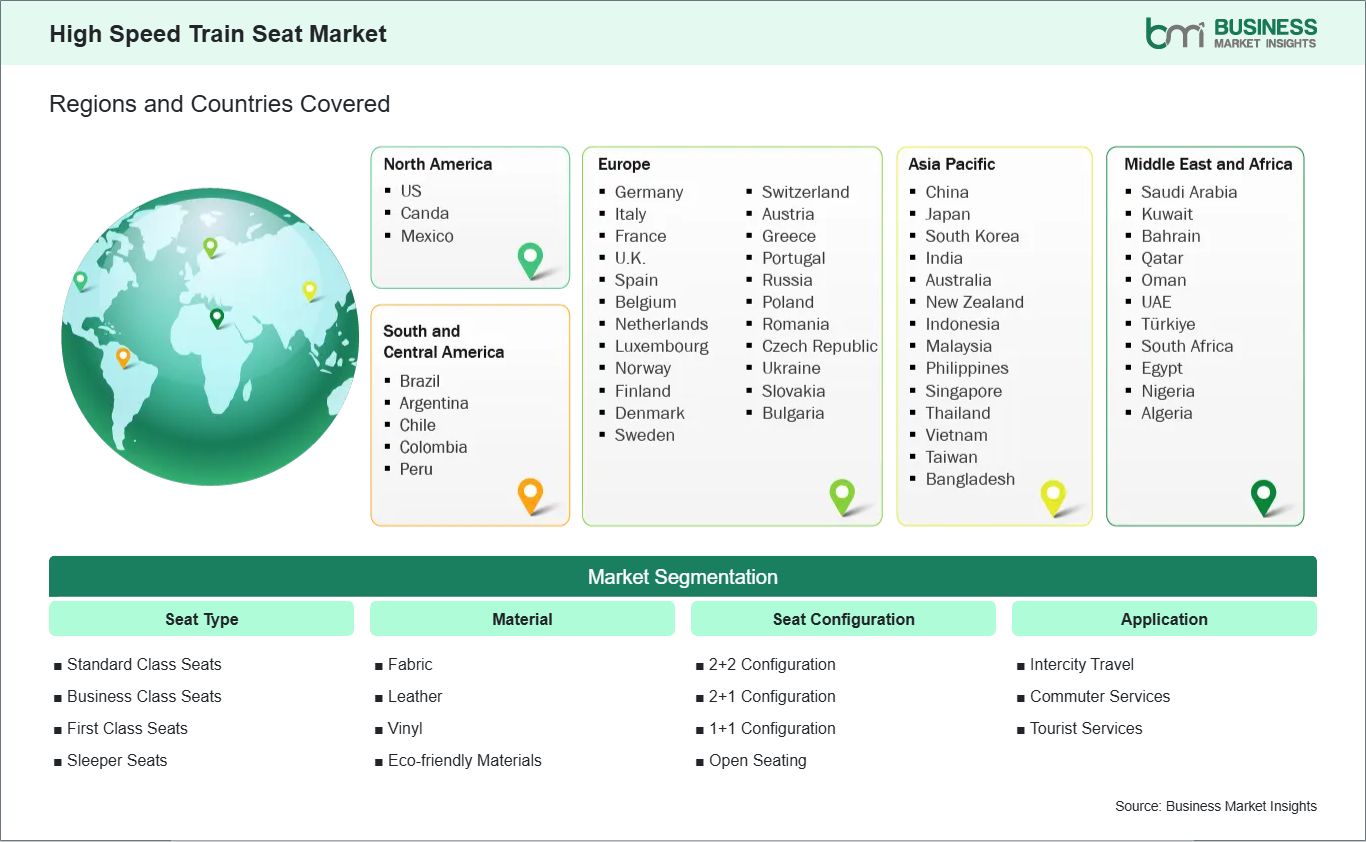
The High Speed Train Seat market is segmented based on seat type, material, seat configuration and application.
By Seat Type
- Standard Class Seats – Widely used for cost-effective, high-capacity passenger transport
- Business Class Seats – Enhanced comfort with additional legroom and amenities
- First Class Seats – Premium seating offering luxury and a superior passenger experience
- Sleeper Seats – Designed for long-distance overnight travel comfort and rest.
By Material
- Fabric – Commonly used for durability and cost efficiency in mass transit
- Leather – Premium material offering enhanced comfort and aesthetic appeal
- Vinyl – Easy maintenance option suitable for high-usage environments
- Eco-friendly Materials – Increasing adoption driven by sustainability regulations.
By Seat Configuration
- 2+2 Configuration – Standard layout balancing capacity and passenger comfort
- 2+1 Configuration – Offers more space per passenger for mid-premium services
- 1+1 Configuration – High-comfort layout used in premium rail coaches
- Open Seating – Flexible arrangement maximizing passenger accommodation efficiency.
By Application
- Intercity Travel – Major demand driver for high-speed and long-distance routes
- Commuter Services – Focus on durability and high passenger turnover efficiency
- Tourist Services – Emphasizes comfort and enhanced travel experience for leisure passengers.
Market Forces
High Speed Train Seat Market Drivers and Opportunities
Rising High-Speed Rail Infrastructure Investments
Governments worldwide are increasing investments in high-speed rail infrastructure to support sustainable transportation and reduce road congestion. This trend is driving innovation in lightweight, ergonomic, and space-efficient train seating systems. Manufacturers are developing advanced seat designs with integrated charging ports, smart controls, and enhanced cushioning to improve passenger experience. These innovations are increasingly used in intercity and cross-border rail services where passenger comfort and operational efficiency are critical competitive factors.
Future expansion of high-speed rail corridors across Asia-Pacific, Europe, and the Middle East is expected to create significant demand for modern seating solutions. Rail operators are likely to prioritize premium seating upgrades and modular cabin layouts to attract more passengers. This expansion will encourage long-term supplier contracts, increased production capacity, and technological advancements, ultimately strengthening the overall growth potential of the High Speed Train Seat market.
Smart and Sustainable Seating Solutions
The growing focus on digitalization and sustainability is creating strong opportunities for smart and eco-friendly train seating systems. Manufacturers are introducing seats with wireless charging, occupancy sensors, adjustable ergonomics, and recyclable materials to align with passenger expectations and environmental regulations. These innovations are increasingly being adopted in premium and next-generation high-speed trains to enhance travel convenience, reduce maintenance requirements, and improve energy efficiency.
In the coming years, the adoption of connected rail technologies and green transportation policies will expand the market for intelligent seating solutions. Emerging economies investing in railway modernization are expected to generate new business opportunities for seating manufacturers offering sustainable and customizable products. The integration of smart features and environmentally friendly materials will improve passenger satisfaction, strengthen operator competitiveness, and accelerate technological transformation across the High Speed Train Seat market.
Size and Share Analysis
High Speed Train Seat Market Size and Share Analysis
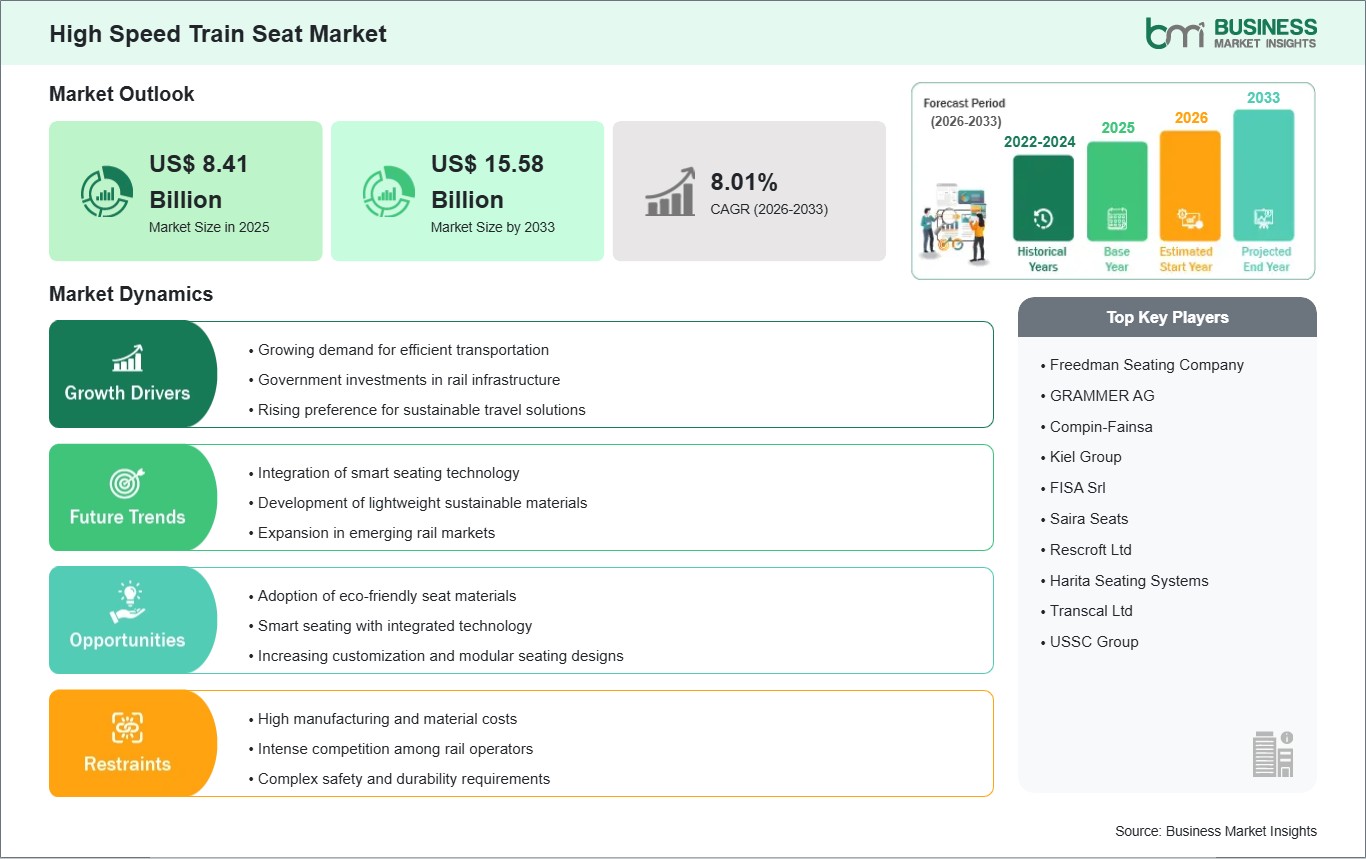
The High Speed Train Seat Market is projected to grow from US$ 8.41 Billion in 2025 to US$ 15.58 Billion by 2033 , registering a CAGR of 8.01% from 2026 to 2033.
High Speed Train Seat market is due to their extensive deployment in high-capacity rail networks and cost-efficient passenger accommodation. Fabric-based seating materials maintain strong adoption because of their durability, affordability, and suitability for frequent passenger usage. Among seat configurations, the 2+2 configuration remains the most preferred layout as it balances seating capacity with passenger comfort, making it widely applicable across intercity and commuter rail services.
From an application perspective, intercity travel represents the leading segment in the market owing to the rapid expansion of long-distance high-speed rail connectivity worldwide. Rail operators prioritize advanced seating systems that improve passenger comfort during extended journeys while supporting operational efficiency. Tourist services are also witnessing increasing adoption of premium seating arrangements, especially in luxury and scenic rail routes focused on enhancing the overall travel experience.
Report Coverage
High Speed Train Seat Market Report Coverage and Deliverables
The "High Speed Train Seat Market Size and Forecast (2022–2033)" report provides a detailed analysis of the market covering below areas:
- High Speed Train Seat market size and forecast at global, regional, and country levels for all market segments covered under the scope
- High Speed Train Seat market trends, as well as drivers, restraints, and opportunities
- High Speed Train Seat market analysis covering key trends, global and regional framework, major players, regulations, and recent developments
- Industry landscape and competition analysis covering market concentration, heat map analysis, prominent players, and recent developments for the High Speed Train Seat market
- Detailed company profiles, including SWOT analysis
Geographic Insights
High Speed Train Seat Market Geographic Insights
The global High Speed Train Seat market is experiencing steady growth due to increasing investments in railway modernization, sustainable transportation infrastructure, and passenger comfort enhancement. Governments and rail operators are focusing on improving travel efficiency while reducing carbon emissions, leading to rising deployment of advanced seating systems in high-speed trains. Demand for lightweight, ergonomic, and technology-enabled seats is increasing across developed and developing economies. Growing urbanization and expanding intercity rail networks continue to strengthen the long-term outlook for the global market.
North America is witnessing gradual market expansion driven by railway infrastructure upgrades and the development of modern passenger rail projects. The region is increasingly emphasizing passenger comfort, safety standards, and operational efficiency in rail transportation systems. Demand for durable and technologically advanced seating solutions is rising as transportation agencies invest in rail modernization initiatives. The adoption of premium seating configurations and smart passenger amenities is also supporting market growth, particularly in long-distance and high-speed rail development projects.
Asia Pacific remains the largest and fastest-growing regional market due to extensive high-speed rail expansion in countries such as China, Japan, India, and South Korea. Governments across the region are heavily investing in railway connectivity to support economic development and urban mobility. Rising passenger volumes and increasing expectations for comfortable travel experiences are encouraging demand for advanced train seating systems. Local manufacturers are also expanding production capabilities and introducing cost-effective, lightweight seating technologies to meet growing regional procurement requirements.
Europe maintains a strong market position supported by its well-established high-speed rail infrastructure and focus on sustainable transportation policies. Countries including France, Germany, Italy, and Spain continue investing in rail modernization and passenger experience improvements. Demand for eco-friendly materials, modular seating systems, and premium rail interiors remains high across the region. Emerging markets in the Middle East, Latin America, and parts of Africa are also creating new opportunities as governments invest in rail connectivity projects and urban transportation development initiatives.
Industry Activity
Recent Developments
The High Speed Train Seat market is evaluated by gathering qualitative and quantitative data post primary and secondary research, which includes important corporate publications, association data, and databases. A few of the key developments in the High Speed Train Seat market are:
- In August 2025, HS2 Ltd unveiled advanced interior concepts for its upcoming Class 895 high-speed trains. The designs included ergonomic seating, integrated charging ports, increased legroom, and improved passenger accessibility features. The initiative aims to enhance onboard comfort and modernize passenger experience across the United Kingdom’s future high-speed rail network while supporting efficient long-distance rail travel.
- In October 2025, Eurostar announced plans to introduce double-decker high-speed trains by 2031 to increase passenger capacity and improve travel comfort. The upcoming fleet will feature upgraded seating layouts, modern onboard amenities, and enhanced operational efficiency. The expansion reflects growing demand for sustainable cross-border rail transportation across major European travel corridors.
Trust & Transparency
Research Methodology
The market analysis combines proprietary research with secondary data from government agencies, company disclosures, regulatory filings, industry databases and expert interviews. Market estimates are validated through data triangulation, cross-market benchmarking and analyst
review.
View Full Research Methodology
Key Sources Referred:
International Union of Railways (UIC) European Commission – Transport OECD Transport Statistics Railway Gazette International International Railway Journal Federal Railroad Administration (FRA)