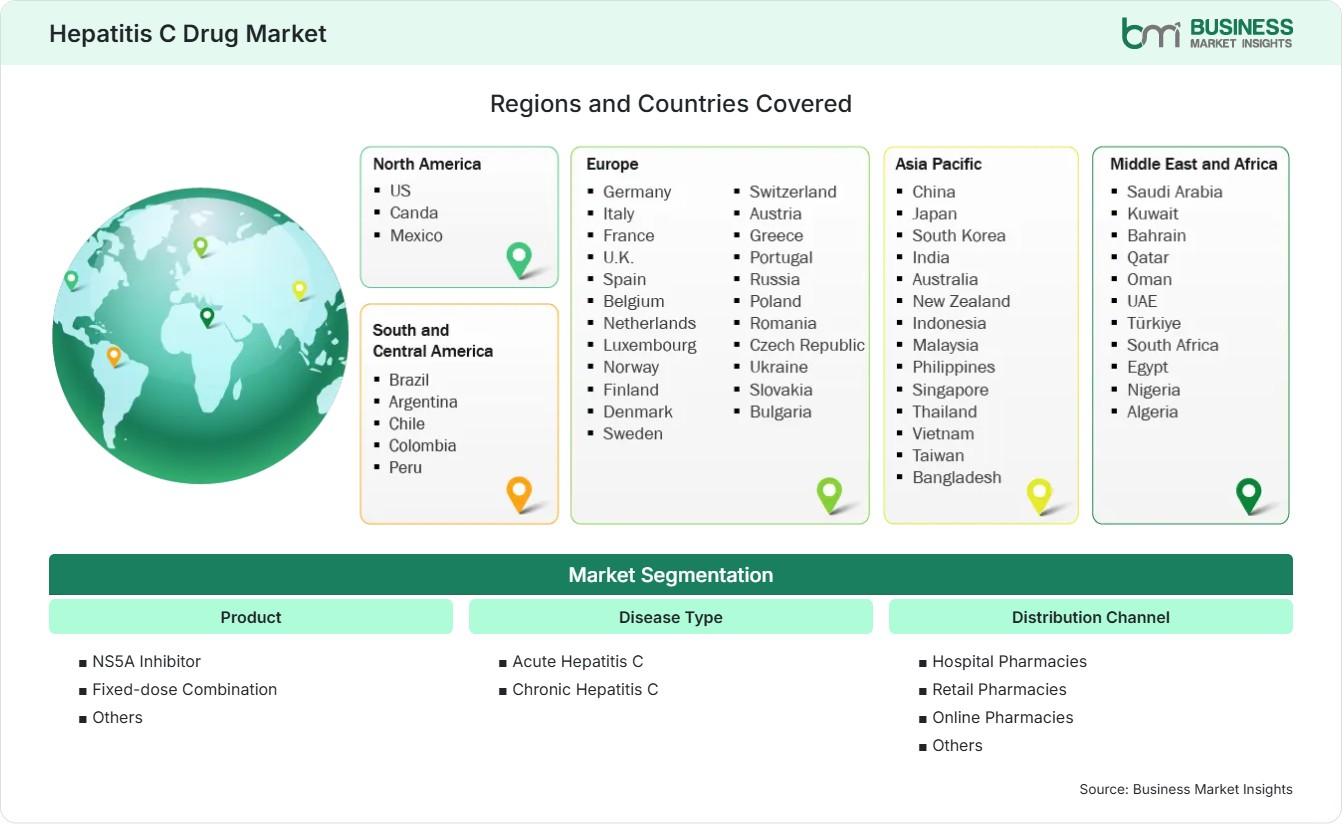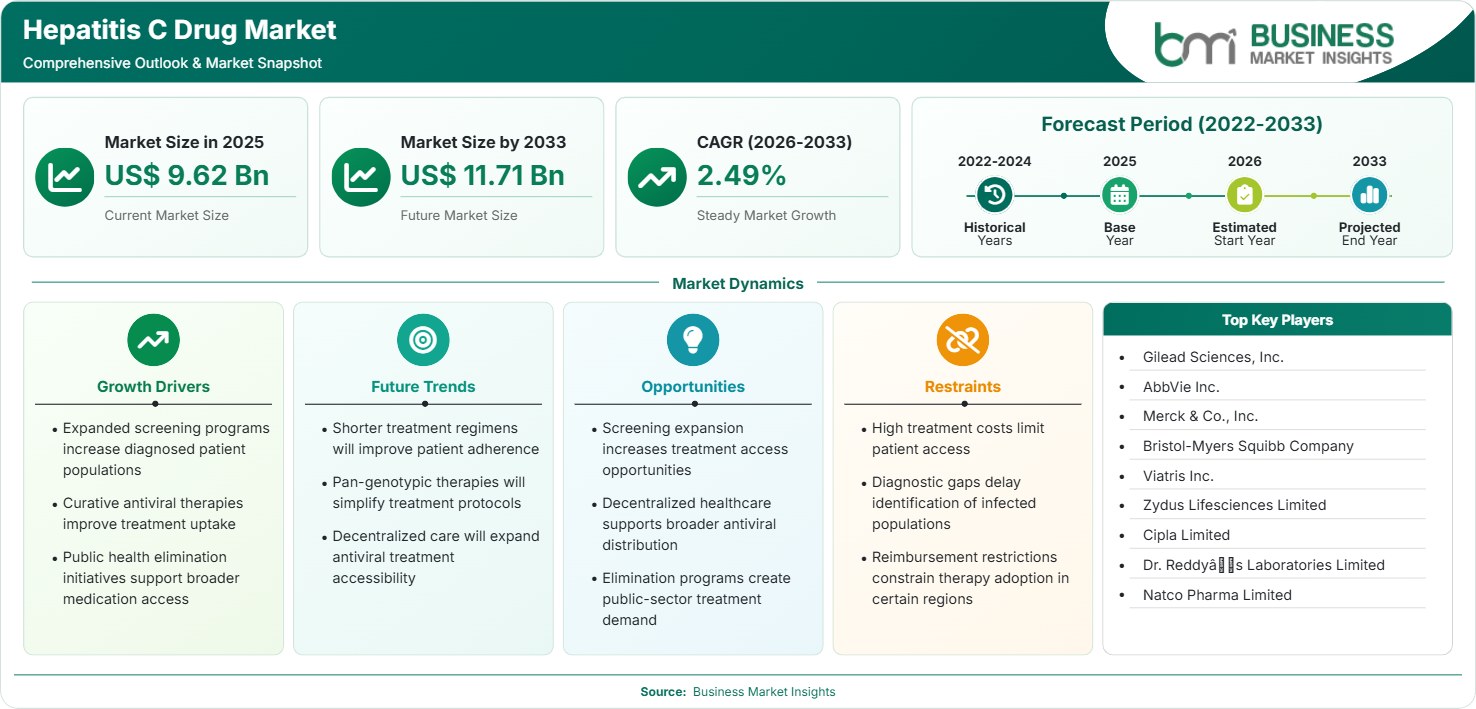
Hepatitis C Drug Market Regional Highlights
North America Hepatitis C Drug Market
North America Hepatitis C Drug Market accounts for a 36%–39% share in 2025 and records a 1.90%–2.20% CAGR through 2033. The United States represents the dominant regional revenue contributor, while Canada provides a smaller but structured treatment market. High clinical awareness, established reimbursement systems, specialist networks, and increasing emphasis on immediate treatment sustain demand. Acute-infection management is creating an additional treatment pathway as regulators and clinicians emphasize intervention before chronic disease develops.
- Established reimbursement and specialist infrastructure support continued adoption of branded and combination antiviral therapies across diagnosed populations.
- The United States remains the principal commercial market because of treatment spending, broad prescribing access, and extensive pharmaceutical distribution capabilities.
- Acute HCV treatment expansion can improve patient conversion by reducing waiting periods between diagnosis and therapeutic initiation.
- Canada offers opportunities through public procurement, provincial treatment programs, and coordinated infectious-disease management strategies.
US Hepatitis C Drug Market
The US Hepatitis C Drug Market accounts for 28%–31% of global revenue in 2025 and expands at a 1.80%–2.10% CAGR through 2033. Commercial performance is shaped by reimbursement, specialist prescribing, branded competition, and increasing attention to underserved populations. Regulatory expansion of acute HCV treatment creates incremental demand by allowing therapy at diagnosis. Market development increasingly depends on identifying undiagnosed patients and linking them rapidly to accessible treatment rather than improving efficacy alone.
- Payer coverage and negotiated pricing remain central commercial variables because treatment affordability influences prescription initiation among diagnosed patients.
- Expansion into acute infection creates a new treatment window and supports earlier therapeutic intervention before chronic liver complications emerge.
- Integrated screening, primary-care referral, and pharmacy-based treatment pathways can improve conversion of diagnosed patients into completed treatment courses.
Europe Hepatitis C Drug Market
Europe Hepatitis C Drug Market represents a 24%–27% share in 2025 and grows at a 2.10%–2.40% CAGR through 2033. Germany, France, Italy, Spain, and the United Kingdom provide leading commercial opportunities, while Romania and several Eastern European markets offer faster expansion potential. Public-health procurement, national elimination plans, generic competition, and decentralized treatment support broader access. Regulatory expansion into acute infection further strengthens the addressable population and encourages earlier treatment.
- Germany and France provide strong specialist infrastructure, established reimbursement, and substantial treatment experience, supporting stable pharmaceutical demand.
- The United Kingdom remains strategically important because elimination programs emphasize diagnosis, linkage to treatment, and targeted interventions among high-risk populations.
- Eastern European markets can deliver higher growth where diagnosis, affordability, and treatment penetration have greater room for improvement.
- European procurement models favor suppliers capable of combining competitive pricing with reliable product availability and regulatory compliance.
Asia Pacific Hepatitis C Drug Market
Asia Pacific Hepatitis C Drug Market holds a 19%–22% share in 2025 and records a 3.40%–3.80% CAGR through 2033, making it the fastest-growing regional market. China, Japan, India, and Australia are leading contributors, while Pakistan, Indonesia, and Viet Nam offer stronger expansion potential. Large untreated populations, generic manufacturing, improving diagnostics, and national elimination initiatives create substantial treatment-volume opportunities across public and private healthcare channels.
- India combines substantial disease burden with a mature generic pharmaceutical ecosystem, creating opportunities for competitively priced pangenotypic treatment.
- China provides a large addressable population, expanding treatment access, and increasing emphasis on standardized diagnosis and antiviral management.
- Pakistan and Indonesia offer high-volume opportunities as testing, affordability, procurement, and decentralized treatment capacity improve.
- Australia and Japan provide mature markets where reimbursement, clinical quality, and specialist care support stable demand.
Rest of World Hepatitis C Drug Market
South and Central America Hepatitis C Drug Market represents a developing treatment opportunity, supported by Brazil, Argentina, Colombia, and Chile. Regional growth is shaped by public procurement, generic availability, and expanded diagnosis. Brazil provides the leading commercial base, while Colombia and Argentina offer comparatively faster adoption as screening and treatment programs strengthen.
Middle East and Africa markets remain diverse, with Egypt, Saudi Arabia, South Africa, and Morocco providing important opportunities. Egypt demonstrates the impact of large-scale elimination programs, while African markets increasingly require affordable medicines, decentralized testing, and supply reliability.
- Brazil benefits from public-health infrastructure and procurement mechanisms that can support large treatment volumes.
- Egypt remains a strategic benchmark for elimination-oriented treatment deployment and mass screening approaches.
- South Africa offers growth potential through integrated HIV, hepatitis, and primary-care service delivery models.
- Saudi Arabia combines healthcare investment with expanding specialist capacity and structured access to antiviral treatment.