Hemp Seeds Market Regional Highlights
North America Hemp Seeds Market
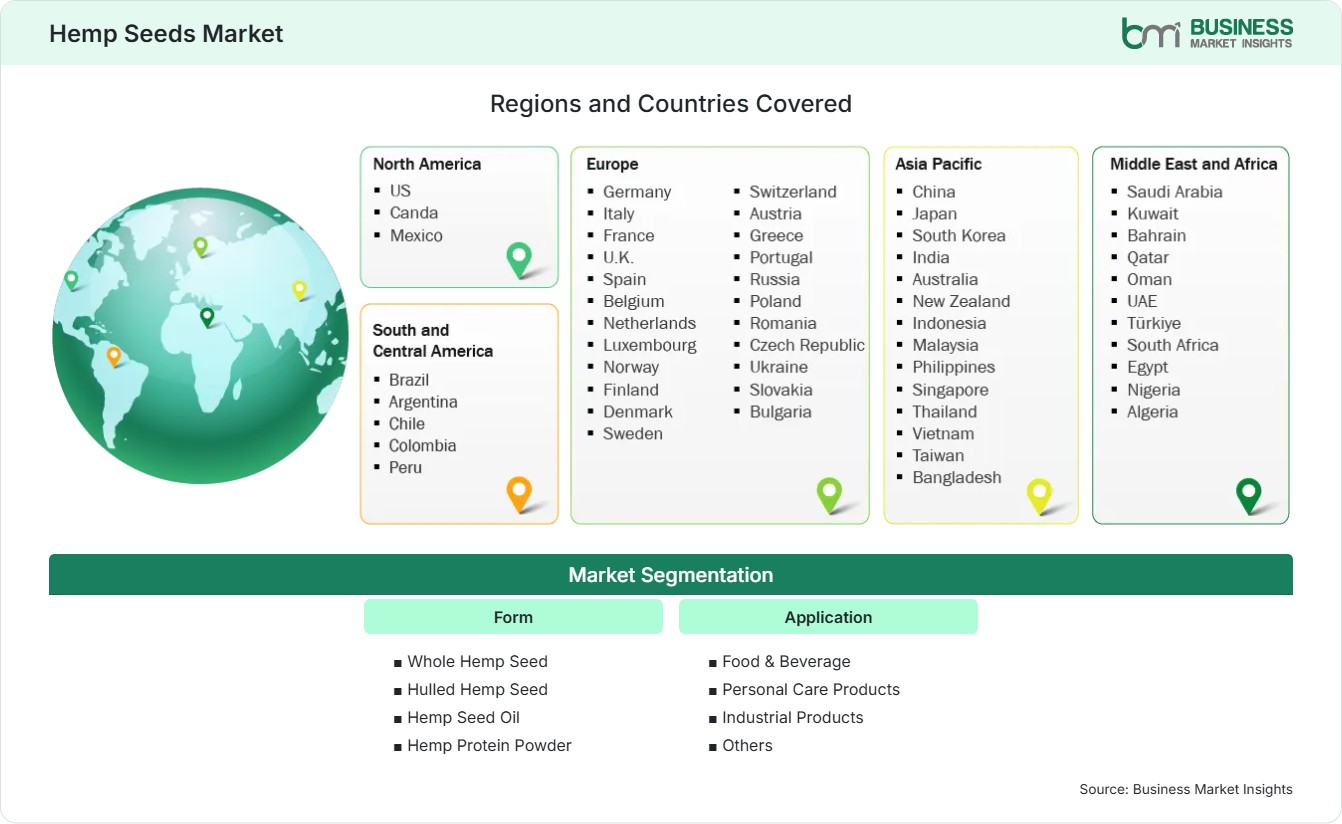
North America accounts for 36%–39% of the global market in 2025 and is projected to expand at a 11.5%–12.5% CAGR during 2026–2033. The region benefits from mature industrial hemp cultivation, advanced processing infrastructure, and growing demand for plant-based nutrition. Strong retail penetration, supportive regulatory frameworks for industrial hemp, and continuous innovation in protein powders, edible oils, and functional ingredients strengthen the Hemp Seeds Market share.
- Expanding consumer demand for vegan protein, healthy snacks, and omega-rich functional foods is encouraging manufacturers to diversify ingredient portfolios while strengthening investments in seed processing, cold-pressed oil extraction, and value-added nutritional formulations.
- Large-scale commercial cultivation supported by certified farming practices improves raw material availability, enabling processors to maintain consistent quality standards while reducing dependence on imported agricultural inputs across multiple product categories.
- Food manufacturers increasingly incorporate hemp-derived ingredients into bakery products, cereals, beverages, dairy alternatives, and nutritional supplements, reflecting changing dietary preferences toward sustainable, clean-label, and protein-rich food solutions.
- Growing collaborations among agricultural producers, ingredient suppliers, research institutions, and branded food companies continue improving product innovation, processing efficiency, and commercialization of advanced hemp-based nutritional ingredients throughout North America.
US Hemp Seeds Market
The United States represents 68%–72% of North American demand in 2025 and is forecast to record a 12.0%–13.0% CAGR through 2033. Rising consumer awareness regarding plant-derived nutrition, expanding health-focused retail channels, and increasing commercialization of industrial hemp support sustained market development.
- Functional food manufacturers continue launching protein-enriched beverages, nutrition bars, cereals, and ready-to-eat products incorporating hemp ingredients to address increasing demand from health-conscious consumers seeking complete plant protein sources.
- Regulatory clarity surrounding industrial hemp cultivation has encouraged additional investments in processing facilities, contract farming, and ingredient standardization, strengthening domestic production capabilities while improving commercial confidence across the value chain.
- E-commerce platforms and specialty health retailers are expanding product accessibility, enabling premium nutritional ingredients to reach broader consumer groups while supporting higher-value branded product development across multiple distribution channels.
- Research initiatives focusing on nutritional composition, processing technologies, and sustainable agricultural practices continue supporting innovation, enabling manufacturers to develop differentiated products targeting sports nutrition, wellness, and functional food applications.
Europe Hemp Seeds Market
Europe captures 28%–31% of the global market in 2025 and is anticipated to expand at a 12.0%–13.0% CAGR during 2026–2033. Strong consumer preference for organic foods, expanding plant-based diets, and supportive sustainability initiatives continue driving regional demand. Germany leads regional consumption, while the Netherlands remains a significant processing hub.
- Germany continues leading regional consumption through strong demand for organic food ingredients, premium nutritional supplements, and sustainable plant-based protein products supported by well-developed retail and health food distribution networks.
- Romania records the highest regional growth, driven by expanding cultivation acreage, competitive agricultural production costs, supportive farming initiatives, and increasing export opportunities across European functional ingredient markets.
- European food producers increasingly adopt hemp-derived ingredients in bakery products, dairy alternatives, nutritional beverages, and functional snacks as consumers prioritize clean-label nutrition and environmentally sustainable agricultural products.
- Investment in advanced seed cleaning, protein extraction, and cold-press oil technologies enables regional manufacturers to improve product quality, processing efficiency, and compliance with evolving European food safety and sustainability standards.
Asia Pacific Hemp Seeds Market
Asia Pacific accounts for 24%–27% of the global market in 2025 and is anticipated to register the fastest regional expansion with a 13.8%–15.0% CAGR during 2026–2033. Rising health consciousness, increasing disposable incomes, and expanding food processing industries continue stimulating demand for hemp-derived nutritional ingredients.
- China maintains regional leadership through extensive industrial hemp cultivation, established seed processing infrastructure, expanding exports of hemp-derived ingredients, and continuous investments in advanced agricultural technologies that strengthen competitiveness within international functional food supply chains.
- India records the highest regional growth as consumer awareness regarding plant-based nutrition rises alongside expanding health food retail, increasing startup participation, and progressive interest in industrial hemp applications across food and wellness industries.
- Japan, South Korea, and Australia continue increasing adoption of premium nutritional ingredients for sports nutrition, fortified beverages, dietary supplements, and functional snacks, encouraging manufacturers to expand product portfolios and premium positioning strategies.
- Regional investments in processing facilities, agricultural modernization, quality certification, and sustainable cultivation methods improve production efficiency while supporting higher-value exports of hemp proteins, edible oils, and specialty food ingredients.
- Rapid expansion of organized retail channels and cross-border e-commerce platforms enables broader consumer access to innovative hemp-based products, accelerating commercialization across urban markets while encouraging multinational ingredient suppliers to strengthen regional partnerships.
Rest of World Hemp Seeds Market
The Rest of World region represents 8%–11% of the global market in 2025 and is projected to expand at a 11.8%–12.8% CAGR through 2026–2033. South & Central America benefits from expanding agricultural diversification and favorable climatic conditions supporting industrial hemp cultivation.
Brazil leads South & Central America through growing cultivation initiatives and food innovation activities, while the United Arab Emirates demonstrates the strongest growth across the Middle East & Africa with rising consumer demand for premium functional nutrition and expanding specialty retail distribution.
- Brazil continues leading regional development through increasing agricultural diversification, supportive cultivation initiatives, and growing investments in food ingredient manufacturing that improve export competitiveness while strengthening domestic value-added processing capabilities.
- The United Arab Emirates records the highest growth in the Middle East & Africa, supported by premium wellness product demand, expanding specialty retail infrastructure, and increasing imports of high-quality plant-based nutritional ingredients.
- Food manufacturers across Latin America increasingly incorporate hemp-derived ingredients into bakery products, beverages, and nutritional supplements to address evolving consumer preferences for sustainable and protein-rich food alternatives.
- Government initiatives promoting agricultural innovation, sustainable farming techniques, and food processing modernization encourage private investment while improving opportunities for regional producers to participate in international ingredient supply chains.
- Rising collaboration between local distributors, international ingredient suppliers, and food manufacturers continues improving product availability, strengthening consumer awareness, and supporting long-term commercial expansion across emerging economies.