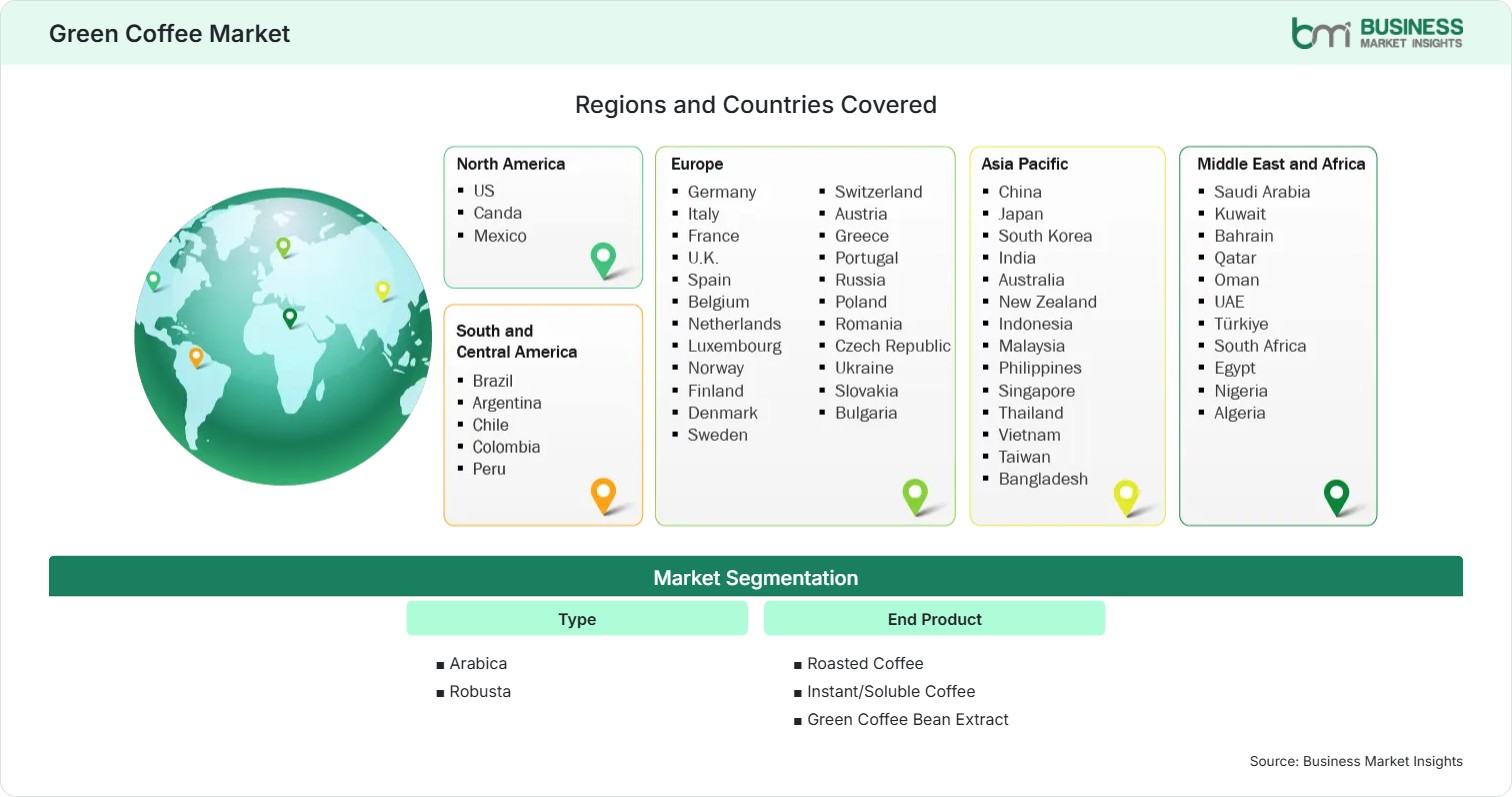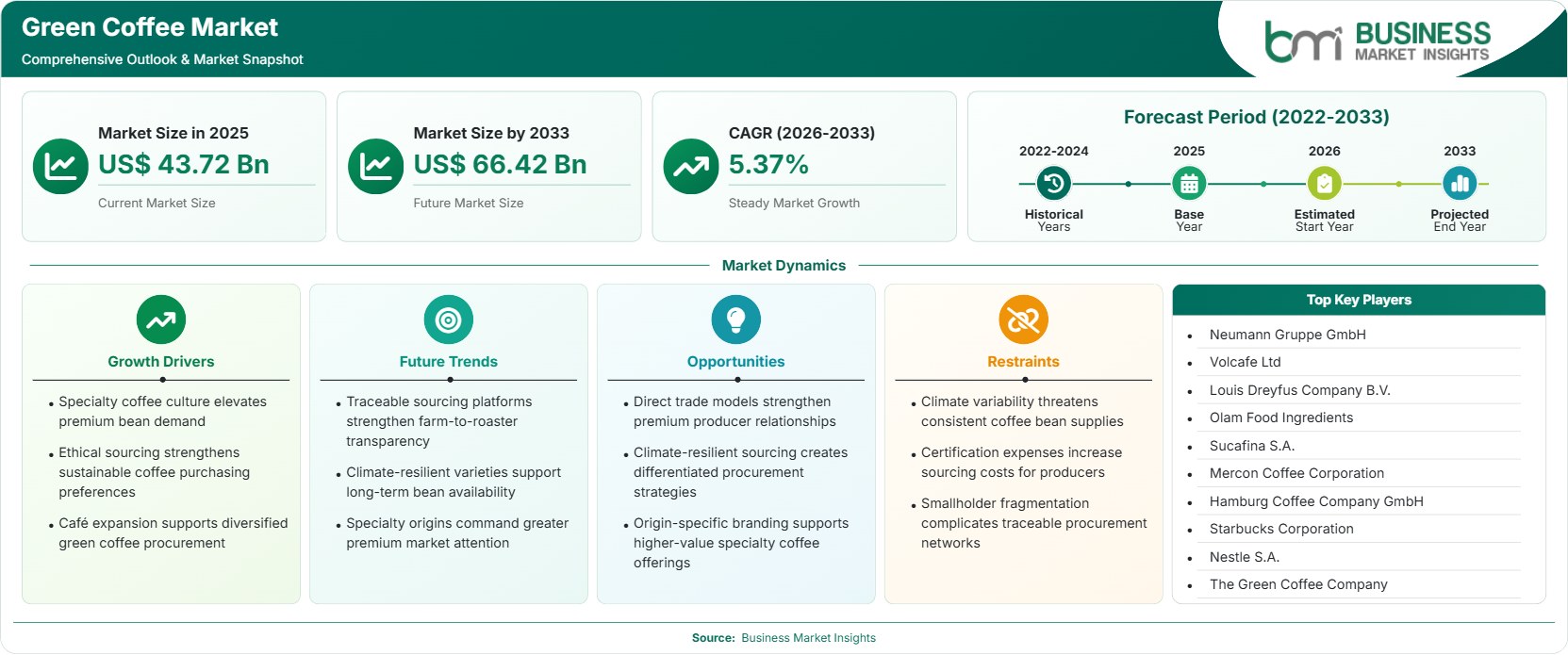
Green Coffee Market Regional Highlights
North America Green Coffee Market
North America is estimated to account for 21% to 24% market share in 2025, with a CAGR of 4.7% to 5.1% during 2033. North America enjoys its well-established specialty coffee tradition, importers, top-quality roasting, and demand for traceability of coffee beans. The US Green Coffee Market is the dominant market in North America, while Canada contributes to the specialty and ethically sourced segments. The role of importers is increasing as they use differentiation by origin, quality grading, and supply agreements to reduce volatility. Specialty roasters are also broadening experimentation with Robusta in espresso blends, cold coffee, and cost optimization.
- Specialty roasters increasingly prioritize single-origin, micro-lot, certified, and traceable beans, creating stronger procurement opportunities for exporters able to provide consistent quality, documented origin information, and dependable logistics.
- Climate variability encourages North American buyers to diversify sourcing across Latin America, Africa, and Asia, reducing dependence on individual origins while preserving differentiated flavor profiles and commercial-grade availability.
- Premium coffee channels support higher-value Arabica procurement, while Robusta gains relevance as roasters seek blend flexibility, crema characteristics, competitive pricing, and alternatives during Arabica supply constraints.
- Digital procurement platforms, warehouse analytics, and quality-testing technologies improve purchasing decisions by connecting physical inventories with market information, shipment schedules, farmer-level documentation, and customer specifications.
US Green Coffee Market
The US accounts for 82%-86% of North America's market share in 2025 and is projected to achieve a CAGR of 4.8%-5.2% through 2033. Growth drivers include the presence of specialty cafes and independent roasters, high-quality coffee products, and increasing consumer preferences for origin stories and information. Large players show focus on supply chain robustness and the involvement of farmers. The country's advanced roasting industry further drives the production of various Arabica and Robusta blends. The coffee procurement initiatives and the growth of specialty chains at Starbucks are also noteworthy.
- Specialty coffee continues expanding the addressable premium pool, with independent roasters using direct relationships, exclusive origins, fermentation profiles, and seasonal lots to differentiate products and improve customer engagement.
- Importers are strengthening inventory strategies because price movements can rapidly affect working capital, roasting margins, contract economics, and retail pricing, making procurement expertise increasingly important.
- Sustainability programs increasingly connect US buyers with farmer financing, agronomy support, tree renovation, and responsible sourcing, strengthening long-term supply relationships while improving environmental and social performance.
Europe Green Coffee Market
Europe holds a market share of 32%-35% in 2025 and is projected to grow at a CAGR of 3.8%-4.3% through 2033. The key countries in this region include Germany, Italy, France, Spain, Belgium, and the Netherlands. According to CBI research, Europe is the largest global green coffee market, with Germany the largest buyer, followed by Italy, Spain, and Belgium. There is significant growth potential in the Netherlands, while European buyers increasingly prioritize specialty, certified, traceable, and sustainability-compliant beans.
- Germany remains a central importing and distribution hub, supported by established roasting capacity, sophisticated logistics, strong household consumption, and extensive relationships with producing-country exporters.
- Italy's espresso culture sustains demand for quality Arabica and Robusta blends, while premium roasters increasingly use origin differentiation, controlled processing, and specialty certifications to support higher-value products.
- Spain combines established coffee consumption with expanding specialty channels, creating opportunities for differentiated Arabica, premium blends, and traceable green coffee supplied through specialized importers.
- The Netherlands is a high-growth trading opportunity, supported by logistics infrastructure and import activity. Available market research indicates strong historical growth in Dutch green coffee consumption and market value.
- European sustainability requirements increase demand for traceability, documented farm origins, and responsible sourcing. Suppliers able to demonstrate credible environmental and social controls gain stronger access to premium procurement programs.
Asia Pacific Green Coffee Market
Asia Pacific holds a 22%-25% share in 2025 and is the leading region expanding at a CAGR of 5.8%-6.3% from 2024 to 2033. Countries such as China, Japan, India, Indonesia, South Korea, and Australia show strong traction in demand and processing. The rising trends in café culture, urbanization, disposable incomes, and high-end beverage consumption will drive growth in imports and processing. The region comprises large-scale producer countries such as Vietnam and Indonesia, creating significant potential for all types of processing and services.
- China offers substantial long-term potential as younger consumers adopt specialty cafés, premium beans, cold coffee, and digitally marketed beverage formats, encouraging importers to expand differentiated origin portfolios.
- India combines a growing domestic café culture with established Arabica and Robusta production, creating opportunities for domestic processors, specialty exporters, premium brands, and integrated farm-to-roaster models.
- Indonesia remains important for both production and consumption, with diversified origins supporting specialty offerings while sustainability programs strengthen farmer productivity, traceability, and market access.
- Japan maintains a sophisticated quality-oriented coffee culture, supporting stable demand for premium Arabica, specialty lots, precise processing specifications, and reliable import relationships.
- Vietnam remains a major Robusta source, strengthening the region's role in global soluble coffee and espresso supply chains while encouraging investments in quality upgrading and sustainable farming.
Rest of World Green Coffee Market
South America and Central America are important sources of supply, including Brazil, Colombia, Honduras, Peru, and Guatemala, while Mexico acts as a link between producers and consumers. The Middle East & Africa regions have contributions from countries such as Ethiopia, Uganda, Côte d'Ivoire, Tanzania, Kenya, and others. These regions together account for a 17% to 20% market share in 2025 and grow at a CAGR of 5.1% to 5.7% till 2033 in the Green Coffee Market. Production diversification and origin-specific quality create strong opportunities for exporters, processors, and sustainability-focused buyers.
- Brazil remains central to global supply, supporting Arabica and Conilon production while expanding processing capabilities. Integrated sourcing and processing can capture more value near origin and reduce logistics exposure.
- Colombia maintains a premium positioning based on washed Arabica, origin recognition, and farmer networks, supporting specialty buyers seeking consistent flavor profiles and differentiated provenance.
- African origins offer substantial specialty upside, particularly where exporters improve processing infrastructure, quality control, farmer training, and direct market access. Ethiopia and Kenya remain important for distinctive Arabica profiles.
- Middle Eastern demand is supported by specialty cafés, premium hospitality, and growing consumer interest in high-quality coffee, creating opportunities for importers and distributors with differentiated portfolios.
- Central American producers can strengthen competitiveness through climate-resilient varieties, shade management, traceability, and specialty certifications, enabling greater access to premium European, North American, and Asian buyers.