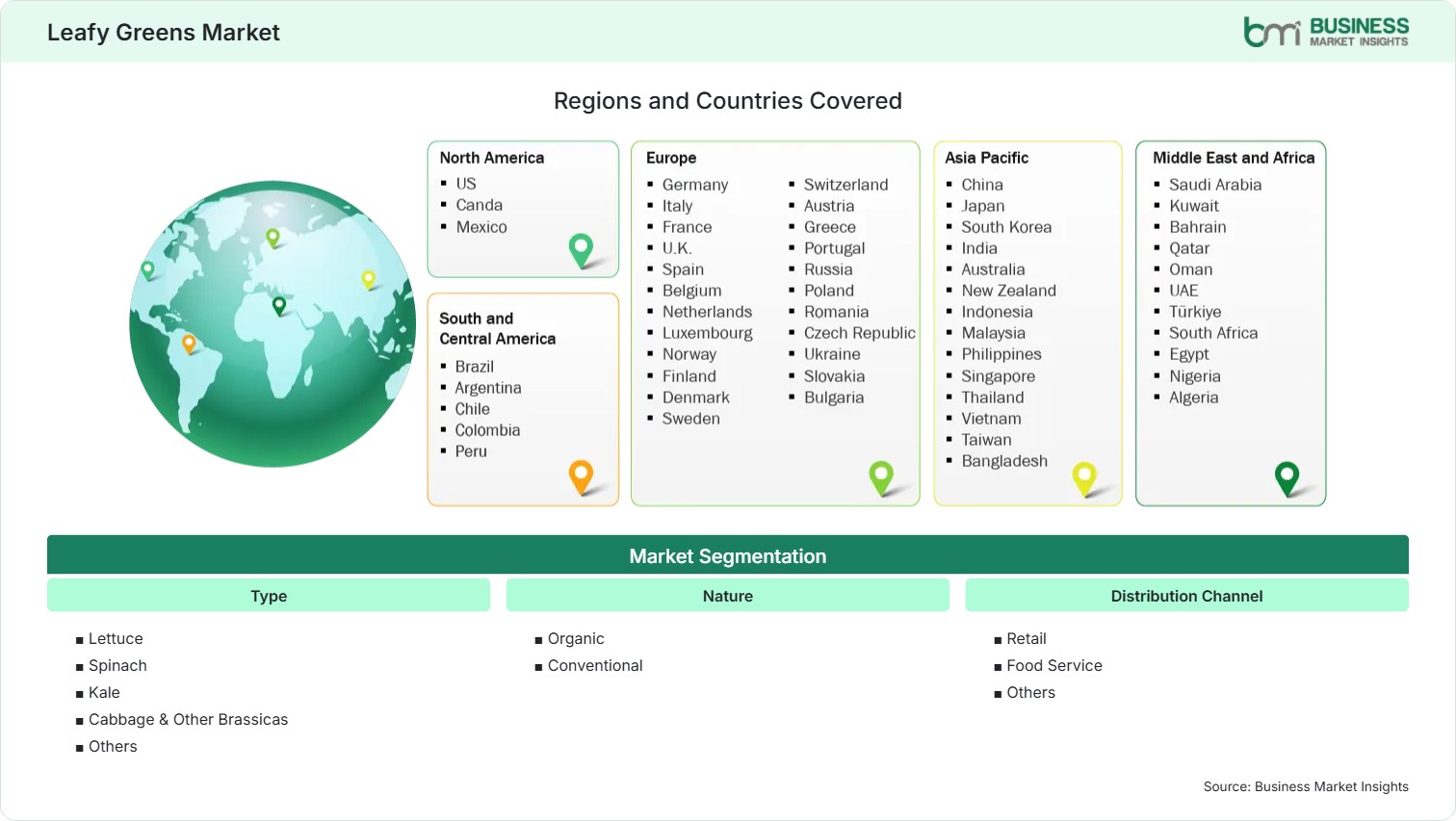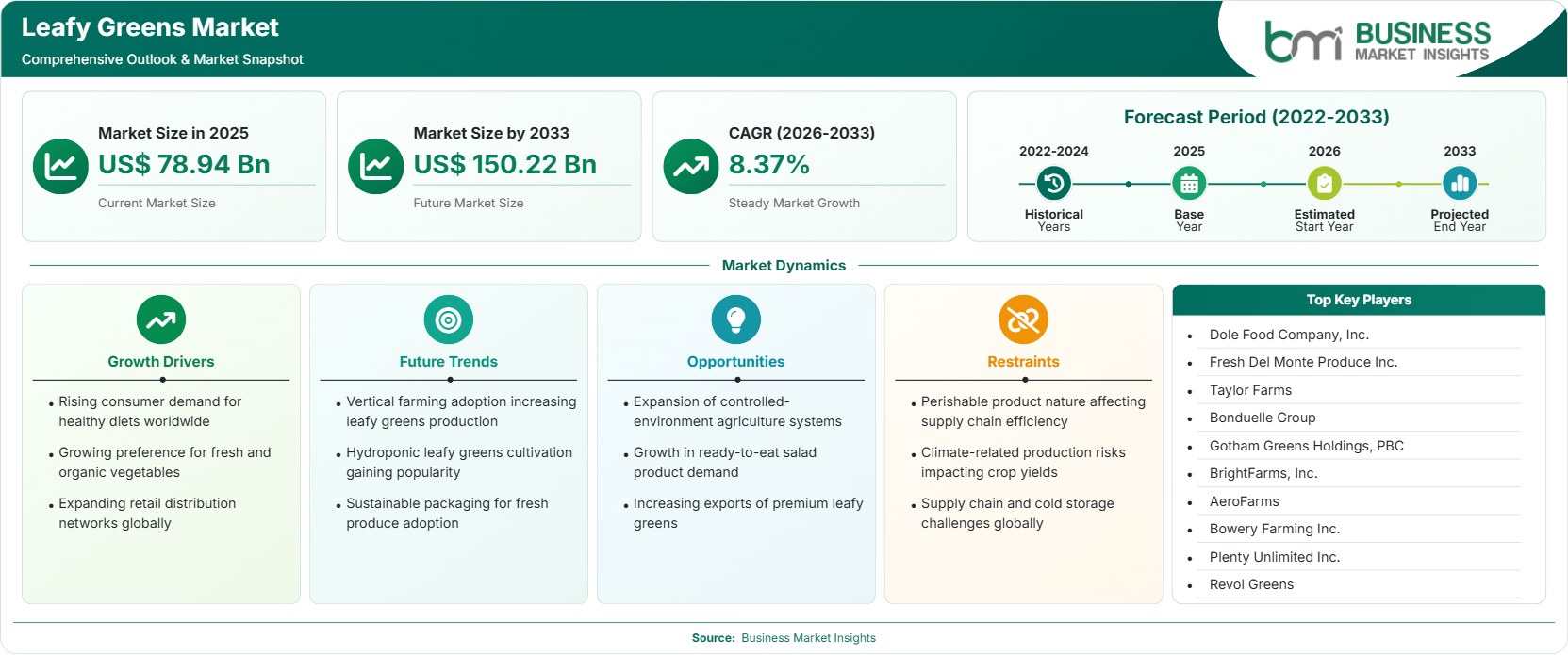
Leafy Greens Market Regional Highlights
North America Leafy Greens Market
North America accounts for 31%–34% of the Leafy Greens Market share in 2025 and is projected to grow at a CAGR of 7.8%–8.2% during 2026–2033. Regional growth is supported by increasing health awareness, strong demand for fresh vegetables, rising organic food consumption, and advanced agricultural technologies. The expansion of controlled-environment agriculture, hydroponics, and vertical farming systems is improving production efficiency and year-round availability of leafy greens.
- The United States dominates regional demand due to high consumption of salads, strong retail networks, and increasing adoption of indoor farming technologies.
- Growing consumer preference for organic and sustainably produced vegetables is increasing demand for premium leafy greens.
- Expansion of supermarket chains, online grocery platforms, and direct-to-consumer delivery models is strengthening product accessibility.
- Food service demand from restaurants, cafeterias, and institutional buyers continues supporting regional market growth.
US Leafy Greens Market
The U.S. represents 86%–89% of the North American market in 2025 and is projected to register a CAGR of 7.9%–8.3% through 2033. Rising consumer focus on healthy diets, increasing organic food adoption, and growing demand for convenient salad products continue driving market expansion. Advanced agricultural practices, including greenhouse cultivation and vertical farming, are supporting domestic production.
- Strong consumer awareness regarding nutrition and preventive health is increasing leafy greens consumption.
- Growing demand for organic vegetables is encouraging producers to expand certified organic cultivation, aligning leafy greens market trends.
- Controlled-environment agriculture is improving crop consistency and reducing dependency on seasonal production.
- Retail and food service channels continue investing in efficient sourcing and distribution systems.
Europe Leafy Greens Market
Europe holds 27%–30% market share in 2025 and is expected to expand at a CAGR of 8.0%–8.4% during the forecast period. Increasing demand for sustainable agriculture, organic food products, and locally sourced vegetables is supporting regional growth. Government initiatives promoting environmentally friendly farming practices and reduced food transportation distances are influencing production trends.
- Germany leads regional demand due to strong organic food consumption and advanced agricultural practices.
- The United Kingdom and France are witnessing increasing adoption of premium salad products and convenience vegetables.
- Sustainable farming methods and reduced pesticide usage are becoming important purchasing factors among consumers.
- Expansion of modern grocery retail and online food delivery platforms is improving market reach.
Asia Pacific Leafy Greens Market
Asia Pacific captures 28%–31% market share in 2025 and is projected to register the fastest CAGR of 9.2%–9.6% during 2026–2033. Rising population, urbanization, increasing disposable incomes, and changing dietary preferences are accelerating leafy greens demand. Growing investments in agricultural technology and controlled-environment farming are improving production capacity across the region.
- China dominates regional demand due to its large consumer base, agricultural production capacity, and expanding modern retail sector.
- India is experiencing rising demand due to increasing health awareness, urban lifestyle changes, and growing organized food retail.
- Japan and South Korea are adopting advanced indoor farming technologies to improve supply consistency.
- Southeast Asian countries are witnessing increasing demand for premium vegetables and ready-to-eat food products.
Rest of World Leafy Greens Market
Rest of World accounts for 8%–11% market share in 2025 and is expected to grow at a CAGR of 8.1%–8.5% through 2033. Increasing urbanization, rising food imports, expanding hospitality sectors, and growing consumer awareness of healthy diets are supporting market development across Latin America, the Middle East, and Africa.
- Brazil remains a leading Latin American market due to expanding vegetable production and growing demand from urban consumers.
- Middle Eastern countries are increasing investment in controlled-environment agriculture to overcome agricultural limitations.
- Africa presents growth opportunities through improved farming infrastructure and rising demand for nutritious food products.
- Premium leafy greens exports are gaining importance as producers target international markets with high-value vegetable products.