
GLP-1 Receptor Agonist Market Outlook: Size, Share, Trends, Growth Analysis, Competitive Landscape & Forecast, 2026-2033

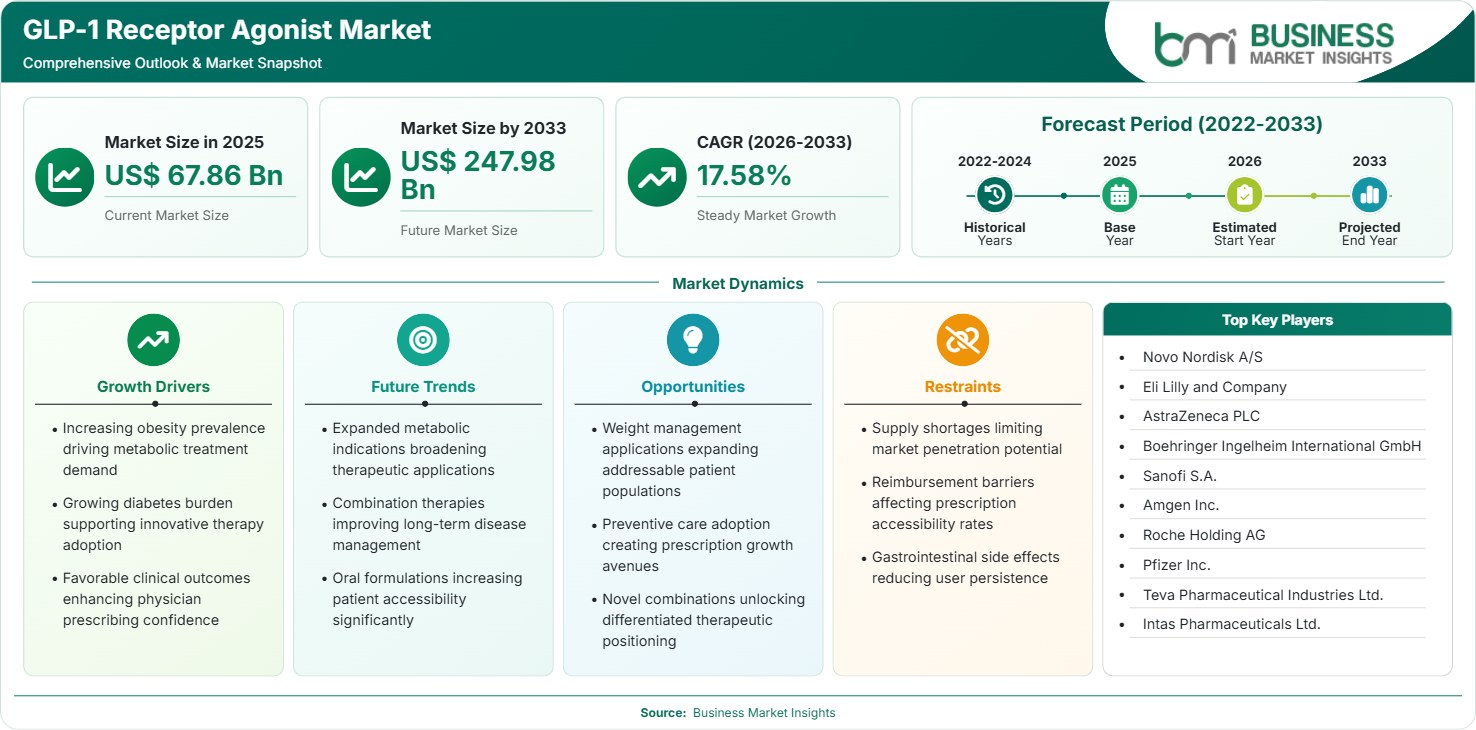
The GLP-1 Receptor Agonist Market size was valued at US$ 67.86 Billion in 2025 and is projected to reach US$ 247.98 Billion by 2033, growing at a CAGR of 17.58% during 2026–2033, driven by obesity treatment demand, diabetes prevalence, oral formulation innovation, cardiovascular applications, and broader healthcare access.

Report Coverage
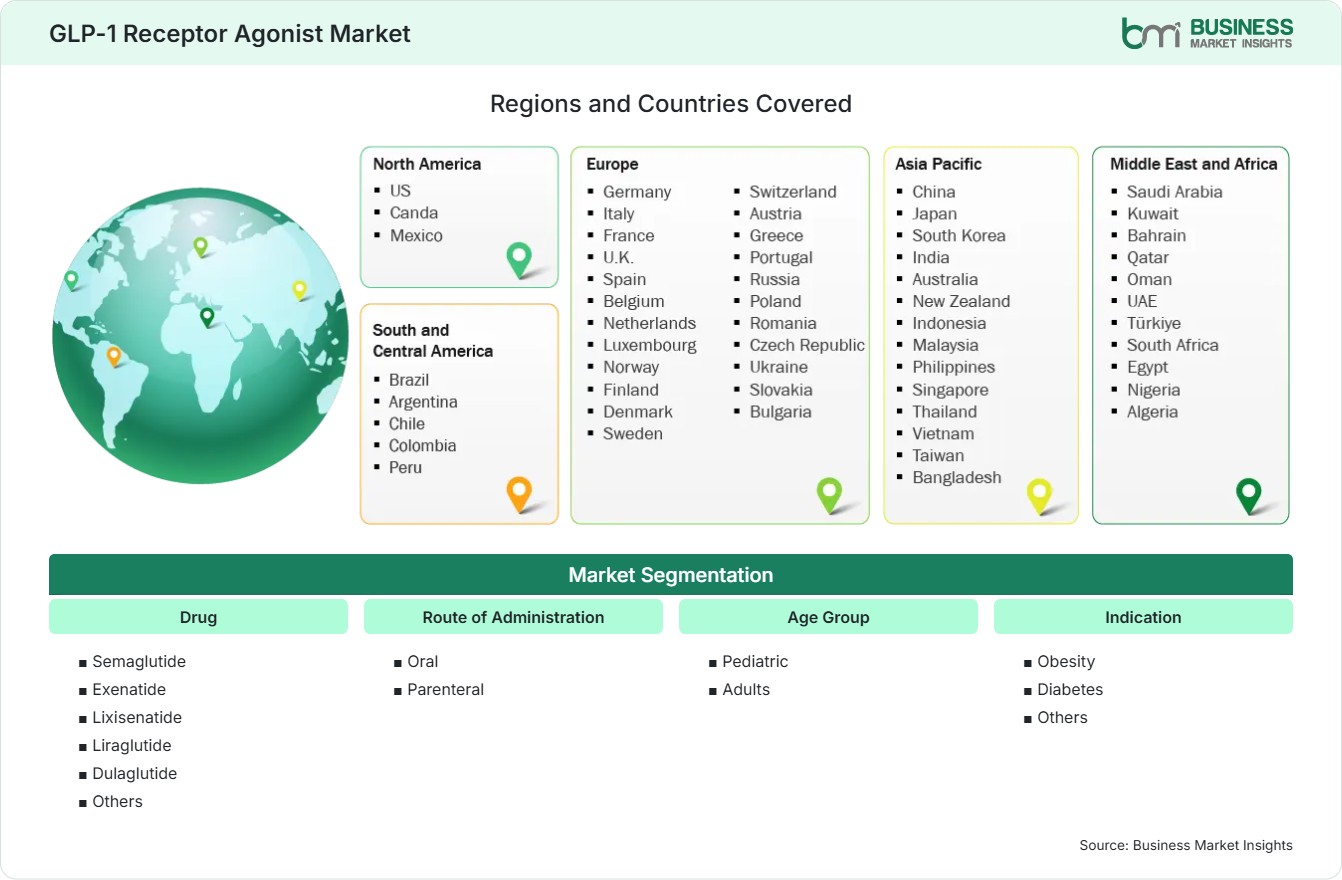
  • Drug: Semaglutide, Exenatide, Lixisenatide, Liraglutide, Dulaglutide, Others
  • Route of Administration: Oral, Parenteral
  • Age Group: Pediatric, Adults
  • Indication: Obesity, Diabetes, Others
  • Distribution Channel: Hospital Pharmacies, Retail Pharmacies, Online Pharmacies
US$ 67.86 Bn Market size in 2025
US$ 247.98 Bn Market Size by 2033
17.58% CAGR, 2026 - 2033
2026-2033 Forecast Period

AI Overview

GLP-1 Receptor Agonist Market Summary

  • North America Region: North America holds a 36%–39% share in 2025, growing at a 16.8%–17.6% CAGR through 2033, supported by obesity prevalence, reimbursement expansion, clinical evidence, manufacturing investments, and wider prescribing across metabolic care.
  • Fastest Growing Region: Asia Pacific accounts for a 22%–25% GLP-1 Receptor Agonist Market share in 2025 and is projected to expand at a 20.1%–21.3% CAGR, supported by diabetes growth, urbanization, expanding private healthcare, local manufacturing, and improving access.
  • Leading Segment: Adults represent an estimated 88%–91% share in 2025 and are projected to grow at a 17.2%–17.9% CAGR, reflecting obesity prevalence, type 2 diabetes management, cardiovascular risk reduction, and expanding long-term metabolic treatment.
  • High Growth Segment: Oral administration represents an estimated 18%–22% share in 2025 and is projected to grow at a 24.0%–27.0% CAGR in the GLP-1 Receptor Agonist Market, supported by convenience, adherence potential, formulation innovation, and patient preference.
  • Key Market Opportunity: The strongest opportunity lies in scalable oral therapies, differentiated dosing schedules, combination approaches, and lower-cost access models that can extend treatment beyond established high-income healthcare systems.
  • Major Market Players: Novo Nordisk A/S, Eli Lilly and Company, AstraZeneca PLC, Boehringer Ingelheim International GmbH, Sanofi S.A., Amgen Inc., Roche Holding AG, Pfizer Inc., Teva Pharmaceutical Industries Ltd., and Intas Pharmaceuticals Ltd.
Strategic Insights

GLP-1 Receptor Agonist Market: Strategic Insights

GLP-1 Receptor Agonist Market Strategic Framework
FREE PDF
Request your free sample
Request free sample
Stakeholder View

Key Takeaways

  • The value chain is moving beyond drug discovery toward an integrated ecosystem encompassing peptide synthesis, active pharmaceutical ingredients, formulation, injection devices, oral delivery systems, specialty distribution, patient-support programs, and digital adherence services.
  • Obesity is creating the largest incremental treatment pool because GLP-1 therapies increasingly address weight management alongside glycemic control. Oral formulations could unlock additional demand among patients reluctant to initiate injectable therapy.
  • Research is progressing from conventional injectable agonists toward oral small molecules, longer-acting formulations, receptor combinations, and therapies designed to improve tolerability, treatment persistence, dosing convenience, and cardiometabolic outcomes.
  • Asia Pacific provides a compelling expansion case because diabetes prevalence, urbanization, private healthcare investment, and growing obesity awareness can support faster adoption from a comparatively lower treatment penetration base.
  • Competitive intensity is encouraging companies to allocate capital toward manufacturing scale, obesity pipelines, and differentiated mechanisms. Roche, Amgen, and other challengers are advancing programs that could reshape future treatment choice.
  • Pricing, reimbursement, manufacturing capacity, and regulated distribution will increasingly determine whether clinical innovation converts into broad patient adoption, particularly in emerging economies.
Geographic Outlook

GLP-1 Receptor Agonist Market Regional Highlights

North America GLP-1 Receptor Agonist Market

North America held a 36%–39% GLP-1 Receptor Agonist Market share in 2025 and is projected to register a 16.8%–17.6% CAGR through 2033. The region benefits from high obesity treatment demand, mature specialty pharmacy networks, strong pharmaceutical R&D, and extensive clinical evidence. The US remains the dominant national market because of broad product availability, substantial manufacturer investment, and active regulatory development. However, payer scrutiny and affordability concerns remain important determinants of treatment persistence and population-level access.

  • Strong demand for obesity medicines is expanding treatment beyond endocrinology into primary care, cardiology, and obesity medicine, increasing prescription opportunities and supporting broader patient identification.
  • Pharmaceutical manufacturers continue investing in domestic production and supply resilience as demand increases, making capacity expansion an important competitive factor alongside clinical efficacy.
  • Digital health platforms increasingly support patient education, prescription management, adherence monitoring, and lifestyle interventions, creating complementary service opportunities around pharmacological treatment.
  • Canada represents a smaller but strategically relevant market, supported by rising metabolic disease awareness and healthcare-system interest in evidence-based obesity management.

US GLP-1 Receptor Agonist Market

The United States accounted for 31%-34% of the global market for GLP-1 Receptor Agonist Market in 2025 and is expected to experience a 16.5%-17.4% CAGR through 2033. The nation enjoys a combination of high physician awareness, advanced specialty pharmacy networks, robust clinical research capabilities, and considerable investment by manufacturers. The competition will now focus on efficacy, tolerability, cardiovascular performance, ease of administration, and cost-effectiveness. Expanding regulatory coverage to other cardiometabolic indications will increase the eligible patient pool.

  • The US market is increasingly influenced by evidence demonstrating benefits beyond glycemic control, including cardiovascular risk reduction and broader cardiometabolic outcomes.
  • Employer coverage, commercial insurance policies, Medicare developments, and manufacturer assistance programs remain central to affordability and treatment continuity.
  • Oral GLP-1 development is attracting significant investment because convenient dosing could address patient reluctance toward injections and potentially simplify long-term therapy.

Europe GLP-1 Receptor Agonist Market

Europe accounted for around 24% to 27% of the market share in 2025 and is expected to witness a 15.8% to 16.8% CAGR in the GLP-1 Receptor Agonist Market during 2033. Germany continues to lead the country-wise market, and the UK and France are other major contributing countries owing to their robust health care systems. Spain is one of the fastest-growing regions in Europe, with an approximate CAGR of 17.2%-18.4%. Regulatory harmonization, obesity-care policy development, and evidence on long-term outcomes support adoption, although country-level reimbursement decisions influence access.

  • Germany benefits from a large pharmaceutical market, strong specialist infrastructure, and increasing demand for medical obesity management, supporting its regional leadership.
  • The UK continues strengthening obesity and metabolic disease management pathways, creating opportunities for therapies supported by robust clinical and health-economic evidence.
  • Spain offers faster expansion potential as obesity awareness, private healthcare activity, and treatment adoption increase from a comparatively developing utilization base.
  • European manufacturers and global pharmaceutical companies are prioritizing oral and next-generation metabolic pipelines to address convenience and differentiation requirements.

Asia Pacific GLP-1 Receptor Agonist Market

Asia Pacific contributed about 22%-25% in 2025 and is expected to demonstrate the highest growth rate, with a CAGR of 20.1%-21.3% until 2033. Japan stands out as one of the key developed nations, whereas China and India offer high-volume growth potential in the long term. India is forecast to witness a CAGR of 22.0%-23.5%, driven by rising diabetes cases, increased healthcare expenditure, growing pharmaceutical production, and improved awareness of metabolic disorders.

  • China provides a large addressable population and expanding domestic pharmaceutical capabilities, although pricing, regulatory access, and local competition will shape commercial outcomes.
  • India combines high diabetes prevalence with a strong generic pharmaceutical ecosystem, creating opportunities for lower-cost formulations and domestic manufacturing partnerships.
  • Japan offers an established healthcare system and aging population, supporting demand for chronic metabolic disease management and physician-led treatment.
  • Southeast Asian markets provide incremental growth as private hospitals, specialist care, and consumer awareness of obesity-related complications expand.

Rest of World GLP-1 Receptor Agonist Market

South and Central America were seen to hold a share of approximately 7%-9% in 2025, due to the high incidence of diabetes, growth in the private healthcare industry, and increased awareness about obesity. While Brazil continues to lead the market, Mexico holds significant growth potential. The Middle East and Africa markets accounted for around 4%-6% of the market share, with Saudi Arabia and the UAE showing greater adoption potential due to increased healthcare spending.

  • Brazil benefits from a large population, expanding private healthcare infrastructure, and increasing interest in pharmacological obesity management, supporting regional commercial scale.
  • Mexico offers attractive growth as diabetes and obesity treatment demand increases, although affordability and reimbursement remain important barriers to broader adoption.
  • Saudi Arabia and the UAE are developing sophisticated healthcare systems, supporting faster uptake of innovative metabolic therapies among specialist and private-sector providers.
  • African markets remain underpenetrated, creating long-term potential for affordable products, local distribution partnerships, and tiered pricing strategies.
Global Market Geography
FREE PDF
Request your free sample
Request free sample
Segment Analysis

GLP-1 Receptor Agonist Market Segmentation

Drug

The Drug section will remain important for differentiating treatments by effectiveness, duration, cardiovascular outcomes, and ease of delivery, with semaglutide and dulaglutide maintaining leading clinical and commercial profiles. The section had an estimated share of 97%–99% in 2025 and is expected to grow at a 17.0%–17.8% CAGR up until 2033. The GLP-1 Receptor Agonist Market scope is widening to include oral and injectable compounds.

  • Semaglutide: Widely used across diabetes and obesity management, semaglutide benefits from strong clinical evidence, multiple administration formats, cardiovascular outcomes, and broad physician familiarity.
  • Exenatide: An established GLP-1 therapy supporting glycemic management, exenatide remains relevant where physician experience, therapeutic familiarity, and treatment availability influence prescribing decisions.
  • Lixisenatide: Lixisenatide contributes to the established GLP-1 portfolio, particularly where postprandial glucose control and existing treatment pathways support continued clinical use.
  • Liraglutide: Liraglutide maintains relevance across diabetes and obesity applications, supported by long clinical experience and evidence concerning glycemic and weight-management outcomes.
  • Dulaglutide: Dulaglutide benefits from convenient weekly administration and established diabetes usage, supporting continued demand across chronic metabolic treatment pathways.

Route of Administration

Route selection is now a major factor in competition, as companies have to ensure both effectiveness and convenience. Parenteral administration accounted for about 78%–82% of the market share in 2025, whereas oral administration is now the fastest-growing route of administration. It is expected that this segment will grow at an approximate 18.0%–19.0% CAGR due to improved formulations for better absorption.

  • Oral: Oral therapies are gaining attention because they eliminate injections and may broaden patient acceptance, particularly among individuals seeking convenient long-term obesity and metabolic treatment.
  • Parenteral: Injectable products retain strong commercial importance because weekly dosing, established pharmacokinetics, and extensive clinical experience support physician confidence and treatment continuity.

Age Group

Adults form the core of utilization since the established treatment protocol for obesity and diabetes includes procedures primarily designed for adults. The adult segment accounted for an estimated 88%-91% share in 2025 and is projected to grow at an approximately 17.2%-17.9% CAGR in the GLP-1 Receptor Agonist Market. The pediatric segment is much more niche and is driven by approvals and age-specific clinical guidelines.

  • Pediatric: Pediatric use is developing through targeted approvals and clinical research, with growth dependent on age-specific efficacy evidence, safety monitoring, specialist availability, and healthcare-system protocols.
  • Adults: Adults constitute the principal treatment population because obesity and type 2 diabetes generate substantial chronic-care demand and increasingly require pharmacological intervention.

Indication

The dynamics of indications are changing as GLP-1 agonists shift from glucose regulation to holistic metabolic regulation. The diabetes indication continues to dominate, while the obesity indication has the greatest incremental potential. The indications subsegment is expected to grow at a CAGR of approximately 17.5%–18.3% through 2033, driven by clinical validation, expanded eligibility, and recognition of obesity as a disease.

  • Obesity: Obesity is driving new patient recruitment as GLP-1 therapies provide pharmacological weight-management options within structured nutrition, physical activity, and medical-care programs.
  • Diabetes: Diabetes remains a foundational indication, with GLP-1 therapies supporting glucose control while offering weight-management and cardiovascular or renal benefits for appropriate patients.

Distribution Channel

Distribution is also evolving concurrently with prescription volume, specialty pharmacy involvement, direct-to-patient solutions, and regulated digital channels. Traditional hospitals and retail pharmacies continue to hold a prominent position, but online pharmacies have been gaining prominence. It is projected that the distribution industry will grow at a CAGR of around 16.5%–18.0% in the GLP-1 Receptor Agonist Market until 2033.

  • Hospital Pharmacies: Hospital pharmacies remain important for specialist-led initiation, complex metabolic care, institutional procurement, and treatment of patients with multiple chronic conditions.
  • Retail Pharmacies: Retail pharmacies provide convenient prescription fulfillment for chronic therapy and remain critical for patients transitioning from specialist care to routine community-based management.
  • Online Pharmacies: Online pharmacies can improve convenience and refill accessibility, although regulatory oversight, prescription verification, product authenticity, and patient counseling remain essential.
Market Forces

GLP-1 Receptor Agonist Market Dynamics

Key Market Drivers

Rising Global Obesity and Metabolic Disease Burden

More than 1 billion people globally live with obesity, according to the WHO, while diabetes affected more than 800 million people in 2022. These conditions create a large chronic-care population requiring sustained interventions. The GLP-1 treatments help regulate appetite and glucose levels, thereby making them pertinent to overlapping metabolic diseases. The WHO categorizes GLP-1 treatments as part of an option for managing obesity. It goes on to state that obesity is a chronic and relapsing disease. This disease burden contributes significantly to the GLP-1 Receptor Agonist Market growth, driven by increased treatment awareness and expanded eligibility. Increasing recognition of obesity-related cardiovascular and renal risks further strengthens the therapeutic value.

Expansion of Cardiometabolic Treatment Applications

Clinical development is increasingly evaluating GLP-1 therapies across cardiovascular, renal, hepatic, and other obesity-related outcomes. WHO notes that some GLP-1 therapies reduce risks associated with heart attack, stroke, heart failure, kidney disease, and other complications. Such a broader knowledge base allows the approach to focus not only on reducing glucose levels but also on shifting toward overall cardiometabolic risk management. With payers and doctors shifting from single-biomarker analysis to outcome evaluation, drugs that provide more than one benefit become even more relevant. Expanding the drug's goals also leads to greater collaboration among specialists, namely endocrinologists, cardiologists, nephrologists, and obesity physicians. GLP-1 Receptor Agonist Market trends, therefore, become characterized by treatment convergence across previously separated chronic disease pathways.

Investment in Manufacturing and Treatment Capacity

Increasing demand means that pharmaceutical companies must consider their manufacturing capabilities as strategic assets. Manufacturing capacities for peptide production, formulation, filling, delivery systems, quality control, and distribution must all increase simultaneously to meet the growing number of patients. Pharmaceutical companies are thus investing money in production, production flexibility, and unique formulations. In addition, competition compels them to invest in oral small-molecule technologies to reduce dependence on the peptide injection system. These investments impact product availability, product launch timing, market coverage, and cost structures.

Key Market Opportunities

Oral GLP-1 Formulations Can Expand Patient Adoption

Oral preparations are another promising avenue for those patients who have problems starting injectable therapy. Eli Lilly revealed the results of the Phase 3 ATTAIN-1 study involving the investigational once-daily oral orforglipron; the maximum dose resulted in a mean reduction in body weight of 12.4% at week 72 among adults with obesity or overweight and at least one weight-related condition, excluding diabetes. Novo Nordisk continues to develop its own oral semaglutide; its European regulators recommended approving the Wegovy pill in 2026. This demonstrates a trend towards greater administrative convenience and formulation differentiation. Consequently, GLP-1 Receptor Agonist Market Forecasts heavily rely on the success of oral therapies converting injection-averse patients to oral formulations.

Emerging-Market Access Models Can Broaden Treatment Volumes

There is great potential for demand in emerging markets, owing to the growing burden of diabetes and obesity, and the limited availability of high-end metabolic drugs. High costs have been identified by the World Health Organization as barriers to accessing semaglutide and tirzepatide, which could be addressed through pooled purchasing, tiered pricing, and voluntary licensing, among other measures. Drug manufacturers can pursue a multifaceted market-entry approach without resorting to premium pricing. In-country production, contract manufacturing, regional collaboration, and low-cost products are some of the ways that can facilitate market access. Some of the countries that would present favorable opportunities for healthcare investment and for raising awareness of metabolic diseases include India, Brazil, China, Saudi Arabia, and Mexico.

Combination and Next-Generation Therapies Create Pipeline Optionality

There is now a growing trend toward future value generation through combination therapies with differentiated mechanisms of action, dosing regimens, and tolerability profiles. Roche is developing enicepatide, a novel dual GLP-1/GIP receptor agonist, in addition to other pipeline compounds for obesity management. Amgen is developing MariTide, a peptide-antibody conjugate intended to provide prolonged action, with dosing either monthly or annually. The above projects represent an evolution from standard weekly injections to therapies built on principles of durability, efficacy, treatment compliance, and individualized therapy. Successful future projects will establish new competitive classes and facilitate licensing, collaboration, and acquisitions of product portfolios.

Market Restraints and Challenges

High Treatment Costs and Reimbursement Constraints

Factor: Premium pricing of branded GLP-1 agents may limit access, especially when reimbursement policies are absent or when patients incur high costs. Impact: Insufficient affordability will affect treatment initiation and continuity of care, despite robust clinical demand. The WHO has explicitly pointed out that medicine prices are an obstacle to access and that there is a need to prioritize generic competitors and implement appropriate pricing strategies. The cost factor will also affect payer negotiations and lead to outcomes that favor patients with documented clinical needs. Affordability becomes an even greater constraint in emerging countries due to competing chronic diseases for health care funds.

Safety Concerns and Unregulated Product Channels

Factor: The swift rise in consumer demand has increased vulnerability to inappropriate prescriptions, counterfeit drugs, and unregulated internet supply chains. Impact: Issues related to product quality may pose risks to the safety of patients, doctors, regulators, and reputable manufacturers. The WHO noted an increasing problem with individuals using GLP-1 drugs not as prescribed and in unauthorized circumstances, including online sources and others. In addition, the organization stresses the importance of regulation in supply chain distribution and the involvement of licensed healthcare professionals. Such risks are becoming even more relevant as the demand is being driven by social media use, which encourages self-medication.

Company Analysis

Competitive Landscape

The GLP-1 Receptor Agonist Market analysis indicates that competition increasingly depends on clinical efficacy, formulation convenience, cardiovascular evidence, manufacturing scale, pipeline breadth, and geographic reach.

Company Name

Overview

Products and Services relevant to this market

Novo Nordisk A/S

Danish pharmaceutical leader with a deep diabetes and obesity portfolio and extensive GLP-1 commercialization experience across global markets.

Semaglutide-based Ozempic, Wegovy, and Rybelsus, alongside obesity, diabetes, metabolic disease research, manufacturing, and patient-support capabilities.

Eli Lilly and Company

US pharmaceutical company competing strongly in diabetes and obesity while expanding oral and next-generation incretin programs.

Tirzepatide-based Mounjaro and Zepbound, investigational oral orforglipron, obesity clinical development, manufacturing, and cardiometabolic research.

AstraZeneca PLC

Global biopharmaceutical company with established metabolic disease capabilities and continued interest in obesity and diabetes innovation.

Diabetes therapies, metabolic disease research, clinical development, biologics capabilities, and partnerships supporting future obesity treatment opportunities.

Boehringer Ingelheim International GmbH

Privately held pharmaceutical company with significant metabolic disease research and collaboration experience.

Diabetes medicines, metabolic research, clinical development, and strategic collaborations focused on obesity and cardiometabolic therapies.

Sanofi S.A.

Global healthcare company with established diabetes expertise and broad international commercial infrastructure.

Diabetes treatments, metabolic disease development, specialty medicines, clinical research, and global healthcare distribution capabilities.

Amgen Inc.

Biotechnology company developing differentiated obesity therapies designed around prolonged dosing and novel molecular architecture.

MariTide, an investigational long-acting GLP-1 receptor agonist/GIP receptor antagonist conjugate, plus obesity and cardiometabolic clinical programs.

Roche Holding AG

Diversified healthcare company expanding rapidly into obesity through differentiated incretin and complementary metabolic mechanisms.

Enicepatide, petrelintide, combination development, obesity clinical trials, diagnostics, and integrated cardiometabolic research.

Pfizer Inc.

Global pharmaceutical company with extensive metabolic research capabilities and ongoing evaluation of obesity pipeline opportunities.

Oral GLP-1 research, obesity development programs, metabolic research capabilities, clinical infrastructure, and global pharmaceutical commercialization.

Teva Pharmaceutical Industries Ltd.

Global pharmaceutical company with broad generic and specialty medicine capabilities and potential relevance to future affordable metabolic treatment access.

Generic pharmaceutical manufacturing, specialty medicines, supply infrastructure, and development capabilities supporting broader metabolic treatment availability.

Intas Pharmaceuticals Ltd.

India-based pharmaceutical company with strong generic and biosimilar capabilities and international commercial reach.

Generic medicines, biologics and biosimilars, manufacturing infrastructure, regulatory capabilities, and potential future participation in affordable metabolic therapies.

Trust & Transparency

Research Methodology

The market analysis combines proprietary research with secondary data from government agencies, company disclosures, regulatory filings, industry databases and expert interviews. Market estimates are validated through data triangulation, cross-market benchmarking and analyst review.

View Full Research Methodology

Questions Answered

Frequently Asked Questions

What is the role of regulation in expanding GLP-1 access?

Regulation determines which populations can receive therapies, how products are distributed, and what clinical evidence supports additional indications. Strong oversight also helps control counterfeit products and inappropriate online sales while protecting patient safety and treatment credibility.

What does the GLP-1 Receptor Agonist Market report help stakeholders evaluate?

The report helps stakeholders assess market size, regional opportunities, product and administration trends, indication dynamics, distribution structures, competitive positioning, emerging technologies, investment priorities, and factors that may influence adoption through 2033.

Why are emerging economies important for future GLP-1 adoption?

Emerging economies combine large populations with rising diabetes and obesity burdens. Expanding private healthcare, domestic pharmaceutical manufacturing, specialist infrastructure, and tiered pricing can improve access while creating substantial incremental treatment opportunities.

How are oral formulations changing obesity treatment?

Oral formulations can reduce injection-related reluctance and simplify long-term administration. The emergence of once-daily oral candidates from major pharmaceutical companies indicates that convenience is becoming a core competitive dimension alongside weight-loss efficacy and safety.

What factors will determine the next phase of GLP-1 drug competition?

Clinical efficacy, tolerability, dosing frequency, oral availability, cardiovascular outcomes, manufacturing capacity, reimbursement, and geographic access will determine competitive positioning. Companies able to combine differentiated clinical benefits with reliable supply and attractive treatment economics should gain stronger market positions.

Access the Full GLP-1 Receptor Agonist Market Report

Get segment-level forecasts, regional estimates, competitive benchmarking, company profiles and downloadable Excel datasets.

Access the full GLP-1 Receptor Agonist Market Report
350 pages PDF & Excel | 2026-09-21
Similar Research

Related Market Reports