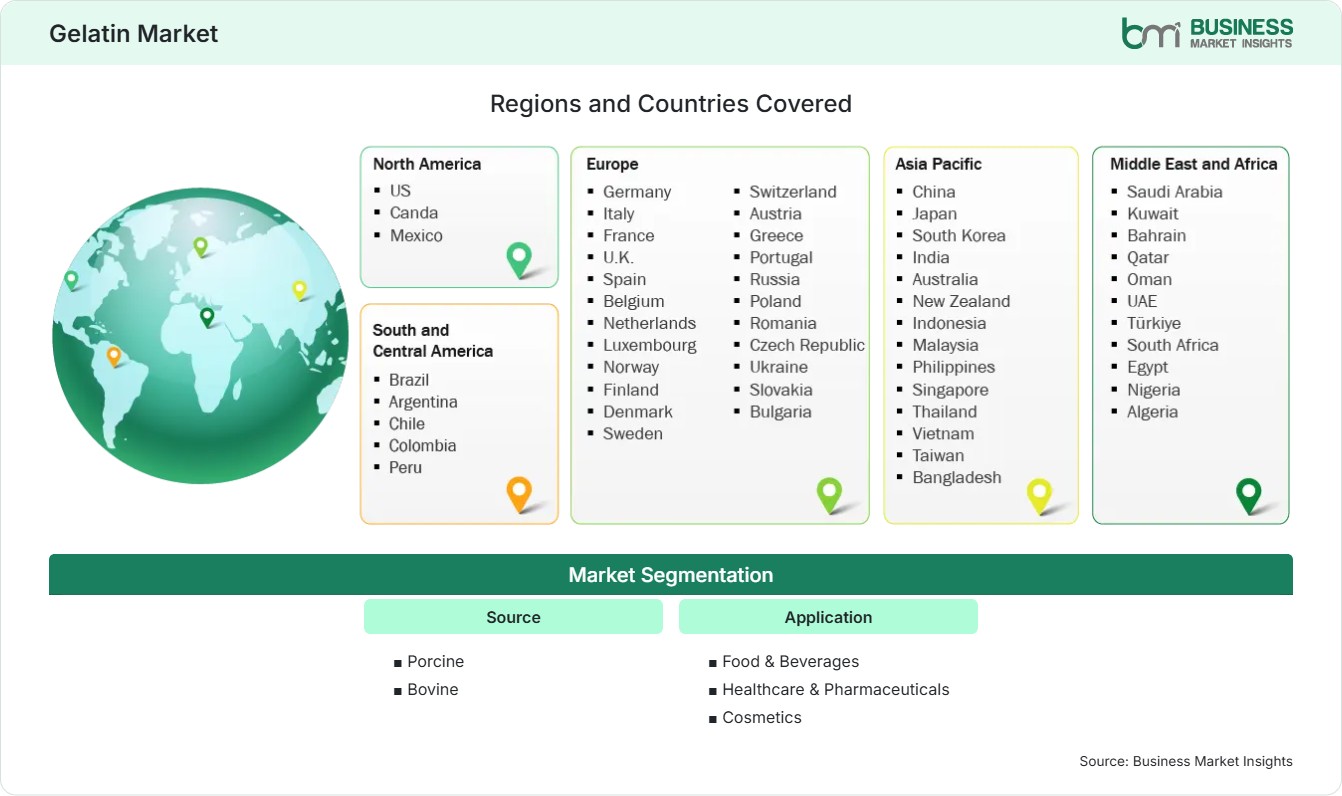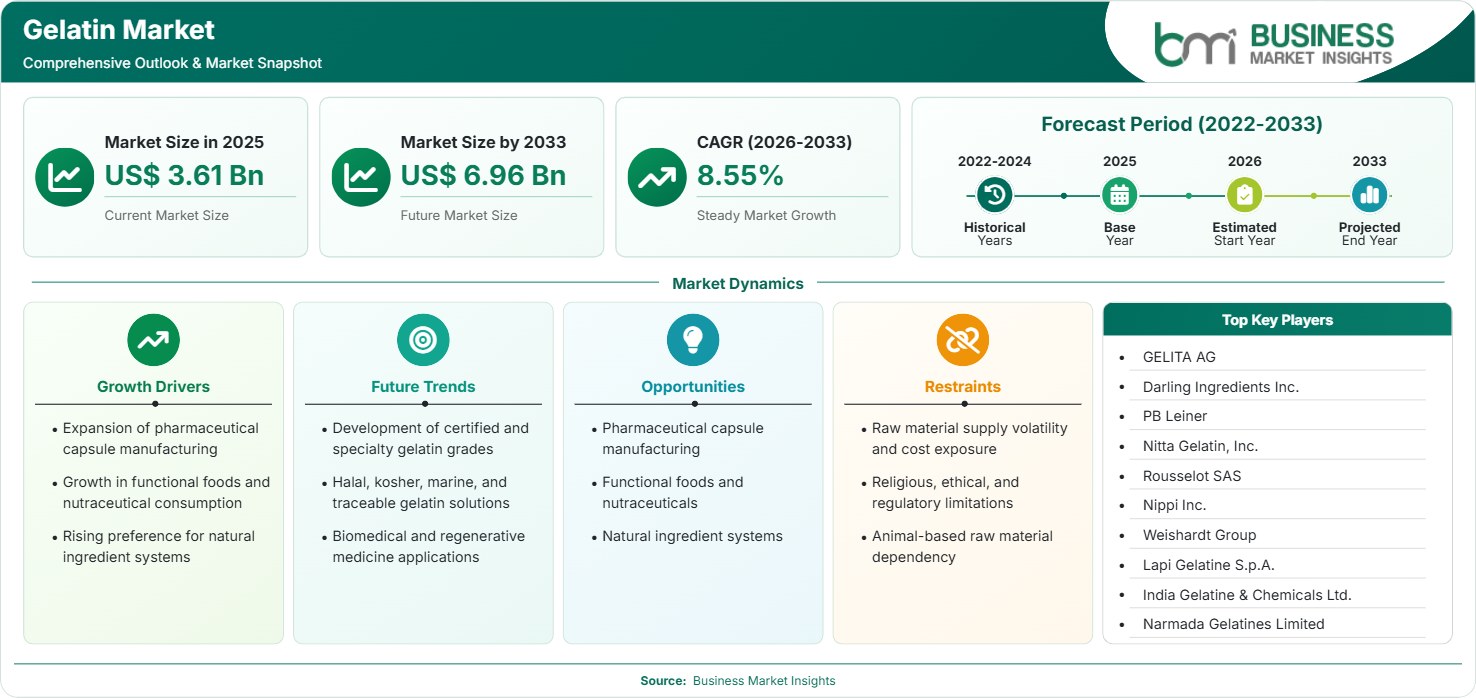
Gelatin Market Regional Highlights
North America Gelatin Market
North America accounts for 34%–37% of global demand in 2025 and advances at a 7.4%–8.0% CAGR through 2033. Strong pharmaceutical manufacturing, dietary supplement consumption, and premium food ingredient demand sustain market leadership. The region benefits from mature healthcare infrastructure, extensive R&D activity, and advanced processing technologies. Gelatin Market share remains supported by collagen-enriched nutritional products and specialty applications.
- Nutraceutical product launches continue creating incremental ingredient demand across supplements, sports nutrition, and healthy aging categories.
- Pharmaceutical capsule production maintains high consumption volumes through regulated manufacturing networks and established drug delivery platforms.
- Sustainable sourcing investments improve transparency and strengthen purchasing confidence among healthcare and food manufacturers.
- Premium confectionery and dairy segments increasingly utilize specialized grades for texture, stability, and formulation performance.
US Gelatin Market
The United States represents approximately 74%–78% of the North American Gelatin Market demand and records a 7.6%–8.2% CAGR. Strong supplement consumption, pharmaceutical innovation, and protein-focused dietary preferences support industrial demand. Large-scale food processing capacity and robust healthcare spending reinforce domestic market expansion.
- Sports nutrition manufacturers increasingly incorporate collagen and protein ingredients into mainstream consumer products.
- Pharmaceutical outsourcing and domestic production investments support continued capsule material consumption.
- Premium food brands adopt clean-label formulation strategies utilizing multifunctional protein ingredients.
- Research into biomedical and regenerative uses broadens long-term application potential.
Europe Gelatin Market
Europe captures 29%–32% market share during 2025 and expands at a 7.9%–8.6% CAGR. Germany leads regional consumption while Eastern Europe demonstrates stronger growth momentum. Stringent quality standards, established processing infrastructure, and growing healthcare applications sustain demand. Regional producers remain globally competitive in premium product categories.
- Germany remains the leading national market with strong pharmaceutical and food manufacturing activity.
- Poland and selected Eastern European markets exhibit higher growth rates near regional averages.
- Sustainability and traceability requirements encourage investment in certified production systems.
- Healthcare and nutraceutical applications continue gaining share within overall regional demand.
Asia Pacific Gelatin Market
Asia Pacific represents 27%–30% of demand in 2025 and delivers the fastest expansion at 9.8%–10.5% CAGR. China leads consumption volumes while India demonstrates strong long-term growth prospects. Rising disposable income, pharmaceutical manufacturing investments, and processed food production strengthen regional positioning. Market share continues increasing across developing economies.
- China maintains leadership through extensive food processing and healthcare manufacturing capacity.
- India records among the strongest expansion rates supported by pharmaceutical sector growth.
- Southeast Asian economies benefit from export-oriented manufacturing and urban dietary changes.
- Increasing demand for protein-enriched foods supports broader ingredient adoption.
- Local capacity expansion improves supply security and cost competitiveness.
Rest of World Gelatin Market
Rest of World contributes 8%–11% share and grows at a 8.6%–9.3% CAGR through 2033. Brazil leads demand in South and Central America through food processing strength, while Gulf economies show rising healthcare sector opportunities. Expanding nutraceutical consumption and local manufacturing initiatives support regional development.
- Brazil remains the leading market based on livestock resources and food processing activity.
- Saudi Arabia and the UAE benefit from growing demand for certified halal ingredients.
- Healthcare investments create opportunities for pharmaceutical and nutraceutical applications.
- International suppliers increasingly target underserved regional markets through partnerships.