
Flight Management And Guidance System Market Outlook: Size, Share, Trends, Growth Analysis, Competitive Landscape & Forecast, 2026-2033

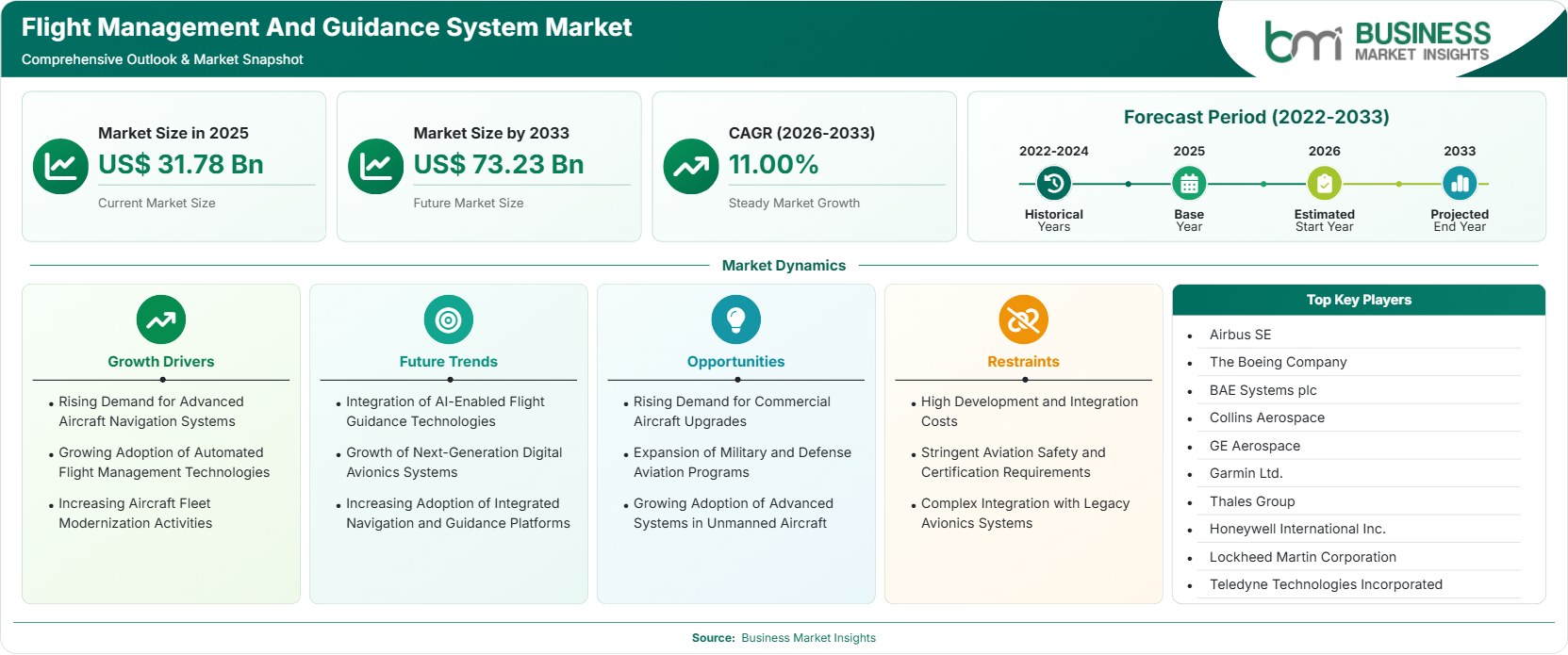
The Flight Management and Guidance System Market size was valued at US$ 31.78 Billion in 2025 and is projected to reach US$ 73.23 Billion by 2033, growing at a CAGR of 11.00% during 2026–2033. Rising aircraft modernization programs, growing demand for flight automation, increasing investments in advanced avionics technologies, expansion of commercial aviation fleets, and adoption of autonomous flight systems are creating significant market opportunities.

Report Coverage
  • Component: Hardware, Software
  • Platform: Commercial Aircraft, Military Aircraft, UAV
US$ 31.78 Bn Market size in 2025
US$ 73.23 Bn Market Size by 2033
11.00% CAGR, 2026 - 2033
2026-2033 Forecast Period

01 AI Overview

Flight Management And Guidance System Market Summary

  • North America Region: North America holds a market share of 36%–40% in 2025 and is projected to grow at a CAGR of 10.2%–10.8% during 2026–2033. Growth is supported by commercial aircraft modernization, defense aviation investments, navigation technology advancements, connected avionics adoption, flight safety requirements, automation initiatives, fleet optimization programs, air traffic management upgrades, aerospace innovation, and increasing aircraft deliveries. The U.S. remains the dominant market owing to strong aerospace manufacturing capabilities and continuous avionics upgrades, advancing at a CAGR of 10.4%–11.0%.
  • Fastest Growing Region: Asia Pacific accounts for 24%–28% share in 2025 and is expected to register a CAGR of 12.4%–13.0% through 2033. Growth is fueled by airline fleet expansion, increasing passenger traffic, airport infrastructure development, defense modernization programs, commercial aircraft procurement, indigenous aerospace initiatives, UAV deployment, rising aviation investments, technological modernization, and regional air transportation growth.
  • Leading Segment: Hardware represents 62%–66% share in 2025 and is anticipated to grow at a CAGR of 10.8%–11.4% through 2033. Demand is supported by avionics modernization, navigation equipment upgrades, advanced cockpit systems, flight management computers, operational safety requirements, aircraft performance optimization, automation technologies, integrated guidance systems, and increasing fleet modernization initiatives.
  • High Growth Segment: Commercial Aircraft captures 52%–56% share in 2025 and is forecast to expand at a CAGR of 10.6%–11.2% during 2026–2033. Expansion is driven by fleet expansion programs, increasing aircraft deliveries, fuel-efficiency goals, airline modernization initiatives, flight optimization requirements, passenger traffic growth, regulatory compliance needs, digital cockpit integration, and operational efficiency objectives.
  • Key Market Opportunity: Growing investments in autonomous flight operations, connected aircraft ecosystems, advanced navigation software, and next-generation avionics platforms are creating opportunities for technology providers across global aviation markets.
  • Major Market Players: Airbus SE, The Boeing Company, BAE Systems plc, Collins Aerospace, General Electric Company, Garmin Ltd., Thales Group, Honeywell International Inc., Lockheed Martin Corporation, and Teledyne Technologies Incorporated.
02 Strategic Insights

Flight Management And Guidance System Market: Strategic Insights

Flight Management And Guidance System Market Strategic Framework
FREE PDF
Request your free sample
Request free sample
03 Stakeholder View

Key Takeaways

  • The flight management and guidance system market ecosystem is increasingly integrating flight management computers, navigation systems, autopilot technologies, software platforms, and connectivity solutions into unified avionics architectures that improve operational efficiency and flight safety.
  • UAV platforms present the strongest long-term opportunity as defense agencies and commercial operators continue investing in autonomous and remotely piloted aircraft capabilities.
  • Artificial intelligence, enhanced navigation algorithms, real-time flight optimization software, and next-generation avionics architectures are driving innovation across the industry.
  • Asia Pacific offers significant investment potential due to growing aircraft deliveries, airline fleet expansion, defense modernization programs, and rising indigenous aerospace development activities.
  • Strategic collaborations among aircraft manufacturers, avionics suppliers, and defense contractors are accelerating adoption of advanced flight guidance technologies and integrated cockpit solutions.
  • Increasing emphasis on fuel efficiency, flight path optimization, and operational safety continues encouraging airlines and defense operators to modernize navigation and guidance systems.
04 Geographic Outlook

Flight Management And Guidance System Market Regional Highlights

North America Flight Management and Guidance System Market

North America accounted for 36%–40% of global revenue in 2025 and is expected to grow at a CAGR of 10.2%–10.8% through 2033. The region benefits from strong aerospace manufacturing capabilities, continuous avionics upgrades, and extensive commercial and military aircraft operations. The Flight Management and Guidance System Market share remains the largest globally due to high aircraft fleet density and sustained investment in next-generation aviation technologies. Growing adoption of connected avionics, modernization programs, and advanced navigation systems continues supporting regional demand.

  • Airlines continue investing in digital flight management systems to improve operational efficiency and reduce fuel consumption.
  • Defense modernization programs are supporting procurement of advanced avionics and guidance technologies.
  • Aerospace manufacturers continue integrating next-generation flight deck systems into new aircraft platforms.
  • Regulatory emphasis on flight safety and air traffic management fuels avionics upgrades.
  • Investments in autonomous aviation technologies support innovation across commercial and military applications.

US Flight Management and Guidance System Market

The United States represents 82%–86% of North American demand and is projected to grow at a CAGR of 10.4%–11.0% through 2033. Strong aerospace manufacturing activity, military aviation investments, and commercial fleet modernization support flight management and guidance system market expansion. Advanced aviation technologies and significant defense spending continue creating opportunities for avionics suppliers and system integrators.

  • Commercial airlines increasingly adopt advanced flight optimization and navigation technologies.
  • Military aviation platforms require sophisticated guidance systems to support mission capabilities.
  • Investments in next-generation air mobility programs contribute to technology development.
  • Autonomous and unmanned aircraft initiatives continue strengthening avionics demand.

Europe Flight Management and Guidance System Market

Europe held 25%–29% of global revenue in 2025 and is expected to register a CAGR of 10.5%–11.1% through 2033. Demand is supported by commercial fleet modernization, aerospace innovation, and defense aviation investments. France remains a leading market, while Germany represents a high-growth country with a CAGR of 11.2%–11.8%. Investments in aircraft efficiency and digital aviation technologies continue driving adoption.

  • Aircraft manufacturers continue integrating advanced avionics systems into next-generation aircraft programs.
  • Defense agencies are investing in navigation and guidance modernization initiatives.
  • Germany benefits from strong aerospace engineering and aviation technology capabilities.
  • Airlines focus on flight efficiency and operational optimization through advanced systems.
  • Regulatory compliance continues supporting avionics upgrade cycles.

Asia Pacific Flight Management and Guidance System Market

Asia Pacific accounted for 24%–28% of global revenue in 2025 and is expected to record the fastest CAGR of 12.4%–13.0% through 2033. Rapid fleet expansion, airport infrastructure development, and increasing aircraft procurement are driving demand. China and India remain key market, while South Korea demonstrates strong growth with a CAGR of 13.0%–13.6%. Growing aerospace capabilities continue creating significant opportunities for technology providers.

  • Commercial aviation growth is increasing demand for advanced navigation and guidance technologies.
  • Defense modernization programs support procurement of sophisticated avionics platforms.
  • Expanding aircraft manufacturing capabilities strengthen regional demand.
  • Investments in unmanned aerial vehicle technologies support system adoption.
  • Air traffic growth encourages deployment of advanced flight management solutions.

Rest of World Flight Management and Guidance System Market

Rest of World accounted for 8%–12% of global revenue in 2025 and is projected to grow at a CAGR of 10.8%–11.4% through 2033. Growth is supported by aircraft fleet modernization, increasing defense expenditure, and aviation infrastructure expansion. Saudi Arabia and the United Arab Emirates remain important Middle Eastern markets, while Brazil leads demand in South America through expanding aviation investments.

  • Fleet modernization programs continue driving avionics system upgrades.
  • Defense aviation projects support adoption of advanced guidance technologies.
  • Airport and air traffic infrastructure investments strengthen long-term demand.
  • Regional airlines increasingly seek operational efficiency through advanced navigation solutions.
  • Expanding UAV deployments create additional opportunities for system manufacturers.
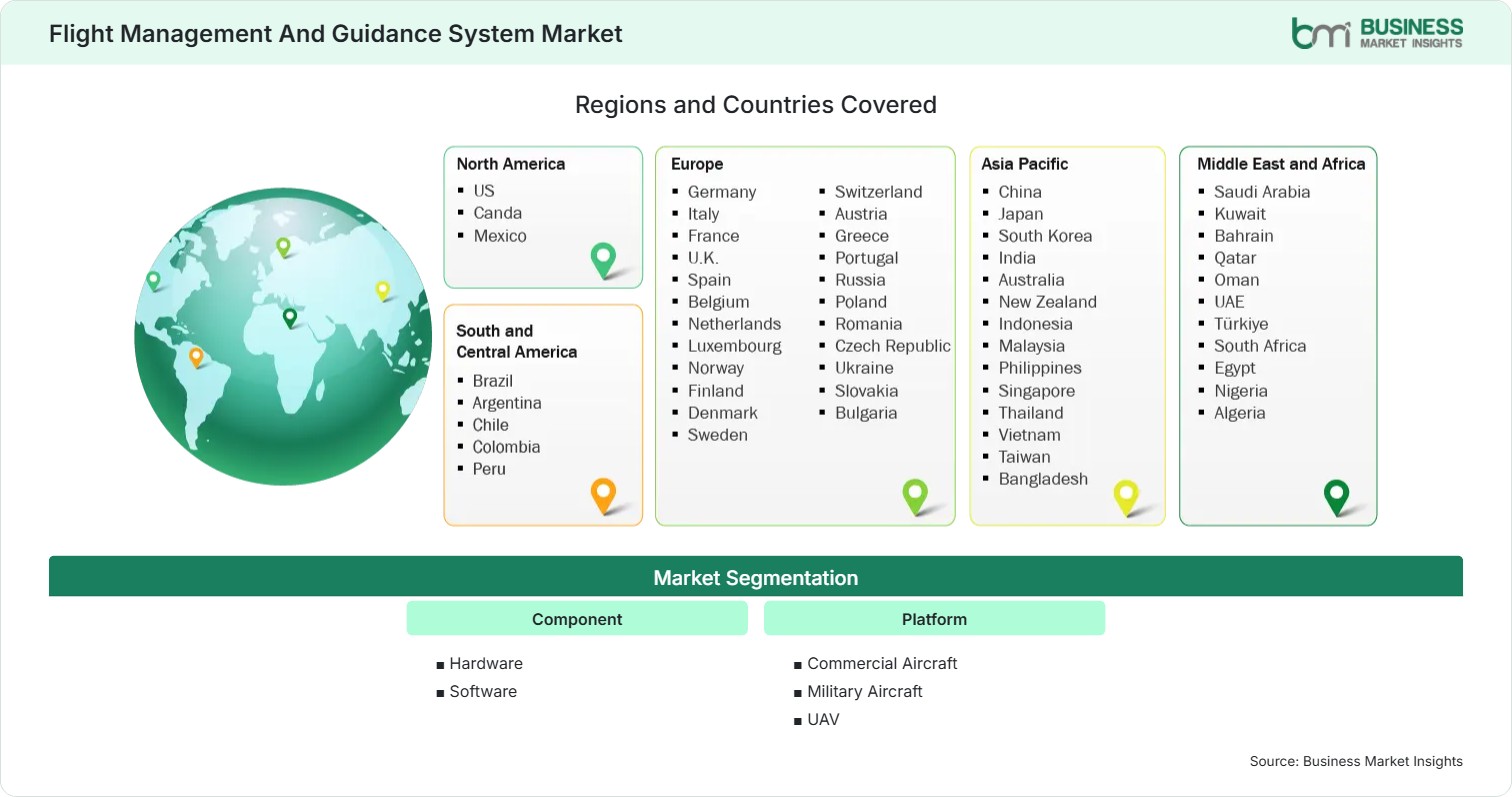
Global Market Geography
FREE PDF
Request your free sample
Request free sample
05 Segment Analysis

Flight Management And Guidance System Market Segmentation

Component

Hardware accounts for 62%–66% share in 2025 and is expected to grow at a CAGR of 10.8%–11.4% through 2033. The segment continues to dominate due to increasing investments in avionics modernization, flight control systems, navigation computers, and cockpit display technologies. The Flight Management and Guidance System Market scope continues expanding as aircraft operators prioritize enhanced flight efficiency, navigation accuracy, and operational safety.

  • Hardware: Includes flight management computers, navigation sensors, display systems, control panels, and avionics components that support aircraft navigation and guidance functions.
  • Software: Supports route optimization, performance calculations, flight planning, navigation management, autopilot integration, and real-time operational analytics.

Platform

Commercial Aircraft account for 52%–56% share in 2025 and are projected to grow at a CAGR of 10.6%–11.2% through 2033. Market growth is driven by airline fleet expansion, aircraft deliveries, and increasing investments in digital cockpit technologies. Current Flight Management and Guidance System Market trends indicate rising adoption of advanced navigation and automation capabilities across modern commercial fleets.

  • Commercial Aircraft: Driven by airline modernization strategies, fuel-efficiency objectives, navigation optimization requirements, and increasing passenger traffic worldwide.
  • Military Aircraft: Utilize advanced guidance systems for mission planning, situational awareness, navigation precision, and operational effectiveness.
  • UAV: Experiencing rapid adoption through increasing deployment in surveillance, reconnaissance, logistics, border monitoring, and autonomous aviation applications.
06 Market Forces

Flight Management And Guidance System Market Dynamics

Key Market Drivers

Rising Demand for Advanced Aircraft Navigation Systems

The modern aviation industry now requires more precise navigation solutions that enable the management of complex routes and airspace, as well as fuel savings. Both the airline and defense companies are turning towards advanced navigation systems that can provide greater situational awareness and improve performance. Flight management systems use various sources of information to provide better navigation and reduce fuel expenditure. Increasing volume of air traffic and higher requirements to increase the operational efficiency of flights are driving the demand for the next generation navigation solutions.

Growing Adoption of Automated Flight Management Technologies

Aviation companies have begun relying on automation to improve flight efficiency, reduce pilots' workload, and ensure consistent operations. Flight management systems have automated functions of route planning, fuel planning, performance planning, and navigation functions. This has enabled the pilots to concentrate on mission-critical tasks while ensuring greater safety during flights. Automated systems have been embraced by airlines to increase productivity and reducing operational costs. Similarly, defense organizations have been investing in automated technologies to aid their mission and operational efficiency. Automated flight management systems have emerged as one of the key drivers of the market.

Increasing Aircraft Fleet Modernization Activities

Commercial airlines and military operators worldwide are upgrading aging fleets with modern avionics and flight guidance technologies. Fleet modernization programs focus on improving fuel efficiency, navigation accuracy, safety performance, and regulatory compliance. Next-generation flight management systems provide enhanced operational capabilities while supporting integration with emerging air traffic management frameworks. Aircraft manufacturers are also equipping new platforms with increasingly sophisticated guidance technologies. Growing investments in fleet renewal and avionics upgrades continue creating demand for innovative navigation and guidance systems across global aviation markets.

Key Market Opportunities

Rising Demand for Commercial Aircraft Upgrades

Airlines continue pursuing aircraft modernization strategies to improve operational efficiency, passenger experience, and regulatory compliance. Upgrading existing fleets with advanced flight management systems provides a cost-effective alternative to complete aircraft replacement. Enhanced navigation software, digital cockpit functions, and automation capabilities help operators improve route planning and reduce fuel consumption. Flight Management and Guidance System Market Forecasts indicate sustained demand for retrofit and upgrade programs as airlines seek to maximize fleet performance. Suppliers offering scalable and easily integrated solutions are expected to benefit significantly from these ongoing modernization initiatives.

Expansion of Military and Defense Aviation Programs

Governments across major economies continue allocating resources to strengthen military aviation capabilities through fleet modernization and next-generation aircraft procurement. Advanced flight guidance systems are essential for mission planning, tactical operations, navigation accuracy, and operational readiness. The introduction of new combat aircraft, surveillance platforms, and transport aircraft is creating substantial opportunities for avionics suppliers. Military programs increasingly emphasize digital integration, automation, and network-centric operations, creating favorable conditions for advanced flight management technology providers. Continued defense spending is expected to support long-term market growth.

Growing Adoption of Advanced Systems in Unmanned Aircraft

The expanding use of unmanned aerial vehicles across commercial and defense sectors is generating significant opportunities for flight management and guidance system providers. UAV operations require reliable navigation technologies, autonomous flight capabilities, real-time route management, and mission control functionality. Applications in logistics, agriculture, surveillance, infrastructure monitoring, and defense continue supporting adoption. Manufacturers are investing in advanced software and autonomous flight capabilities to improve UAV operational performance. As unmanned aviation becomes increasingly integrated into global airspace, demand for sophisticated flight management technologies is expected to accelerate.

Market Restraints and Challenges

High Development and Integration Costs

Factor: Advanced flight management and guidance systems require substantial investment in research, software development, avionics engineering, testing procedures, and platform integration activities. Impact: High development and implementation costs can increase project complexity and limit adoption among smaller aviation operators. Aircraft integration often requires extensive customization, certification, and validation activities that raise deployment expenses. These financial challenges may delay modernization programs and influence purchasing decisions. Manufacturers must balance innovation with cost efficiency to maintain competitiveness while addressing evolving customer requirements.

Stringent Aviation Safety and Certification Requirements

Factor: Aviation systems must comply with rigorous safety, reliability, airworthiness, and regulatory certification standards before deployment. Impact: Compliance requirements can extend development timelines, increase certification costs, and create barriers for technology introduction. Extensive testing and validation processes are necessary to ensure system performance under a wide range of operational conditions. These requirements increase operational complexity for manufacturers while prolonging product launch schedules. Maintaining compliance with evolving global aviation standards remains a key challenge for market participants.

07 Company Analysis

Competitive Landscape

The Flight Management and Guidance System Market analysis highlights a competitive environment driven by avionics innovation, aircraft modernization initiatives, autonomous flight technologies, and integrated navigation solutions.

Company Name

Overview

Products and Services Relevant to this Market

Airbus SE

Global aerospace manufacturer with extensive commercial aviation and defense capabilities.

Flight management systems, avionics integration, navigation technologies, and aircraft operational solutions.

The Boeing Company

Leading aerospace company serving commercial and military aviation markets globally.

Advanced cockpit systems, flight guidance technologies, avionics platforms, and aircraft optimization solutions.

BAE Systems plc

Defense and aerospace company focused on mission-critical aviation technologies.

Military avionics, flight navigation systems, aircraft electronics, and mission management solutions.

Collins Aerospace

Major aerospace technology supplier serving commercial and defense aviation customers.

Flight management computers, navigation systems, cockpit displays, and integrated avionics platforms.

General Electric Company

Aviation technology provider supporting aircraft operations and performance management.

Aircraft systems, avionics support technologies, operational analytics, and aviation solutions.

Garmin Ltd.

Aviation navigation specialist serving commercial, business, and general aviation customers.

Flight management software, navigation systems, cockpit displays, and guidance technologies.

Thales Group

Global aerospace and defense technology company with strong avionics expertise.

Flight management systems, navigation platforms, avionics suites, and aircraft guidance technologies.

Honeywell International Inc.

Aerospace technology provider recognized for integrated avionics and automation systems.

Flight management computers, navigation solutions, autopilot technologies, and cockpit systems.

Lockheed Martin Corporation

Defense contractor supporting advanced military aviation and mission systems.

Military flight management systems, avionics technologies, navigation solutions, and mission support systems.

Teledyne Technologies Incorporated

Technology company specializing in aerospace instrumentation and electronic systems.

Aircraft sensors, navigation solutions, avionics equipment, and flight monitoring technologies.


10 Trust & Transparency

Research Methodology

The market analysis combines proprietary research with secondary data from government agencies, company disclosures, regulatory filings, industry databases and expert interviews. Market estimates are validated through data triangulation, cross-market benchmarking and analyst review.

View Full Research Methodology

11 Questions Answered

Frequently Asked Questions

What does this Flight Management and Guidance System Market Report evaluate?

The market report evaluates market dynamics, technological developments, regional opportunities, competitive positioning, platform trends, growth drivers, and industry challenges through 2033.

How are unmanned aircraft influencing market demand?

UAV deployment is increasing demand for autonomous navigation, flight planning, guidance software, mission management systems, and advanced flight control technologies.

Why is Asia Pacific the fastest-growing regional market?

The region benefits from expanding airline fleets, increasing aircraft procurement, strengthening defense aviation programs, airport infrastructure investments, and growing aerospace manufacturing activities.

Which component segment dominates the market?

Hardware leads the market due to extensive deployment of flight management computers, navigation devices, cockpit displays, sensors, and avionics infrastructure across aircraft platforms.

What is driving growth in the flight management and guidance system market?

Growth is supported by aircraft fleet modernization, increasing demand for automated flight operations, rising commercial aircraft deliveries, and growing investments in advanced avionics technologies.

Access the Full Flight Management And Guidance System Market Report

Get segment-level forecasts, regional estimates, competitive benchmarking, company profiles and downloadable Excel datasets.

Access the full Flight Management And Guidance System Market Report
350 pages PDF & Excel | 2026-08-20