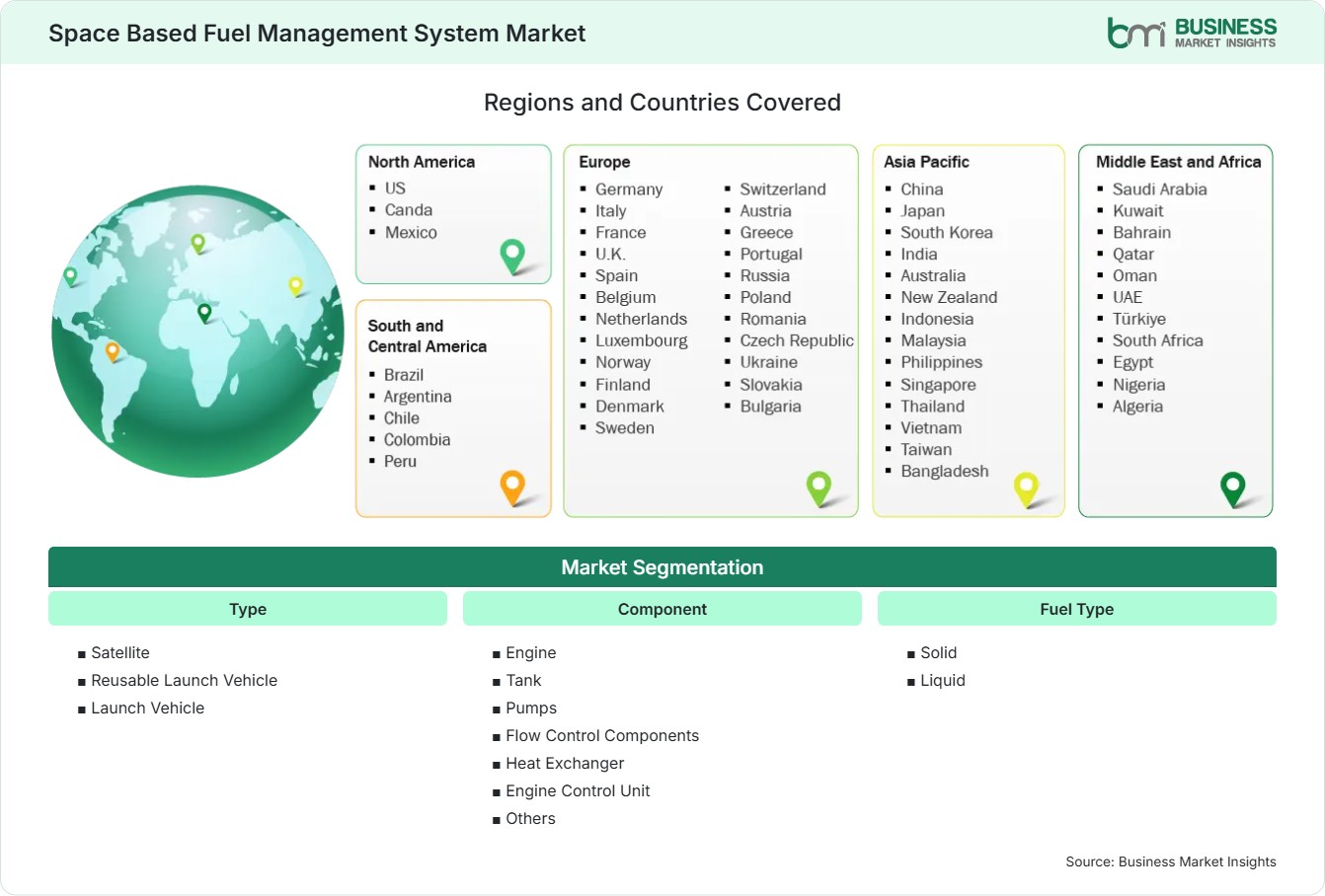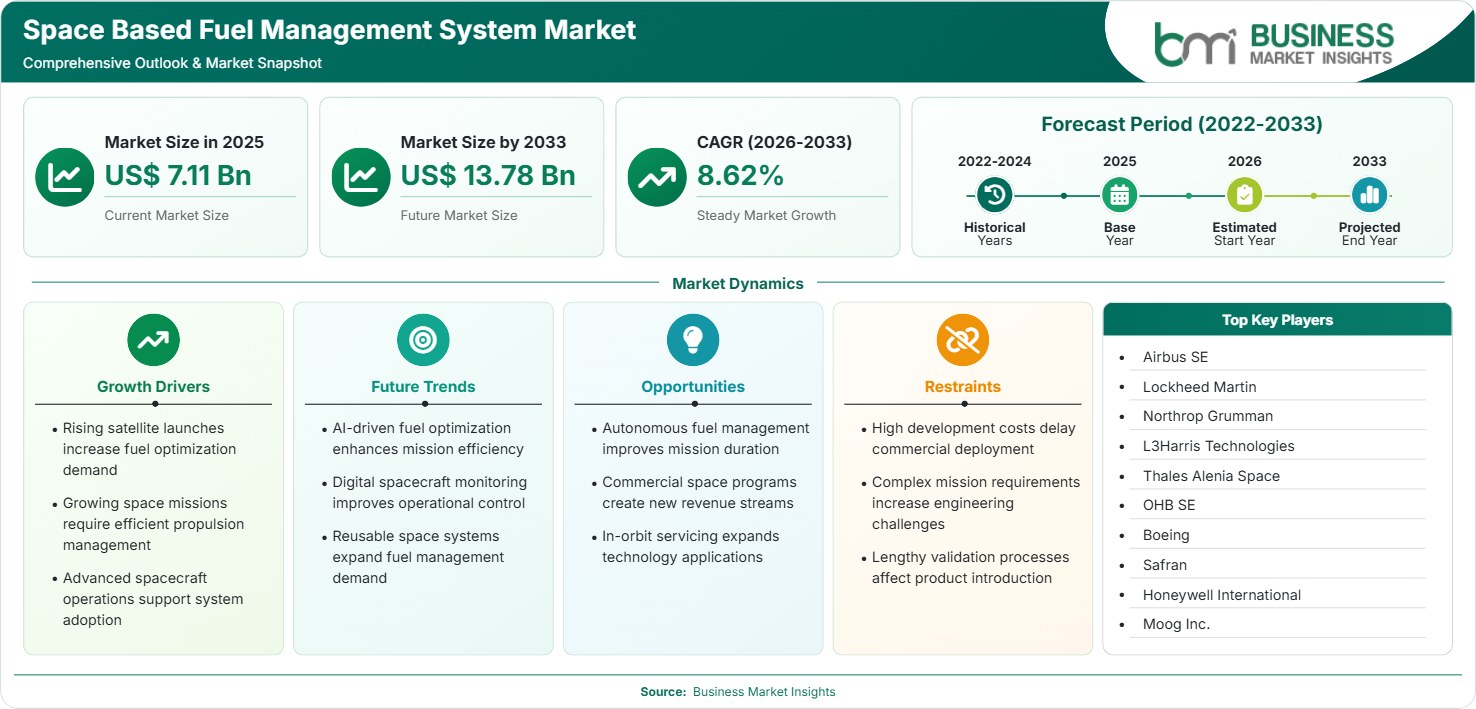
Space Based Fuel Management System Market Regional Highlights
North America Space Based Fuel Management System Market
North America accounted for 39%–42% Space Based Fuel Management System Market Share in 2025 and is expected to expand at a CAGR of 8.3%–8.8% through 2033. The region benefits from advanced aerospace manufacturing, substantial defense investments, and strong commercial space activity led by public and private organizations. Continuous satellite launches and propulsion technology development continue reinforcing regional leadership.
- Government-funded satellite programs continue supporting procurement of advanced propulsion and fuel monitoring systems.
- Private launch providers are increasing investments in reusable spacecraft technologies requiring sophisticated fuel management solutions.
- Defense modernization initiatives continue strengthening demand for reliable onboard propulsion control systems.
- Ongoing research into deep-space exploration expands opportunities for next-generation propulsion technologies.
US Space Based Fuel Management System Market
The United States contributes 84%–87% of North American revenue and is projected to register a CAGR of 8.4%–8.9% during the forecast period. Strong investment in commercial launches, military satellites, and advanced space exploration programs continues supporting long-term industry expansion.
- NASA missions and commercial launch providers continue driving demand for advanced spacecraft fuel management technologies.
- Defense satellite modernization programs encourage development of intelligent propulsion control systems.
- Increasing private investment supports innovation in reusable launch vehicle technologies.
- Advanced aerospace manufacturing capabilities strengthen domestic technology leadership.
Europe Space Based Fuel Management System Market
Europe represented 24%–27% market share in 2025 and is anticipated to grow at a CAGR of 8.1%–8.6% through 2033. Regional growth is supported by collaborative European space programs, advanced satellite manufacturing, and investments in sustainable propulsion technologies. France remains the leading regional market, while Germany records the fastest growth owing to expanding aerospace engineering capabilities.
- Collaborative satellite missions continue encouraging propulsion technology innovation.
- Investments in reusable launch technologies support demand for advanced fuel management systems.
- European aerospace manufacturers continue expanding spacecraft production capabilities.
- Increasing government funding accelerates next-generation propulsion research.
Asia Pacific Space Based Fuel Management System Market
Asia Pacific accounted for 25%–28% market share in 2025 and is projected to register the highest CAGR of 9.4%–9.9% through 2033. Expanding national space programs, rising satellite launches, and increasing investments in indigenous aerospace manufacturing continue supporting regional development. China remains the largest market, while India demonstrates the fastest expansion through growing commercial and government-backed space initiatives.
- Expanding satellite communication networks increase propulsion system requirements.
- National launch programs strengthen regional spacecraft manufacturing capabilities.
- Commercial space companies continue investing in reusable launch technologies.
- Rising public-sector funding supports long-term propulsion research and innovation.
Rest of World Space Based Fuel Management System Market
The Rest of World region accounted for 8%–10% space based fuel management system market share in 2025 and is projected to expand at a CAGR of 8.4%–8.9% during the forecast period. Growth is supported by increasing participation in satellite development, regional space programs, and international aerospace collaborations across the Middle East, Latin America, and selected African countries.
- The UAE continues strengthening investments in advanced satellite and deep-space missions.
- Brazil supports regional aerospace capabilities through satellite development initiatives.
- International collaborations accelerate technology transfer and propulsion system adoption.
- Emerging space agencies continue expanding investments in orbital infrastructure and research.