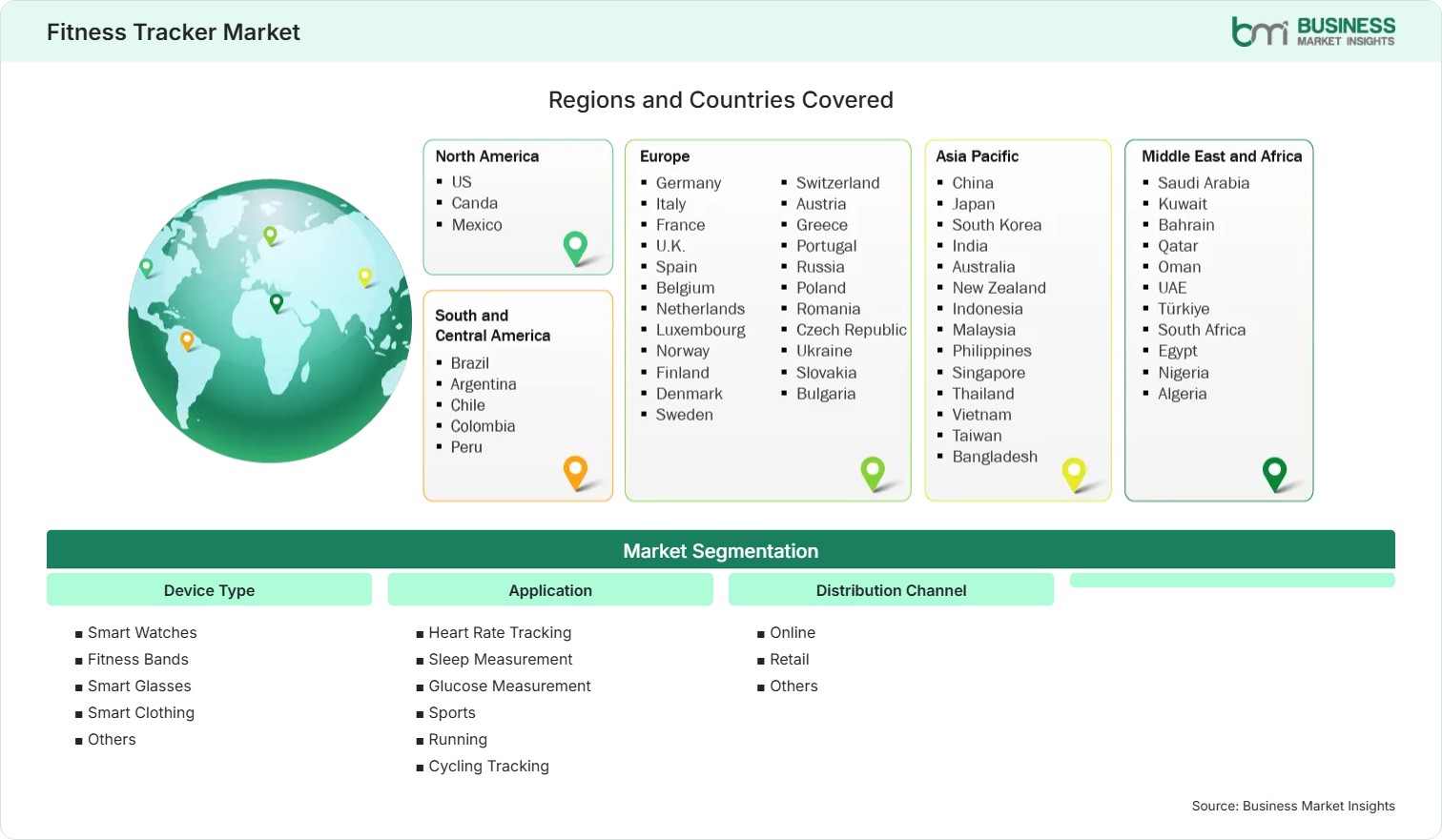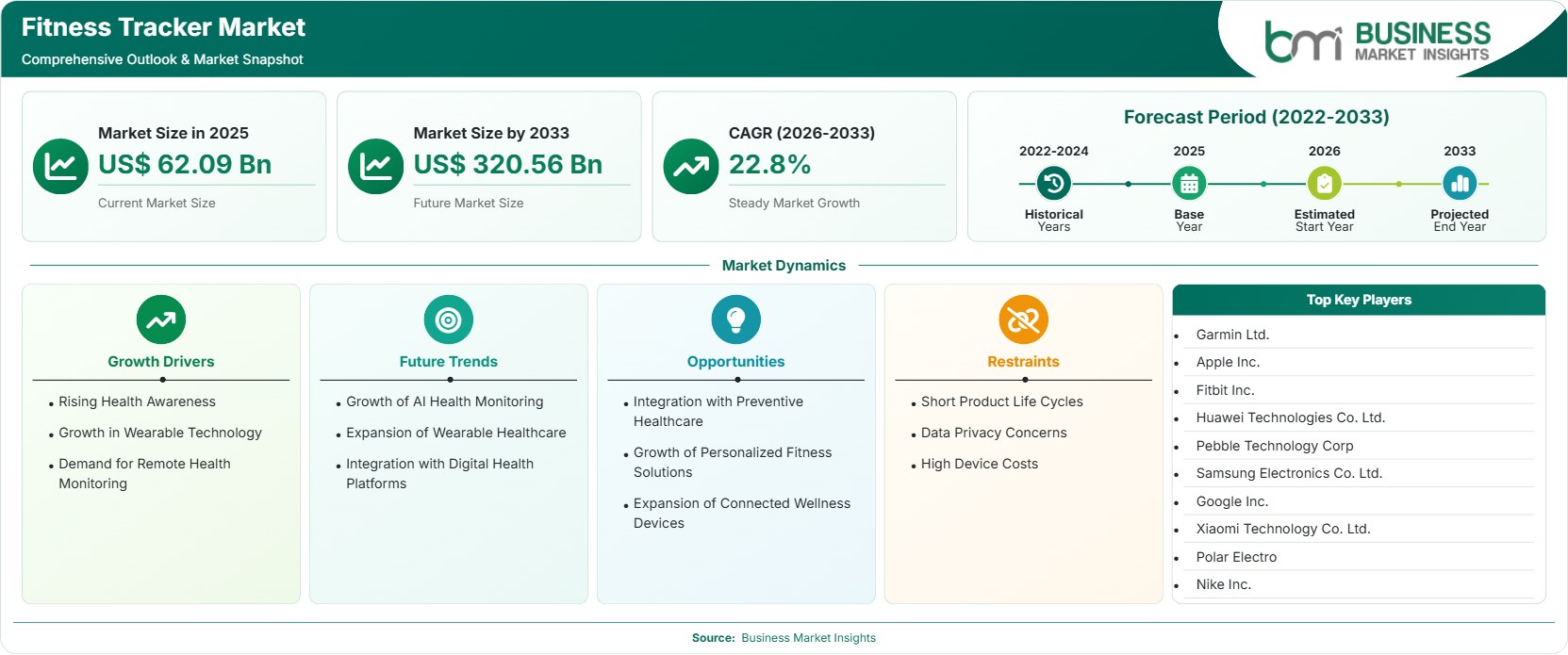
Fitness Tracker Market Regional Highlights
North America Fitness Tracker Market
North America accounted for a market share of 35%–38% in 2025 and is projected to expand at a CAGR of 21.5%–22.5% during 2026–2033. The region maintains a leading position due to high consumer spending on wearable technology, established digital health infrastructure, and strong adoption of connected fitness solutions. The Fitness Tracker Market share is supported by healthcare integration, premium wearable demand, and increasing preventive wellness initiatives.
- Strong adoption of advanced smartwatches with health monitoring features is increasing demand among consumers focused on fitness management and continuous wellness tracking.
- Partnerships between technology companies and healthcare providers are expanding remote monitoring applications and improving adoption among users seeking personalized health insights.
- The United States remains the largest regional contributor due to high disposable income, technology adoption, and increasing interest in preventive healthcare solutions.
- Growing investments in artificial intelligence-based health analytics are improving wearable capabilities, enabling more accurate fitness recommendations and personalized user experiences.
US Fitness Tracker Market
The US represented the largest share within North America, accounting for 31%–34% in 2025 and expanding at a CAGR of 22.0%–23.0% between 2026–2033. Strong consumer preference for smart devices, increasing fitness participation, and integration with digital healthcare platforms are supporting market expansion. The Fitness Tracker Market share in the country is strengthened by premium product adoption and strong brand presence.
- Increasing awareness of preventive health management is encouraging consumers to use wearable devices for continuous monitoring of physical activity and wellness indicators.
- Technology companies are integrating advanced sensors, artificial intelligence, and health applications to improve device functionality and user engagement.
- Expanding employer wellness programs are increasing adoption of fitness trackers for employee health improvement and activity monitoring initiatives.
Europe Fitness Tracker Market
Europe held a market share of 24%–27% in 2025 and is expected to grow at a CAGR of 20.5%–21.5% from 2026–2033. The region benefits from rising health consciousness, expanding digital healthcare adoption, and growing interest in active lifestyles. Germany, the United Kingdom, and France represent major markets, with Germany growing at 21.0%–22.0% and the UK expanding at 21.5%–22.5% during the forecast period.
- Increasing demand for personal health monitoring devices is supporting adoption among consumers managing fitness routines and lifestyle-related health goals.
- European healthcare digitalization initiatives are encouraging integration of wearable data into broader wellness and healthcare platforms.
- Premium wearable brands are strengthening regional presence through advanced features, ecosystem connectivity, and subscription-based health services.
- Growing interest in sports and outdoor activities is increasing demand for performance tracking devices among professional and recreational users.
Asia Pacific Fitness Tracker Market
Asia Pacific represented a market share of 28%–31% in 2025 and is anticipated to record the fastest growth with a CAGR of 24.0%–25.0% during 2026–2033. Expanding smartphone penetration, increasing disposable income, and availability of affordable wearable devices are supporting regional expansion. China, India, and Japan are key markets, with India growing at 25.0%–26.0% and China expanding at 24.0%–25.0%.
- Rising adoption of affordable smart bands and watches is expanding access to fitness monitoring technologies among price-sensitive consumers.
- Growing digital health awareness in emerging economies is increasing demand for connected wellness devices and mobile health applications.
- Local manufacturers are strengthening competitive positioning through cost-effective products with advanced tracking capabilities and ecosystem integration.
- Increasing participation in fitness activities and sports is encouraging demand for performance measurement and activity tracking solutions.
Rest of World Fitness Tracker Market
Rest of World accounted for a market share of 8%–10% in 2025, growing at a CAGR of 19.5%–20.5% between 2026–2033. South America, the Middle East, and Africa are gradually adopting wearable technologies due to improving digital connectivity, rising health awareness, and expanding consumer technology access. Brazil, Saudi Arabia, and the UAE represent emerging markets, with Brazil growing at 20.0%–21.0% and UAE at 20.5%–21.5%.
- Increasing smartphone availability is improving accessibility to connected fitness devices across developing economies and expanding consumer adoption.
- Healthcare modernization initiatives are supporting demand for remote monitoring solutions and digital wellness technologies.
- Rising interest in sports participation is encouraging use of wearable devices for performance tracking and activity management.
- Expanding online retail infrastructure is enabling wider distribution of fitness trackers in emerging markets.