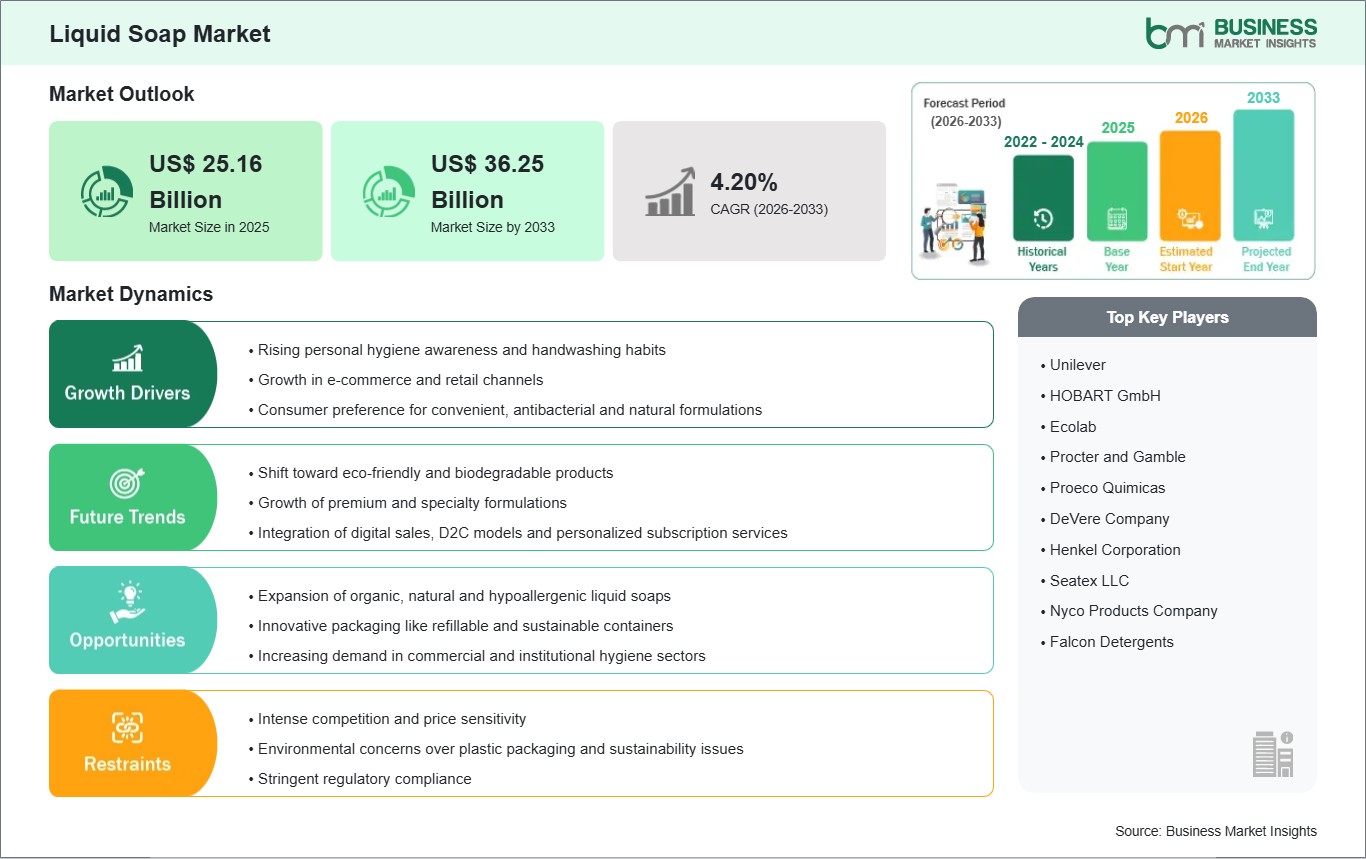
The liquid soap market size is expected to reach US$ 36.25 billion by 2033 from US$ 25.16 billion in 2025. The market is estimated to record a CAGR of 4.2% from 2026 to 2033.
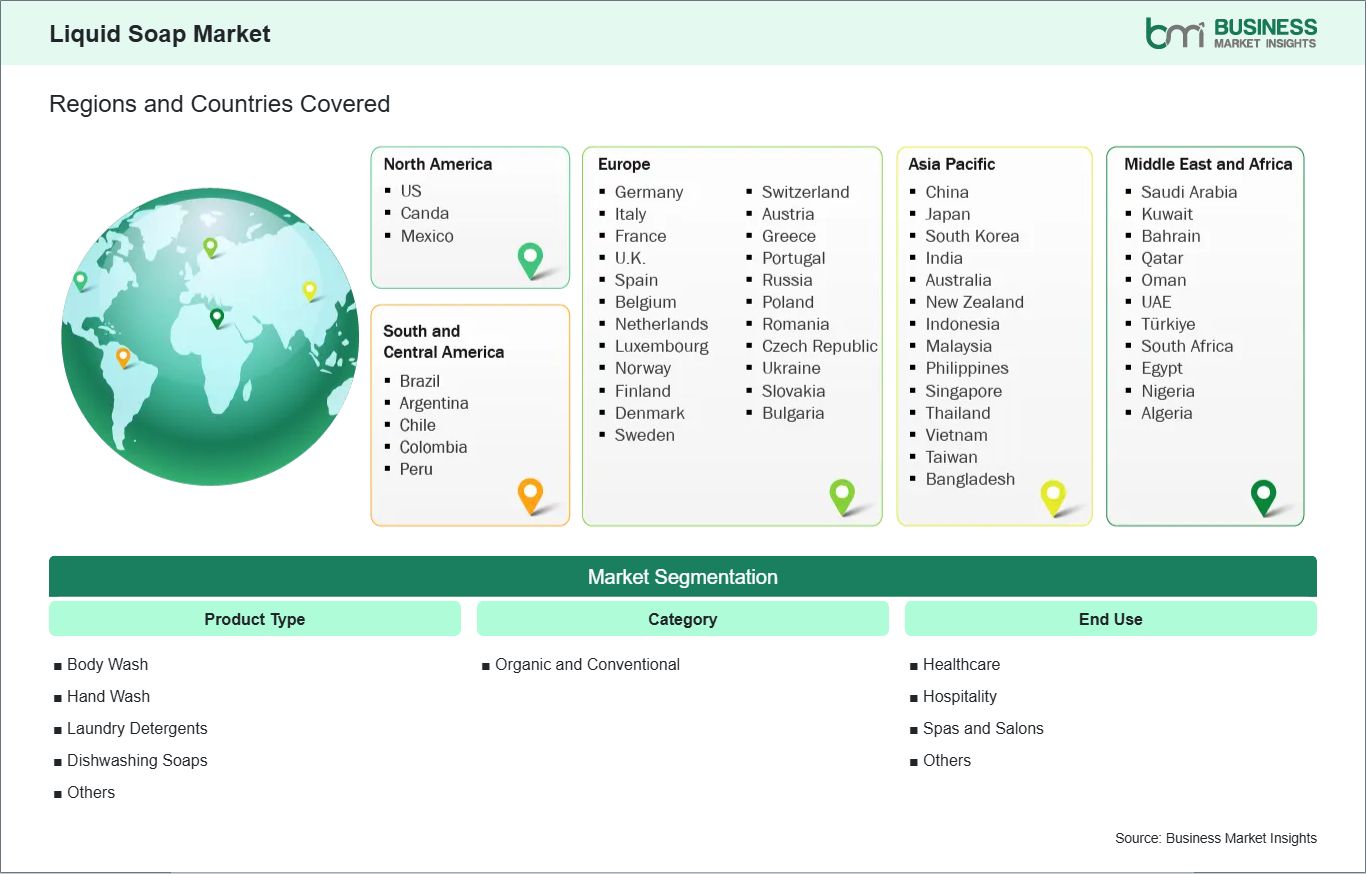
Liquid soap comes in several types based on its formula and intended use. These include body wash, hand wash, laundry detergents, dish soaps, and others. Body wash is designed for personal hygiene. It provides gentle cleaning along with moisturizers and scents for various skin types. Hand wash effectively removes germs and dirt while being gentle on the skin, making it suitable for regular use. Liquid laundry detergents are used to wash clothes. They are appreciated for their easy dissolving, stain removal, and effectiveness for both hand and machine washing. Dish soaps tackle grease and food residue on dishes and are safe for skin contact.
In terms of application, liquid soaps are widely used in healthcare settings to maintain hygiene and prevent infections. In the hospitality sector, such as hotels and restaurants, they improve guest experience and sanitation standards. Spas and salons use liquid soaps for gentle cleansing during treatments. Other common uses include households, offices, and public facilities, where convenience, hygiene, and ease of use are important.

Key segments that contributed to the derivation of the liquid soap market analysis are product type, category, and end use.
One of the primary drivers of the liquid soap market is the growing focus on hygiene and personal cleanliness around the world. Growing consumer awareness of the spread of germs, bacteria, and infectious diseases influences consumer behavior, encouraging regular use of liquid soaps for handwashing, bathing, and cleaning at home. Liquid soaps are perceived as more hygienic than bar soaps since they reduce direct contact and lower the risk of contamination, especially in shared spaces like homes, workplaces, hospitals, and public facilities.
Healthcare organizations and governments promote frequent handwashing as a preventive health measure, which further boosts demand. Urbanization and higher disposable incomes have also led to increased spending on personal care and hygiene products, especially in developing economies. Consumers prefer liquid soaps for their convenience, ease of use, and the variety of formulations available, such as antibacterial, moisturizing, and scented options. The wide use of liquid soap dispensers in places like offices, schools, and restaurants also supports market growth. This makes awareness of hygiene a strong and ongoing influence in the industry.
A significant growth opportunity in the liquid soap market comes from the increasing demand for natural, organic, and sustainable products. Consumers are more aware of the ingredients in personal care items and how they affect the environment. This has led to a shift away from harsh chemicals toward safer, plant-based, and eco-friendly options. Liquid soaps made with natural oils, herbal extracts, and biodegradable ingredients are becoming popular, especially among health-conscious and environmentally aware shoppers.
Concerns about skin sensitivity and allergies are also driving up demand for mild, sulfate-free, and chemical-free liquid soaps. Sustainability efforts, such as recyclable packaging, refill packs, and reduced plastic use, make these products even more appealing. This trend is particularly strong in urban areas and among younger consumers who care about ethical sourcing and environmentally responsible brands. Manufacturers that focus on green innovation, clear labeling, and sustainable practices can set themselves apart and meet growing demand. As regulatory bodies also encourage eco-friendly products, the natural and sustainable segment offers long-term growth potential for liquid soap makers worldwide.

| Report Attribute | Details |
|---|---|
| Market size in 2025 | US$ 25.16 Billion |
| Market Size by 2033 | US$ 36.25 Billion |
| Global CAGR (2026 - 2033) | 4.20% |
| Historical Data | 2022 - 2024 |
| Forecast period | 2026-2033 |
| Segments Covered | By Product Type
|
|
Regions and Countries Covered
| |
| North America | US, Canada, Mexico |
| Europe | Belgium, Austria, Finland, Denmark, Greece, Poland, Romania, Russia, Ukraine, Czech Republic, Slovakia, Bulgaria, Italy, Luxembourg, Germany, Switzerland, France, Netherlands, Norway, Portugal, Spain, Sweden, United Kingdom |
| Asia-Pacific | Australia, China, India, Japan, South Korea, Indonesia, Malaysia, Philippines, Singapore, Thailand, Vietnam, Bangladesh, New Zealand, Taiwan |
| South and Central America | Brazil, Argentina, Peru, Chile, Colombia |
| Middle East and Africa | Bahrain, Kuwait, Oman, Qatar, Saudi Arabia, United Arab Emirates, Turkiye, South Africa, Egypt, Algeria, Nigeria |
| Market leaders and key company profiles |
|
The Liquid Soap Market Size and Forecast (2022-2033) report provides a detailed analysis of the market covering below areas:
The geographical scope of the liquid soap market report is divided into five regions: North America, Asia Pacific, Europe, the Middle East & Africa, and South & Central America. The liquid soap market in the Asia Pacific is expected to grow significantly during the forecast period.
This is due to a mix of demographic, economic, and behavioral factors. The region has a large and growing population, which drives high demand for personal hygiene and household cleaning products. Rapid urbanization and better living standards in countries like China, India, Indonesia, and other Southeast Asian nations have raised awareness about cleanliness and health. Increasing disposable incomes allow consumers to spend more on convenient and improved hygiene products, including liquid soaps.
Government and public health initiatives that promote hand hygiene, especially in schools, healthcare facilities, and public spaces, have greatly increased consumption. The growth of healthcare infrastructure and the hospitality sector has also raised institutional demand for liquid soaps. Asia Pacific witnesses strong manufacturing capabilities, easy access to raw materials, and the presence of both multinational and local brands selling products at competitive prices. The rise of modern retail formats and e-commerce platforms has made products more accessible, further driving market growth. These factors together make Asia Pacific the leading and fastest-growing region in the global liquid soap market.

The liquid soap market is evaluated by gathering qualitative and quantitative data post-primary and secondary research, which includes important corporate publications, association data, and databases. A few of the key developments in the liquid soap market are:
The Liquid Soap Market is valued at US$ 25.16 Billion in 2025, it is projected to reach US$ 36.25 Billion by 2033.
As per our report Liquid Soap Market, the market size is valued at US$ 25.16 Billion in 2025, projecting it to reach US$ 36.25 Billion by 2033. This translates to a CAGR of approximately 4.20% during the forecast period.
The Liquid Soap Market report typically cover these key segments-
The historic period, base year, and forecast period can vary slightly depending on the specific market research report. However, for the Liquid Soap Market report:
The Liquid Soap Market is populated by several key players, each contributing to its growth and innovation. Some of the major players include:
The Liquid Soap Market report is valuable for diverse stakeholders, including:
Essentially, anyone involved in or considering involvement in the Liquid Soap Market value chain can benefit from the information contained in a comprehensive market report.
Please tell us your area of interest
(Market Segments/ Regions and Countries/ Companies)