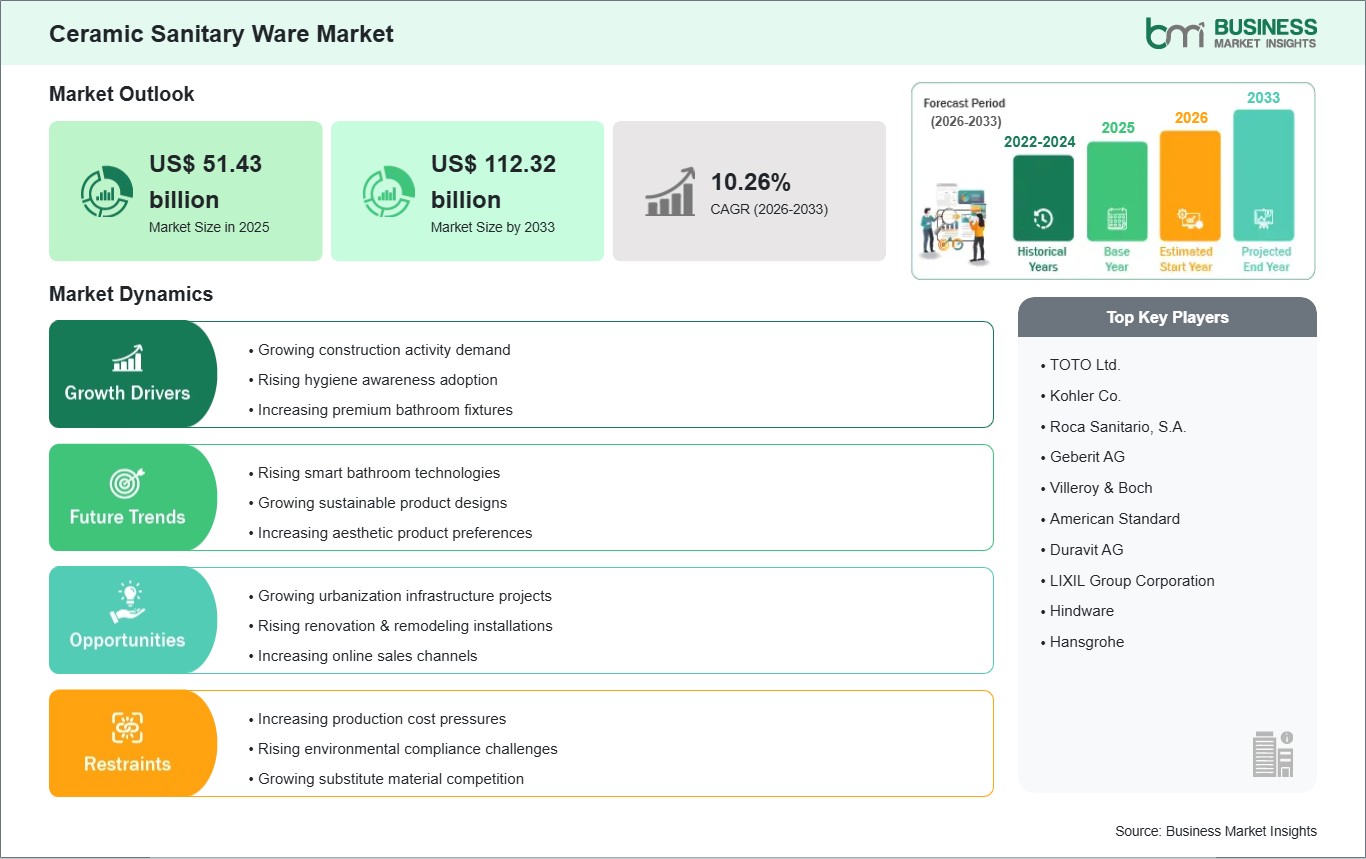
The Ceramic Sanitary Ware Market size is expected to reach US$ 112.32 billion by 2033 from US$ 51.43 billion in 2025. The market is estimated to record a CAGR of 10.26% from 2026 to 2033.
Ceramic sanitary ware includes bathroom fixtures made from high-quality ceramic materials, such as toilets, basins, bidets, urinals, and shower trays. These products are made using refined clay, kaolin, and feldspar, and they undergo high-temperature firing and glazing. This process ensures they are durable, stain-resistant, and visually appealing. Ceramic sanitary ware is popular in homes, businesses, and public buildings because it lasts long, is easy to maintain, and can handle daily use. Modern designs feature water-saving elements, ergonomic shapes, and hygienic surfaces that meet the practical and aesthetic needs of consumers.
Market growth is derived from rising urbanization, increased disposable incomes, and greater awareness of hygiene and sanitation, especially in developing countries. The growth of residential, commercial, and hospitality construction, along with government efforts that promote clean water access and sanitation, further encourages use. Consumers prefer durable, low-maintenance, and eco-friendly products. This trend, along with improvements in design, smart flushing systems, and water-efficient technologies, is increasing demand. Moreover, e-commerce and modern retail formats are making ceramic sanitary ware easier to access, boosting its presence in both established and emerging markets. The rising interest in bathroom remodeling, luxury fittings, and interior design also contributes to market growth.

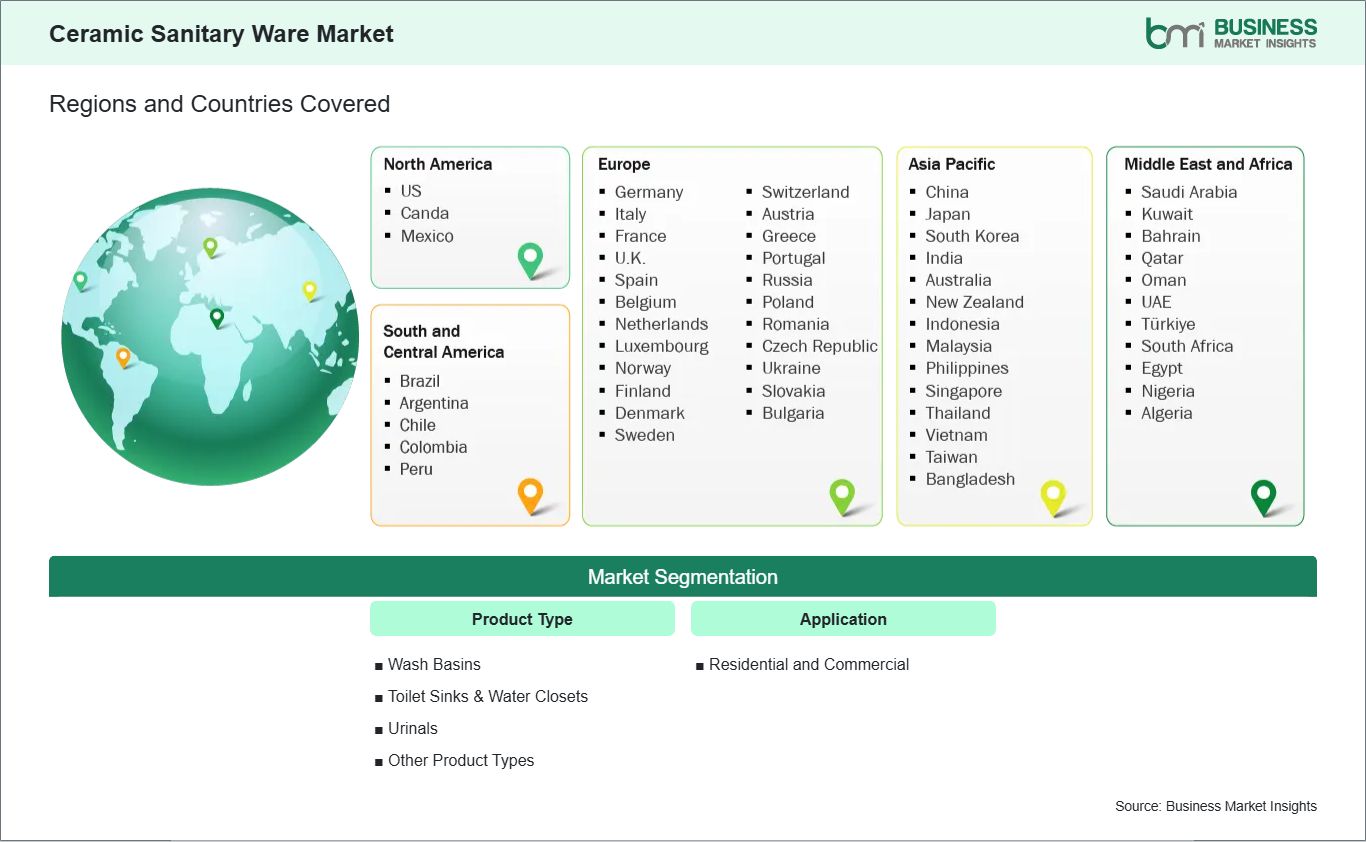
Key segments that contributed to the derivation of the ceramic sanitary ware market analysis are product type and application.
The growth of the construction and real estate sectors drives the ceramic sanitary ware market. Rapid urbanization in developing economies and increased building activities for homes and businesses boost demand for toilets, basins, urinals, and other ceramic bathroom fixtures. Higher disposable incomes, along with improvements in lifestyle, encourage homeowners and businesses to buy high-quality, durable, and visually appealing sanitary ware. Modern designs, ergonomic shapes, and water-saving features are increasingly important to developers and end consumers.
In addition, the growth of hotels, restaurants, hospitals, and commercial complexes leads to bulk purchases of sanitary ware, which supports steady market growth. Government programs promoting sanitation, access to clean water, and public health infrastructure, such as sanitation initiatives in Asia-Pacific and Africa, further increase demand. Manufacturers are responding with innovative designs, smart flushing systems, and hygienic coatings to address changing consumer needs. The combination of strong construction activity, urban migration, and a focus on hygiene and sustainability keeps the demand for ceramic sanitary ware strong around the world.
The growing demand for smart and eco-friendly ceramic sanitary ware offers significant growth opportunities. Increased consumer awareness of water conservation and environmental sustainability is boosting interest in low-flush toilets, sensor-based faucets, and water-saving basins. The use of technologies like touchless operation, automated flushing, and antimicrobial coatings improves convenience, hygiene, and efficiency. Urban consumers and high-end residential developments are also favoring modern, stylish bathroom fixtures that match current design trends.
Emerging markets with rising disposable incomes and better infrastructure present more chances for adopting smart and eco-friendly products. Manufacturers using digital marketing and e-commerce can reach valuable customer segments, including residential, commercial, and hospitality buyers. Partnerships with architects, interior designers, and contractors provide extra ways to promote innovative sanitary ware. Overall, the combination of technology, sustainability, and design is likely to drive long-term market growth and product differentiation for ceramic sanitary ware manufacturers around the world.

The ceramic sanitary ware market demonstrates steady growth, with size and share analysis revealing evolving trends and competitive positioning among key players. The report examines subsegments categorized within product type and application, offering insights into their contribution to overall market performance. By product type, the toilet sinks and water closets segment holds the largest market share. This dominance results from the widespread use of these products in residential and commercial buildings for daily sanitation needs. Ceramic toilet sinks and water closets are highly valued because they are durable, easy to clean, resistant to stains, and have a long service life compared to other materials. The industry favors ceramic sanitary ware because it offers both functionality and hygiene, is water-efficient, and meets modern design standards. Growth in this segment is driven by rising construction activities, increasing consumer awareness of hygiene, and the growing adoption of premium bathroom fixtures in homes, hotels, and commercial spaces.
| Report Attribute | Details |
|---|---|
| Market size in 2025 | US$ 51.43 billion |
| Market Size by 2033 | US$ 112.32 billion |
| Global CAGR (2026 - 2033) | 10.26% |
| Historical Data | 2022-2024 |
| Forecast period | 2026-2033 |
| Segments Covered | By Product Type
|
|
Regions and Countries Covered
| |
| North America | US, Canada, Mexico |
| Europe | Belgium, Austria, Finland, Denmark, Greece, Poland, Romania, Russia, Ukraine, Czech Republic, Slovakia, Bulgaria, Italy, Luxembourg, Germany, Switzerland, France, Netherlands, Norway, Portugal, Spain, Sweden, United Kingdom |
| Asia-Pacific | Australia, China, India, Japan, South Korea, Indonesia, Malaysia, Philippines, Singapore, Thailand, Vietnam, Bangladesh, New Zealand, Taiwan |
| South and Central America | Brazil, Argentina, Peru, Chile, Colombia |
| Middle East and Africa | Bahrain, Kuwait, Oman, Qatar, Saudi Arabia, United Arab Emirates, Turkiye, South Africa, Egypt, Algeria, Nigeria |
| Market leaders and key company profiles |
|
The " Ceramic Sanitary Ware Market Size and Forecast (2022 - 2033)" report provides a detailed analysis of the market covering below areas:
The geographical scope of the ceramic sanitary ware market report is divided into five regions: North America, Asia Pacific, Europe, the Middle East & Africa, and South & Central America. Asia Pacific holds a significant share of the ceramic sanitary ware market. This is due to large production, plenty of raw materials, and increasing domestic demand. Countries like China, India, and Vietnam are top manufacturers and exporters of high-quality ceramic sanitary products, catering to both local and international markets. Rapid urbanization, population growth, and rising incomes in these countries have driven the need for modern bathrooms and better sanitation facilities. Growth in residential, commercial, and hospitality construction projects, along with government efforts to promote clean sanitation and water management, further boosts the market.
The region also benefits from cost-effective manufacturing, skilled labor, and established supply chains that allow for competitive pricing for local use and exports. A growing awareness of hygiene, eco-friendly products, and water-saving technologies spurs adoption in homes, hotels, hospitals, and public infrastructure. The increasing popularity of smart and stylish bathroom fixtures, along with the rise of e-commerce and modern retail options, enhances consumer access and choices. Overall, these elements solidify Asia-Pacific's position as the top region in the global ceramic sanitary ware market, with both established and emerging markets driving ongoing growth.

The ceramic sanitary ware market is evaluated by gathering qualitative and quantitative data post-primary and secondary research, which includes important corporate publications, association data, and databases. A few of the key developments in the ceramic sanitary ware market are:
The Ceramic Sanitary Ware Market is valued at US$ 51.43 billion in 2025, it is projected to reach US$ 112.32 billion by 2033.
As per our report Ceramic Sanitary Ware Market, the market size is valued at US$ 51.43 billion in 2025, projecting it to reach US$ 112.32 billion by 2033. This translates to a CAGR of approximately 10.26% during the forecast period.
The Ceramic Sanitary Ware Market report typically cover these key segments-
The historic period, base year, and forecast period can vary slightly depending on the specific market research report. However, for the Ceramic Sanitary Ware Market report:
The Ceramic Sanitary Ware Market is populated by several key players, each contributing to its growth and innovation. Some of the major players include:
The Ceramic Sanitary Ware Market report is valuable for diverse stakeholders, including:
Essentially, anyone involved in or considering involvement in the Ceramic Sanitary Ware Market value chain can benefit from the information contained in a comprehensive market report.
Please tell us your area of interest
(Market Segments/ Regions and Countries/ Companies)