
Fishmeal and Fish Oil Market Outlook: Size, Share, Trends, Growth Analysis, Competitive Landscape & Forecast, 2026-2033

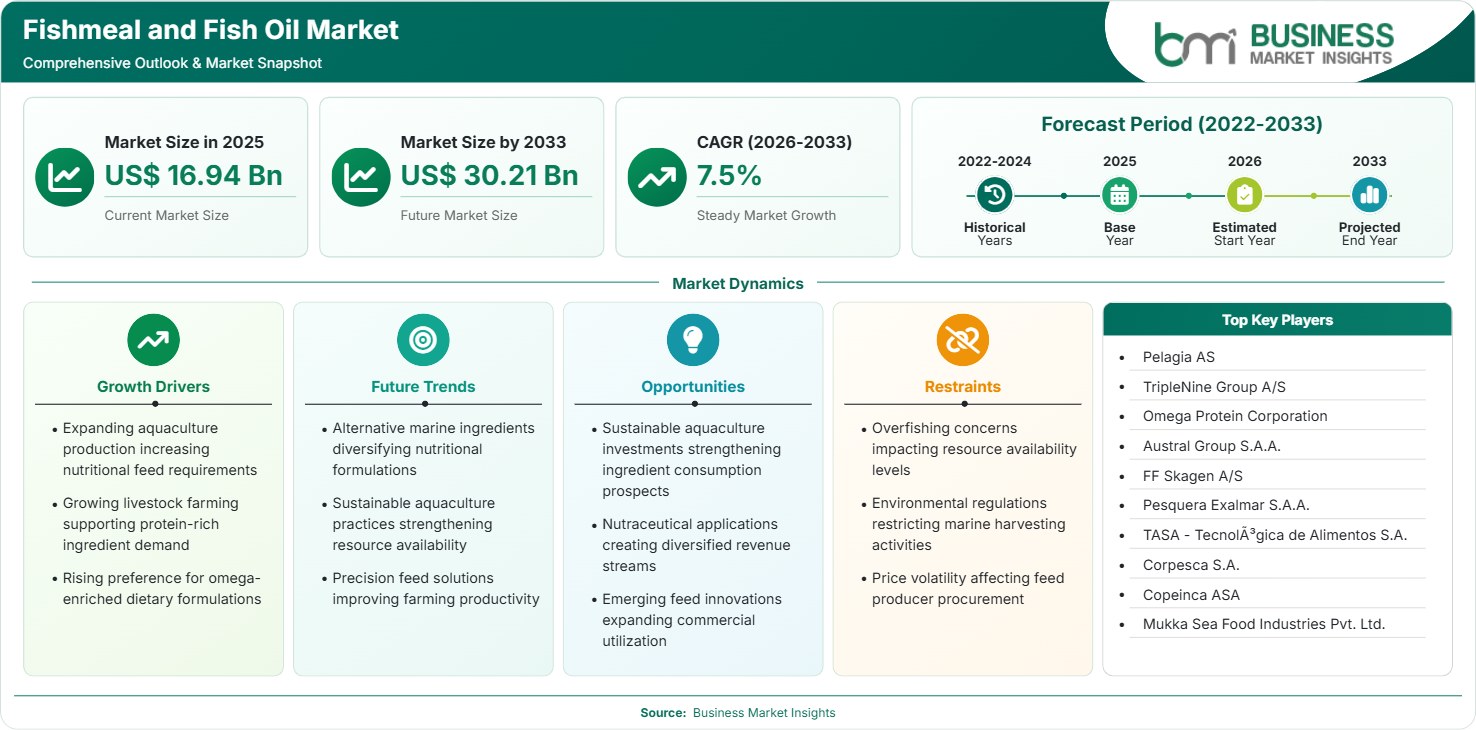
The Fishmeal and Fish Oil Market size was valued at US$ 16.94 Billion in 2025 and is projected to reach US$ 30.21 Billion by 2033, growing at a CAGR of 7.5% during 2026–2033. Rising aquaculture production, increasing omega-3 consumption, feed efficiency requirements, sustainable marine ingredient innovation, and expanding nutraceutical applications continue to create substantial growth opportunities across global value chains.

Report Coverage
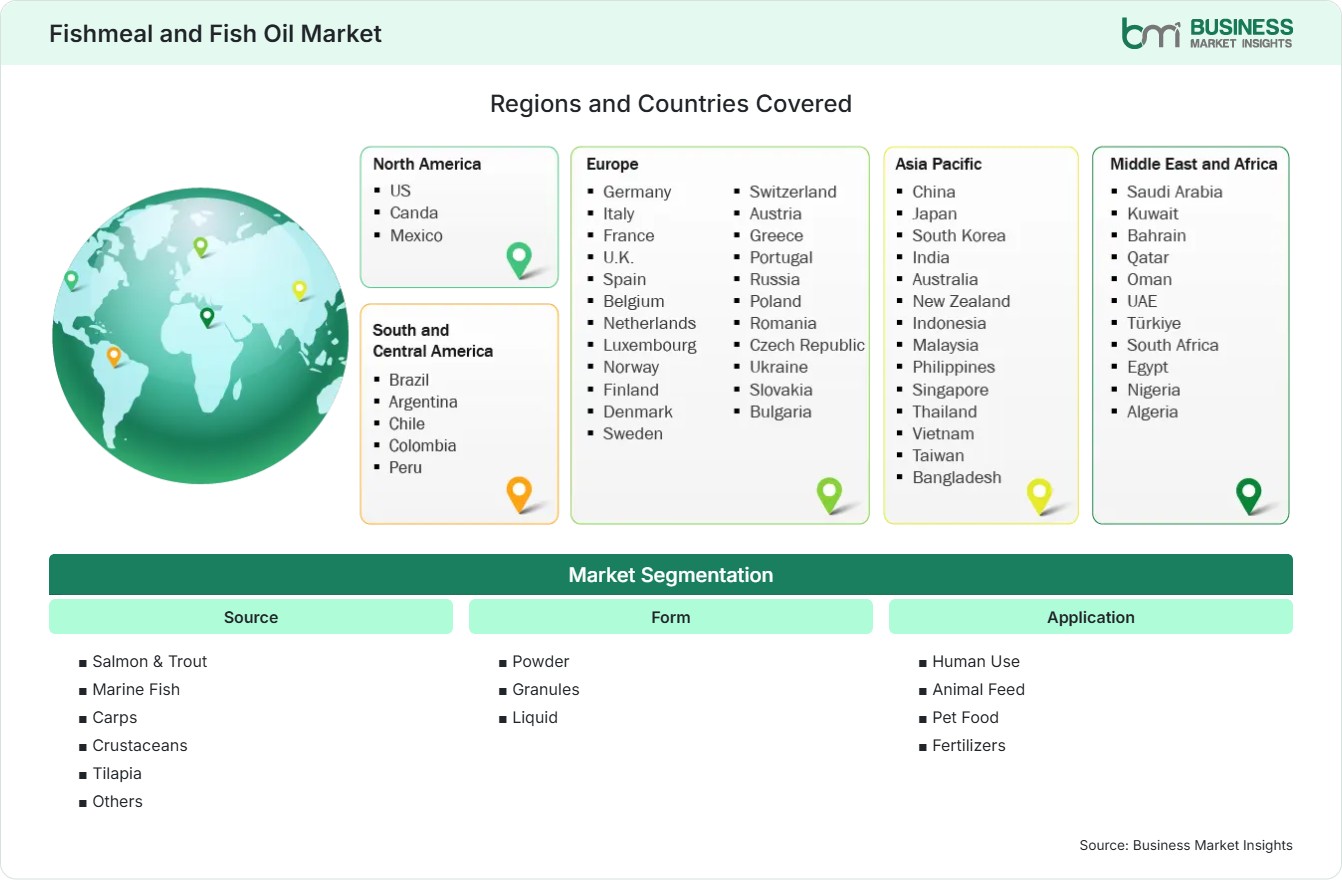
  • Source: Salmon & Trout, Marine Fish, Carps, Crustaceans, Tilapia, Others
  • Form: Powder, Granules, Liquid
  • Application: Human Use , Animal Feed , Pet Food, Fertilizers
US$ 16.94 Bn Market size in 2025
US$ 30.21 Bn Market Size by 2033
7.5% CAGR, 2026 - 2033
2026-2033 Forecast Period

AI Overview

Fishmeal and Fish Oil Market Summary

  • North America Region: North America holds a market share of 32%–35% in 2025, growing with a CAGR of 6.8%–7.2% during 2026–2033. Growth is supported by premium pet nutrition demand, advanced aquaculture systems, feed innovation initiatives, marine ingredient processing investments, sustainability certifications, and expanding omega-3 consumption across dietary and clinical applications globally. The U.S. remains the dominant contributor, supported by aquaculture innovation, premium pet food demand, and a CAGR of 6.9%–7.3%.
  • Fastest Growing Region: Asia Pacific accounts for 27%–30% market share in 2025 and is anticipated to expand at a CAGR of 8.5%–9.0% during 2026–2033. Expansion is driven by intensive aquaculture production, seafood consumption growth, feed modernization, rising disposable income, export-oriented fisheries, government support programs, and increasing adoption of specialized nutritional ingredients across industries.
  • Leading Segment: Animal Feed holds 48%–52% share in 2025 and advances at a CAGR of 7.0%–7.6% during 2026–2033. Demand is reinforced by protein-rich feed formulations, commercial livestock productivity requirements, aquaculture expansion, feed conversion efficiency objectives, industry integration, and increasing focus on sustainable nutrition across species.
  • High Growth Segment: Human Use represents 18%–22% share in 2025 and records a CAGR of 8.8%–9.4% during 2026–2033. Growth stems from expanding omega-3 supplementation, preventive healthcare awareness, functional nutrition development, clinical research advancements, aging demographics, premium ingredients demand, and growing pharmaceutical utilization worldwide.
  • Key Market Opportunity: Commercialization of traceable marine ingredients, circular fisheries utilization, algae-based blending strategies, premium nutraceutical formulations, and digital supply-chain monitoring creates substantial opportunities for manufacturers seeking differentiated value and margin expansion.
  • Major Market Players: Pelagia AS, TripleNine Group A/S, Omega Protein Corporation, Austral Group S.A.A., FF Skagen A/S, Pesquera Exalmar S.A.A., TASA - Tecnológica de Alimentos S.A., Corpesca S.A., Copeinca ASA, Mukka Sea Food Industries Pvt. Ltd.
Strategic Insights

Fishmeal and Fish Oil Market: Strategic Insights

Fishmeal and Fish Oil Market Strategic Framework
FREE PDF
Request your free sample
Request free sample
Stakeholder View

Key Takeaways

  • The value chain is growing more integrated, with fishing, processing, feed manufacturing, and distribution becoming increasingly controlled as part of unified ecosystems to ensure raw material availability and to improve operating margins.
  • Human nutrition uses offer the most long-term potential. People all over the world want more omega-3-rich products, preventive healthcare options, and proven nutraceutical ingredients.
  • There is a move in the area of product innovation towards more refined oils, more concentrated formulations of EPA and DHA, marine ingredients that enable traceability, and advanced preservation technologies that help to maintain the nutrients and extend the shelf life.
  • The investment case in the Asia Pacific is the most attractive because of the rapid expansion of aquaculture, the growing consumption of seafood, the presence of supportive policy frameworks, and the increasing use of scientifically formulated feeds.
  • Strategic acquisitions and partnerships are now more concerned with gaining access to fishery resources, obtaining sustainability certifications, acquiring advanced processing technologies, and developing distribution capabilities for high-end nutritional products.
  • Initiatives based on the circular economy that make use of by-products from fish processing are helping to create new sources of income while promoting resource efficiency and meeting environmental compliance objectives.
Geographic Outlook

Fishmeal and Fish Oil Market Regional Highlights

North America Fishmeal and Fish Oil Market

North America represents 32%-35% of total global revenue in 2025 and is estimated to record a CAGR of 6.8%-7.2% during 2024-2033. There is a huge demand for marine ingredients from the leading producers of pet nutrition, aqua feed, and dietary supplements. The region has a competitive edge over other regions because of its state-of-the-art facilities for processing marine ingredients, along with better distribution networks and increased awareness about Omega-3 benefits. The Fishmeal and Fish Oil Market share remains elevated due to established industry participants and premium-value product categories.

  • Increasingly, pet food and aquafeed manufacturers who are looking for supply-chain transparency and responsible sourcing credentials are taking into account ingredients that have been given a sustainability certificate.
  • Spending on concentrated omega-3 extraction and purification technologies helps to expand the range of higher-value products and improve profitability in various nutraceutical applications.
  • The programs aimed at modernizing aquaculture promote demand for marine ingredients that are rich in protein and have strong digestibility and nutritional performance characteristics.
  • The objectives regarding feed efficiency maintained by producers in the livestock and aquaculture sectors still support the use of premium ingredients even though there are fluctuations in the cost of raw materials.
  • Partnerships involving ingredient suppliers and nutrition companies help to speed up the process of bringing specialized marine-based formulations to market.

US Fishmeal and Fish Oil Market

The United States represents approximately 72%–76% of the North American Fishmeal and Fish Oil Market revenue and records a CAGR of 6.9%–7.3% through 2033. Consumption is backed up by an extensive base of companion animals, the capability to manufacture nutraceuticals, and increased awareness of preventive health care. Good regulatory practices and quality management push manufacturers to develop premium products. All stakeholders in the industry keep on working to produce value-added marine-based ingredients that are useful for functional nutrition applications.

  • In the premium categories for dog and cat food, there is an increasing use of ingredients derived from marine sources to improve the quality of the protein and the level of omega-3 fatty acids.
  • Manufacturers of domestic supplements are increasing the range of their products with a view to addressing cardiovascular, cognitive, and joint health needs.
  • Putting money into the management of sustainable fisheries helps to ensure that supplies will be available in the long term and also boosts consumer confidence.
  • The scientific validation of marine lipids is still providing a helpful means of distinguishing the company's products within the health and wellness sectors.

Europe Fishmeal and Fish Oil Market

Europe holds approximately 22%–25% of the global Fishmeal and Fish Oil Market revenue in 2025 and is projected to expand at a CAGR of 6.5%–7.0% through 2033. Demand in these markets is bolstered by the high-end aquaculture industry, feed quality standards, and nutraceuticals production. Norway continues to be the leading country owing to its salmon farming industry, while Denmark and Spain have been able to retain their processing abilities.

  • Norway continues to lead the pack on account of its massive salmon farming industry, whereas Poland is growing at a higher pace owing to its increased investments in feed production and seafood production.
  • Nutraceutical companies are still launching omega-3 formulations with high purity, aiming them at uses related to cardiovascular health, cognitive function, and healthy aging throughout the region.
  • Sustainability certification schemes continue to have an impact on the way in which ingredients are acquired, promoting responsible fisheries management and transparent sourcing practices.
  • The steady demand for premium aquafeed on the part of Atlantic salmon and trout farming operations ensures that marine proteins and oils are used in a stable manner.
  • Research collaborations between producers of feed and suppliers of marine ingredients lead to greater nutrient efficiency and allow for greater product differentiation.

Asia Pacific Fishmeal and Fish Oil Market

The Asia Pacific region will generate revenues of around 27%-30% in the global Fishmeal and Fish Oil market in 2025, and it is forecasted that it will have the fastest CAGR of 8.5%-9.0% from 2025 to 2033. The largest share is due to the development of aquaculture production in China, while India, Indonesia, and Vietnam show great growth potential.

  • China continues to be the leading market as a result of the size of its aquaculture sector, while India offers some of the strongest investment-driven growth opportunities in the region.
  • Feed producers are now more inclined to use high-performance nutritional formulations to enhance production efficiency and disease resistance.
  • The operations for farming shrimp, tilapia, and carp are being expanded to meet the continuing demand for nutritional ingredients derived from marine sources.
  • As the number of people in the middle class grows, so does the consumption of seafood products and nutritional supplements that contain marine oils.
  • Making strategic investments in processing facilities increases regional self-sufficiency and supply-chain resilience.

Rest of World Fishmeal and Fish Oil Market

The Rest of World region accounts for approximately 13%–16% of global Fishmeal and Fish Oil Market revenue in 2025 and is forecast to register a CAGR of 7.4%–8.0% through 2033. South and Central American regions provide most of the production capacity, especially those found in Peru and Chile. In the Middle Eastern and African region, aquaculture development programs, food security policies, and feed industry activities help in future development.

  • Peru is still the main contributor due to its large-scale anchovy fishing industry, while Chile gains an advantage from its extensive salmon aquaculture and export operations.
  • The Gulf states are putting money into aquaculture infrastructure to achieve their goals regarding increased domestic seafood production and food security.
  • South Africa and Egypt are becoming increasingly appealing as destinations for manufacturers of aquaculture feed and suppliers of marine ingredients.
  • Fisheries operations aimed at export contribute to foreign exchange earnings and promote investments in capacity expansion.
  • As people become more aware of the benefits of omega-3 nutrition, dietary supplement products gradually gain a foothold in developing economies.
Global Market Geography
FREE PDF
Request your free sample
Request free sample
Segment Analysis

Fishmeal and Fish Oil Market Segmentation

Source

The source segment represents the foundation of raw material availability and supply stability across the industry. Marine Fish remains the dominant category, helping the segment account for approximately 58%–62% market share in 2025 while advancing at a CAGR of 7.2%–7.8%. Fishmeal and Fish Oil Market scope continues expanding as processors diversify sourcing strategies to improve sustainability, manage seasonality risks, and satisfy increasing demand from feed, nutrition, and specialty ingredient applications.

  • Salmon & Trout: Increasing aquaculture production supports demand for nutrient-rich ingredients. Producers emphasize balanced nutritional formulations and high-performance feed solutions designed to improve growth efficiency and fish health outcomes.
  • Marine Fish: Anchovy, sardine, menhaden, and related species remain essential raw materials due to favorable protein and lipid profiles supporting large-scale industrial processing operations.
  • Carps: Growing freshwater aquaculture activities in Asia strengthen utilization patterns, supported by increasing feed demand and expanding commercial fish farming practices.
  • Crustaceans: Shrimp and related aquaculture systems contribute to ingredient consumption through specialized feed formulations focused on productivity, immunity, and survival rates.
  • Tilapia: Rising global tilapia farming activities support specialized feed requirements designed to optimize growth performance and operational efficiency.

Form

The form segment influences transportation efficiency, storage requirements, and application suitability across industries. Powder remains the most widely utilized format, supporting approximately 52%–56% market share in 2025 while achieving a CAGR of 7.1%–7.7% through 2033.

  • Powder: Widely preferred for feed manufacturing because of handling convenience, formulation flexibility, consistent nutrient distribution, and efficient incorporation into commercial feed production processes.
  • Granules: Demand is growing among manufacturers seeking improved flowability, reduced dust generation, and enhanced processing efficiency during feed production activities.
  • Liquid: Utilized extensively in omega-3 supplements, pharmaceuticals, and liquid feed applications where bioavailability and concentration characteristics are particularly important.

Application

Application remains the largest revenue-generating segment, with Animal Feed accounting for approximately 48%–52% market share in 2025 and expanding at a CAGR of 7.0%–7.6%. Fishmeal and Fish Oil Market trends increasingly reflect diversification into human nutrition, pet food, specialty feed additives, and value-added formulations.

  • Dietary Supplements: Consumer awareness surrounding cardiovascular, cognitive, and wellness benefits continues to support premium omega-3 product demand across mature and emerging markets.
  • Functional Foods: Food manufacturers increasingly incorporate marine-derived nutritional ingredients into fortified beverages, dairy products, nutrition bars, and specialty health-oriented offerings.
  • Pharmaceuticals: Clinical research into EPA and DHA applications supports utilization in therapeutic formulations addressing specific health conditions and medical nutrition requirements.
  • Ruminants: Livestock producers adopt marine-derived ingredients to improve nutritional balance, reproductive performance, and productivity outcomes within commercial operations.
  • Poultry: Commercial poultry production increasingly relies on specialized nutritional strategies supporting feed efficiency, growth rates, and product quality enhancement.
  • Swine: Swine nutrition programs incorporate targeted ingredients designed to optimize health, performance, and profitability under intensive production systems.
  • Aquatic Animals: Aquaculture remains a major consumption category because marine-derived proteins and lipids contribute significantly to growth performance and feed conversion outcomes.
  • Pet Food: Premiumization trends stimulate incorporation of high-quality marine ingredients supporting digestibility, coat health, and overall nutritional value.
  • Fertilizers: Agricultural applications utilize nutrient-rich marine by-products to enhance soil quality and support sustainable crop production strategies.
Market Forces

Fishmeal and Fish Oil Market Dynamics

Key Market Drivers

Expansion of Global Aquaculture Production

The aquaculture industry is still the greatest consumer of marine proteins and lipids. According to the Food and Agriculture Organization, the aquaculture sector still leads some traditional animal protein industries in terms of output levels, hence the need for balanced nutrients in their feeds. Fish meal supplies highly digestible proteins and essential amino acids, while fish oil supplies the much-needed omega-3 fatty acids. Fishmeal and Fish Oil Market growth has been correlated to the growth of commercial fish farming in China, India, Vietnam, Indonesia, Norway, and Chile. The producers will continue to focus on feed efficiency and growth performance.

Growing Demand for Omega-3 Nutritional Products

The consciousness of consumers about the health of their heart, brain function, immune system, and aging process is creating an ever-growing demand for Omega-3 fatty acids. Fish oil is the most commonly used source of EPA and DHA fatty acids in supplements. Pharmaceutical manufacturers are also incorporating marine-derived oils into targeted therapeutic formulations. Rising healthcare expenditures and preventive wellness purchasing trends support demand across developed and emerging economies. Fishmeal and Fish Oil Market trends increasingly reflect diversification toward higher-value nutrition applications rather than exclusive dependence on feed markets.

Sustainability and Resource Utilization Improvements

The processing of marine ingredients is benefiting from technological advances, which are leading to better use of raw materials and less waste being produced. Nowadays, manufacturers are placing more emphasis on recovering value from the by-products of fish processing, thus helping to achieve the aims of a circular economy and, at the same time, improving their profitability. Spending money on certification schemes, traceability systems, responsible fisheries management, and digital monitoring systems enhances transparency throughout the supply chain. Such developments not only help companies to meet the requirements set by their customers but also increase the confidence of feed producers, nutrition firms, and regulatory bodies.

Key Market Opportunities

Premium Human Nutrition Applications

Opportunities still exist in the production of nutritional supplements for heart health, brain function, prenatal nutrition, post-exercise recovery, and healthy aging. Human Use remains the fastest growing application market as people look for scientifically proven wellness products. There is heavy investment in high-strength EPA and DHA products, quality capsules, functional foods, and innovative delivery systems. Expansion of e-commerce distribution channels further improves accessibility across developing markets. Fishmeal and Fish Oil Market Forecasts increasingly indicate stronger revenue contributions from nutritional applications than traditional commodity-oriented categories.

Advanced Traceability and Sustainable Branding

There is an increasing focus on transparency among food manufacturers, retailers, and consumers with regard to the marine ingredients involved in the value chains. Digital traceability systems, monitoring made possible by blockchain technology, and sustainability verification schemes offer advantages for suppliers. Those companies which show they are sourcing responsibly and taking care of the environment are able to gain access to premium product lines and secure long-term supply contracts. Regulatory bodies and large-scale buyers are now requiring documentation on fishery management and proof of origin.

Growth in Emerging Aquaculture Nations

The rapid growth of commercial aquaculture in South Asia, Southeast Asia, Africa, and certain areas of Latin America leads to a large demand potential. There is a growing tendency among governments to support domestic seafood production to enhance food security, cut down on imports, and increase exports. To achieve high productivity and strong disease resistance, modern aquaculture methods call for feed formulations that are nutritionally balanced. Marine-origin proteins and oils are still necessary components in a great many high-performance feed mixes. Investment in hatcheries, feed mills, the cold-chain infrastructure, and fisheries management systems is expected to strengthen long-term consumption.

Market Restraints and Challenges

Raw Material Supply Volatility and Seasonal Dependence

The reliance on wild-capture fisheries means that producers are affected by seasonal variations, environmental occurrences, regulatory quotas, and changes in fish stock conditions. Because the availability of raw materials is fluctuating, this can lead to supply interruptions, difficulties in production planning, and instability in pricing throughout the value chain. Disruptions caused by the weather and fishery restrictions can lower harvest volumes, which in turn affects processor utilisation rates and inventory control. As a response, manufacturers usually adopt more diverse sourcing strategies and make greater use of processing by-products.

Competition from Alternative Protein and Oil Sources

The development of algae-based omega-3 ingredients, insect proteins, nutrition products obtained by fermentation, and plant-based feed alternatives is leading to greater competitive pressure. As a result, alternative ingredients could decrease reliance on marine sources in certain applications and affect long-term pricing patterns. Feed manufacturers are still considering the use of ingredient substitutes to control costs and achieve their sustainability goals. Even though marine-derived ingredients still have significant nutritional benefits, new technologies are enhancing the performance and commercial feasibility of the alternatives.

Company Analysis

Competitive Landscape

Fishmeal and Fish Oil Market analysis indicates a moderately consolidated competitive environment characterized by integrated fisheries operators, specialized marine ingredient manufacturers, and value-added nutrition suppliers.

Company Name

Overview

Products and Services relevant to this market

Pelagia AS

Major Norwegian marine ingredient producer with integrated sourcing, processing, and distribution operations across international markets.

Fishmeal, fish oil, omega-3 ingredients, feed inputs, marine nutrition solutions, and sustainable sourcing services.

TripleNine Group A/S

Denmark-based marine ingredient specialist serving aquaculture, agriculture, and industrial customers globally.

Fishmeal, fish oil, protein concentrates, feed ingredients, and marine-derived nutrition products.

Omega Protein Corporation

Leading U.S. marine ingredient supplier with strong processing and nutritional ingredient capabilities.

Menhaden fishmeal, fish oil, omega-3 products, animal nutrition ingredients, and feed solutions.

Austral Group S.A.A.

Peru-based fisheries company with substantial fishing and marine ingredient production operations.

Fishmeal production, fish oil manufacturing, industrial fisheries services, and export activities.

FF Skagen A/S

Established Danish producer focused on high-quality marine ingredients and sustainable processing.

Premium fishmeal, fish oil, feed ingredients, and marine nutrient products.

Pesquera Exalmar S.A.A.

Integrated Peruvian fisheries enterprise serving feed and marine nutrition industries.

Fishmeal, fish oil, industrial fishing operations, and marine resource management services.

TASA - Tecnológica de Alimentos S.A.

One of Peru's largest marine ingredient producers with extensive fishing fleet operations.

Fishmeal, fish oil, nutritional ingredients, fisheries management, and processing services.

Corpesca S.A.

Chilean fisheries company supplying marine-derived products to regional and export markets.

Fishmeal manufacturing, fish oil production, raw material sourcing, and industrial fisheries activities.

Copeinca ASA

Large fishmeal and fish oil producer with vertically integrated marine operations.

Fishmeal, fish oil, nutritional ingredients, fishery management, and export services.

Mukka Sea Food Industries Pvt. Ltd.

India-based marine products company supporting domestic and international demand.

Fishmeal, fish oil, seafood by-product processing, feed ingredients, and export distribution.

Trust & Transparency

Research Methodology

The market analysis combines proprietary research with secondary data from government agencies, company disclosures, regulatory filings, industry databases and expert interviews. Market estimates are validated through data triangulation, cross-market benchmarking and analyst review.

View Full Research Methodology

Questions Answered

Frequently Asked Questions

What does the Fishmeal and Fish Oil Market Report indicate about future industry evolution?

The industry is expected to move toward value-added omega-3 nutrition products, circular economy initiatives, digital traceability systems, advanced processing technologies, and greater utilization of seafood processing by-products.

How does sustainability influence purchasing decisions?

Sustainability certifications, traceability systems, responsible sourcing frameworks, and fisheries management standards increasingly influence supplier selection. Large buyers prioritize transparency and environmental compliance within procurement strategies.

Which region is expected to grow the fastest during the forecast period?

Asia Pacific is projected to register the highest growth rate due to expanding aquaculture production, increasing seafood consumption, supportive government programs, and rising feed manufacturing investments across major economies.

Which application segment generates the highest revenue?

Animal Feed remains the largest application category because of extensive usage in aquaculture, poultry, swine, and livestock nutrition. High digestibility and balanced nutrient profiles support widespread adoption across commercial feed operations.

What factors are creating long-term demand for marine-derived ingredients?

Demand is supported by aquaculture expansion, premium pet nutrition, rising omega-3 consumption, feed efficiency requirements, and sustainability-driven resource utilization strategies. Growth across nutrition and healthcare sectors further strengthens commercial opportunities.

Access the Full Fishmeal and Fish Oil Market Report

Get segment-level forecasts, regional estimates, competitive benchmarking, company profiles and downloadable Excel datasets.

Access the full Fishmeal and Fish Oil Market Report
350 pages PDF & Excel | 2026-09-21
Similar Research

Related Market Reports