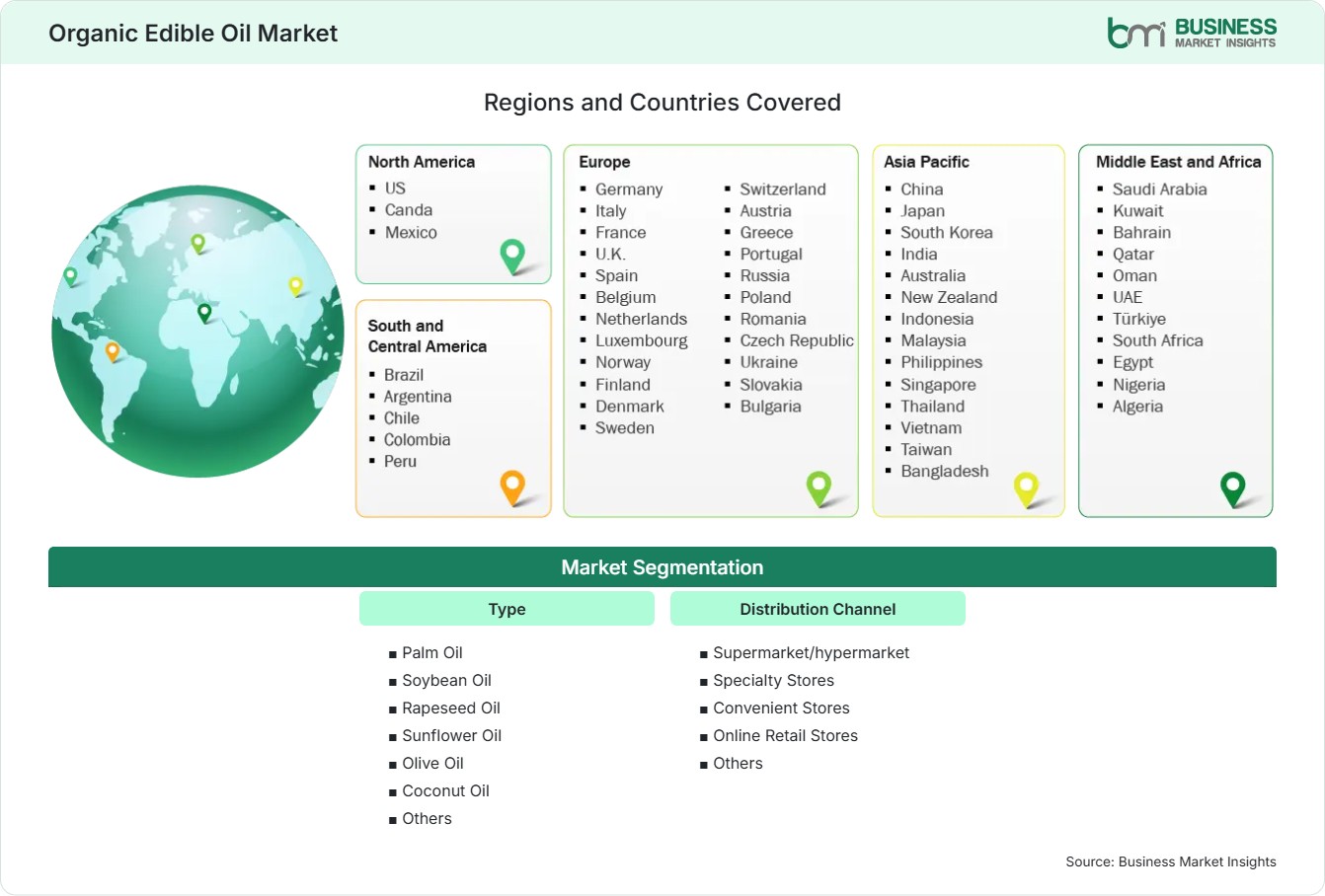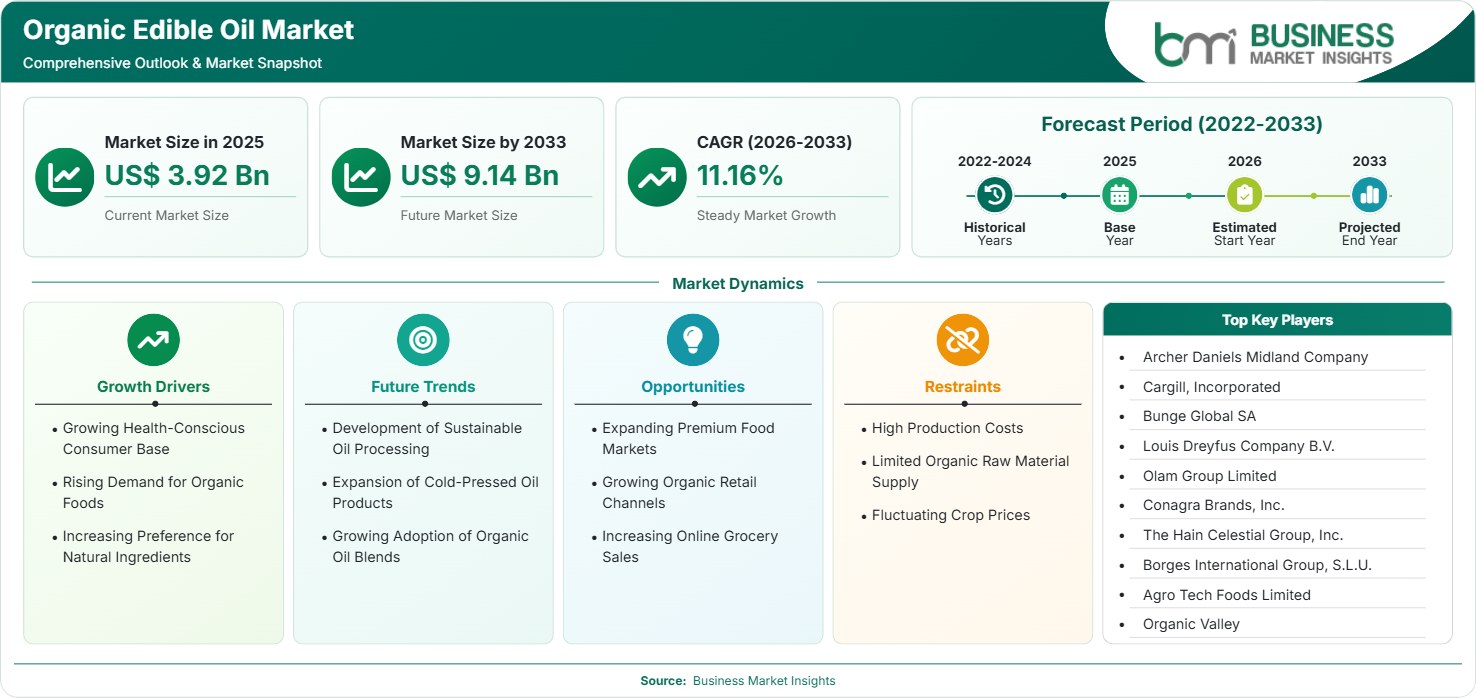
Organic Edible Oil Market Regional Highlights
North America Organic Edible Oil Market
North America represents 28%–31% Organic Edible Oil Market share in 2025 and is projected to expand at a CAGR of 10.2%–10.8% during 2026–2033. The United States remains the principal regional contributor, while Canada provides additional potential through premium food retail and increasing consumer interest in transparent sourcing, organic certification, and minimally processed cooking products.
- Premium grocery customers increasingly compare origin, certification, processing, and packaging information before selecting specialty cooking oils, creating opportunities for brands with transparent positioning and differentiated product attributes.
- Specialty retailers remain important discovery points because consumers seeking organic products often value curated assortments, knowledgeable merchandising, and clear certification communication when evaluating unfamiliar edible oil brands.
- Manufacturers can strengthen regional penetration through smaller premium packs, multipurpose cooking formats, and packaging that communicates traceability, processing characteristics, and suitable culinary applications.
- Digital grocery platforms provide additional reach for specialized brands, particularly where detailed product descriptions and origin information help overcome limited physical shelf presence and improve consumer confidence.
US Organic Edible Oil Market
The United States contributes 84%–87% of North American demand and is projected to register a CAGR of 10.4%–10.9% during 2026–2033. Broad premium food availability, developed supermarket networks, specialty retail, and digital grocery adoption support category expansion. Brand differentiation is increasingly influenced by organic credentials, oil type, origin communication, packaging, and perceived processing quality, allowing established companies and specialized producers.
- Supermarkets can expand category productivity by separating everyday organic cooking oils from premium specialty varieties, helping consumers understand differences in culinary use, origin, and product positioning.
- Online retailers enable smaller brands to reach geographically dispersed consumers while presenting certification, ingredient, sourcing, and usage information that may require more shelf space in physical stores.
- Premium food manufacturers can create additional demand through organic oils positioned for specific culinary occasions, including baking, salad preparation, roasting, finishing, and specialized cuisine.
Europe Organic Edible Oil Market
Europe accounts for 25%–28% Organic Edible Oil Market share in 2025 and is projected to grow at a CAGR of 10.6%–11.2% during 2026–2033. Germany, France, Italy, Spain, and the United Kingdom remain important consumption centers, while higher-growth opportunities are emerging in Central and Eastern European retail markets. Strong organic food positioning, established specialty distribution, sustainability-oriented purchasing, and diverse culinary traditions.
- Germany provides a strong premium retail environment where organic positioning, product transparency, and specialized food assortments can support broader penetration of differentiated edible oils.
- France and Italy offer opportunities for olive and specialty oils because culinary identity, premium food culture, and interest in origin can strengthen consumer willingness to evaluate higher-value products.
- Spain remains strategically important for olive oil supply and branding, while specialized organic positioning can create additional opportunities across domestic retail and export-oriented product portfolios.
- Central European markets provide incremental growth potential as organized retail expands assortment depth and consumers gain greater access to certified organic food categories.
Asia Pacific Organic Edible Oil Market
Asia Pacific holds 24%–27% Organic Edible Oil Market share in 2025 and is expected to achieve a CAGR of 12.1%–12.8% during 2026–2033. China, Japan, Australia, South Korea, and India represent important demand centers, while India and Southeast Asian markets offer comparatively stronger expansion opportunities. Urbanization, premium grocery formats, digital commerce, changing food preferences, and rising awareness of organic ingredients are broadening the addressable consumer base.
- India offers substantial expansion potential as organized grocery, specialty food retail, and digital commerce create additional routes for premium organic cooking oil brands.
- China provides opportunities through premium food channels and online retail, where product information, packaging differentiation, and trusted brand positioning can influence consumer selection.
- Japan and South Korea provide mature premium food environments where quality communication, specialized product formats, and culinary applications can support differentiated organic oil offerings.
- Australia combines established organic food awareness with developed retail infrastructure, creating opportunities for premium oils supported by transparent sourcing and clear product positioning.
Rest of World Organic Edible Oil Market
Rest of World accounts for 17%–20% Organic Edible Oil Market share in 2025 and is forecast to expand at a CAGR of 10.7%–11.4% during 2026–2033. South and Central America benefit from agricultural production capabilities and expanding premium food channels, while Middle Eastern and African markets provide opportunities through urban retail development, imported specialty foods, and changing consumer preferences.
- Brazil and Mexico provide attractive Latin American opportunities as modern retail and premium food assortments create additional shelf space for differentiated cooking oils.
- Middle Eastern retailers can expand specialty oil assortments by combining premium imported products with clear origin, certification, and culinary-use communication.
- Urban African markets offer selective opportunities where organized grocery infrastructure supports premium imported food categories and consumers increasingly seek differentiated household cooking products.
- Regional distributors can improve penetration by consolidating specialized products, maintaining dependable inventory, and connecting smaller organic brands with established retail networks.