Edible Oil Alternatives Market Regional Highlights
North America Edible Oil Alternatives Market
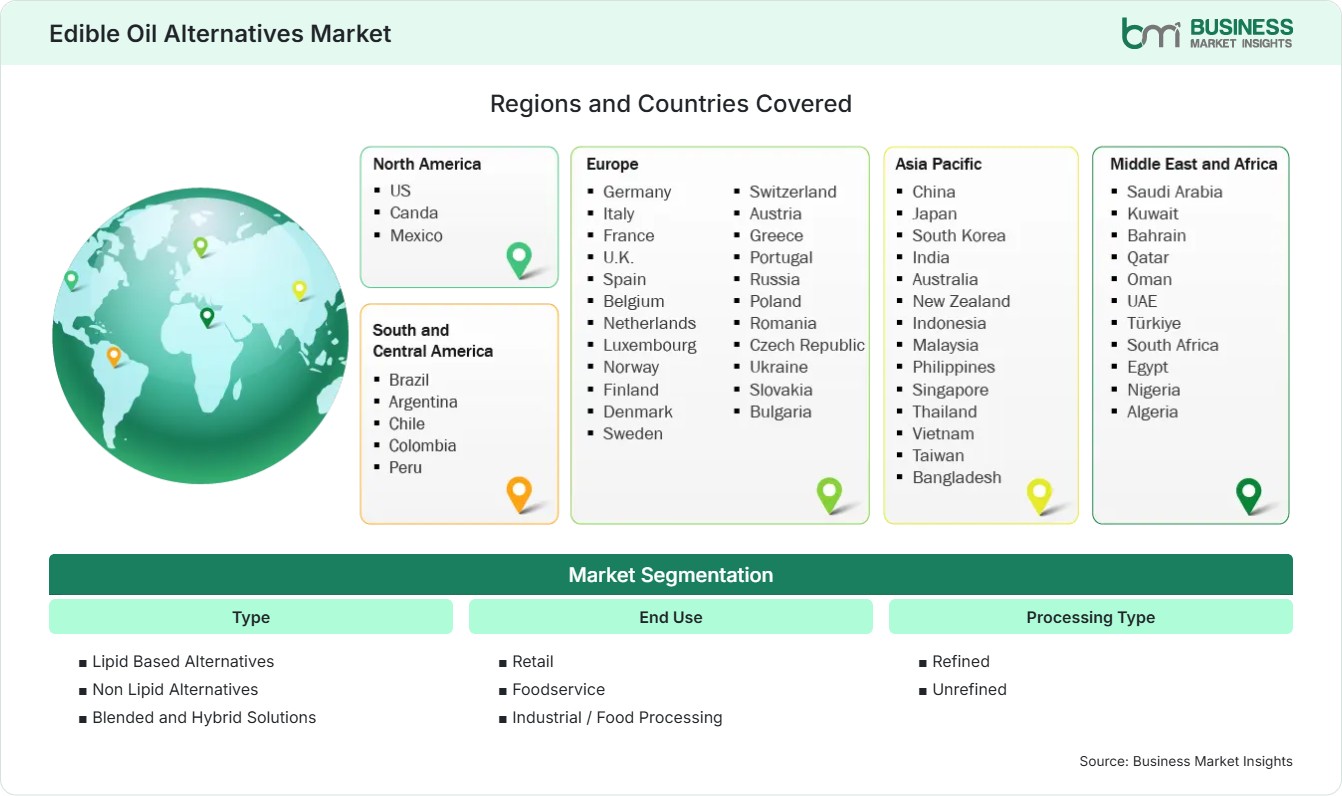
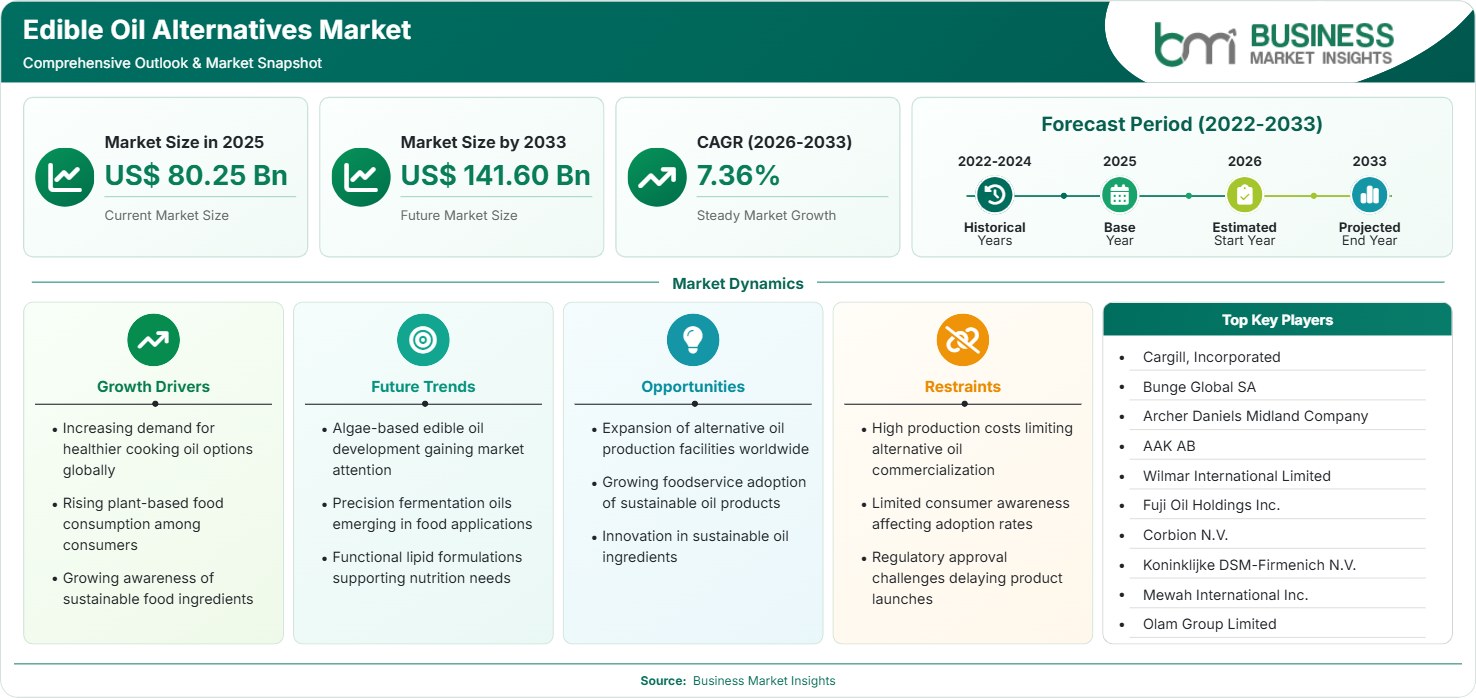
North America accounted for 29%–32% of global revenue in 2025 and is projected to register a CAGR of 7.0%–7.5% during 2026–2033. The region continues maintaining a strong market position due to high consumer awareness of healthy nutrition, increasing demand for plant-based foods, advanced food manufacturing capabilities, and widespread adoption of clean-label ingredients. The Edible Oil Alternatives Market Share remains substantial as food manufacturers, retailers, and foodservice operators increasingly incorporate healthier and sustainable edible oil alternatives into their product portfolios.
- The United States remains the largest regional market owing to growing demand for plant-based food products, expanding functional food consumption, and increasing investments in sustainable ingredient innovation.
- Canada continues supporting regional growth through rising health-conscious consumer behavior, expanding food processing activities, and increasing demand for clean-label ingredients.
- Growing adoption of healthier cooking oils continues encouraging food manufacturers to diversify alternative ingredient portfolios.
- Increasing investments in sustainable agriculture and food innovation continue strengthening long-term market expansion.
US Edible Oil Alternatives Market
The United States accounted for approximately 84%–87% of North American revenue in 2025 and is projected to register a CAGR of 7.1%–7.6% during the forecast period. Strong consumer demand for healthier diets, increasing plant-based food adoption, expanding food manufacturing activities, and continuous innovation in functional ingredients continue driving domestic market growth.
- Rising demand for healthier cooking ingredients continues supporting edible oil alternative adoption across households and foodservice establishments.
- Increasing product innovation in plant-based foods continues expanding ingredient utilization.
- Growing investments in sustainable food production continue encouraging commercialization of advanced edible oil alternatives.
- Food manufacturers continue introducing clean-label formulations that improve nutritional profiles while meeting evolving consumer preferences.
Europe Edible Oil Alternatives Market
Europe represented 27%–30% of global revenue in 2025 and is expected to expand at a CAGR of 6.8%–7.3% during 2026–2033. The region continues benefiting from strong sustainability initiatives, increasing plant-based food consumption, evolving nutritional preferences, and growing regulatory emphasis on environmentally responsible food production. Germany remains the largest regional market, while the Netherlands is projected to register the fastest growth with a CAGR of 7.8%–8.3% owing to expanding food innovation, sustainable ingredient development, and growing investments in plant-based food manufacturing.
- Germany continues leading regional demand through advanced food processing industries, increasing health-conscious consumers, and strong plant-based food adoption.
- The Netherlands continues witnessing rapid growth through sustainable food innovation, ingredient technology development, and expanding exports of alternative food ingredients.
- France continues supporting market expansion through premium food manufacturing, healthy cooking trends, and increasing demand for functional food ingredients.
- European food manufacturers continue investing in environmentally sustainable ingredient sourcing and clean-label product development.
- Increasing regulatory support for sustainable food production continues encouraging innovation in edible oil alternatives.
Asia Pacific Edible Oil Alternatives Market
Asia Pacific accounted for 35%–38% of global revenue in 2025 and is projected to register the highest CAGR of 8.0%–8.6% during the forecast period. Rising disposable incomes, expanding food processing industries, increasing health awareness, and growing consumption of plant-based food products continue driving regional market growth. China remains the leading regional market, while India is projected to register the fastest growth with a CAGR of 8.7%–9.2% owing to increasing consumer awareness, expanding packaged food production, rising demand for healthier cooking ingredients, and rapid growth of organized food processing industries in edible oil alternatives market.
- China continues dominating regional demand through large-scale food manufacturing, increasing functional food consumption, and expanding sustainable ingredient adoption.
- India continues witnessing rapid growth due to rising health consciousness, expanding plant-based food markets, increasing food processing investments, and growing consumer preference for healthier cooking oils.
- Japan continues supporting premium edible oil alternatives through advanced food technology innovation and health-focused consumer demand.
- South Korea continues contributing through functional food development, plant-based product innovation, and sustainable ingredient utilization.
- Southeast Asian countries continue creating substantial opportunities through expanding food processing industries, urbanization, and increasing disposable incomes.
Rest of World Edible Oil Alternatives Market
The Rest of World accounted for 7%–10% of global revenue in 2025 and is projected to register a CAGR of 7.2%–7.8% during 2026–2033. Latin America, the Middle East, and Africa continue experiencing increasing demand for edible oil alternatives due to expanding food processing industries, improving nutritional awareness, rising disposable incomes, and increasing consumer preference for healthier food ingredients.
Growing investments in sustainable agriculture, food manufacturing, and alternative ingredient production are creating significant opportunities for ingredient suppliers across emerging economies.
- Brazil continues supporting regional edible oil alternatives market demand through expanding food manufacturing, increasing health-conscious consumers, and growing demand for plant-based ingredients.
- Mexico continues strengthening market growth through packaged food expansion, rising awareness of healthier diets, and increasing retail availability of alternative food ingredients.
- Middle Eastern countries continue investing in food security initiatives, sustainable food production, and premium food ingredient imports.
- South Africa continues contributing through expanding processed food industries and increasing consumer awareness of healthier cooking alternatives.
- Emerging economies across Latin America, the Middle East, and Africa continue creating long-term opportunities through food industry modernization, growing retail penetration, and increasing adoption of sustainable food ingredients.