
Dairy Alternatives Market Outlook: Size, Share, Trends, Growth Analysis, Competitive Landscape & Forecast, 2026-2033

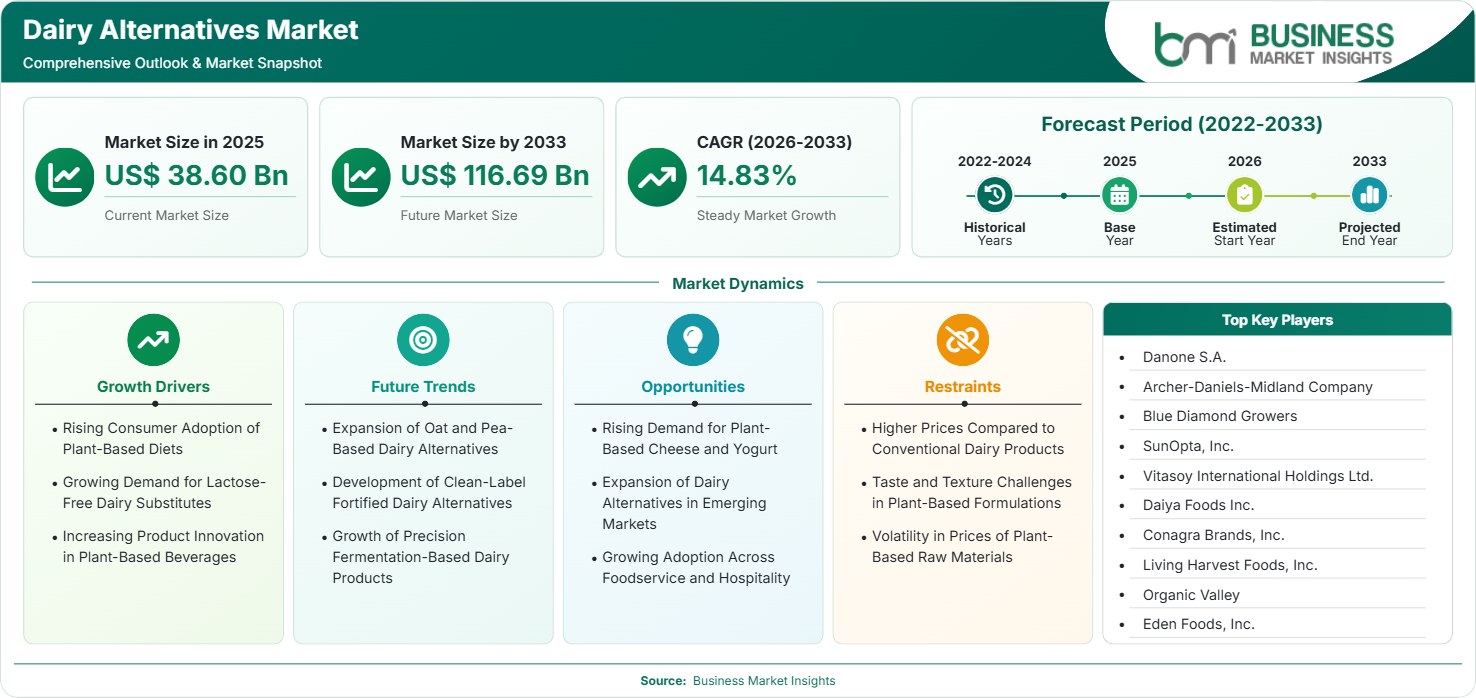
The Dairy Alternatives Market size was valued at US$ 38.60 Billion in 2025 and is projected to reach US$ 116.69 Billion by 2033, growing at a CAGR of 14.83% during 2026–2033. Rising consumer preference for plant-based nutrition, growing lactose intolerance awareness, increasing vegan population, and expanding availability of innovative dairy-free products are supporting market expansion worldwide.

Report Coverage
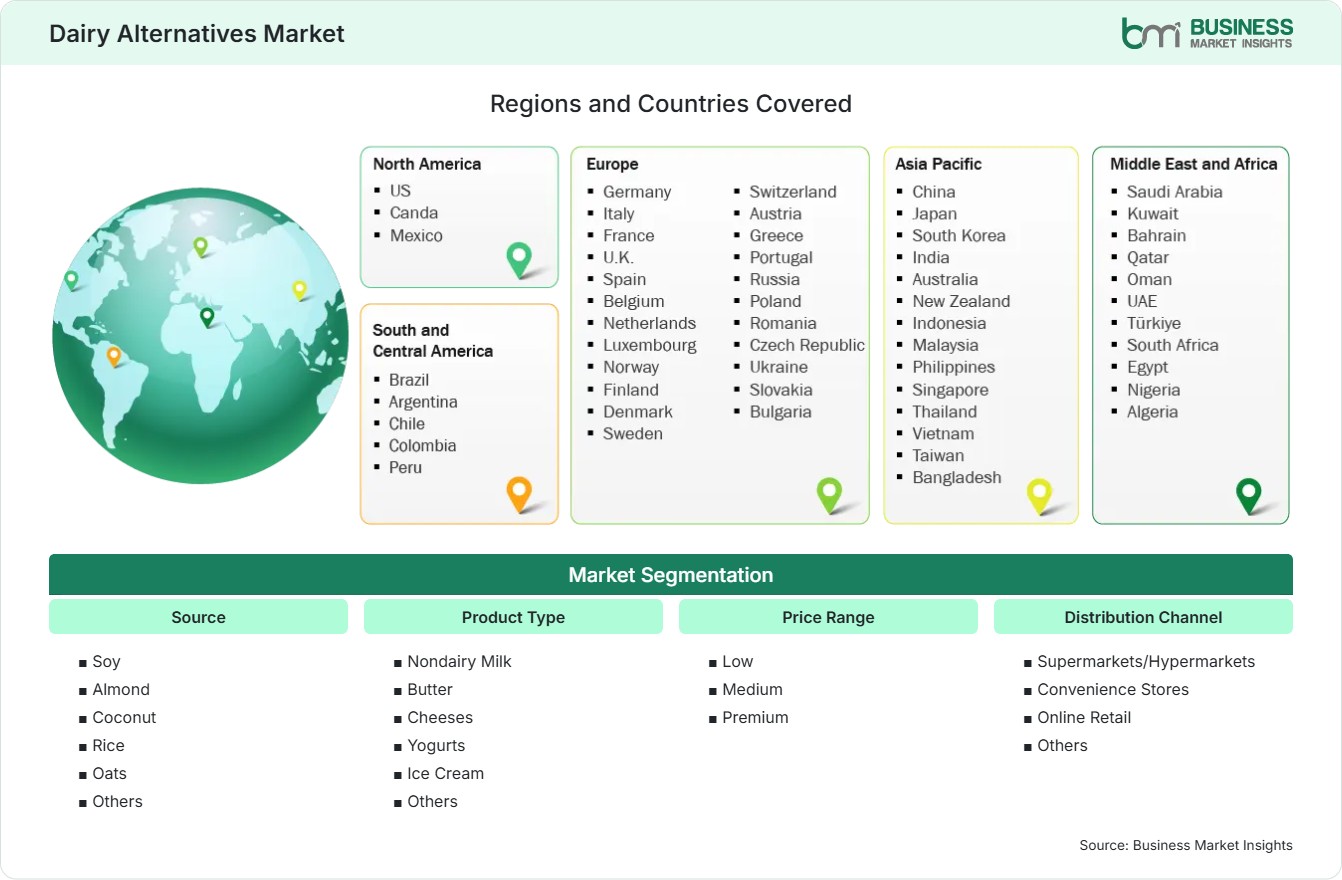
  • Source: Soy, Almond, Coconut, Rice, Oats, Others
  • Product Type: Nondairy Milk, Butter, Cheeses, Yogurts, Ice Cream, Others
  • Price Range: Low, Medium , Premium
  • Distribution Channel: Supermarkets/Hypermarkets, Convenience Stores, Online Retail, Others
US$ 38.60 Bn Market size in 2025
US$ 116.69 Bn Market Size by 2033
14.83% CAGR, 2026 - 2033
2026-2033 Forecast Period

01 AI Overview

Dairy Alternatives Market Summary

  • North America Region: North America holds a dairy alternatives market share of 34%–37% in 2025, growing with a CAGR of 13.6%–14.2% during 2026–2033. Strong consumer awareness regarding plant-based nutrition, increasing health-conscious purchasing behavior, product innovation, and widespread retail availability continue supporting regional growth. The U.S. market benefits from high plant-based food adoption rates and strong investments in alternative protein development, expanding at 13.8%–14.4% CAGR.
  • Fastest Growing Region: Asia Pacific accounts for 27%–30% share in 2025 and is projected to grow at a CAGR of 16.2%–16.9% through 2033. Rising disposable incomes, increasing urbanization, dietary diversification, and growing demand for lactose-free products continue accelerating market development.
  • Leading Segment: Non-dairy Milk represents 42%–45% share in 2025 and is expected to grow at a CAGR of 14.5%–15.1% through 2033. Strong consumer acceptance, broad product availability, convenience, and increasing demand for plant-based beverages continue supporting segment leadership.
  • High Growth Segment: Oats account for 15%–18% share in 2025 and are forecast to grow at a CAGR of 17.0%–17.7% during 2026–2033. Consumer preference for sustainability, nutritional value, creamy texture, and expanding product portfolios are driving rapid adoption.
  • Key Market Opportunity: Growing expansion of premium plant-based dairy products across emerging markets is creating opportunities for manufacturers to strengthen product differentiation and consumer engagement.
  • Major Market Players: Danone S.A., Archer-Daniels-Midland Company, Blue Diamond Growers, SunOpta, Inc., Vitasoy International Holdings Ltd., Daiya Food, Inc., Conagra Brands, Inc., Living Harvest Foods, Inc., Organic Valley, Eden Foods, Inc.
02 Strategic Insights

Dairy Alternatives Market: Strategic Insights

Dairy Alternatives Market Strategic Framework
FREE PDF
Request your free sample
Request free sample
03 Stakeholder View

Key Takeaways

  • Plant-based dairy products are increasingly transitioning from niche offerings to mainstream food and beverage categories across global dairy alternatives market.
  • Non-dairy milk continues generating the largest revenue contribution due to strong consumer familiarity and broad retail availability.
  • Oat-based products are witnessing significant adoption because of their taste profile, sustainability credentials, and versatile application potential.
  • Asia Pacific represents an attractive expansion opportunity driven by growing middle-class populations and increasing demand for wellness-oriented products.
  • Innovation in flavor, texture, nutrition, and ingredient sourcing remains a critical competitive differentiator for manufacturers.
  • E-commerce and digital retail platforms continue enhancing accessibility and product visibility for dairy alternative brands worldwide.
04 Geographic Outlook

Dairy Alternatives Market Regional Highlights

North America Dairy Alternatives Market

North America accounts for 34%–37% Dairy Alternatives Market share in 2025 and is projected to grow at a CAGR of 13.6%–14.2% through 2033. Strong consumer awareness regarding plant-based nutrition, increasing prevalence of lactose intolerance, and ongoing innovation in dairy-free products continue supporting market expansion. Major food and beverage companies are investing heavily in plant-based product portfolios to capitalize on evolving dietary preferences.

  • Consumers across the region are increasingly adopting plant-based diets as part of broader health and wellness initiatives. This trend is encouraging manufacturers to expand dairy-free offerings across beverage, yogurt, cheese, and dessert categories.
  • Retailers continue allocating greater shelf space to dairy alternatives due to rising product demand and expanding consumer acceptance. This increased visibility is supporting category growth across mainstream shopping channels.
  • Product innovation focused on taste, texture, and nutritional enhancement is helping manufacturers attract traditional dairy consumers seeking alternative options without compromising product quality.
  • Sustainability concerns continue influencing purchasing decisions as environmentally conscious consumers increasingly explore plant-based alternatives to conventional dairy products.
  • Foodservice providers are expanding dairy-free menu options to accommodate changing dietary preferences and improve accessibility of plant-based food choices.

US Dairy Alternatives Market

The United States contributes approximately 80%–84% of North American revenue and is expected to register a CAGR of 13.8%–14.4% through 2033. Strong consumer demand for plant-based foods, extensive product availability, and continuous innovation remain key dairy alternatives market growth factors. Manufacturers are actively introducing new formulations and premium offerings to strengthen competitive positioning.

  • Plant-based milk remains one of the most widely consumed dairy alternative categories, supported by broad distribution across retail and foodservice channels.
  • Consumer interest in clean-label and health-focused products continues encouraging manufacturers to develop formulations with enhanced nutritional profiles.
  • Premium dairy-free products are gaining popularity as consumers seek superior taste, texture, and ingredient quality in plant-based offerings.
  • E-commerce channels continue improving market accessibility and supporting growth among emerging and specialty dairy alternative brands.

Europe Dairy Alternatives Market

Europe represents 25%–28% of global revenue in 2025 and is anticipated to expand at a CAGR of 14.0%–14.6% through 2033. Favorable consumer attitudes toward sustainable foods, strong regulatory support for environmental initiatives, and growing vegan populations continue supporting demand. Germany remains the leading regional dairy alternatives market, while Poland demonstrates stronger growth momentum.

  • Germany maintains leadership through strong consumer acceptance of plant-based nutrition and significant product innovation activity across dairy alternative categories.
  • Poland is among the fastest-growing regional markets, expected to record a CAGR of 15.2%–15.8% through the forecast period.
  • Manufacturers are increasingly introducing oat-based, almond-based, and blended products to address diverse consumer preferences.
  • Sustainability considerations continue encouraging substitution of traditional dairy products with plant-based alternatives across both retail and foodservice channels.
  • Dairy-free cheeses and yogurts are gaining traction as technological advancements improve texture and flavor performance.

Asia Pacific Dairy Alternatives Market

Asia Pacific accounts for 27%–30% of total revenue in 2025 and is expected to achieve the fastest CAGR of 16.2%–16.9% through 2033. Growing health awareness, changing dietary habits, and increasing availability of plant-based products continue supporting strong growth. Regional manufacturers are expanding production capacities and introducing localized products to address evolving consumer preferences.

  • China remains the largest regional market due to strong demand for plant-based beverages and increasing interest in functional nutrition products.
  • India is projected to achieve approximately 16.8%–17.5% CAGR, supported by rising urbanization, expanding middle-class populations, and increasing awareness regarding plant-based nutrition.
  • Soy-based products continue maintaining a strong dairy alternatives market presence due to established consumer familiarity and widespread availability.
  • Oat and almond-based products are gaining traction among health-conscious consumers seeking premium dairy-free alternatives.
  • Expanding retail and e-commerce infrastructure is improving product accessibility across both urban and semi-urban areas.

Rest of World Dairy Alternatives Market

Rest of World accounts for 9%–12% of global revenue in 2025 and is projected to grow at a CAGR of 14.2%–14.8% through 2033. Increasing health awareness, urbanization, and product availability continue supporting market development. Manufacturers are gradually expanding distribution networks across Latin America, the Middle East, and Africa.

  • Brazil remains an important dairy alternatives market due to increasing consumer interest in plant-based nutrition and alternative protein products.
  • The UAE is witnessing growing demand for premium plant-based beverages and dairy-free food products driven by changing lifestyle preferences.
  • Saudi Arabia is expected to register approximately 14.9%–15.5% CAGR through 2033, supported by expanding retail channels and increasing health-conscious consumption patterns.
  • Foodservice operators are increasingly incorporating dairy-free products into menus to address growing consumer demand.
  • Product innovation and greater market accessibility continue supporting long-term expansion opportunities across emerging economies.
Global Market Geography
FREE PDF
Request your free sample
Request free sample
05 Segment Analysis

Dairy Alternatives Market Segmentation

Source

The source segment forms the backbone of product innovation within the dairy alternatives industry, influencing nutritional content, flavor profiles, sustainability positioning, and consumer acceptance. The segment accounts for approximately 41%–44% share in 2025 and is projected to grow at a CAGR of 15.2%–15.8% through 2033. The expanding Dairy Alternatives Market scope is supported by increasing consumer demand for plant-based nutrition, diversification of ingredient options, and ongoing investments in alternative protein processing technologies.

  • Soy: Soy remains one of the most established dairy alternative sources due to its high protein content, broad consumer familiarity, cost efficiency, and extensive application across beverages, yogurts, and other dairy-free products.
  • Almond: Almond-based products continue gaining popularity because of their mild flavor, low-calorie profile, growing consumer acceptance, and suitability for premium dairy alternative offerings.
  • Coconut: Coconut-derived products are widely used in dairy-free yogurts, ice creams, and beverages due to their rich texture, natural sweetness, and favorable taste characteristics.
  • Rice: Rice-based alternatives appeal to consumers seeking allergen-friendly options and products with lighter flavor profiles suitable for multiple consumption occasions.
  • Oats: Oat-based products represent one of the fastest-growing categories owing to their creamy texture, sustainability credentials, and strong alignment with consumer wellness and environmental preferences.
  • Others: Additional sources include peas, hemp, cashew, flax, and blended formulations designed to enhance nutritional value, texture performance, and product differentiation.

Product Type

Product diversification continues accelerating as manufacturers expand dairy-free portfolios to address changing consumer dietary preferences. This segment accounts for approximately 42%–45% share in 2025 and is expected to register a CAGR of 14.5%–15.1% through 2033. Current Dairy Alternatives Market trends indicate growing demand for innovative products that closely replicate the taste, texture, and functionality of conventional dairy offerings.

  • Non-dairy Milk: Non-dairy milk remains the dominant category due to widespread consumer familiarity, convenient consumption patterns, and extensive availability through retail and foodservice channels.
  • Butter: Dairy-free butter alternatives are gaining traction as consumers seek plant-based substitutes suitable for cooking, baking, and everyday household use.
  • Cheeses: Plant-based cheese products continue witnessing strong development as manufacturers improve texture, melting performance, and flavor profiles to increase consumer acceptance.
  • Yogurts: Dairy-free yogurts are increasingly popular because of growing demand for probiotic-rich and health-focused food products that align with plant-based dietary preferences.
  • Ice Cream: Plant-based ice cream products continue expanding across mainstream retail channels as brands introduce premium formulations and innovative flavor options.
  • Others: Other products include creamers, desserts, spreads, and specialty dairy-free offerings targeting niche dietary preferences and lifestyle choices.

Price Range

Price positioning plays a critical role in determining consumer accessibility and market penetration across diverse economic segments. This category accounts for approximately 31%–34% share in 2025 and is projected to grow at a CAGR of 14.8%–15.4% through 2033. Manufacturers continue expanding product portfolios across multiple pricing tiers to serve both value-conscious and premium-oriented consumers.

  • Low: Entry-level products focus on affordability and accessibility, supporting broader adoption of dairy alternatives among price-sensitive consumers while maintaining essential nutritional and functional attributes.
  • Medium: Medium-priced offerings balance quality, nutrition, and affordability, making them the most widely consumed category across mainstream retail channels.
  • Premium: Premium dairy alternatives emphasize organic ingredients, enhanced nutrition, sustainability credentials, clean-label formulations, and superior taste experiences to attract health-conscious consumers.

Distribution Channel

Distribution channels continue evolving as manufacturers seek wider product accessibility and stronger consumer engagement. This segment accounts for approximately 35%–38% share in 2025 and is expected to grow at a CAGR of 15.0%–15.6% through 2033. Expanding retail infrastructure and digital commerce platforms are strengthening market reach across both developed and emerging economies.

  • Supermarkets/Hypermarkets: Supermarkets and hypermarkets remain the dominant distribution channel due to extensive product visibility, broad brand variety, and high consumer traffic.
  • Convenience Stores: Convenience stores support impulse purchases and everyday accessibility, particularly for ready-to-drink dairy alternative beverages and snack-oriented products.
  • Online Retail: Online retail is experiencing rapid expansion due to growing consumer preference for home delivery, product comparisons, subscription services, and broader product access.
  • Others: Other channels include specialty health stores, direct-to-consumer platforms, foodservice outlets, and institutional distribution networks supporting category growth.
06 Market Forces

Dairy Alternatives Market Dynamics

Key Market Drivers

Rising Consumer Adoption of Plant-Based Diets

Global consumers are now adding more plant-based foods and drinks to their diets owing to increasing health, environmental, and ethical consciousness. The trend of plant-based diets is being adopted by consumers who fall under the categories of flexitarian, vegan, and vegetarian, as a result of which they seek alternatives to their usual animal-based products. This development has resulted in an effort from manufacturers to diversify their offerings by developing more dairy alternatives and making them more readily available through different sales channels. Owing to continuous consumer education on nutritional and environmental aspects, greater adoption is taking place.

Growing Demand for Lactose-Free Dairy Substitutes

As the number of people who have issues with lactose intolerance and dairy sensitivity keeps growing, more people require products that will provide the same functionality without causing digestive problems. There is a rising interest in lactose-free drinks, yogurts, cheese, and other frozen products that meet their health and dietary requirements. Dairy products provide the perfect choice as well as cater to people who prefer products that do not contain cholesterol and come from plants.

Increasing Product Innovation in Plant-Based Beverages

Companies are coming out with a broad range of new plant-based drinks produced using oats, almonds, soy, coconuts, rice, and other blends in order to appeal to various customer groups. Product innovation is aimed at enhancing taste, texture, nutritional value, and other features, including their use in coffee, blending into smoothies, or use in cooking. Innovation in the area also includes fortifying products with vitamins, minerals, and proteins in order to add more value for consumers. Innovation is enabling the narrowing down of the gap between dairy products and plant-based alternatives. As a result of innovation, consumer adoption rates continue increasing globally.

Key Market Opportunities

Rising Demand for Plant-Based Cheese and Yogurt

Plant-based milk still constitutes the biggest segment, but dairy-free cheese and yogurts have considerable potential to grow because of rising customer interest in non-dairy foods in addition to beverages. Development of fermentation technology and ingredients along with enhanced texture has enabled manufacturers to enhance product performance and consumer reception. More shelf space is being allocated in stores for dairy-free cheese and yogurt products, making them more noticeable to consumers. The desire for total dairy elimination among consumers has driven the development of these segments.

Expansion of Dairy Alternatives in Emerging Markets

New economies are offering significant prospects for dairy alternatives manufacturers as more people earn higher incomes, become urbanized, and are becoming aware of the importance of good health. Modernization of the retail environment and development of e-commerce have enabled increased availability of these products in markets that were not served before. Both local and global companies are now developing regional variations that cater to the tastes of consumers in different regions. Increasing awareness about the benefits of plant-based nutrition is also encouraging its use.

Growing Adoption Across Foodservice and Hospitality

Restaurants, cafes, hotels, quick-service chains, and institutional food providers are increasingly incorporating dairy-free options into their menus to accommodate changing consumer preferences. Demand for non-dairy milk in coffee beverages, plant-based desserts, dairy-free yogurts, and alternative cheese products continues strengthening across foodservice environments. Menu diversification strategies are encouraging businesses to offer a wider variety of plant-based options. Long-term Dairy Alternatives Market Forecasts remain favorable as foodservice operators continue responding to increasing customer demand for healthier and more inclusive dietary choices.

Market Restraints and Challenges

Higher Prices Compared to Conventional Dairy Products

Factor: There is the cost of production involved in the production of the dairy substitutes which are usually higher due to factors such as sourcing of raw materials, processing of ingredients and special manufacturing needs.

Impact: Price-sensitive customers can be reluctant to purchase or switch to plant-based dairy substitutes especially in developing countries. This would hinder further penetration into the mainstream market by the manufacturers.

Taste and Texture Challenges in Plant-Based Formulations

Factor: Replicating the taste, mouthfeel, creaminess, and functionality of traditional dairy products remains a significant technical challenge for manufacturers. Certain plant-based ingredients can introduce flavor profiles or texture characteristics that differ from consumer expectations. Impact: Product performance limitations may affect repeat purchases and slow consumer adoption, particularly among individuals transitioning from conventional dairy. Manufacturers must continue investing in research, ingredient innovation, and advanced processing technologies to improve sensory attributes. Successfully addressing these challenges remains critical for achieving wider market acceptance and sustainable long-term growth.

07 Company Analysis

Competitive Landscape

The Dairy Alternatives Market analysis highlights a highly competitive environment characterized by product innovation, plant-based ingredient diversification, premium positioning strategies, and expansion across retail and foodservice channels. Market participants are focusing on improving taste, texture, nutritional value, and sustainability credentials while expanding portfolios across non-dairy milk, cheese, yogurt, butter, and frozen dessert categories. Strategic investments in production capacity, ingredient sourcing, and new product development continue shaping competition across global markets.

Company Name

Overview

Products and Services relevant to this market

Danone S.A.

Global food and beverage company with a strong presence in plant-based nutrition and dairy alternative product categories.

Non-dairy milk, plant-based yogurt, dairy-free beverages, alternative nutrition products, and plant-based food solutions.

Archer-Daniels-Midland Company

Agricultural processing and nutrition company supplying plant-based ingredients and consumer dairy alternative products.

Plant proteins, soy ingredients, oat ingredients, dairy alternative formulations, beverage solutions, and nutrition products.

Blue Diamond Growers

Almond-focused agricultural cooperative known for its extensive portfolio of almond-based food and beverage products.

Almond milk, almond-based beverages, plant-based ingredients, dairy alternative products, and consumer nutrition solutions.

SunOpta, Inc.

Plant-based food and beverage manufacturer specializing in dairy-free and organic product categories.

Oat beverages, soy beverages, plant-based milk products, ingredient solutions, and dairy alternative manufacturing services.

Vitasoy International Holdings Ltd.

Producer of plant-based beverages and nutritional products serving multiple international markets.

Soy milk, oat beverages, plant-based drinks, nutritional beverage products, and dairy-free beverage solutions.

Daiya Food, Inc.

Manufacturer specializing in dairy-free food products targeted toward plant-based and allergy-conscious consumers.

Dairy-free cheese, plant-based yogurt, dairy alternative foods, frozen desserts, and specialty nutrition products.

Conagra Brands, Inc.

Consumer packaged goods company participating in plant-based food categories through diversified product offerings.

Dairy-free foods, plant-based meals, alternative nutrition products, frozen dairy alternative items, and retail food solutions.

Living Harvest Foods, Inc.

Plant-based food company known for dairy-free beverage and nutrition-focused product innovation.

Non-dairy beverages, plant-based nutrition products, dairy alternative formulations, and specialty consumer food products.

Organic Valley

Food producer providing organic and specialty nutrition products across multiple consumer segments.

Organic dairy alternatives, plant-based beverages, specialty nutrition products, and health-oriented food solutions.

Eden Foods, Inc.

Natural and organic food company offering plant-based products and alternative nutrition solutions.

Soy beverages, plant-based foods, organic nutrition products, dairy-free alternatives, and specialty consumer products.

10 Trust & Transparency

Research Methodology

The market analysis combines proprietary research with secondary data from government agencies, company disclosures, regulatory filings, industry databases and expert interviews. Market estimates are validated through data triangulation, cross-market benchmarking and analyst review.

View Full Research Methodology

11 Questions Answered

Frequently Asked Questions

How is the foodservice industry contributing to market expansion?

Restaurants, cafes, hotels, and quick-service chains are increasingly introducing dairy-free beverages, desserts, and meal options to meet growing consumer demand for plant-based and lactose-free alternatives.

What does this Dairy Alternatives Market Report cover?

This report covers source analysis, product type evaluation, price range assessment, distribution channel trends, regional opportunities, competitive positioning, market dynamics, and future growth prospects through 2033.

Why are oat-based dairy alternatives witnessing strong growth?

Oat-based products are gaining popularity because of their creamy texture, sustainability benefits, nutritional appeal, and suitability for applications such as beverages, coffee, yogurt, and frozen desserts.

Which product type currently dominates the market?

Non-dairy milk remains the largest product category due to strong consumer familiarity, broad retail availability, convenience, and widespread adoption across households and foodservice establishments.

What is driving growth in the dairy alternatives industry?

Growing adoption of plant-based diets, increasing lactose intolerance awareness, rising demand for health-focused food products, and continuous innovation in dairy-free product formulations are the primary drivers supporting market expansion.

Access the Full Dairy Alternatives Market Report

Get segment-level forecasts, regional estimates, competitive benchmarking, company profiles and downloadable Excel datasets.

Access the full Dairy Alternatives Market Report
350 pages PDF & Excel | 2026-08-07