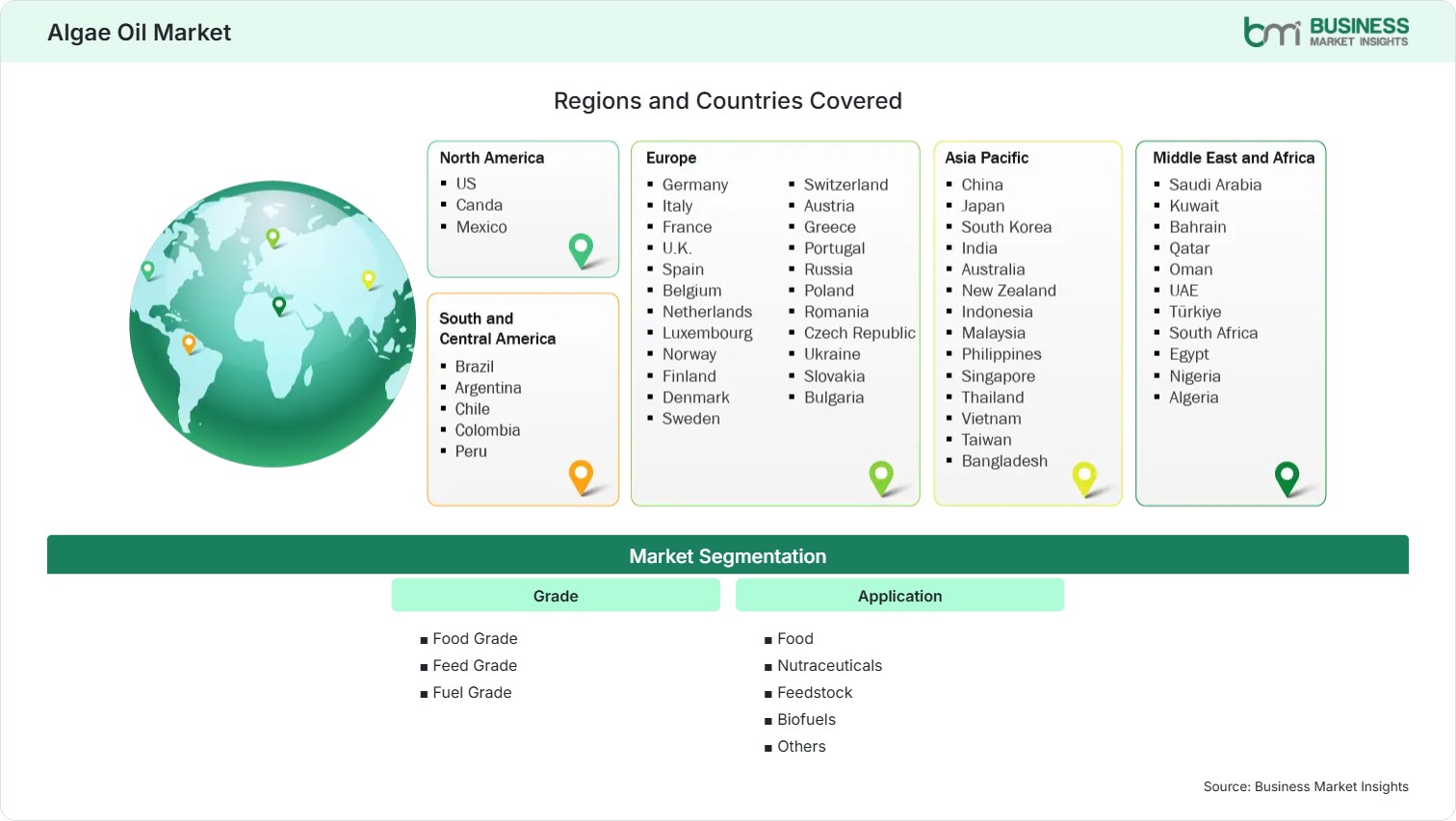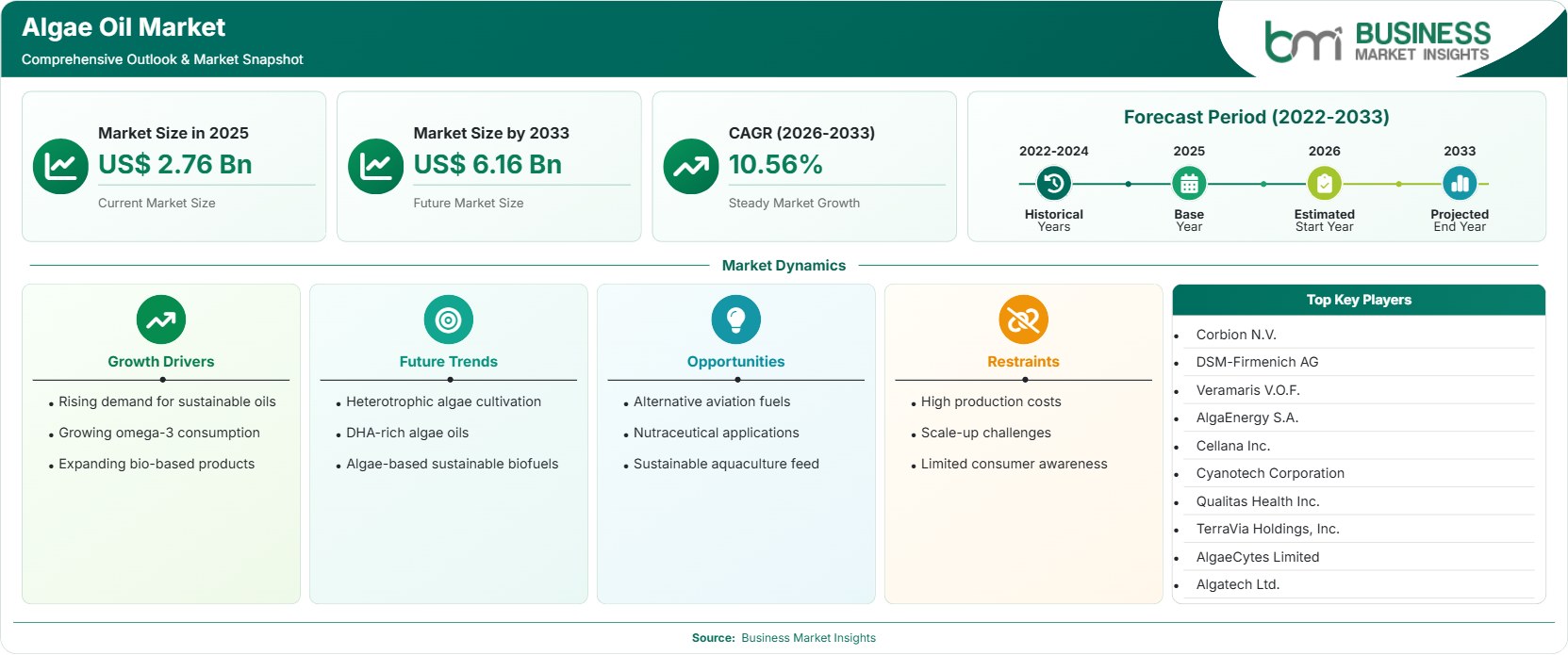
Algae Oil Market Regional Highlights
North America Algae Oil Market
North America accounts for approximately 36%–39% of the global market in 2025 and is projected to expand at a CAGR of 9.8%–10.3% during 2026–2033. The region benefits from advanced biotechnology infrastructure, strong investments in renewable ingredients, increasing adoption of plant-based nutrition, and expanding commercialization of algae-derived biofuels. Algae Oil Market share remains the highest globally owing to extensive research capabilities, established ingredient manufacturers, and growing demand across food, nutraceutical, and industrial applications.
- Rising consumer preference for vegan omega-3 supplements continues encouraging manufacturers to increase production capacity and expand algae-derived DHA and EPA product portfolios.
- Government support for renewable fuels and sustainable industrial feedstocks accelerates investments in algae cultivation technologies and commercialization of advanced bio-based products.
- Food and beverage manufacturers increasingly incorporate algae-derived ingredients into functional foods, infant nutrition, and premium health products to meet clean-label consumer preferences.
- Expansion of biotechnology research partnerships between universities and commercial companies continues improving algae cultivation efficiency, oil extraction technologies, and strain optimization.
- Growing interest in sustainable aviation fuel development supports long-term investment opportunities for industrial-scale algae oil production.
US Algae Oil Market
The United States represents approximately 30%–33% of the global market in 2025 and is expected to register a CAGR of 9.9%–10.4% through 2033. Strong biotechnology innovation, expanding nutraceutical manufacturing, supportive renewable fuel policies, and increasing investments in sustainable food ingredients continue strengthening domestic market growth.
- Commercial biotechnology companies continue investing in advanced algae cultivation systems that improve productivity, reduce operating costs, and enhance commercial scalability.
- Demand for algae-derived omega-3 ingredients continues rising across dietary supplements, infant formula, medical nutrition, and functional beverage applications.
- Federal support for renewable energy and sustainable aviation fuel research encourages commercialization of algae-based biofuel technologies.
- Strategic collaborations between ingredient manufacturers and food companies accelerate product innovation and market expansion.
Europe Algae Oil Market
Europe accounts for approximately 28%–31% of the global Algae Oil market in 2025 and is projected to grow at a CAGR of 10.3%–10.8% through 2033. Sustainability policies, strong demand for plant-based nutrition, and increasing investment in circular bioeconomy initiatives continue supporting regional market expansion. The Netherlands leads regional commercialization, while Germany records the fastest growth among major European economies with a CAGR of 10.8%–11.3%.
- Increasing consumer preference for sustainable food ingredients encourages adoption of algae-derived oils across food, beverage, and nutritional product manufacturers.
- European Green Deal initiatives continue supporting investments in renewable feedstocks, bio-based chemicals, and low-carbon industrial processes.
- Pharmaceutical and nutraceutical companies increasingly utilize algae-derived omega-3 ingredients to diversify product portfolios and reduce dependence on marine fish oil.
- Growing investments in industrial biotechnology continue improving production efficiency and supporting commercialization of high-value algae-derived products.
- Expansion of sustainable aquaculture across Northern Europe increases demand for algae oil as an alternative feed ingredient.
Asia Pacific Algae Oil Market
Asia Pacific represents approximately 24%–27% of the global Algae Oil market revenue in 2025 and is expected to register the fastest CAGR of 11.8%–12.4% during 2026–2033. Rising health awareness, expanding aquaculture production, rapid biotechnology development, and increasing government support for renewable products continue driving regional growth. China leads the regional market, while India records the highest growth with a CAGR of 12.4%–13.0%.
- Rapid expansion of aquaculture production significantly increases demand for sustainable algae-based feed ingredients rich in DHA and EPA.
- Rising disposable incomes and growing health consciousness continue supporting demand for premium nutritional supplements and functional food ingredients.
- Biotechnology companies increasingly invest in large-scale algae cultivation facilities and advanced extraction technologies to improve production efficiency.
- Government initiatives supporting renewable energy, biotechnology innovation, and sustainable agriculture create favorable conditions for market expansion.
- Food manufacturers continue incorporating algae-derived oils into premium nutrition products targeting health-conscious consumers.
Rest of World Algae Oil Market
The Rest of World region accounts for approximately 7%–9% of the global market in 2025 and is anticipated to expand at a CAGR of 10.4%–10.9% during the forecast period. Growth is supported by increasing investments in biotechnology, sustainable agriculture, and renewable fuel production across Latin America, the Middle East, and Africa.
Brazil continues leading market development in Latin America through expanding biotechnology research and aquaculture investments, while the United Arab Emirates and Saudi Arabia are strengthening renewable energy initiatives utilizing algae-based technologies.
- Brazil records the fastest regional growth with a CAGR of 10.9%–11.4%, supported by expanding aquaculture production and growing investments in industrial biotechnology.
- Gulf countries continue investing in algae cultivation research for renewable fuels, carbon capture, and sustainable food production.
- Increasing collaboration between research institutions and biotechnology firms accelerates commercialization of algae-derived industrial products.
- Growing awareness regarding sustainable nutrition supports adoption of algae-derived ingredients across emerging consumer markets.
- Renewable energy diversification strategies continue encouraging investments in algae-based biofuel production technologies.