
Enzymes Market Outlook: Size, Share, Trends, Growth Analysis, Competitive Landscape & Forecast, 2026-2033

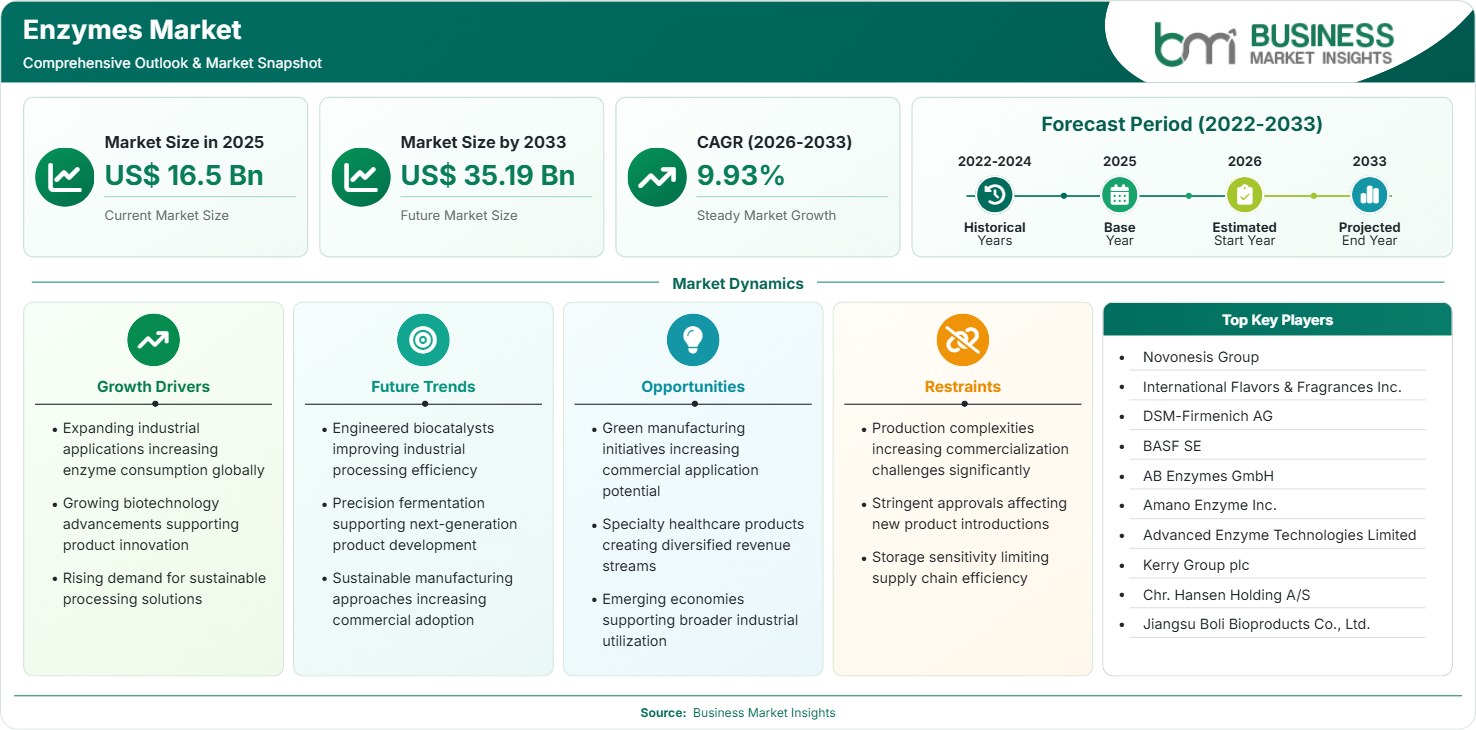
The Enzymes Market size was valued at US$ 16.5 Billion in 2025 and is projected to reach US$ 35.19 Billion by 2033, growing at a CAGR of 9.93% during 2026–2033. Rising bioprocessing demand, sustainable industrial manufacturing, expanding pharmaceutical applications, and increasing adoption across food processing, biofuels, and specialty biotechnology are creating significant growth opportunities globally.

Report Coverage
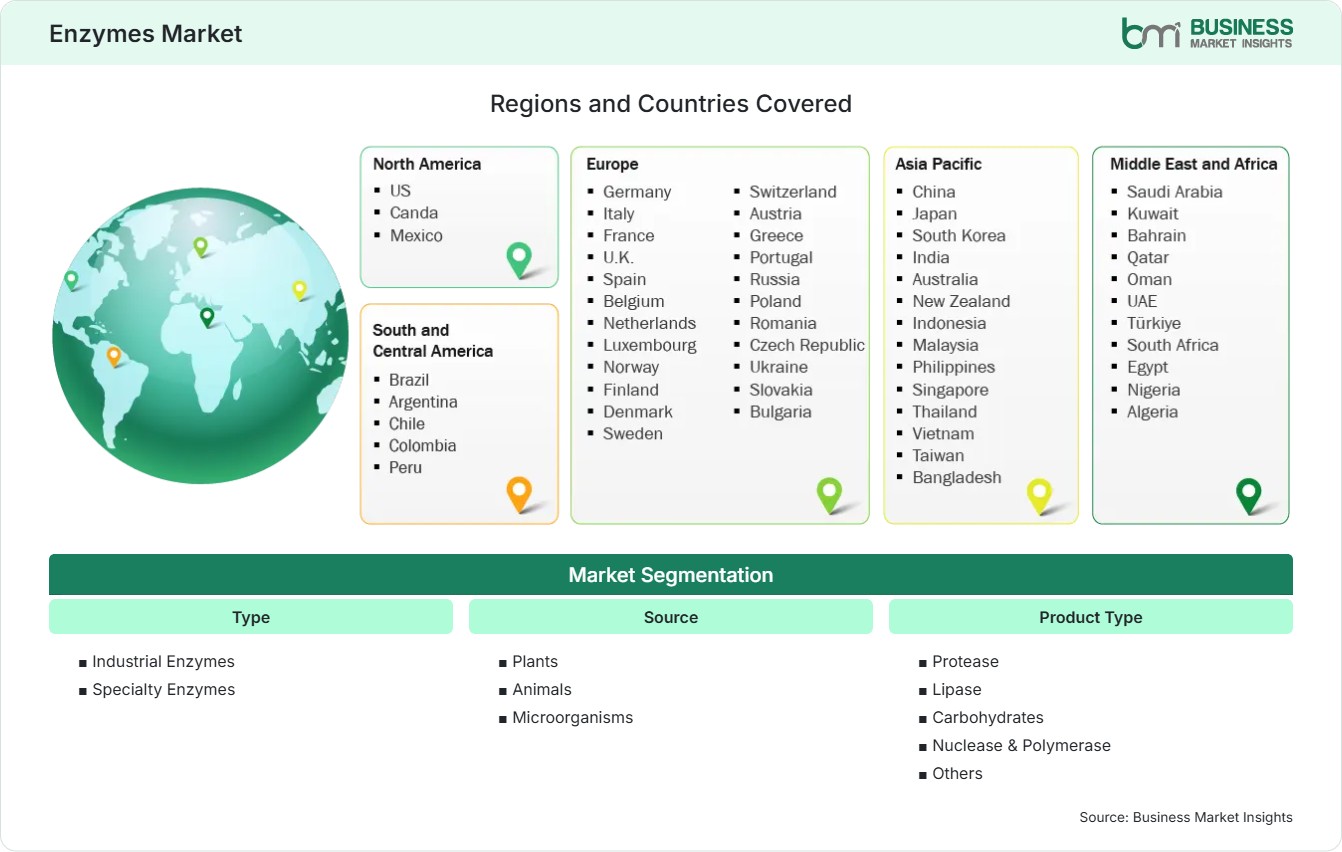
  • Type: Industrial Enzymes, Specialty Enzymes
  • Source: Plants, Animals, Microorganisms
  • Product Type: Protease, Lipase, Carbohydrates, Nuclease & Polymerase, Others
US$ 16.5 Bn Market size in 2025
US$ 35.19 Bn Market Size by 2033
9.93% CAGR, 2026 - 2033
2026-2033 Forecast Period

AI Overview

Enzymes Market Summary

  • North America Region: North America holds a market share of 34%–37% in 2025, growing at a CAGR of 8.5%–9.0% during 2026–2033, supported by advanced biotechnology infrastructure, strong pharmaceutical manufacturing, industrial biocatalysis adoption, food innovation investments, sustainability initiatives, precision fermentation expansion, research funding growth, favorable intellectual property frameworks, high-value specialty applications, and increasing enzyme-enabled production efficiencies across industries. Brief U.S. analysis: The United States dominates regional demand through biotechnology leadership, specialty manufacturing expansion, and pharmaceutical innovation, advancing at 8.7%–9.2% CAGR through 2033.
  • Fastest Growing Region: Asia Pacific accounts for 29%–32% share in 2025, advancing at 11.0%–12.0% CAGR during 2026–2033, driven by industrialization, food processing modernization, expanding pharmaceutical production, biotechnology investments, fermentation capacity additions, export-oriented manufacturing, growing healthcare expenditure, sustainable processing requirements, contract manufacturing expansion, and strong government support for bioeconomy development.
  • Leading Segment: Industrial Enzymes represents 58%–62% market share in 2025 and records 9.0%–10.0% CAGR during 2026–2033, supported by detergent formulation improvements, starch processing optimization, bioethanol production, sustainable manufacturing goals, energy-efficient production techniques, resource conservation priorities, industrial biotechnology expansion, waste reduction initiatives, and increased process productivity requirements.
  • High Growth Segment: Specialty Enzymes captures 38%–42% share in 2025 and expands at 10.5%–11.5% CAGR during 2026–2033, supported by precision medicine growth, molecular diagnostics adoption, genomics research expansion, advanced therapeutic development, personalized healthcare initiatives, biopharmaceutical manufacturing requirements, laboratory automation investments, clinical testing innovation, and increasing biotechnology research activities.
  • Key Market Opportunity: Expanding precision fermentation and synthetic biology platforms create opportunities for advanced biocatalyst development, enabling high-value production, reduced environmental impact, lower process costs, scalable manufacturing, and specialized applications.
  • Major Market Players: Novonesis Group, International Flavors & Fragrances Inc., DSM-Firmenich AG, BASF SE, AB Enzymes GmbH, Amano Enzyme Inc., Advanced Enzyme Technologies Limited, Kerry Group plc, Chr. Hansen Holding A/S, Jiangsu Boli Bioproducts Co., Ltd.
Strategic Insights

Enzymes Market: Strategic Insights

Enzymes Market Strategic Framework
FREE PDF
Request your free sample
Request free sample
Stakeholder View

Key Takeaways

  • The value chain is becoming more and more integrated, with microbial strain developers, fermentation experts, ingredient suppliers, and downstream manufacturers working together in order to improve production yields and achieve greater commercial scalability.
  • In the case of specialty healthcare applications such as molecular diagnostics, genomic research reagents, and therapeutic bioprocessing, there are some of the most promising opportunities for revenue growth over the forecast period.
  • Innovation is now focusing on engineered proteins that have greater temperature stability, substrate selectivity, and process durability, which allows their use in more complicated industrial environments.
  • The investment case for Asia Pacific is strong because of its extensive capacity in food manufacturing, the growing production of pharmaceuticals, supportive funding for biotechnology, and increasing domestic consumption.
  • Large biotechnology companies are still making strategic acquisitions and entering into licensing agreements in order to obtain proprietary platforms, precision fermentation capabilities, and specialty product portfolios.
  • In various manufacturing sectors sustainability measures are leading to greater use of biological catalysts, thereby reducing energy consumption, the amount of chemicals used, and the generation of production waste.
Geographic Outlook

Enzymes Market Regional Highlights

North America Enzymes Market

North America holds the leading position by taking up 34%-37% of the global Enzymes Market share in 2025 with a CAGR of 8.5%-9.0% until 2033. This region owes its competitiveness to several factors, including the structure of biotech industry, pharmaceutical manufacturing, and the use of food processing technologies. Investments in synthetic biology and industrial biotechnology are being increased continuously.

  • Heavy investment in biomanufacturing plants is increasing production capacity and at the same time aiding advanced industrial and medical applications that call for highly specialised biological catalysts and fermentation-derived ingredients.
  • Increasingly, pharmaceutical and diagnostic companies are incorporating advanced catalytic solutions into their manufacturing processes, which in turn leads to greater demand for high-purity and specialty products.
  • Sustainability regulations promote the replacement of conventional chemical processes with biologically based alternatives which reduce energy use and emissions intensity.
  • Strong academic research ecosystems are able to support commercialization pipelines by working together with industrial biotechnology developers and healthcare manufacturers.

US Enzymes Market

The United States accounts for approximately 78%–82% of regional Enzymes Market revenue and advances at 8.7%–9.2% CAGR. The strength of biotechnology innovations, investment of venture capital, and expertise in synthetic biology hasten product development. The demand is further strengthened by advanced drug manufacturing, personalized medicine programs, advancements in molecular diagnostics, and the adoption of industrial biotechnology solutions.

  • The expansion of clinical diagnostics is helping to increase use of molecular assays, sequencing workflows, and other precision healthcare applications which require highly specific biological reagents.
  • Industrial producers stress the way in which catalytic technologies improve process efficiency by reducing the amount of waste produced and enhancing the use of resources.
  • Food and beverage companies are still making investments in clean-label formulations that are backed by advanced biological processing methods.
  • The federal government's support of biotechnology innovation helps to strengthen the pathways for commercialization and the development of production infrastructure.

Europe Enzymes Market

Europe accounts for 25%–28% Enzymes Market share in 2025 and is projected to register 8.8%–9.5% CAGR through 2033. Continued regulatory backing on sustainable manufacturing processes, circular economic goals, and advances in biotechnology has ensured the continued success in both industry and specialty sectors. Food processing industries, pharmaceutical manufacturing capabilities, and research facilities already exist within the region.

  • Germany is leading the region in terms of revenue generation, due to its expertise in industrial biotechnology, its advanced capabilities in pharmaceutical production, and its extensive research infrastructure, all of which encourage the commercialisation of innovative catalytic technologies.
  • France is showing a growing level of adoption in the food processing and pharmaceutical manufacturing industries with the aim of improving both efficiency and sustainability.
  • The United Kingdom has strong capabilities in the field of life sciences, with genomic research being expanded and greater investment being made in biotechnology innovation ecosystems.
  • The markets in Poland and the Czech Republic are experiencing high growth, due to the expansion of manufacturing, increases in foreign direct investment, and the development of modern biotechnology facilities.
  • Regulations aimed at promoting sustainability are helping to get biological processing solutions introduced in a wide range of industrial sectors and thus speeding up the adoption of new technologies.

Asia Pacific Enzymes Market

Asia Pacific holds 29%–32% Enzymes Market share in 2025 and is forecast to achieve the fastest regional expansion at 11.0%–12.0% CAGR. Industrialization, development of pharmaceutical production capacities and food processing capacities keep stimulating demand. Investments into the development of biotechnology, fermentation technologies and biomanufacturing help to ensure further development.

  • China is still the biggest contributor within the region as a result of its extensive manufacturing capabilities, its pharmaceutical production, and its strong initiatives in the commercialisation of biotechnology.
  • India is one of the fastest-growing national markets, due to government-supported biotechnology initiatives and increasing investments in healthcare innovation.
  • Japan holds a strong position due to its advanced abilities in research, the development of specialist products, and its leadership in pharmaceutical manufacturing.
  • Investment is being drawn to economies in Southeast Asia for the purpose of setting up manufacturing and food ingredient production facilities based on fermentation.
  • The increasing awareness of sustainability goals is leading industrial operators to take up efficient biological processing methods in various sectors.

Rest of World Enzymes Market

Rest of World represents 9%–12% of the global Enzymes Market revenue in 2025 and is expected to expand at 9.5%–10.5% CAGR through the forecast period. South and Central America benefit from agricultural processing and biofuel industry development, supporting broader commercial adoption.

In the Middle East and in Africa there is a growing use of biotechnology in the areas of food manufacturing, healthcare and industrial applications. Within South America Brazil is at the forefront of demand, and in the case of Saudi Arabia and the United Arab Emirates they have become appealing destinations for biotechnology investment because of their industrial diversification programmes and their economic strategies which emphasise innovation.

  • Brazil holds on to its leading position due to its bioethanol production, its agricultural processing industries, and the increasing use of advanced production technologies.
  • Mexico gains as a result of the expansion in manufacturing and the growing demand in the areas of food processing and pharmaceuticals.
  • Saudi Arabia is promoting investments in biotechnology as part of its wider economic diversification and industrial modernization efforts.
  • The United Arab Emirates promotes innovation by means of research partnerships and developments in advanced manufacturing.
  • Greater investment in sustainable methods of production leads to the wider use of catalytic solutions in developing economies.
Global Market Geography
FREE PDF
Request your free sample
Request free sample
Segment Analysis

Enzymes Market Segmentation

Type

The Type segment remains central to industry development. Industrial Enzymes account for 58%–62% market share in 2025 and are projected to expand at 9.0%–10.0% CAGR, supported by broad utilization across detergents, food processing, biofuels, and textiles. The Enzymes Market scope continues expanding through sustainable manufacturing initiatives. Specialty Enzymes hold 38%–42% share and register 10.5%–11.5% CAGR, driven by healthcare innovation, diagnostics adoption, and growing investment in precision biotechnology applications.

  • Industrial Enzymes: Growing deployment in bioethanol production, detergent formulations, textile processing, and starch conversion strengthens demand as manufacturers prioritize efficiency, sustainability, and resource conservation objectives.
  • Specialty Enzymes: Expansion of genomics, molecular diagnostics, therapeutic manufacturing, and biotechnology research generates strong demand for highly specialized and application-specific biological catalysts.

Source

Source diversity is important for scaling up production and performance. Microorganism sources are preferred for commercial production due to their efficiency, high yields, and scalability. Plant and animal sources are still significant in specialized food and drug applications.

  • Plants: Widely utilized in food processing and specialty formulations where natural sourcing preferences and clean-label requirements influence purchasing decisions among manufacturers and consumers.
  • Animals: Maintains importance within selected pharmaceutical, diagnostic, and specialty food applications requiring specific catalytic properties difficult to replicate through alternative sources.
  • Microorganisms: Preferred production source due to scalability, production consistency, cost efficiency, and compatibility with industrial-scale fermentation technologies.

Product Type

Protease products generate the largest revenue contribution, supported by extensive use across detergents, food processing, pharmaceuticals, and industrial manufacturing. Lipase adoption continues increasing in specialty ingredients and healthcare applications. The Enzymes Market trends increasingly favor advanced nucleases and polymerases because of expanding genomics research and molecular diagnostics.

  • Protease: Strong demand stems from detergent formulations, protein processing, pharmaceutical manufacturing, and industrial applications focused on improving operational efficiency.
  • Lipase: Adoption expands across dairy processing, flavor enhancement, biodiesel production, and specialty healthcare applications requiring targeted catalytic functionality.
  • Carbohydrates: Critical for starch processing, sweetener production, brewing operations, and food manufacturing activities emphasizing productivity improvements.
  • Nuclease & Polymerase: Increasing importance within molecular biology, genomic sequencing, diagnostics, and advanced life science research environments.
Market Forces

Enzymes Market Dynamics

Key Market Drivers

Growing Demand for Sustainable Industrial Processing

Industrial manufacturers are now more and more dependent on biological catalysts in order to boost efficiency and at the same time reduce their energy consumption, water use, and the amount of chemicals needed. There is pressure on the food processing, textile manufacturing, pulp and paper processing, and detergent production sectors to achieve their sustainability goals and meet their carbon-reduction targets. Since enzyme-based processing can be carried out at milder temperatures and pH levels, it cuts operating costs and, at the same time, enables more environmentally sound production methods. Regulatory support of green manufacturing in North America and Europe is playing its role in boosting the demand. With the emergence of bio-economies and the development of circular production systems, biological catalysts have become an important raw material in industrial processing. All of these trends are adding up to a quicker adoption and growth of the global market over time.

Expansion of Biopharmaceutical and Diagnostic Applications

Specialized catalysts are widely used in protein engineering, drug development, and biologic product manufacturing in biopharmaceutical manufacturing. The increasing cases of chronic diseases and advancements in therapeutic drugs have increased the demand for specialty products. The molecular diagnostics, genetic sequencing, and precision medicine systems require the use of various enzymes like nucleases and polymerases for the correct tests and researches. Increased personalization of health care has further raised the usage rate. New biotechnology firms are still investing in new manufacturing technologies. As healthcare systems place greater emphasis on advanced diagnostics and targeted treatment approaches, demand from life sciences applications remains a major Enzymes Market growth catalyst.

Advancements in Microbial Engineering and Fermentation Technologies

The commercial viability is being greatly enhanced in various areas due to significant advances in synthetic biology, strain engineering, and precision fermentation. Compared to conventional methods, today's microbial systems provide greater yields, better catalytic performance, and reduced production costs. Businesses are making heavy investments in recombinant technologies so that they can achieve precise customisation to meet industrial and medical needs. Digital tools for managing bioprocesses also contribute to higher fermentation efficiency, improved scalability, and greater consistency. Increasing cooperation between biotechnology companies, research institutions, and industrial manufacturers is speeding up the introduction of next-generation products. These innovations boost competitiveness, aid cost reduction efforts, and widen the range of applications, thus setting the stage for continued acceptance in all global end-use sectors.

Key Market Opportunities

Precision Fermentation for High-Value Bioproduct Manufacturing

Precision fermentation is opening new commercial pathways for producing specialty ingredients, pharmaceutical compounds, and performance-enhancing biological materials. Manufacturers increasingly utilize engineered microorganisms to create products with improved functional attributes and consistent quality. Growing investment in alternative proteins, sustainable food ingredients, and advanced biomaterials creates attractive revenue opportunities. Scaling capabilities continue improving due to technological advances in fermentation systems and process automation. Demand from the food, healthcare, and industrial sectors provides broad market potential. Long-term Enzymes Market Forecasts indicate growing investment interest in fermentation infrastructure as organizations seek sustainable production capabilities and differentiated product offerings that support premium pricing strategies globally.

Rapid Growth of Genomics and Personalized Medicine

The progress made in genomic sequencing and in the field of precision medicine offers considerable potential for use in specialist areas. As more genetic testing, companion diagnostics, and personalized treatment methods are adopted, so too does the demand for nucleases, polymerases, and other highly specialized biological tools increase. Healthcare professionals are becoming more reliant on molecular data when making decisions about treatment, which in turn expands the potential market for new biotechnology products. Research institutions and pharmaceutical companies are still increasing their investments in advanced diagnostic techniques and in next-generation therapeutic technologies. The emerging economies are likewise enhancing their genomic capabilities via national programmes aimed at modernising healthcare. These developments point to promising long-term growth opportunities for companies that supply advanced healthcare and research products.

Emerging Biotechnology Hubs in Developing Economies

In many of the countries in the Asia Pacific area, the Middle East, and Latin America, biotechnology ecosystems are being developed with the help of both public and private investments. The expansion of research infrastructure, the establishment of biomanufacturing facilities, and a series of policy initiatives aimed at promoting innovation are all contributing to commercial production and technology transfer. The increasing demand at home for healthcare products, processed foods, and industrial biotechnology solutions is helping to drive the growth of the local markets. International manufacturers are now more and more entering into partnerships and setting up production facilities in these regions in order to enhance the resilience of their supply chains and lower their operating costs. Because of their favourable demographic conditions and the growing level of technological capability, there are opportunities for continued capacity expansion. The markets in question are expected to become increasingly significant in terms of their contribution to future industry revenues.

Market Restraints and Challenges

Complex Production Requirements and Elevated Operating Costs

Factor: Production requires sophisticated fermentation systems, advanced quality control measures, and specialized technical expertise.

Impact: The impact is that high levels of capital expenditure and operational complexity can restrict market participation, especially for smaller producers and new companies. To ensure product consistency, to comply with regulatory requirements and to maintain production efficiency, large ongoing investments are necessary. Variations in the availability of raw materials can also affect the economics of manufacturing. Companies have to constantly optimize their bioprocessing systems if they are to remain competitive and at the same time meet customer expectations regarding performance.

Regulatory and Quality Compliance and Extended Commercialization Cycles

Factor: Biotechnology products intended for healthcare, food, and diagnostic applications are subject to rigorous regulatory oversight.

Impact: The result is that lengthy approval processes, rigorous validation requirements, and constantly changing compliance frameworks can delay product launches and lead to higher development costs. Businesses that operate in a number of jurisdictions have to deal with a variety of regulatory environments, all of which demand a great deal of documentation and testing. Further difficulties occur when it comes to keeping product traceability and maintaining consistent standards for manufacturing quality.

Company Analysis

Competitive Landscape

The competitive environment is shaped by continuous innovation, fermentation scale advantages, specialty product development, and strategic partnerships. Current Enzymes Market analysis indicates that leading companies are strengthening positions through biotechnology investments, healthcare-focused product portfolios, and sustainable manufacturing capabilities.

Company Name

Overview

Products and Services relevant to this market

Novonesis Group

Global biotechnology leader formed through enzyme and biosolutions expertise serving food, healthcare, agriculture, and industrial sectors.

Industrial enzymes, specialty enzymes, fermentation solutions, food processing ingredients, bioenergy technologies, and microbial biosolutions.

International Flavors & Fragrances Inc.

Major ingredient and biotechnology company with strong presence in food, health, and bioscience applications.

Food enzymes, specialty biotechnology solutions, health ingredients, fermentation technologies, and industrial bioscience products.

DSM-Firmenich AG

Diversified science-based company focused on nutrition, health, and biotechnology innovation worldwide.

Nutritional enzymes, feed enzymes, specialty bioprocessing ingredients, fermentation technologies, and healthcare solutions.

BASF SE

Global chemical and biotechnology participant supporting industrial efficiency and sustainable manufacturing.

Industrial processing solutions, enzyme-enabled technologies, biotechnology products, and specialty manufacturing applications.

AB Enzymes GmbH

Specialized developer of enzyme technologies serving industrial and food processing sectors.

Baking enzymes, feed enzymes, technical enzymes, grain processing solutions, and industrial biotechnology products.

Amano Enzyme Inc.

Leading producer with expertise in high-purity and specialty biological catalysts.

Specialty enzymes, pharmaceutical applications, food processing solutions, and research-grade products.

Advanced Enzyme Technologies Limited

Biotechnology company offering diverse catalytic products across industrial and healthcare sectors.

Food enzymes, healthcare enzymes, feed additives, industrial processing solutions, and research applications.

Kerry Group plc

International taste and nutrition company with expanding biotechnology capabilities.

Food processing enzymes, nutritional ingredients, fermentation-based solutions, and specialty formulations.

Chr. Hansen Holding A/S

Bioscience company recognized for microbial and natural ingredient innovation.

Fermentation cultures, specialty enzymes, food biotechnology solutions, and health-related bioscience products.

Jiangsu Boli Bioproducts Co., Ltd.

Asian biotechnology company serving industrial and commercial customer requirements.

Industrial enzymes, textile processing catalysts, detergent ingredients, and fermentation-based biotechnology products.

Trust & Transparency

Research Methodology

The market analysis combines proprietary research with secondary data from government agencies, company disclosures, regulatory filings, industry databases and expert interviews. Market estimates are validated through data triangulation, cross-market benchmarking and analyst review.

View Full Research Methodology

Questions Answered

Frequently Asked Questions

What insights does an Enzymes Market Report provide for investors?

An Enzymes Market Report helps investors assess growth prospects, regional opportunities, competitive positioning, technology trends, demand drivers, and emerging application areas influencing long-term market attractiveness.

How does sustainability influence industry development?

Biological catalysts reduce energy consumption, waste generation, and dependence on harsh chemicals. Organizations pursuing environmental targets increasingly adopt these technologies to improve resource efficiency and operational performance.

Why are specialty products gaining momentum?

Specialty products support genomics, molecular diagnostics, therapeutic manufacturing, and advanced research applications. Rising demand for precision healthcare and biotechnology innovation continues accelerating adoption worldwide.

Which region offers the strongest future growth potential?

Asia Pacific is expected to present the strongest expansion opportunity due to biotechnology investments, pharmaceutical manufacturing growth, food processing modernization, and increasing industrial adoption across large emerging economies.

What are the primary applications of enzymes across industries?

Enzymes are widely used in food processing, detergents, pharmaceuticals, diagnostics, animal nutrition, biofuel production, textile manufacturing, and biotechnology research. Their ability to accelerate reactions efficiently supports productivity and sustainability objectives.

Access the Full Enzymes Market Report

Get segment-level forecasts, regional estimates, competitive benchmarking, company profiles and downloadable Excel datasets.

Access the full Enzymes Market Report
350 pages PDF & Excel | 2026-09-18
Similar Research

Related Market Reports