
Electric Vehicle Plastic Market Outlook: Size, Share, Trends, Growth Analysis, Competitive Landscape & Forecast, 2026-2033

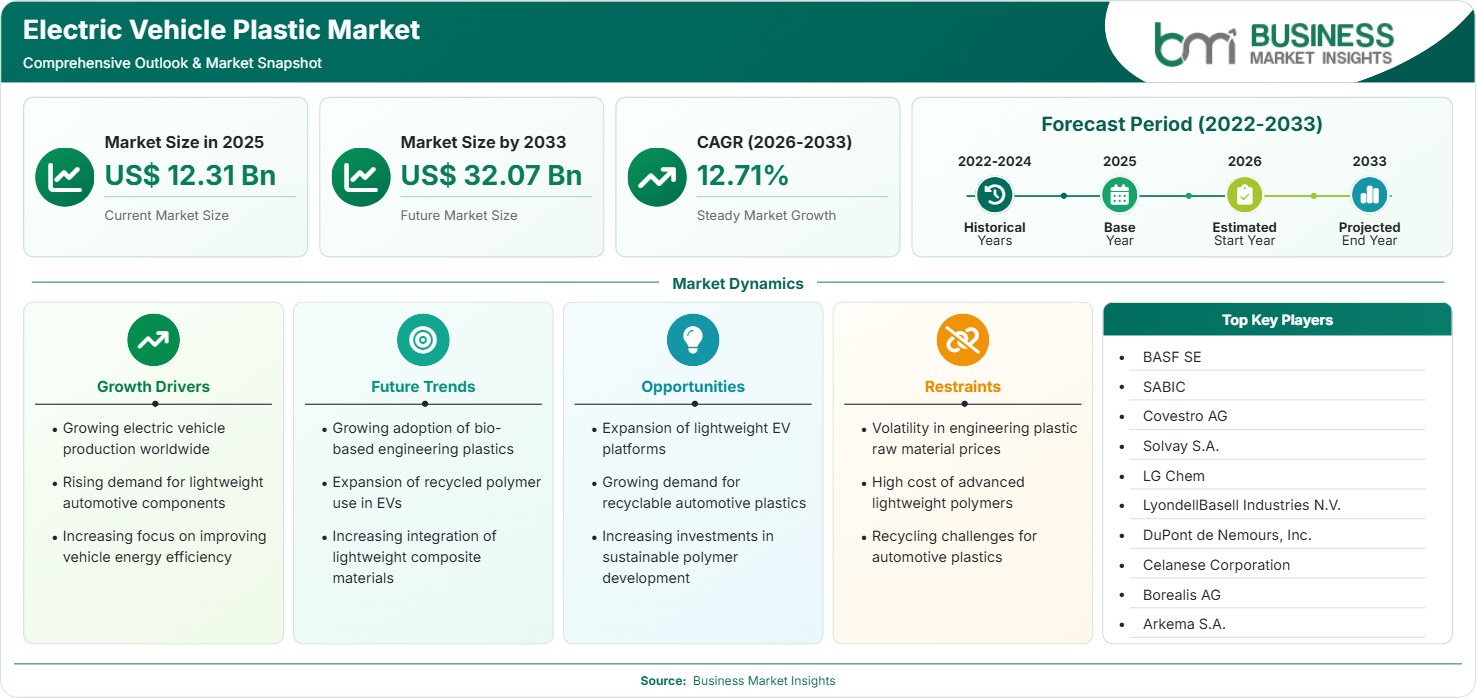
The Electric Vehicle Plastic Market size was valued at US$ 12.31 Billion in 2025 and is projected to reach US$ 32.07 Billion by 2033, growing at a CAGR of 12.71% from 2026 to 2033, driven by EV production expansion, lightweight component demand, energy efficiency improvements, recyclable polymers, and sustainable automotive material innovation.

Report Coverage
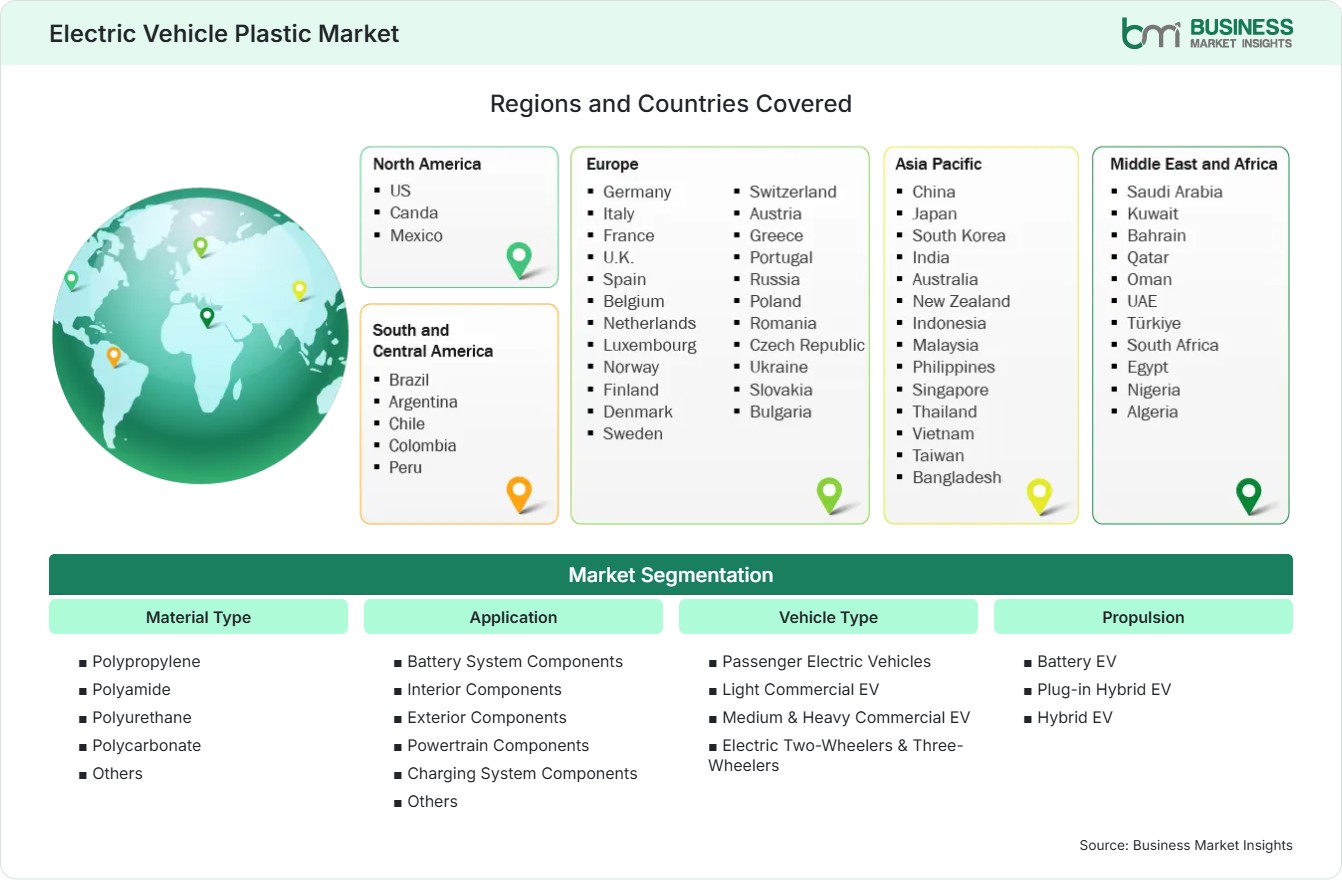
  • Material Type: Polypropylene, Polyamide , Polyurethane, Polycarbonate, Others
  • Application: Battery System Components, Interior Components, Exterior Components, Powertrain Components, Charging System Components, Others
  • Vehicle Type: Passenger Electric Vehicles, Light Commercial EV, Medium & Heavy Commercial EV, and Electric Two-Wheelers & Three-Wheelers
  • Propulsion: Battery EV, Plug-in Hybrid EV, and Hybrid EV
  • Sales Channel: OEM, Aftermarket
US$ 12.31 Bn Market size in 2025
US$ 32.07 Bn Market Size by 2033
12.71% CAGR, 2026 - 2033
2026-2033 Forecast Period

AI Overview

Electric Vehicle Plastic Market Summary

  • North America Region: North America holds a market share of 26%–30% in 2025, growing with a CAGR of 12.20%–12.70% influenced by EV manufacturing expansion, lightweight vehicle development, battery innovation, and sustainable polymer adoption. The U.S. market analysis indicates a CAGR of 12.30%–12.80% from 2026–2033, supported by electric vehicle incentives, automotive investments, and advanced material demand.
  • Fastest Growing Region: Asia Pacific holds a market share of 38%–42% in 2025, growing with a CAGR of 13.00%–13.50% influenced by large-scale EV production, battery ecosystem development, automotive manufacturing growth, and increasing polymer applications.
  • Leading Segment: Polypropylene holds a market share of 28%–32% in 2025, growing with a CAGR of 12.40%–12.90% influenced by lightweight properties, cost efficiency, recyclability, and extensive use across automotive components.
  • High Growth Segment: Battery System Components hold a market share of 14%–18% in 2025, growing with a CAGR of 13.20%–13.70% influenced by EV battery expansion, thermal management requirements, and demand for advanced protective materials.
  • Key Market Opportunity: Growing adoption of recyclable polymers, lightweight EV platforms, and sustainable automotive materials is creating opportunities for advanced plastic manufacturers across global electric mobility supply chains.
  • Major Market Players: BASF SE, SABIC, Covestro AG, Solvay S.A., LG Chem, LyondellBasell Industries N.V., DuPont de Nemours, Inc., Celanese Corporation, Borealis AG, Arkema S.A.
Strategic Insights

Electric Vehicle Plastic Market: Strategic Insights

Electric Vehicle Plastic Market Strategic Framework
FREE PDF
Request your free sample
Request free sample
Stakeholder View

Key Takeaways

  • The value chain is shifting toward integrated partnerships between polymer producers, automotive OEMs, battery manufacturers, and recycling companies to support next-generation electric mobility requirements.
  • Battery system components, lightweight structural applications, and recyclable polymer solutions represent high-potential areas due to increasing EV production and sustainability objectives.
  • Material innovation is focusing on high-performance plastics with improved thermal stability, impact resistance, recyclability, and compatibility with advanced vehicle architectures.
  • Asia Pacific offers strong investment potential due to large EV manufacturing bases, battery production ecosystems, and expanding automotive material demand.
  • Strategic collaborations and capacity expansions are shaping competition as polymer companies strengthen sustainable solutions for electric vehicle applications.
  • Recycling technologies and circular economy initiatives are becoming important factors influencing future automotive plastic development strategies.

North America Electric Vehicle Plastic Market

North America accounted for 26%–30% share in 2025 and is projected to expand at a CAGR of 12.20%–12.70% during 2026–2033. The region maintains strong growth due to increasing EV production, automotive technology investments, and demand for lightweight materials. The Electric Vehicle Plastic Market share in North America is supported by battery manufacturing expansion, vehicle lightweighting initiatives, and sustainability-focused material development.

  • The United States leads regional demand through EV manufacturing expansion, battery investments, and increasing adoption of lightweight automotive components.
  • Canada is developing opportunities through electric vehicle supply chain investments and growing demand for sustainable automotive materials.
  • Automotive manufacturers are increasing plastic integration to improve vehicle efficiency, reduce weight, and enhance design flexibility.
  • Polymer producers are developing recyclable solutions to support sustainability targets across electric mobility applications.
Geographic Outlook

Electric Vehicle Plastic Market Regional Highlights

US Electric Vehicle Plastic Market

The United States represented 21%–25% share within North America in 2025 and is expected to grow at a CAGR of 12.30%–12.80% between 2026–2033. The country remains a significant market due to expanding electric vehicle manufacturing, battery investments, and increasing demand for lightweight materials. The Electric Vehicle Plastic Market analysis highlights opportunities from domestic EV production growth, charging infrastructure development, and increasing focus on recyclable polymer solutions.

  • Electric vehicle manufacturers are adopting engineering plastics for weight reduction and improved vehicle performance.
  • Battery producers are increasing demand for heat-resistant polymer materials used in protection and insulation applications.
  • Automotive suppliers are investing in sustainable plastic technologies to meet environmental and efficiency objectives.

Europe Electric Vehicle Plastic Market

Europe accounted for 22%–26% share in 2025 and is forecast to grow at a CAGR of 11.80%–12.40% from 2026–2033. Germany, France, the United Kingdom, Italy, and Sweden represent key markets due to strong automotive manufacturing capabilities and electrification initiatives. Germany and France are among high-growth countries supported by EV production, battery ecosystem development, and lightweight vehicle engineering. European sustainability regulations are encouraging adoption of recyclable and high-performance plastics across automotive applications in Electric Vehicle Plastic Market forecasts.

  • Germany maintains strong demand through advanced automotive production and electric vehicle component manufacturing.
  • France is expanding adoption through EV investments, sustainable mobility programs, and automotive innovation initiatives.
  • The United Kingdom is increasing usage of lightweight plastics in electric vehicle systems and components.
  • Sweden is supporting growth through electric mobility adoption and sustainable automotive manufacturing practices.

Asia Pacific Electric Vehicle Plastic Market

Asia Pacific represented 38%–42% share in 2025 and is expected to grow at a CAGR of 13.00%–13.50% during 2026–2033. China, Japan, South Korea, and India are major markets supported by EV adoption, polymer manufacturing capabilities, and increasing demand for lightweight materials. The Electric Vehicle Plastic Market trends in Asia Pacific are influenced by battery expansion, government electrification policies, and increasing investments in advanced automotive materials.

  • China dominates regional demand through extensive EV manufacturing, battery production, and automotive polymer consumption.
  • India is experiencing growth due to rising electric mobility adoption and expanding vehicle manufacturing capabilities.
  • Japan continues developing advanced plastics for electric vehicles through material innovation and automotive technology expertise.
  • South Korea is increasing demand through battery manufacturing expansion and electric vehicle component production.

Rest of World Electric Vehicle Plastic Market

Rest of World accounted for 6%–10% share in 2025 and is projected to grow at a CAGR of 12.50%–13.00% during 2026–2033. South America and Middle East and Africa regions are gradually expanding due to increasing EV awareness, infrastructure investments, and automotive modernization efforts. Brazil, Mexico, UAE, and South Africa represent emerging opportunities supported by vehicle electrification programs and industrial development.

  • Brazil is increasing adoption through electric mobility initiatives and automotive manufacturing development.
  • Mexico is expanding demand through automotive exports, EV component production, and industrial investments.
  • UAE markets are developing through sustainable transportation programs and electric vehicle infrastructure expansion.
  • South Africa is creating opportunities through automotive industry modernization and clean mobility initiatives.
Global Market Geography
FREE PDF
Request your free sample
Request free sample
Segment Analysis

Electric Vehicle Plastic Market Segmentation

Material Type

The material type segment is driven by increasing demand for lightweight, durable, and thermally stable materials across electric vehicle applications. Polypropylene represented the leading category with 28%–32% share in 2025 and is projected to grow at a CAGR of 12.40%–12.90% during 2026–2033. Its cost efficiency, recyclability, and versatility support widespread adoption in automotive components. Manufacturers are developing enhanced polypropylene formulations with improved mechanical performance and sustainability characteristics to meet evolving electric vehicle requirements.

  • Polypropylene: Polypropylene is widely used in EV interiors, battery components, and structural applications due to lightweight properties and cost advantages.
  • Polyamide (PA / Nylon): Polyamide is adopted for high-performance applications requiring thermal resistance, durability, and mechanical strength in electric vehicle systems.
  • Polyurethane: Polyurethane supports seating, insulation, and protective applications due to flexibility, durability, and energy absorption characteristics.
  • Polycarbonate: Polycarbonate is increasingly used in electric vehicle lighting systems, glazing applications, and components requiring impact resistance and transparency.

Application

The application segment is expanding due to increasing integration of plastics across battery systems, vehicle interiors, exteriors, and electronic components. Battery System Components represented the leading application category with 14%–18% share in 2025 and are projected to grow at a CAGR of 13.20%–13.70% during 2026–2033. Growing battery production, thermal management requirements, and safety considerations are increasing demand for advanced polymers in Electric Vehicle Plastic Market.

  • Battery System Components: Battery system applications require advanced plastics for insulation, protection, thermal management, and structural support within electric vehicle battery assemblies.
  • Interior Components: Interior applications utilize plastics for lightweight designs, improved aesthetics, durability, and enhanced passenger comfort in electric vehicles.
  • Exterior Components: Exterior components adopt plastic materials for weight reduction, corrosion resistance, design flexibility, and improved vehicle efficiency.
  • Powertrain Components: Powertrain applications use engineering plastics for electrical insulation, thermal resistance, and performance enhancement in EV systems.
  • Charging System Components: Charging systems incorporate plastics for safety, insulation, durability, and protection of electrical components.

Vehicle Type

The vehicle type segment is influenced by increasing electrification across passenger and commercial transportation categories. Passenger Electric Vehicles represented the leading category with 52%–56% share in 2025 and are expected to grow at a CAGR of 12.50%–13.00% during 2026–2033. Expanding consumer EV adoption, government incentives, and increasing model availability are supporting Electric Vehicle Plastic Market demand. Manufacturers are integrating advanced plastics into passenger vehicles to achieve lightweight designs, improved efficiency, and enhanced performance.

  • Passenger Electric Vehicles: Passenger EVs represent major demand due to increasing consumer adoption, vehicle innovation, and extensive use of lightweight polymer components.
  • Light Commercial EV: Light commercial electric vehicles are adopting plastics for delivery vehicles, fleet applications, and efficiency-focused transportation solutions.
  • Medium & Heavy Commercial EV: Commercial EV manufacturers are using durable plastics for larger vehicle platforms requiring strength, safety, and weight optimization.
  • Electric Two-Wheelers & Three-Wheelers: Electric two-wheelers and three-wheelers are increasing plastic adoption due to lightweight requirements and expanding urban mobility solutions.

Propulsion

The propulsion segment is growing due to increasing electrification strategies across automotive markets. Battery EV represented the leading category with 62%–66% share in 2025 and is projected to grow at a CAGR of 13.00%–13.50% during 2026–2033. Battery-powered vehicles require extensive plastic applications across battery systems, electrical components, and lightweight structures in Electric Vehicle Plastic Market. Automakers are increasing investments in pure electric platforms, creating sustained demand for advanced automotive polymers.

  • Battery EV: Battery EV platforms generate strong demand for plastics due to extensive battery integration, lightweighting requirements, and electrical system applications.
  • Plug-in Hybrid EV: Plug-in hybrid vehicles utilize plastics across power systems, interiors, and electronic components to improve efficiency and performance.
  • Hybrid EV: Hybrid vehicles incorporate plastics for weight reduction, component protection, and improved fuel efficiency across vehicle systems.

Sales Channel

The sales channel segment is shaped by automotive production trends, supplier relationships, and replacement demand. OEM represented the leading category with 82%–86% share in 2025 and is projected to grow at a CAGR of 12.60%–13.10% during 2026–2033. Automotive manufacturers increasingly collaborate with polymer suppliers to develop customized materials for electric vehicle platforms. Aftermarket demand is gradually expanding through maintenance, replacement, and customization requirements for electric vehicles.

  • OEM: OEM channels dominate due to direct integration of engineered plastics into electric vehicle manufacturing processes and component supply chains.
  • Aftermarket: Aftermarket channels support replacement components, customization applications, and maintenance-related demand for electric vehicle plastic products.
Market Forces

Electric Vehicle Plastic Market Dynamics

Key Market Drivers

Growing electric vehicle production worldwide

The growing electric vehicle production worldwide is driving demand for specialized plastics as automakers expand electric mobility portfolios and increase vehicle manufacturing capacity. Electric vehicles require lightweight materials to improve range, efficiency, and overall performance. Polymer solutions are increasingly used in battery systems, interiors, exteriors, and electrical components due to their flexibility and weight advantages. The growth is supported by increasing investments in EV manufacturing facilities, battery plants, and automotive supply chains. The Electric Vehicle Plastic Market trends indicate stronger adoption of recyclable and high-performance polymers as manufacturers focus on sustainability goals. Rising EV penetration across developed and emerging economies is accelerating demand for advanced automotive plastics.

Rising demand for lightweight automotive components

The rising demand for lightweight automotive components is increasing plastic adoption as manufacturers seek materials that reduce vehicle weight while maintaining safety and performance. Lightweight designs help improve electric vehicle driving range and energy efficiency by reducing overall vehicle mass. Modern plastics are taking the place of older materials in several different uses, from interiors to structures and electrical components. Reinforced plastics are being developed by auto parts manufacturers for use in cars. Competition between the various EV makers is leading to greater investment in innovative materials that are suitable for designing automobiles efficiently. The trend towards lightweight engineering is opening up possibilities for polymer companies serving electric mobility applications.

Increasing focus on improving vehicle energy efficiency

The rapid development of technologies that enhance the energy efficiency of vehicles is making the use of engineering plastics more widespread in electric vehicle applications. Manufacturers are seeking lightweight materials to optimize battery performance, extend driving range, and enhance energy efficiency. Engineering plastics offer benefits such as light weight, corrosion resistance, design flexibility, and efficient material integration compared with other materials. Specialized polymers are needed to meet efficiency targets for battery packs, power electronic units, charging components, and vehicle interiors. Suppliers of materials are working on better formulations that provide strength, thermal resistance, and recyclability in plastics.

Key Market Opportunities

Expansion of lightweight EV platforms

The development of lightweight EV structures is opening new avenues for plastics manufacturers due to the redesigning efforts by automotive firms to enhance efficiency and performance. The design of new electric vehicles necessitates the use of materials that are lighter without compromising on safety, strength, and heat resistance. Plastics manufacturers are designing solutions for the enclosure, structure, electrical systems, and interior parts of batteries. The increased investment in modular electric vehicles is prompting cooperation between automotive firms and material producers. Plastics for weight reduction purposes are set to be adopted by automobile manufacturers competing in terms of range and production costs.

Growing demand for recyclable automotive plastics

Increasing demand for recyclable automotive plastics has created opportunities for material suppliers as manufacturers become more focused on circular economy models and sustainable vehicle production. There has been an increasing trend among automotive organizations to look for plastics that can be recycled, are environmentally friendly, and meet their sustainability goals. Advanced polymers such as recyclable polypropylene, polyamide, and other similar polymers used in electric vehicles are being developed by material suppliers. Increased regulatory pressure on sustainable production has led to a greater use of environmentally friendly materials.

Increasing investments in sustainable polymer development

The increasing investments in sustainable polymer development are opening new opportunities for manufacturers developing bio-based, recyclable, and low-impact plastic solutions. Electric vehicle producers are seeking materials that support emissions reduction goals while maintaining performance requirements. Polymers are now undergoing more studies on recyclability, longevity, and energy efficiency in their manufacturing processes. Sustainable polymers are now receiving greater interest for use in batteries, interior and structural elements, as environmental considerations become part of the selection criteria. Collaboration between chemical firms and automobile producers is hastening material development.

Market Restraints and Challenges

Volatility in engineering plastic raw material prices

Factor: Volatility in engineering plastic raw material prices creates uncertainty for manufacturers because polymer production depends on fluctuating petrochemical feedstock costs and supply chain conditions. Impact: Price instability can increase production expenses, affect profit margins, and create challenges in maintaining competitive pricing for automotive customers. Engineering plastic suppliers may experience difficulties in long-term planning due to changing raw material costs. Automotive manufacturers may also face pressure when sourcing advanced polymers for electric vehicle production. Companies are adopting supply diversification strategies, improving operational efficiency, and investing in alternative material solutions to reduce exposure to price fluctuations.

High cost of advanced lightweight polymers

Factor: High cost of advanced lightweight polymers limits adoption because specialized materials require complex manufacturing processes, advanced research investments, and higher-quality raw materials. Impact: Increased material costs can affect electric vehicle production economics, particularly in cost-sensitive markets and mass-market vehicle segments. Although advanced polymers provide weight reduction, durability, and efficiency benefits, their higher prices may slow widespread adoption. Manufacturers are focusing on improving production efficiency, scaling manufacturing capabilities, and developing cost-effective formulations. As EV production volumes increase, economies of scale may reduce costs.

Company Analysis

Competitive Landscape

The Electric Vehicle Plastic Market analysis highlights a competitive environment shaped by polymer innovation, lightweight material development, sustainability initiatives, and strategic collaborations between chemical manufacturers and automotive companies. Leading players are focusing on advanced engineering plastics, recyclable solutions, and application-specific materials to support growing electric mobility requirements.

Company Name

Overview

Products and Services relevant to this market

BASF SE

Global chemical company providing advanced materials and automotive solutions.

Offers engineering plastics, polymer compounds, and lightweight material solutions for EV components.

SABIC

Specialty chemicals producer developing innovative automotive material technologies.

Provides thermoplastics, engineering polymers, and sustainable plastic solutions for electric vehicles.

Covestro AG

Material solutions company focused on high-performance polymer development.

Supplies polycarbonate, polyurethane, and advanced materials for EV applications.

Solvay S.A.

Specialty materials company serving automotive and industrial markets.

Provides high-performance polymers for battery systems, electrical parts, and vehicle components.

LG Chem

Chemical manufacturer producing advanced materials and battery-related solutions.

Offers engineering plastics, polymer compounds, and automotive material technologies.

LyondellBasell Industries N.V.

Global plastics and chemicals producer supporting automotive applications.

Provides polypropylene, polymer solutions, and lightweight plastic materials.

DuPont de Nemours, Inc.

Technology-driven materials company serving transportation industries.

Supplies engineering polymers, specialty plastics, and performance materials for EV systems.

Celanese Corporation

Global specialty materials company developing engineered polymer solutions.

Offers high-performance plastics for electrical, automotive, and battery applications.

Borealis AG

Polyolefin producer focused on advanced polymer technologies.

Provides polypropylene solutions and circular polymer materials for automotive applications.

Arkema S.A.

Specialty chemicals company developing advanced material solutions.

Supplies high-performance polymers and specialty plastics for electric vehicle components.

Trust & Transparency

Research Methodology

The market analysis combines proprietary research with secondary data from government agencies, company disclosures, regulatory filings, industry databases and expert interviews. Market estimates are validated through data triangulation, cross-market benchmarking and analyst review.

View Full Research Methodology

Questions Answered

Frequently Asked Questions

What does the Electric Vehicle Plastic Market Report provide?

The report provides insights into market size, segmentation, regional trends, competitive landscape, growth drivers, opportunities, challenges, and strategic factors influencing the adoption of plastics across electric mobility applications.

Which EV application segment is creating strong plastic demand in Electric Vehicle Plastic Market?

Battery system components are generating strong demand due to increasing battery production and the need for lightweight, durable, and thermally stable materials. Plastics are used for insulation, protection, structural support, and safety-related applications within battery assemblies.

Why are recyclable plastics becoming important for EV manufacturers?

Recyclable plastics support sustainability objectives by reducing material waste and improving circular economy practices. Automotive manufacturers are adopting recyclable polymer solutions to meet environmental targets and develop more sustainable electric vehicle production processes.

How do plastics improve electric vehicle performance?

Plastics help reduce vehicle weight, improve energy efficiency, enhance driving range, and support flexible vehicle designs. Advanced polymers are increasingly integrated into battery systems, charging components, and electrical parts due to their insulation properties and resistance to environmental conditions.

What materials are most used in electric vehicle plastic applications?

Polypropylene, polyamide, polyurethane, and polycarbonate are among the widely used materials in electric vehicles. These plastics provide lightweight properties, durability, thermal resistance, and design flexibility for battery systems, interiors, exteriors, electrical components, and structural applications.

Access the Full Electric Vehicle Plastic Market Report

Get segment-level forecasts, regional estimates, competitive benchmarking, company profiles and downloadable Excel datasets.

Access the full Electric Vehicle Plastic Market Report
350 pages PDF & Excel | 2026-08-25
Similar Research

Related Market Reports