Electric Vehicle Aftermarket Market Regional Highlights
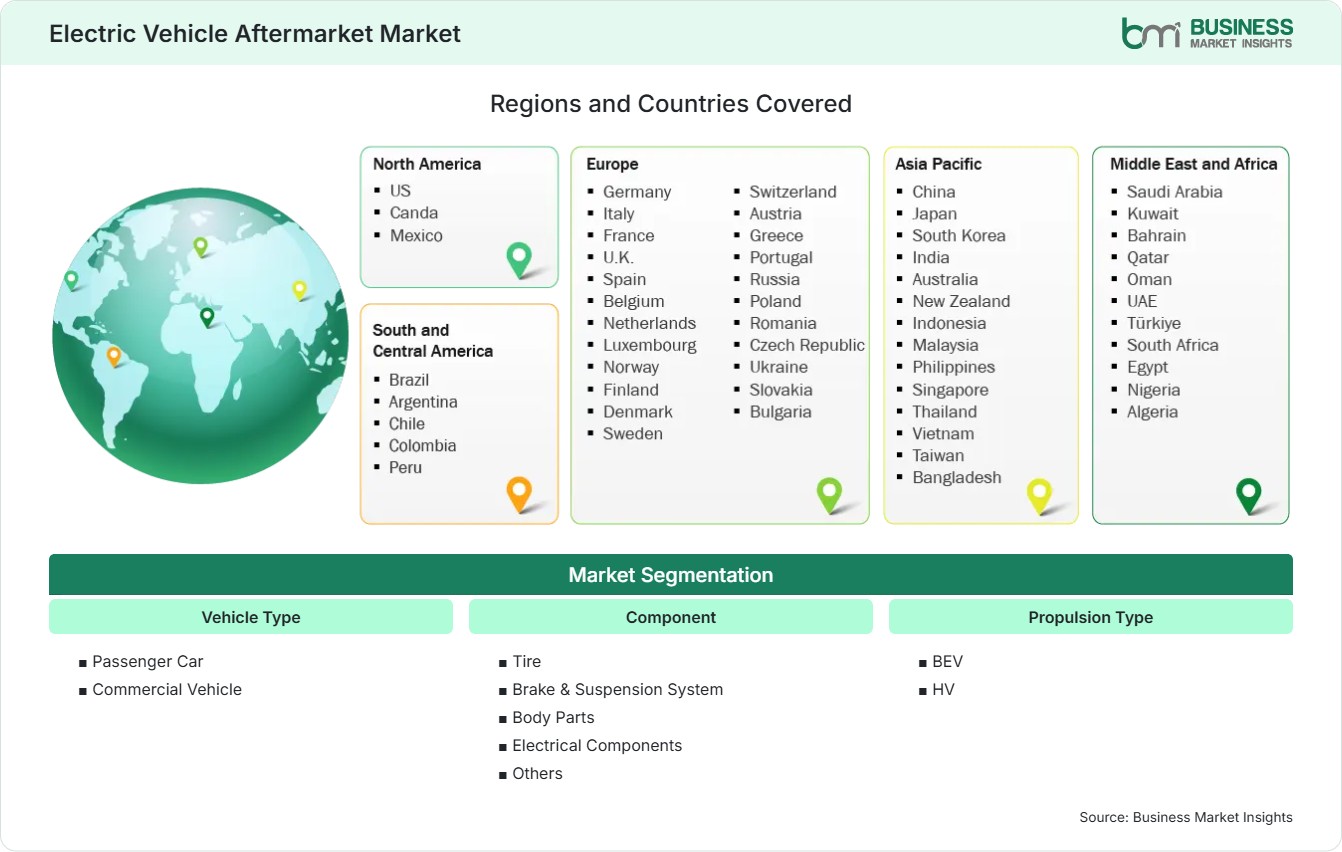
The Electric Vehicle Aftermarket Market share varies meaningfully by geography, reflecting differences in EV parc age, service-network density, and regulatory posture toward independent repair access across mature and emerging economies alike.
North America Electric Vehicle Aftermarket Market
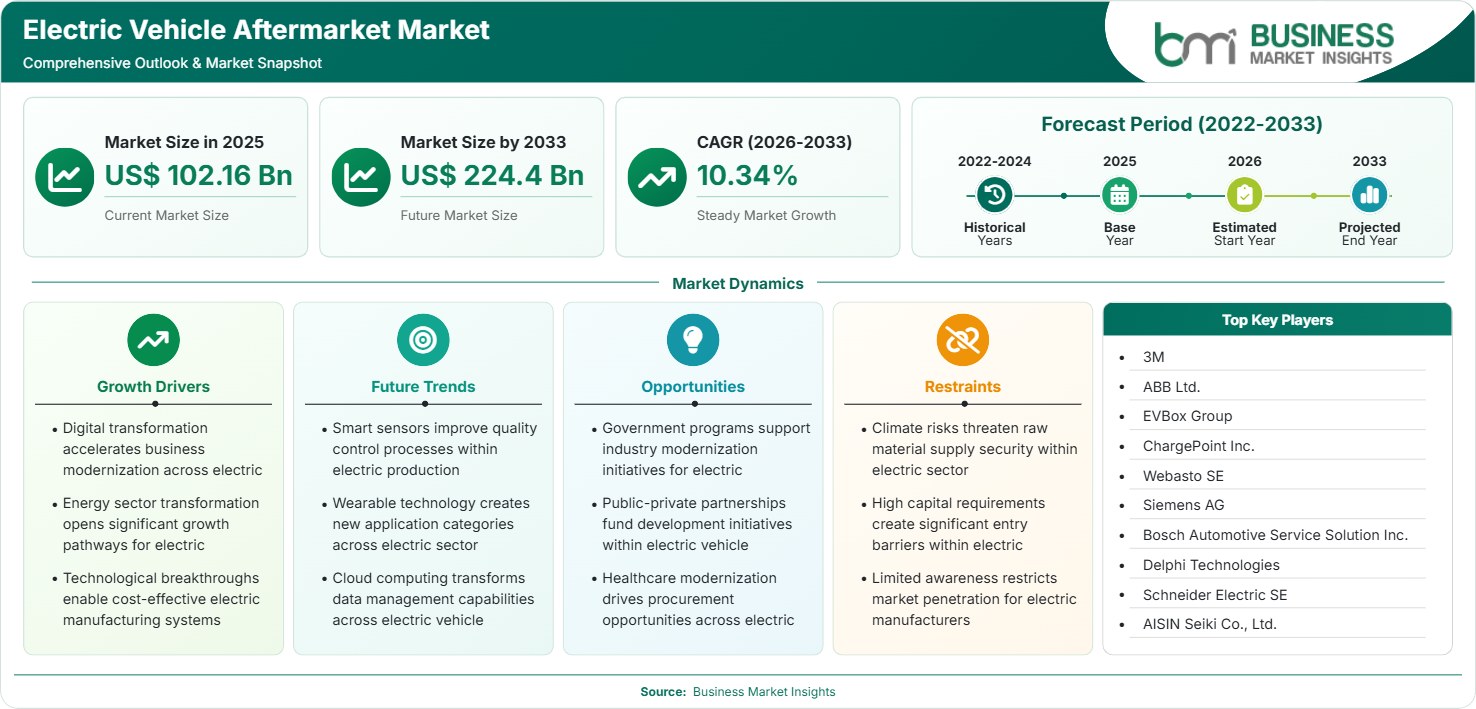
North America commands a share range of 34%–37% of the Electric Vehicle Aftermarket Market in 2025, expanding at a CAGR range of 9.5%–10.5% through 2033. The region benefits from an established network of certified high-voltage technicians, mature insurance frameworks for EV collision repair, and dense charging-corridor buildout that sustains consistent service intake across passenger and fleet segments alike.
- Certified technician expansion: Dealer and independent networks are scaling high-voltage certification programs, addressing acute technician shortages that currently constrain service-bay throughput across metropolitan markets.
- Right-to-repair momentum: Legislative pressure is opening OEM diagnostic data to independent workshops, expanding the addressable service base beyond dealership-exclusive channels significantly.
- Fleet electrification demand: Last-mile delivery and municipal fleets are driving predictable, duty-cycle-based component turnover, supporting steady parts and labor revenue growth.
- Battery recycling buildout: Regional recyclers are scaling second-life and material-recovery capacity, creating new revenue channels tied to end-of-warranty battery packs.
US Electric Vehicle Aftermarket Market
The United States accounts for roughly 82%–85% of North American volume, growing at a CAGR range of 9%–10% through 2033. Federal incentive continuity and expanding fast-charging corridors support sustained service demand across both coastal and inland fleet markets nationwide.
- State-level incentive variation: Divergent state EV-adoption incentives create uneven regional service demand, favoring suppliers with flexible, multi-state distribution footprints.
- Independent workshop investment: Franchise repair chains are rapidly adding high-voltage bays, competing directly with dealership service departments for post-warranty vehicles.
- Insurance-driven standardization: Major insurers are mandating certified-repair protocols for battery-pack claims, concentrating high-value collision work among accredited shops.
Europe Electric Vehicle Aftermarket Market
Europe holds an electric vehicle aftermarket market share range of 27%–30% in 2025, advancing at a CAGR range of 10%–11% through 2033. Germany leads regional volume given its dense automotive supplier base, while Poland and the Nordics post the fastest expansion as fleet electrification scales, growing at roughly 12%–13% CAGR.
- Battery passport compliance: EU traceability mandates are compelling suppliers to digitize component histories, adding compliance-driven service revenue across the supply chain.
- Independent garage certification: German and French workshops are investing heavily in high-voltage safety training to retain post-warranty service volume.
- Circular economy mandates: Extended producer responsibility rules are accelerating battery-recycling partnerships between automakers and materials-recovery specialists.
- Nordic fleet scaling: Norway and Sweden's high BEV penetration is generating early-mover demand for advanced diagnostic and thermal-management repair services.
Asia Pacific Electric Vehicle Aftermarket Market
Asia Pacific holds a share range of 24%–27% of the Electric Vehicle Aftermarket Market in 2025 and is the fastest-growing region, expanding at a CAGR range of 12.5%–14% through 2033. China leads on installed-base scale, while India posts the fastest growth among major markets at roughly 15%–17% CAGR as two- and three-wheeler electrification accelerates.
- China parc maturity: A large first-generation BEV base is entering post-warranty service, driving strong demand for battery diagnostics and component replacement nationwide.
- India two-wheeler surge: Rapid electrification of two- and three-wheelers is generating high-frequency, low-cost service demand across urban and semi-urban markets.
- Japanese component depth: Domestic suppliers' precision-manufacturing capability supports export-oriented aftermarket parts production across the broader region.
- Southeast Asia localization: Automakers and suppliers are localizing component production to reduce tariff exposure and shorten fleet-service lead times.
Rest of World Electric Vehicle Aftermarket Market
Rest of World, spanning South and Central America alongside the Middle East and Africa, holds a share range of 8%–11% in 2025, growing at a CAGR range of 9%–10.5% through 2033. Brazil leads Latin American volume on flex-fuel-to-electric transition programs, while the UAE posts the fastest regional growth, at roughly 13%–14% CAGR, on Gulf infrastructure investment. Nascent service networks and import-dependent parts supply currently constrain scale, though government fleet-electrification pilots are catalyzing early workshop investment.
- Brazil fleet transition: Government incentives supporting flex-fuel-to-electric conversion are seeding early demand for EV-specific replacement parts.
- Gulf infrastructure investment: UAE and Saudi Arabia's rapid charging buildout is attracting international service-network operators seeking first-mover positioning.
- South Africa import dependency: Limited local component manufacturing keeps service costs elevated, favoring distributors with efficient import logistics.
- Pan-regional workshop gaps: Sparse certified-technician availability across the region is prompting mobile-service-fleet pilots by international aftermarket brands.