
Cold Chain Packaging Market Outlook: Size, Share, Trends, Growth Analysis, Competitive Landscape & Forecast, 2026-2033

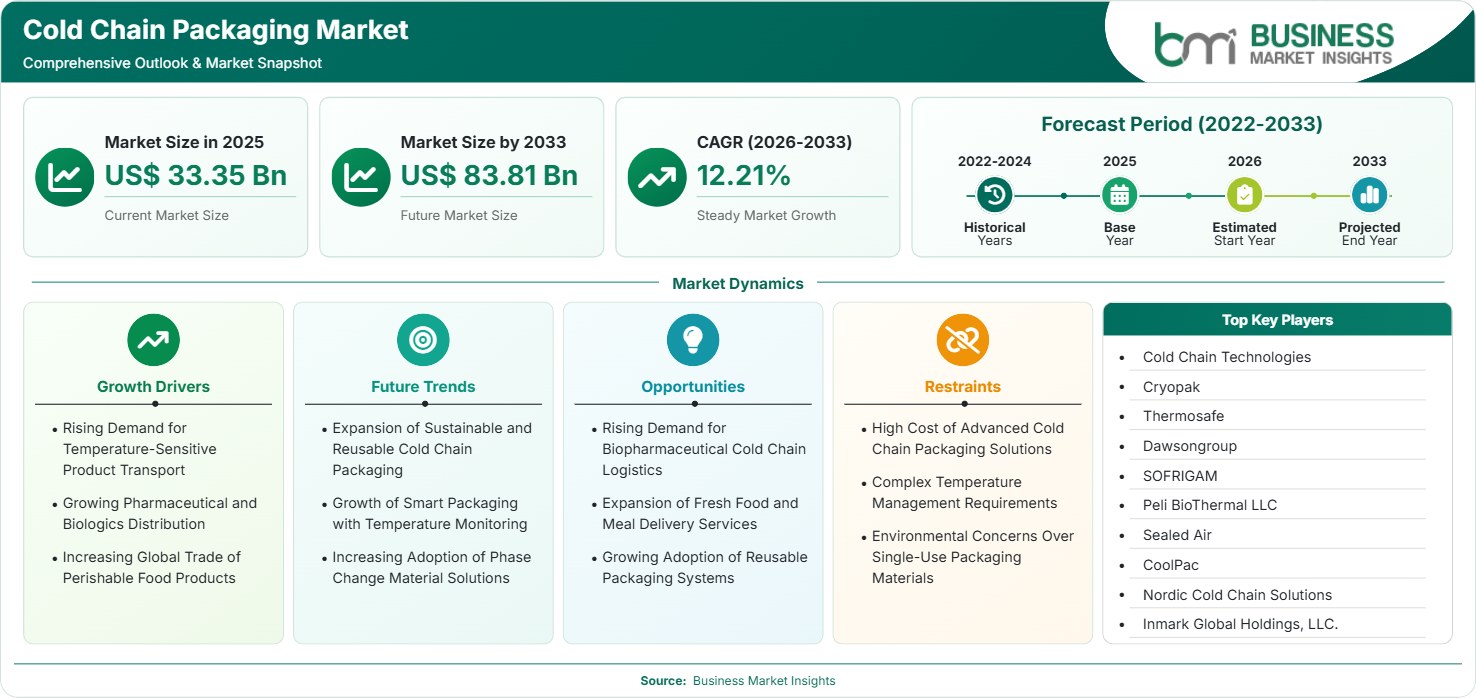
The Cold Chain Packaging Market size was valued at US$ 33.35 Billion in 2025 and is projected to reach US$ 83.81 Billion by 2033, growing at a CAGR of 12.21% during 2026–2033. Rising demand for temperature-sensitive pharmaceuticals, increasing consumption of frozen and packaged foods, growing global cold chain logistics infrastructure, and expanding biologics transportation requirements are supporting market growth globally.

Report Coverage
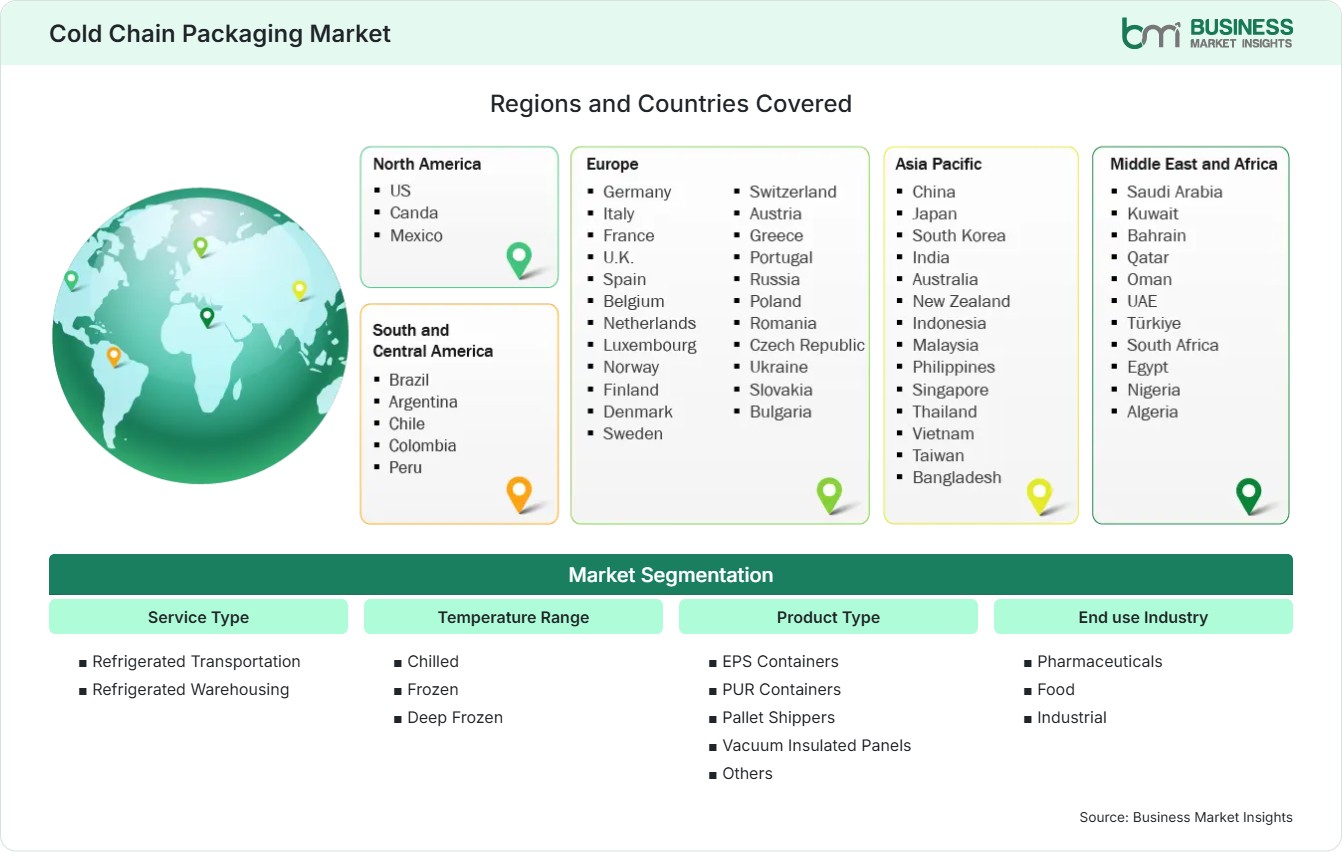
  • Service Type: Refrigerated Transportation, Refrigerated Warehousing
  • Temperature Range: Chilled, Frozen, Deep Frozen
  • Product Type: EPS Containers, PUR Containers, Pallet Shippers, Vacuum Insulated Panels, Others
  • End use Industry: Pharmaceuticals, Food, Industrial
US$ 33.35 Bn Market size in 2025
US$ 83.81 Bn Market Size by 2033
12.21% CAGR, 2026 - 2033
2026-2033 Forecast Period

01 AI Overview

Cold Chain Packaging Market Summary

  • North America Region: North America holds a market share of 35%–38% in 2025, growing with a CAGR of 11.6%–12.3% during 2026–2033. Strong pharmaceutical distribution networks, advanced logistics infrastructure, and increasing adoption of temperature-controlled packaging continue supporting regional leadership. The U.S. cold chain packaging market is expected to register a CAGR of 11.8%–12.5%.
  • Fastest Growing Region: Asia Pacific accounts for 29%–32% share in 2025 and is projected to grow at a CAGR of 13.0%–13.7% through 2033. Expanding pharmaceutical manufacturing, growing food exports, and increasing cold storage investments continue driving regional growth.
  • Leading Segment: Refrigerated Transportation represents 56%–59% share in 2025 and is expected to grow at a CAGR of 12.4%–13.1% through 2033. Rising demand for temperature-controlled logistics continues supporting segment dominance.
  • High Growth Segment: Pharmaceuticals account for 42%–45% share in 2025 and are forecast to grow at a CAGR of 12.9%–13.6% during 2026–2033. Increasing biologics production, vaccine distribution, and specialty drug transportation continue accelerating segment growth.
  • Key Market Opportunity: Expansion of pharmaceutical cold chains, biologics transportation, sustainable insulated packaging solutions, and advanced temperature-monitoring technologies is creating substantial growth opportunities.
  • Major Market Players: Cold Chain Technologies, Cryopak, Thermosafe, Dawsongroup, SOFRIGAM, Peli BioThermal LLC, Sealed Air, CoolPac, Nordic Cold Chain Solutions, and Inmark Global Holdings, LLC.
02 Strategic Insights

Cold Chain Packaging Market: Strategic Insights

Cold Chain Packaging Market Strategic Framework
FREE PDF
Request your free sample
Request free sample
03 Stakeholder View

Key Takeaways

  • Cold chain packaging remains critical for preserving the quality and safety of temperature-sensitive products.
  • Refrigerated transportation continues dominating due to increasing demand for temperature-controlled logistics.
  • Pharmaceutical applications represent the fastest-growing end-use segment.
  • Advanced thermal packaging technologies are improving temperature stability and product protection.
  • Sustainability and reusable packaging solutions are becoming increasingly important.
  • North America remains the leading market due to advanced cold chain infrastructure.
  • Asia Pacific is projected to witness the fastest growth owing to pharmaceutical and food industry expansion.
  • Biologics transportation and specialty healthcare logistics are expected to create significant future opportunities.
04 Geographic Outlook

Cold Chain Packaging Market Regional Highlights

North America Cold Chain Packaging Market

North America accounts for 35%–38% Cold Chain Packaging Market share in 2025 and is projected to grow at a CAGR of 11.6%–12.3% through 2033. The region benefits from advanced healthcare logistics systems, strong pharmaceutical production capabilities, and expanding temperature-controlled food supply chains.

  • Pharmaceutical companies are increasingly utilizing advanced insulated packaging systems to protect biologics, vaccines, and specialty medicines during transportation.
  • Food and beverage manufacturers continue investing in cold chain logistics to maintain product freshness and regulatory compliance.
  • Temperature-monitoring technologies are gaining wider adoption to improve shipment visibility and reduce spoilage risks.
  • E-commerce grocery delivery services are increasing demand for reliable cold chain packaging solutions.
  • Sustainability initiatives are encouraging the development of reusable and environmentally friendly thermal packaging products.
  • Continuous investments in cold storage and logistics infrastructure remain supportive of long-term market growth.

US Cold Chain Packaging Market

The United States contributes approximately 89%–93% of North American revenue and is expected to register a CAGR of 11.8%–12.5% through 2033. The country remains the largest market due to extensive pharmaceutical distribution networks and advanced supply chain technologies.

  • Biopharmaceutical manufacturers continue driving demand for validated temperature-controlled packaging systems.
  • Rising shipment volumes of specialty medicines are increasing adoption of advanced thermal protection technologies.
  • Food delivery and meal kit services are creating additional opportunities for temperature-sensitive packaging solutions.
  • Healthcare providers increasingly require secure logistics systems for sensitive medical products.
  • Smart packaging technologies are improving shipment monitoring and compliance capabilities.
  • Strong investments in healthcare and logistics modernization continue supporting market expansion.

Europe Cold Chain Packaging Market

Europe represents 22%–25% of global revenue in 2025 and is anticipated to expand at a CAGR of 12.0%–12.7% through 2033. Strong pharmaceutical manufacturing activity, food safety regulations, and cross-border trade continue supporting regional growth. Germany remains the leading market while Poland demonstrates stronger growth momentum.

  • Germany continues leading regional demand due to its strong pharmaceutical, biotechnology, and food processing industries.
  • Poland is among the fastest-growing markets and is estimated to register a CAGR of 12.9%–13.6% during the forecast period.
  • Stringent quality and safety regulations are encouraging adoption of advanced cold chain packaging systems.
  • Healthcare companies are increasingly investing in temperature-controlled logistics capabilities.
  • Sustainable packaging innovations are gaining traction across pharmaceutical and food industries.
  • Growing international trade continues supporting demand for reliable thermal packaging solutions.

Asia Pacific Cold Chain Packaging Market

Asia Pacific accounts for 29%–32% of global revenue in 2025 and is expected to achieve the fastest CAGR of 13.0%–13.7% through 2033. Expanding pharmaceutical manufacturing, rising healthcare investments, and increasing demand for frozen food products continue supporting strong regional growth.

  • China remains the largest regional market due to extensive pharmaceutical production and food export activities.
  • India is projected to achieve approximately 13.9%–14.6% CAGR, supported by expanding vaccine manufacturing and cold chain infrastructure investments.
  • Growing biologics production is increasing demand for high-performance temperature-controlled packaging systems.
  • Food exporters are adopting advanced thermal packaging to improve product quality during transportation.
  • Government initiatives are encouraging development of integrated cold chain logistics networks.
  • Rapid expansion of healthcare and e-commerce industries continues creating significant market opportunities.

Rest of World Cold Chain Packaging Market

Rest of World accounts for 8%–11% of global revenue in 2025 and is projected to expand at a CAGR of 10.8%–11.5% through 2033. Increasing pharmaceutical distribution, expanding food logistics networks, and rising investments in cold storage infrastructure are supporting market growth across Latin America, the Middle East, and Africa.

  • Brazil continues generating demand through growth in food exports and healthcare logistics activities.
  • The UAE is witnessing increasing adoption of temperature-controlled packaging solutions for pharmaceutical distribution.
  • Saudi Arabia is expected to achieve approximately 11.7%–12.4% CAGR through 2033, supported by healthcare modernization and logistics investments.
  • Rising consumption of frozen and chilled food products is strengthening demand for cold chain systems.
  • Pharmaceutical imports and exports are increasing requirements for validated thermal packaging solutions.
  • Infrastructure modernization and regulatory improvements continue creating new growth opportunities.
Global Market Geography
FREE PDF
Request your free sample
Request free sample
05 Segment Analysis

Cold Chain Packaging Market Segmentation

Service Type

The service type segment represents the primary cold chain logistics activities responsible for maintaining temperature-sensitive products throughout transportation and storage. This segment accounts for approximately 56%–59% share in 2025 and is projected to grow at a CAGR of 12.4%–13.1% through 2033. The expanding Cold Chain Packaging Market Scope is supported by increasing pharmaceutical shipments, growth in frozen food consumption, and rising demand for temperature-controlled supply chains globally.

  • Refrigerated Transportation: Refrigerated transportation dominates the market due to increasing movement of pharmaceuticals, biologics, vaccines, dairy products, seafood, and frozen foods across domestic and international supply chains.
  • Refrigerated Warehousing: Refrigerated warehousing continues witnessing strong demand as companies expand cold storage capacities to support growing inventories of temperature-sensitive products.

Temperature Range

The temperature range segment highlights the major thermal conditions maintained during transportation and storage operations. This segment accounts for approximately 44%–47% share in 2025 and is expected to register a CAGR of 12.6%–13.3% through 2033. Current Cold Chain Packaging Market Trends indicate growing utilization of specialized packaging systems for pharmaceuticals, biologics, and premium food products.

  • Chilled: Chilled packaging solutions are extensively used for fresh foods, dairy products, beverages, and select pharmaceutical products requiring moderate temperature control.
  • Frozen: Frozen temperature solutions continue generating high demand due to increasing global trade of frozen food products and processed meals.
  • Deep Frozen: Deep frozen applications are expanding rapidly for biologics, specialty pharmaceuticals, seafood products, and highly temperature-sensitive materials.

Product Type

The product type segment reflects the major packaging solutions utilized to maintain temperature integrity during handling and transportation. This segment accounts for approximately 37%–40% share in 2025 and is forecast to grow at a CAGR of 12.8%–13.5% through 2033.

  • EPS Containers: EPS containers remain widely used because of their lightweight structure, insulation performance, and cost-effectiveness.
  • PUR Containers: PUR containers offer superior thermal protection and are increasingly utilized in pharmaceutical and healthcare applications.
  • Pallet Shippers: Pallet shippers are witnessing growing demand for bulk transportation of temperature-sensitive products across long-distance supply chains.
  • Vacuum Insulated Panels: Vacuum insulated panels are gaining popularity due to excellent thermal performance and extended temperature retention capabilities.
  • Others: Other products include phase-change material packaging, insulated boxes, thermal blankets, and specialized cold chain systems.

End-use Industry

The end-use industry segment represents the primary sectors utilizing cold chain packaging solutions for product protection and regulatory compliance. This segment accounts for approximately 42%–45% share in 2025 and is expected to grow at a CAGR of 12.9%–13.6% through 2033.

  • Pharmaceuticals: Pharmaceuticals dominate the market due to increasing transportation requirements for vaccines, biologics, specialty medicines, and clinical trial materials.
  • Food: Food manufacturers increasingly adopt advanced cold chain packaging solutions to maintain freshness, quality, and shelf life throughout distribution.
  • Industrial: Industrial applications continue expanding through temperature-sensitive chemicals, specialty materials, and laboratory product transportation.
06 Market Forces

Cold Chain Packaging Market Dynamics

Key Market Drivers

Rising Demand for Temperature-Sensitive Product Transport

The growing transportation of temperature-sensitive products is significantly driving demand for advanced cold chain packaging solutions across global supply chains. Pharmaceutical products, vaccines, biologics, fresh foods, dairy products, seafood, and specialty chemicals all require controlled environmental conditions to maintain quality and effectiveness. Cold chain packaging technologies help minimize spoilage, contamination, and product loss during transit. As international trade and healthcare distribution networks continue expanding, demand for reliable temperature-controlled packaging systems is expected to increase substantially across multiple industries.

Growing Pharmaceutical and Biologics Distribution

The pharmaceutical industry continues to be one of the strongest growth drivers for the cold chain packaging market. Increasing production and distribution of biologics, vaccines, cell therapies, and specialty medicines require highly controlled transportation conditions. Pharmaceutical companies are investing heavily in validated packaging systems capable of maintaining strict temperature ranges throughout logistics operations. Regulatory compliance requirements and patient safety considerations are further accelerating adoption. As biologic therapies and precision medicine continue expanding globally, cold chain packaging demand is expected to rise significantly.

Increasing Global Trade of Perishable Food Products

Globalization of food supply chains is increasing the movement of fresh, frozen, and processed food products across international markets. Consumers increasingly expect year-round availability of high-quality food products regardless of production location. Cold chain packaging solutions play a critical role in preserving freshness, nutritional value, and product quality during transportation and storage. Growing consumption of frozen foods, seafood, dairy products, and ready-to-eat meals continues strengthening demand for temperature-controlled packaging systems. This trend is expected to remain a key market growth catalyst over the forecast period.

Key Market Opportunities

Rising Demand for Biopharmaceutical Cold Chain Logistics

The rapid growth of biopharmaceutical manufacturing is creating substantial opportunities for cold chain packaging providers. Biologic drugs often require highly controlled transportation environments to maintain therapeutic effectiveness and product stability. Advanced packaging systems featuring extended temperature protection and real-time monitoring capabilities are increasingly being adopted. Pharmaceutical companies are seeking reliable cold chain partners capable of ensuring regulatory compliance and product safety. As biopharmaceutical innovation accelerates globally, packaging suppliers are expected to benefit from expanding logistics requirements.

Expansion of Fresh Food and Meal Delivery Services

The growth of online grocery platforms, meal kit providers, and food delivery services is creating new opportunities for cold chain packaging manufacturers. Consumers increasingly demand convenient delivery of fresh produce, dairy products, frozen foods, and prepared meals. These services rely heavily on thermal packaging solutions to maintain product quality during last-mile delivery operations. Continuous expansion of e-commerce food distribution networks is encouraging innovation in insulated packaging systems. This trend is expected to support strong long-term market growth.

Growing Adoption of Reusable Packaging Systems

Companies are increasingly exploring reusable and sustainable cold chain packaging solutions to reduce environmental impact and improve cost efficiency. Reusable insulated containers, pallet shippers, and advanced thermal packaging systems help reduce packaging waste while supporting sustainability goals. Regulatory pressures and corporate environmental commitments are encouraging broader adoption across pharmaceutical and food industries. Manufacturers continue developing durable and high-performance reusable systems that offer long-term operational benefits. Long-term Cold Chain Packaging Market Forecast projections remain favorable as sustainability becomes an increasingly important purchasing criterion.

Market Restraints and Challenges

High Cost of Advanced Cold Chain Packaging Solutions

Factor: Advanced cold chain packaging systems often incorporate sophisticated insulation materials, temperature-monitoring technologies, phase-change materials, and validation processes that increase overall costs. Pharmaceutical-grade solutions can require substantial investments to achieve regulatory compliance and performance standards.

Impact: High packaging costs may limit adoption among smaller businesses and cost-sensitive market participants. Organizations may face challenges balancing product protection requirements with logistics cost optimization objectives, potentially affecting purchasing decisions.

Complex Temperature Management Requirements

Factor: Many pharmaceuticals, biologics, vaccines, and specialty products require strict temperature control throughout transportation and storage operations. Maintaining stable conditions across multiple logistics stages can be technically challenging.

Impact: Temperature excursions may result in product degradation, financial losses, regulatory non-compliance, and supply chain disruptions. Companies must invest in monitoring systems, validation procedures, and operational controls to ensure product integrity, increasing complexity and operational costs.

07 Company Analysis

Competitive Landscape

The Cold Chain Packaging Market Analysis is characterized by strong competition among thermal packaging manufacturers, cold chain logistics solution providers, insulated container developers, and temperature-controlled transportation companies. Market participants are focusing on reusable packaging systems, advanced insulation technologies, real-time temperature monitoring solutions, and sustainable cold chain products to strengthen their market positions. Rising demand for pharmaceutical logistics, increasing biologics distribution, and expanding global trade of temperature-sensitive food products continue driving innovation across the market. Companies are investing in smart packaging technologies, validated thermal solutions, and environmentally responsible materials to address evolving supply chain requirements.

Company Name

Overview

Products and Services relevant to this market

Cold Chain Technologies

Provider of temperature-controlled packaging solutions for healthcare and life sciences industries.

Thermal packaging systems, insulated shippers, temperature-controlled containers, and cold chain logistics solutions.

Cryopak

Manufacturer of temperature assurance packaging and monitoring solutions.

Gel packs, phase change materials, insulated packaging, and temperature monitoring products.

Thermosafe

Developer of cold chain packaging products for pharmaceutical and healthcare transportation.

Insulated containers, thermal shippers, reusable packaging solutions, and temperature protection systems.

Dawsongroup

Logistics and temperature-controlled transportation solutions provider.

Refrigerated logistics solutions, cold chain transportation services, and temperature-controlled storage systems.

SOFRIGAM

Specialist in temperature-controlled packaging for pharmaceutical and healthcare applications.

Thermal packaging systems, insulated boxes, validated cold chain solutions, and healthcare logistics products.

Peli BioThermal LLC

Provider of reusable temperature-controlled packaging solutions.

Reusable thermal shippers, pharmaceutical packaging systems, and temperature-assured transport solutions.

Sealed Air

Packaging company serving food, healthcare, and industrial markets.

Insulated packaging products, cold chain solutions, protective packaging, and thermal containment systems.

CoolPac

Manufacturer of temperature-controlled packaging products.

Cold chain packaging systems, insulated shipping containers, gel packs, and thermal packaging materials.

Nordic Cold Chain Solutions

Supplier of temperature-controlled logistics and packaging solutions.

Insulated shippers, cold chain packaging, temperature-control products, and pharmaceutical logistics solutions.

Inmark Global Holdings, LLC

Packaging and logistics solutions provider serving healthcare and industrial markets.

Cold chain packaging, temperature-sensitive shipping solutions, insulated containers, and compliance packaging products.

10 Trust & Transparency

Research Methodology

The market analysis combines proprietary research with secondary data from government agencies, company disclosures, regulatory filings, industry databases and expert interviews. Market estimates are validated through data triangulation, cross-market benchmarking and analyst review.

View Full Research Methodology

11 Questions Answered

Frequently Asked Questions

How are biologics influencing the cold chain packaging industry?

Biologics are increasing demand for advanced thermal packaging solutions capable of maintaining precise temperature conditions, ensuring product stability, regulatory compliance, and patient safety during transportation.

What does this Cold Chain Packaging Market Report cover?

This report covers service type analysis, temperature range assessment, product type evaluation, end-use industry analysis, regional trends, competitive landscape analysis, market drivers, opportunities, restraints, challenges, and future growth prospects through 2033.

Why does Pharmaceuticals lead the market?

The pharmaceutical segment leads the market because biologics, vaccines, clinical trial materials, and specialty medicines require strict temperature control and regulatory compliance throughout transportation and storage.

Which service type segment dominates the market?

Refrigerated Transportation dominates the market due to increasing global movement of pharmaceuticals, vaccines, biologics, frozen foods, dairy products, and other temperature-sensitive goods.

What is driving growth in the Cold Chain Packaging market?

Rising demand for temperature-sensitive product transport, growing pharmaceutical and biologics distribution, increasing global trade of perishable food products, and expanding cold storage infrastructure are major factors driving market growth.

Access the Full Cold Chain Packaging Market Report

Get segment-level forecasts, regional estimates, competitive benchmarking, company profiles and downloadable Excel datasets.

Access the full Cold Chain Packaging Market Report
350 pages PDF & Excel | 2026-08-20