
Cloud Kitchen Market Outlook: Size, Share, Trends, Growth Analysis, Competitive Landscape & Forecast, 2026-2033

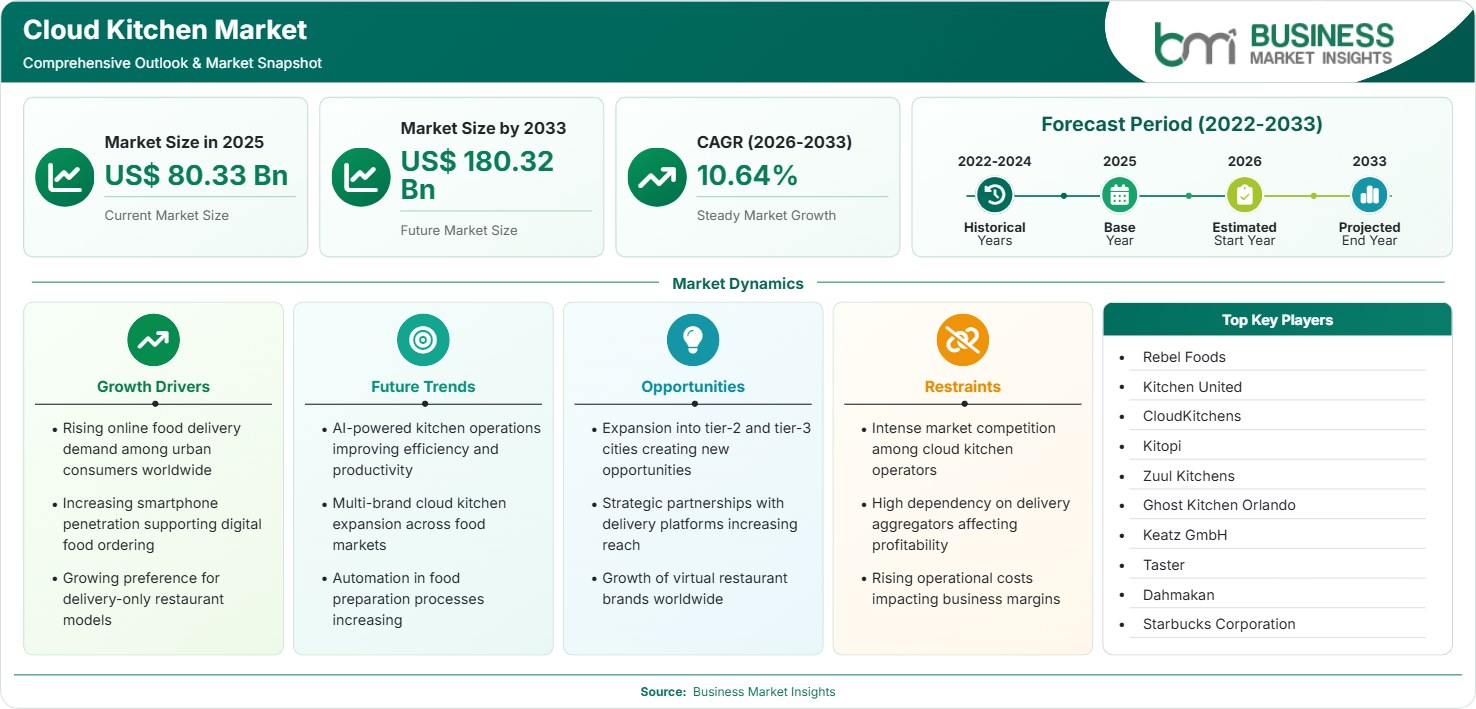
The Cloud Kitchen Market size was valued at US$ 80.33 billion in 2025 and is projected to reach US$ 180.32 billion by 2033, registering a CAGR of 10.64% during 2026–2033. The market is witnessing robust growth driven by rising online food delivery demand among urban consumers worldwide, increasing smartphone penetration supporting digital food ordering, and growing preference for delivery-only restaurant models. Cloud kitchens have emerged as an efficient food service model that enables restaurants and food entrepreneurs to serve customers exclusively through online ordering platforms while minimizing operational costs associated with traditional dine-in establishments.

Report Coverage
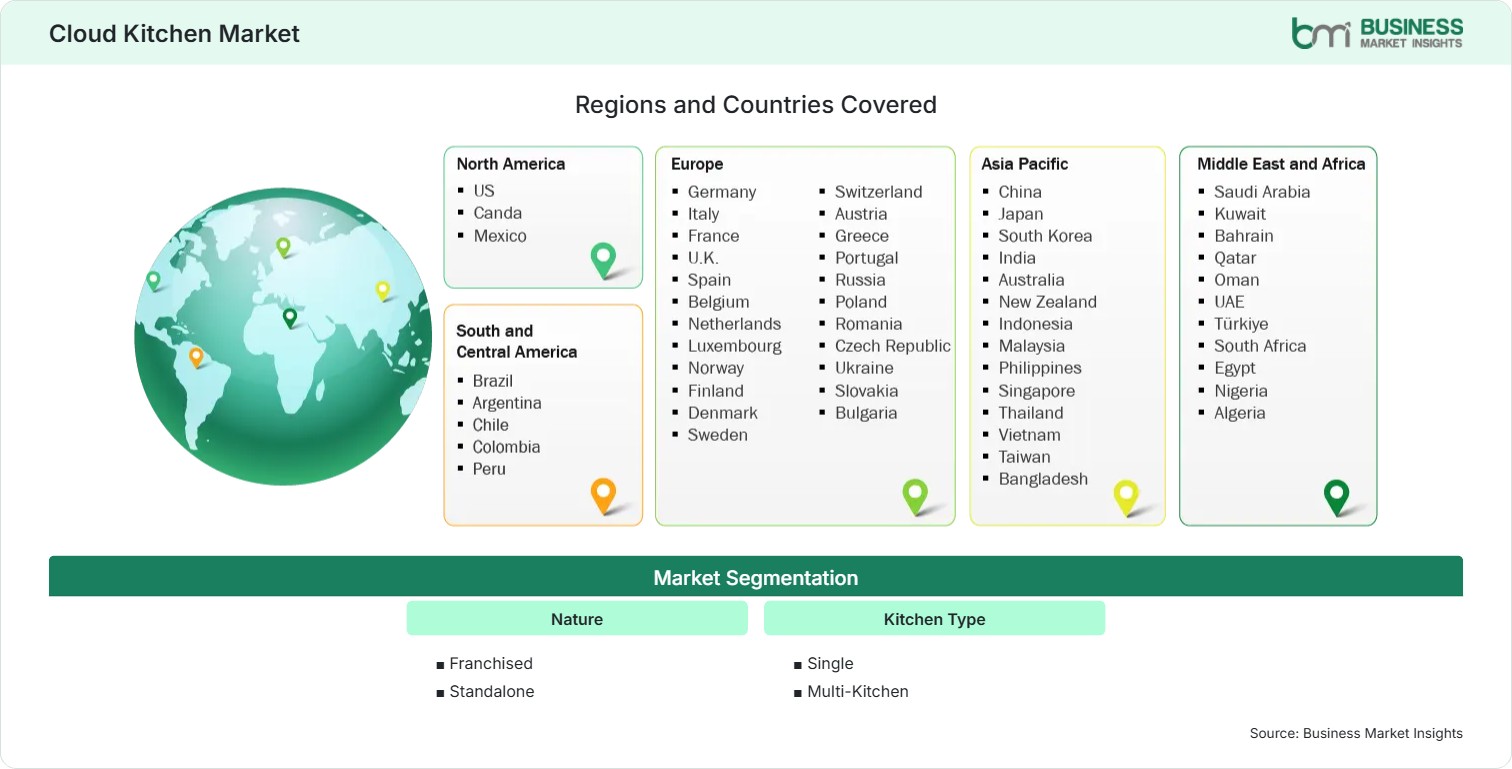
  • Nature: Franchised, Standalone
  • Kitchen Type: Single, Multi-Kitchen
US$ 80.33 Bn Market size in 2025
US$ 180.32 Bn Market Size by 2033
10.64% CAGR, 2026 - 2033
2026-2033 Forecast Period

AI Overview

Cloud Kitchen Market Summary

  • North America Region: North America accounted for 28%–31% of global revenue in 2025 and is projected to register a CAGR of 10.1%–10.7% during 2026–2033. The region maintains a strong market position due to high online food delivery adoption, widespread smartphone usage, advanced digital payment infrastructure, and strong consumer preference for convenience-based dining services. The United States contributes approximately 86%–89% of regional revenue and is expected to register a CAGR of 10.3%–10.9% owing to expanding food delivery platforms, increasing virtual restaurant concepts, and growing investments in cloud kitchen infrastructure.
  • Fastest Growing Region: Asia Pacific represented 39%–42% of global revenue in 2025 and is projected to register the highest CAGR of 11.4%–12.0% during the forecast period. Rapid urbanization, increasing internet penetration, expanding food delivery ecosystems, and rising smartphone adoption continue driving regional market growth.
  • Leading Segment: Standalone accounted for 60%–63% of market revenue in 2025 and is projected to register a CAGR of 10.3%–10.9% during the assessment period owing to lower operational costs, flexible business models, and increasing adoption among independent food entrepreneurs.
  • High Growth Segment: Multi-Kitchen is projected to witness significant growth, expanding at a CAGR of 11.8%–12.4% during 2026–2033 due to increasing operational efficiency, multi-brand management capabilities, and optimized utilization of shared kitchen infrastructure.
  • Key Market Opportunity: Expansion into tier-2 and tier-3 cities creating new opportunities, strategic partnerships with delivery platforms increasing reach, and growth of virtual restaurant brands worldwide continue creating substantial market opportunities.
  • Major Market Players: Rebel Foods, Kitchen United, CloudKitchens, Kitopi, Zuul Kitchens, Ghost Kitchen Orlando, Keatz GmbH, Taster, Dahmakan, Starbucks Corporation.
Strategic Insights

Cloud Kitchen Market: Strategic Insights

Cloud Kitchen Market Strategic Framework
FREE PDF
Request your free sample
Request free sample
Stakeholder View

Key Takeaways

  • The market continues benefiting from rising online food delivery demand among urban consumers worldwide, increasing smartphone penetration supporting digital food ordering, and growing preference for delivery-only restaurant models.
  • The strongest Cloud Kitchen Market Growth opportunities continue emerging from expansion into tier-2 and tier-3 cities creating new opportunities, strategic partnerships with delivery platforms increasing reach, and growth of virtual restaurant brands worldwide.
  • Standalone remains the dominant nature segment owing to lower capital investment requirements, operational flexibility, faster scalability, and increasing adoption among independent restaurant operators.
  • Asia Pacific is projected to witness the fastest growth owing to rapid urbanization, expanding food delivery platforms, increasing smartphone penetration, and rising consumer preference for online food ordering.
  • Cloud kitchen operators are increasingly investing in artificial intelligence, kitchen automation, cloud-based restaurant management platforms, and digital marketing technologies to strengthen market competitiveness.
  • Companies focusing on multi-brand operations, delivery optimization, virtual restaurant concepts, and technology-driven operational efficiency are expected to strengthen their competitive positioning.
Geographic Outlook

Cloud Kitchen Market Regional Highlights

North America Cloud Kitchen Market

North America accounted for 28%–31% of global revenue in 2025 and is projected to register a CAGR of 10.1%–10.7% during 2026–2033. The region continues maintaining a strong market position due to high online food delivery adoption, widespread smartphone usage, advanced digital payment infrastructure, and increasing consumer demand for convenience-based dining services. The Cloud Kitchen Market Share remains significant as restaurants increasingly adopt delivery-only business models to improve operational efficiency while expanding customer reach through digital platforms.

  • The United States remains the largest regional market owing to the strong presence of food delivery aggregators, high consumer spending on online food ordering, and growing adoption of virtual restaurant brands.
  • Canada continues supporting regional growth through increasing smartphone penetration, expanding digital food ordering platforms, and changing consumer dining preferences.
  • Rising investments in cloud-based restaurant technologies continue improving kitchen productivity and delivery efficiency.
  • Increasing demand for quick-service meals and contactless ordering continues strengthening long-term market expansion.

US Cloud Kitchen Market

The United States accounted for approximately 86%–89% of North American revenue in 2025 and is projected to register a CAGR of 10.3%–10.9% during the forecast period. Strong digital infrastructure, expanding online food delivery platforms, increasing urban population, and widespread adoption of delivery-only restaurant models continue driving domestic market growth.

  • Growing popularity of app-based food ordering continues supporting cloud kitchen expansion.
  • Increasing investments in artificial intelligence-driven kitchen management continue improving operational efficiency.
  • Rising consumer demand for diverse cuisines and rapid delivery services continues encouraging virtual restaurant development.
  • Restaurant operators continue expanding multi-brand kitchens to improve asset utilization and profitability.

Europe Cloud Kitchen Market

Europe represented 24%–27% of global revenue in 2025 and is expected to expand at a CAGR of 9.6%–10.2% during 2026–2033. The region continues benefiting from increasing online food delivery adoption, changing consumer lifestyles, expanding digital restaurant ecosystems, and rising demand for convenient meal solutions. The United Kingdom remains the largest regional market, while Germany is projected to register the fastest growth with a CAGR of 10.5%–11.0% owing to increasing online food ordering, expanding delivery infrastructure, and growing investments in cloud kitchen operations.

  • The United Kingdom continues leading regional demand through a mature food delivery ecosystem and high digital ordering adoption.
  • Germany continues witnessing strong growth through expanding urban populations, increasing virtual restaurant concepts, and rising technology investments.
  • France continues supporting market expansion through changing dining habits, increasing food delivery usage, and restaurant digitalization.
  • European operators continue investing in automation technologies and cloud-based restaurant management systems.
  • Growing demand for healthier meal options and customized food offerings continues encouraging virtual brand development.

Asia Pacific Cloud Kitchen Market

Asia Pacific accounted for 39%–42% of global revenue in 2025 and is projected to register the highest CAGR of 11.4%–12.0% during the forecast period. Rapid urbanization, increasing internet penetration, expanding food delivery ecosystems, and rising smartphone adoption continue driving regional market growth. China remains the leading regional market, while India is projected to register the fastest growth with a CAGR of 12.3%–12.9% owing to expanding food delivery platforms, increasing urban consumer spending, and rapid growth of organized cloud kitchen businesses.

  • China continues dominating regional demand through extensive online food delivery networks, digital payment adoption, and high urban population density.
  • India continues witnessing rapid growth due to expanding tier-2 and tier-3 city penetration, increasing smartphone usage, and growing demand for affordable food delivery services.
  • Japan continues supporting premium cloud kitchen concepts through advanced digital infrastructure and consumer preference for convenience.
  • South Korea continues contributing through widespread mobile ordering adoption, technology-driven restaurant operations, and strong delivery culture.
  • Southeast Asian countries continue creating substantial opportunities through increasing internet penetration, rising disposable incomes, and rapid expansion of food delivery platforms.

Rest of World Cloud Kitchen Market

The Rest of World accounted for 6%–9% of global revenue in 2025 and is projected to register a CAGR of 10.0%–10.6% during 2026–2033. Latin America, the Middle East, and Africa continue experiencing increasing demand for cloud kitchen services due to rising urbanization, expanding smartphone penetration, improving digital payment infrastructure, and growing adoption of online food delivery applications.

Increasing investments in food technology, logistics networks, and digital restaurant ecosystems are creating significant opportunities for cloud kitchen operators across emerging economies.

  • Brazil continues supporting regional demand through expanding online food delivery services and increasing urban consumer adoption.
  • Mexico continues strengthening market growth through digital restaurant expansion, smartphone penetration, and changing food consumption habits.
  • Middle Eastern countries continue investing in food delivery platforms, smart city initiatives, and digital hospitality services.
  • South Africa continues contributing through increasing online ordering adoption and expanding food delivery infrastructure.
  • Emerging economies across Latin America, the Middle East, and Africa continue creating long-term opportunities through rising internet accessibility, urban population growth, and increasing consumer preference for convenient food delivery solutions.
Global Market Geography
FREE PDF
Request your free sample
Request free sample
Segment Analysis

Cloud Kitchen Market Segmentation

Nature

The Nature segment accounted for 60%–63% of market revenue in 2025 and is projected to register a CAGR of 10.3%–10.9% during the forecast period. Rising online food delivery demand, increasing digital restaurant adoption, and growing consumer preference for convenient meal ordering continue driving segment growth. The Cloud Kitchen Market Trends indicate increasing investment in technology-enabled kitchen operations, delivery optimization, and virtual restaurant brands that improve operational efficiency and customer reach.

  • Franchised: Franchised cloud kitchens continue witnessing steady growth as established restaurant brands expand their delivery presence through standardized operating models, recognized brand identity, and scalable franchise networks that accelerate market penetration.
  • Standalone: Standalone remains the dominant nature segment owing to lower capital investment requirements, greater operational flexibility, faster decision-making, and increasing adoption among independent food entrepreneurs seeking cost-efficient delivery-only business models.

Kitchen Type

The Kitchen Type segment continues evolving through increasing adoption of shared infrastructure, technology-driven operations, and multi-brand delivery strategies. The Cloud Kitchen Market Scope continues expanding as operators focus on maximizing kitchen utilization while serving multiple customer segments through digital ordering platforms.

  • Single: Single kitchens continue maintaining significant market demand by serving individual restaurant brands with dedicated kitchen infrastructure, consistent food quality, and streamlined operational management.
  • Multi-Kitchen: Multi-Kitchen is projected to witness the fastest growth due to its ability to accommodate multiple restaurant brands within shared kitchen facilities, optimize operational costs, improve space utilization, and increase order fulfillment efficiency. Operators continue leveraging centralized kitchen infrastructure to expand menu offerings while improving profitability and delivery coverage.
Market Forces

Cloud Kitchen Market Dynamics

Key Market Drivers

Rising online food delivery demand among urban consumers worldwide

Rising online food delivery demand among urban consumers worldwide is significantly driving market growth as busy lifestyles, increasing disposable incomes, and changing dining preferences continue encouraging consumers to order meals through digital platforms. Expanding food delivery ecosystems and faster delivery services continue supporting the rapid growth of cloud kitchen operations.

Increasing smartphone penetration supporting digital food ordering

Increasing smartphone penetration supporting digital food ordering is accelerating market expansion by enabling consumers to access food delivery applications, digital payment systems, personalized recommendations, and real-time order tracking. Mobile-first ordering experiences continue improving customer convenience while increasing online food purchasing frequency.

Growing preference for delivery-only restaurant models

Growing preference for delivery-only restaurant models is strengthening market growth as restaurant operators increasingly adopt cloud kitchen concepts to reduce operational expenses associated with dine-in facilities while improving scalability, delivery coverage, and menu flexibility. Delivery-focused business models continue enhancing profitability through optimized kitchen operations and lower infrastructure costs.

Key Market Opportunities

Expansion into tier-2 and tier-3 cities creating new opportunities

Expansion into tier-2 and tier-3 cities creating new opportunities is generating substantial growth potential as increasing urbanization, improving internet connectivity, rising disposable incomes, and expanding food delivery networks continue driving demand beyond major metropolitan areas. Cloud kitchen operators are increasingly targeting underserved markets to broaden their customer base.

Strategic partnerships with delivery platforms increasing reach

Strategic partnerships with delivery platforms increasing reach are creating significant opportunities by enabling cloud kitchen operators to expand market visibility, improve delivery efficiency, access larger customer bases, and optimize logistics through established food delivery ecosystems. Collaborative partnerships continue supporting rapid business scalability.

Growth of virtual restaurant brands worldwide

Growth of virtual restaurant brands worldwide is creating new opportunities as operators increasingly launch delivery-exclusive food brands targeting diverse consumer preferences without investing in additional physical restaurant locations. Data-driven menu optimization, digital marketing, and flexible brand management continue supporting the expansion of virtual dining concepts.

Market Restraints and Challenges

Intense market competition among cloud kitchen operators

Factor: The rapid expansion of cloud kitchen businesses and virtual restaurant brands has significantly increased market competition across major urban centers. New entrants, established restaurant chains, and delivery-focused startups are continuously competing on pricing, menu innovation, delivery speed, promotional campaigns, and customer experience to strengthen their market presence.

Impact: Intense market competition can reduce profit margins, increase customer acquisition costs, and require continuous investments in marketing, technology, and menu development. Cloud kitchen operators continue differentiating themselves through operational efficiency, brand diversification, data-driven decision-making, and superior customer service to maintain long-term competitiveness.

High dependency on delivery aggregators affecting profitability

Factor: Most cloud kitchen operators rely heavily on third-party food delivery aggregators for customer acquisition, order processing, payment management, and last-mile delivery services. Commission fees, changing platform policies, promotional requirements, and limited control over customer relationships can significantly influence business performance.

Impact: High dependency on delivery aggregators can reduce operating margins, limit pricing flexibility, and increase business vulnerability to changes in platform commission structures and algorithms. Operators continue investing in direct ordering channels, loyalty programs, proprietary mobile applications, and diversified delivery partnerships to improve profitability and strengthen customer engagement.

Company Analysis

Competitive Landscape

Competition within the cloud kitchen industry is driven by operational efficiency, digital technology integration, kitchen automation, multi-brand management capabilities, strategic delivery partnerships, and customer experience. The Cloud Kitchen Market Analysis indicates that leading operators are investing in artificial intelligence, cloud-based kitchen management systems, advanced analytics, and virtual restaurant concepts to strengthen their competitive positions.

Company Name

Overview

Products and Services relevant to this market

Rebel Foods

Global cloud kitchen company operating multiple virtual food brands across international markets.

Cloud kitchen operations, virtual restaurant brands, food delivery services, and technology-enabled kitchen management.

Kitchen United

Cloud kitchen platform providing shared commercial kitchen infrastructure for restaurant operators.

Shared kitchen facilities, delivery-focused restaurant infrastructure, operational support, and kitchen management solutions.

CloudKitchens

Technology-driven cloud kitchen company developing delivery-only restaurant infrastructure.

Cloud kitchen facilities, virtual restaurant operations, kitchen leasing, and food delivery infrastructure.

Kitopi

Managed cloud kitchen operator serving restaurant brands through centralized kitchen facilities.

Cloud kitchen management, food preparation services, delivery operations, and technology-enabled restaurant solutions.

Zuul Kitchens

Shared kitchen provider supporting restaurant expansion through delivery-focused facilities.

Commercial kitchen infrastructure, delivery kitchen services, restaurant support, and operational management.

Ghost Kitchen Orlando

Cloud kitchen operator serving delivery-only restaurant concepts.

Shared kitchen facilities, food preparation infrastructure, and delivery-focused restaurant services.

Keatz GmbH

European cloud kitchen company specializing in virtual restaurant operations.

Delivery-only restaurant brands, cloud kitchen operations, digital food services, and kitchen management.

Taster

Virtual restaurant company operating multiple digital food brands.

Virtual restaurant development, cloud kitchen operations, food delivery management, and digital restaurant services.

Dahmakan

Technology-enabled cloud kitchen company providing online food delivery services.

Cloud kitchen operations, food delivery services, virtual restaurant management, and digital ordering platforms.

Starbucks Corporation

Global foodservice company expanding delivery-focused operations through cloud kitchen partnerships in selected markets.

Beverage preparation, food delivery services, cloud kitchen collaborations, and digital ordering solutions.

Trust & Transparency

Research Methodology

The market analysis combines proprietary research with secondary data from government agencies, company disclosures, regulatory filings, industry databases and expert interviews. Market estimates are validated through data triangulation, cross-market benchmarking and analyst review.

View Full Research Methodology

Questions Answered

Frequently Asked Questions

How do market forecasts support strategic planning?

Cloud Kitchen Market Forecasts help restaurant operators, food delivery platforms, investors, hospitality companies, technology providers, and industry stakeholders evaluate future demand, identify emerging opportunities, optimize expansion strategies, and support long-term business planning.

What does the market report include?

The Cloud Kitchen Market Report provides comprehensive insights covering market size, competitive landscape, segmentation analysis, regional outlook, industry trends, investment opportunities, competitive benchmarking, and future growth prospects.

What factors are driving market expansion?

Rising online food delivery demand among urban consumers worldwide, increasing smartphone penetration supporting digital food ordering, growing preference for delivery-only restaurant models, and continuous digital transformation across the foodservice industry continue driving market growth.

Which kitchen type segment is expected to witness significant growth?

Multi-Kitchen is expected to witness the fastest growth due to increasing operational efficiency, shared infrastructure utilization, multi-brand management capabilities, and optimized delivery operations.

Which nature segment dominates market?

Standalone represents the leading nature segment owing to lower capital investment requirements, operational flexibility, faster scalability, and increasing adoption among independent food entrepreneurs.

Access the Full Cloud Kitchen Market Report

Get segment-level forecasts, regional estimates, competitive benchmarking, company profiles and downloadable Excel datasets.

Access the full Cloud Kitchen Market Report
350 pages PDF & Excel | 2026-08-07
Similar Research

Related Market Reports