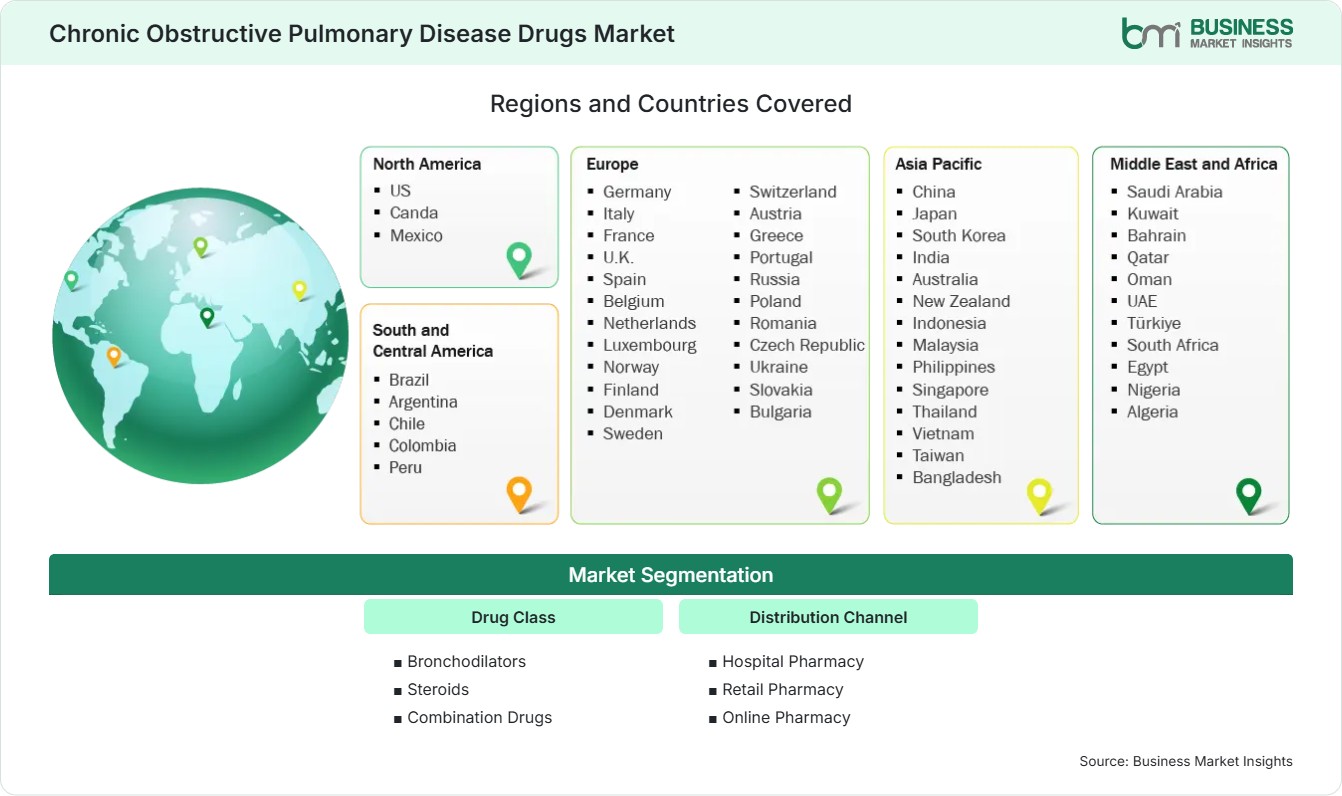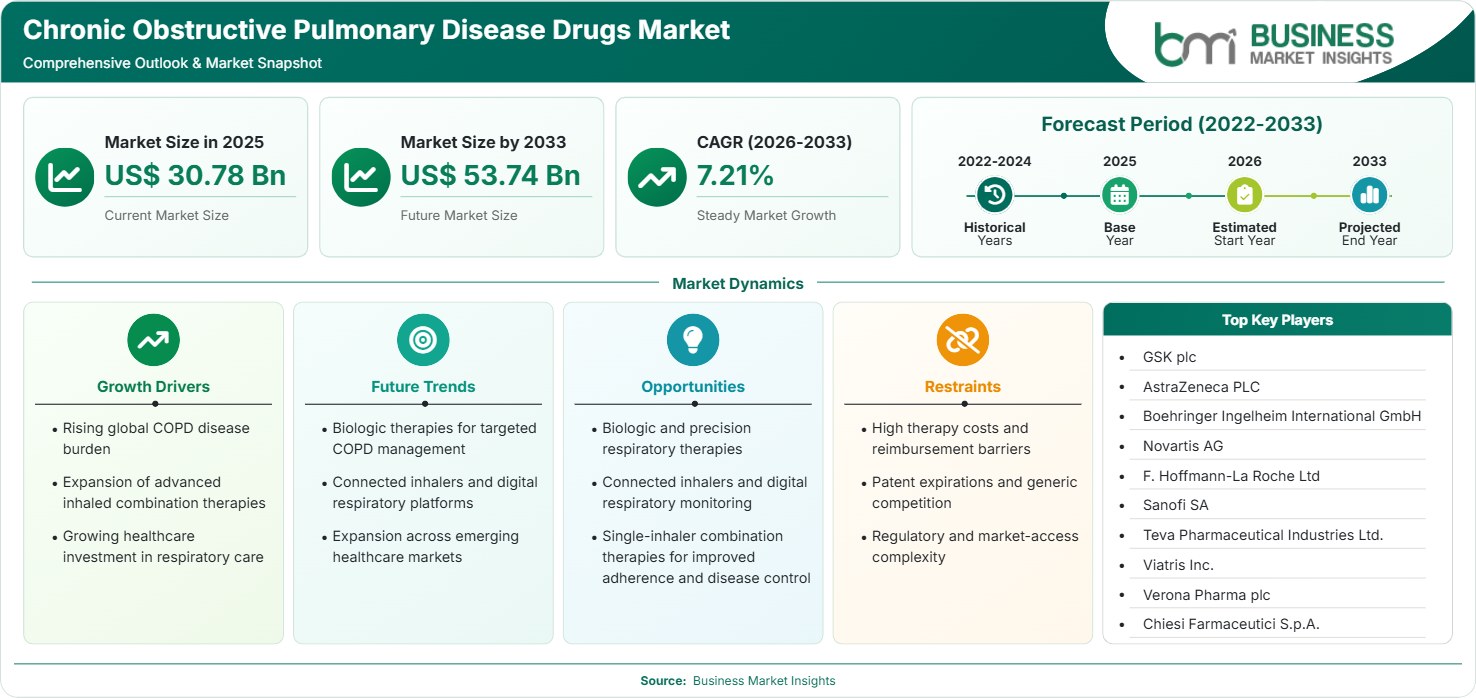
Chronic Obstructive Pulmonary Disease Drugs Market Regional Highlights
North America Chronic Obstructive Pulmonary Disease Drugs Market
North America represents the largest regional contributor, accounting for 38%–41% Chronic Obstructive Pulmonary Disease Drugs Market share in 2025 and advancing at 6.3%–6.8% CAGR through 2033. Strong healthcare expenditure, advanced respiratory diagnostics, broad insurance coverage, and rapid uptake of premium inhalation therapies support regional leadership. Pharmaceutical innovation remains concentrated within the United States and Canada. Growing focus on exacerbation prevention, specialty respiratory care, and biologic development strengthens ongoing market expansion while established treatment guidelines encourage widespread adoption of maintenance therapies across diverse patient populations.
- Triple-combination inhalers continue gaining formulary acceptance, improving disease control and reducing hospitalizations among high-risk patient groups.
- Strong clinical research activity supports novel biologics, precision-medicine approaches, and digital respiratory monitoring technologies.
- Favorable reimbursement environments encourage adoption of premium maintenance therapies and innovative delivery systems.
- Aging populations and persistent smoking-related disease burden sustain long-term patient demand.
- Integrated healthcare networks facilitate earlier diagnosis and comprehensive chronic disease management programs.
US Chronic Obstructive Pulmonary Disease Drugs Market
The United States contributes 78%–82% of the North American Chronic Obstructive Pulmonary Disease Drugs Market revenue and records a projected 6.4%–6.9% CAGR. Strong presence of multinational pharmaceutical companies, advanced respiratory specialists, and extensive insurance-funded treatment pathways support leadership. High rates of COPD diagnosis and patient monitoring accelerate uptake of innovative therapies. Focus on reducing readmissions, improving adherence, and expanding home-based disease management continues driving commercial opportunities. Regulatory support for new respiratory therapeutics further enhances market attractiveness and competitive intensity.
- Large specialty-care infrastructure promotes rapid adoption of newly approved inhaled and biologic therapies.
- Increasing use of connected inhalers improves adherence monitoring and clinical decision-making across chronic respiratory programs.
- Significant clinical trial activity supports continuous product innovation and lifecycle expansion.
- Public and private payers emphasize disease-control outcomes, supporting value-based treatment adoption.
Europe Chronic Obstructive Pulmonary Disease Drugs Market
Europe accounts for 28%–31% Chronic Obstructive Pulmonary Disease Drugs Market share in 2025 and expands at 6.8%–7.4% CAGR. Universal healthcare coverage in major economies supports broad treatment access and long-term patient management. Germany leads regional revenue generation, while Spain demonstrates among the strongest growth profiles with an estimated CAGR above regional averages. Pharmaceutical companies continue investing in low-emission inhaler technologies and advanced respiratory therapies. Strong clinical guideline adherence, growing elderly populations, and increasing environmental-health awareness support sustained demand across European healthcare markets.
- Germany remains the leading revenue contributor through strong respiratory treatment reimbursement and specialist infrastructure.
- Spain shows high-growth potential supported by diagnosis expansion and chronic disease management investments.
- Sustainability initiatives encourage next-generation inhaler development with reduced environmental impact.
- Growing use of combination therapies enhances long-term disease-control outcomes.
- Respiratory screening programs promote earlier intervention and treatment initiation.
Asia Pacific Chronic Obstructive Pulmonary Disease Drugs Market
Asia Pacific holds 24%–27% share in 2025 and records the fastest regional expansion at 8.6%–9.2% CAGR. High smoking prevalence, worsening urban pollution, demographic aging, and healthcare capacity improvements contribute to accelerating demand. China generates the largest regional revenue contribution, while India demonstrates the strongest growth profile. Expansion of respiratory clinics, broader insurance penetration, and domestic pharmaceutical manufacturing capabilities improve availability of maintenance therapies and advanced inhaled treatments across major population centers and secondary healthcare markets.
- China benefits from large patient populations and increasing access to standardized respiratory care.
- India records strong expansion supported by healthcare modernization and improved disease awareness.
- Local pharmaceutical manufacturers enhance affordability and treatment accessibility across emerging economies.
- Urban air-quality challenges continue increasing incidence of chronic respiratory diseases.
- Government healthcare initiatives promote screening, diagnosis, and treatment expansion.
Rest of World Chronic Obstructive Pulmonary Disease Drugs Market
Rest of World represents 9%–12% share in 2025 and grows at 7.2%–7.8% CAGR. South and Central America benefit from expanding public-health programs and broader pharmaceutical distribution networks. Brazil remains the leading regional market while Colombia exhibits comparatively faster growth prospects.
Middle East and Africa demand is supported by healthcare infrastructure investment, specialist capacity expansion, and rising awareness of chronic lung diseases. Saudi Arabia leads revenue generation, while the United Arab Emirates demonstrates notable growth momentum through healthcare modernization initiatives.
- Brazil benefits from expanding respiratory treatment access and improving chronic disease management frameworks.
- Colombia demonstrates solid growth from healthcare investments and diagnostic expansion.
- Saudi Arabia supports adoption through modernization of respiratory specialty services.
- UAE continues attracting healthcare innovation and advanced therapy commercialization initiatives.
- Improved healthcare funding expands access to maintenance respiratory medications.