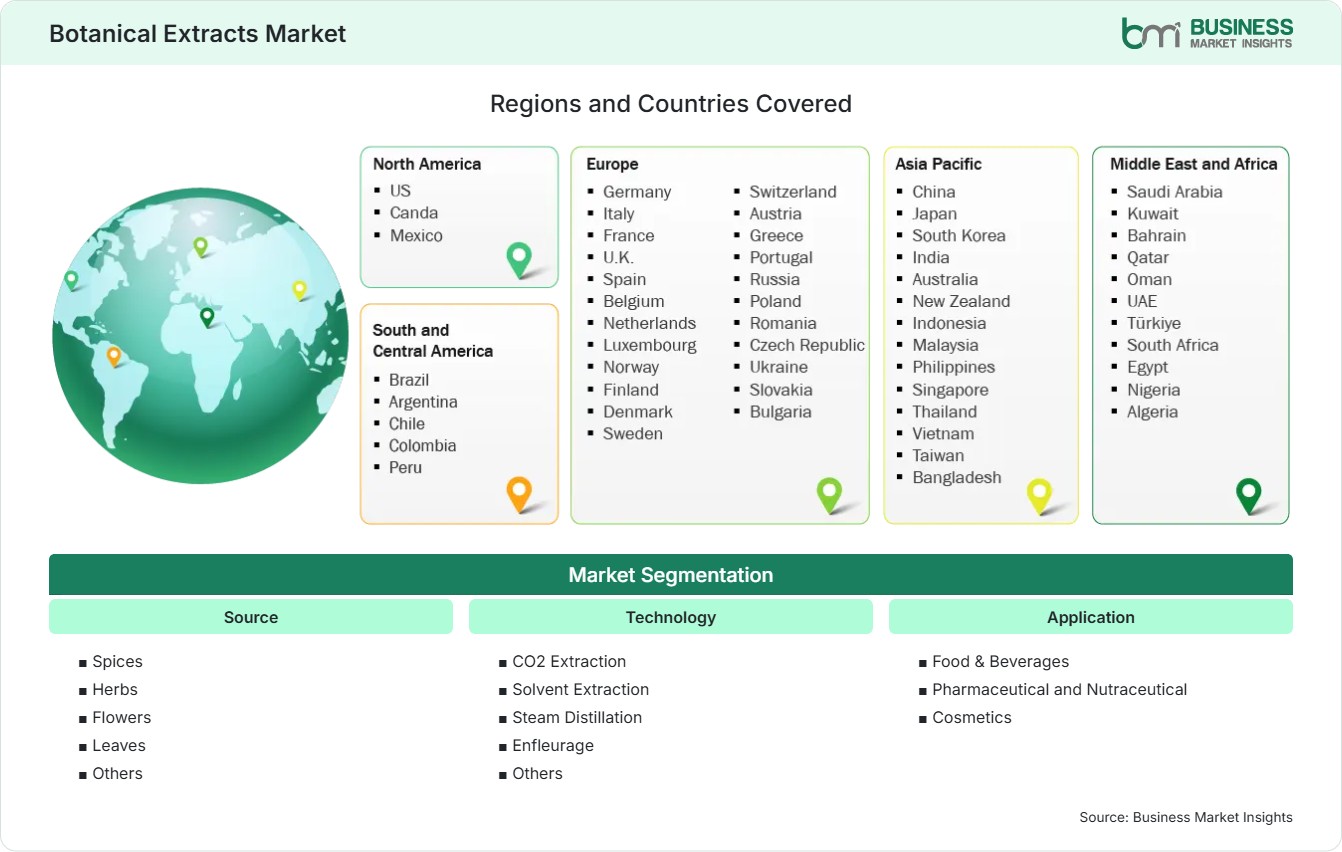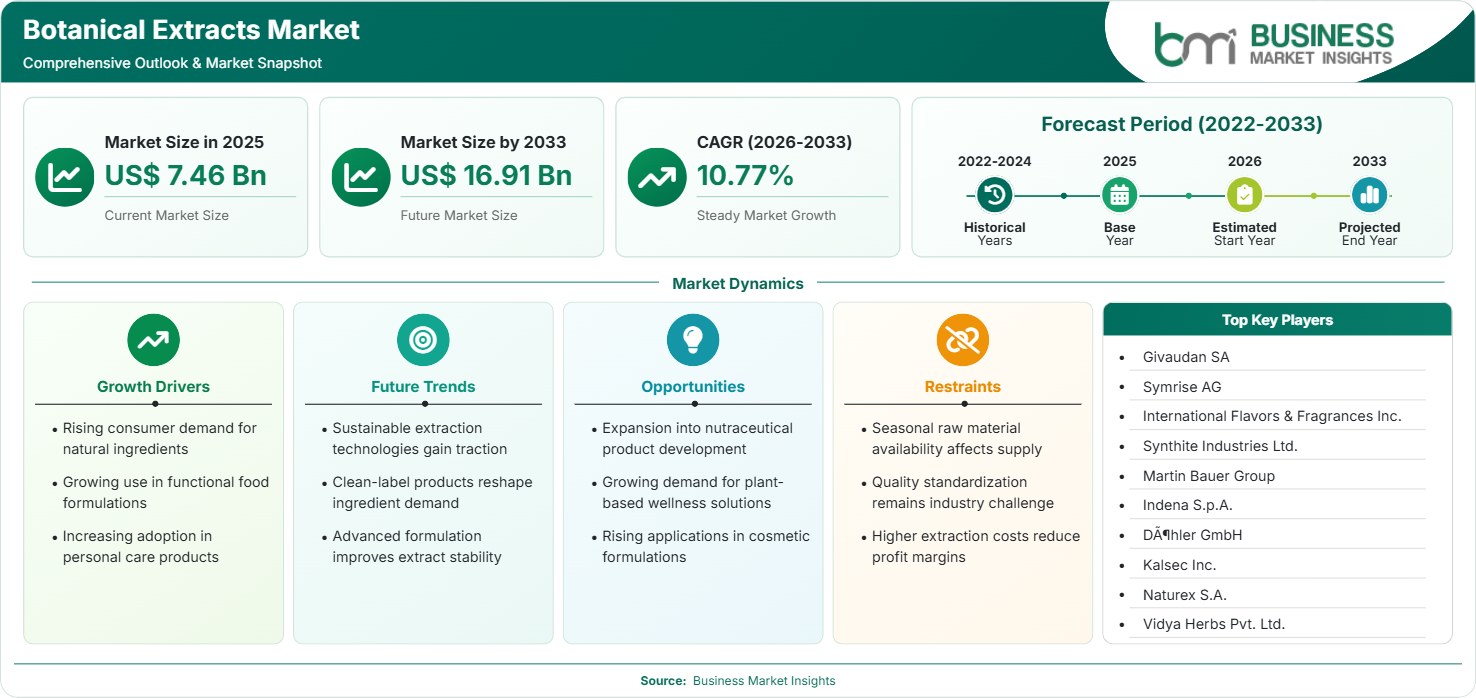
Botanical Extracts Market Regional Highlights
North America Botanical Extracts Market
North America accounts for 31%–34% Botanical Extracts Market share in 2025 and is projected to expand at a CAGR of 10.2%–10.8% during 2026–2033. Rising consumer awareness regarding clean-label products, expanding nutraceutical production, and increasing use of botanical ingredients in cosmetics continue supporting regional demand. Manufacturers are investing in sustainable sourcing, advanced extraction technologies, and product innovation to strengthen competitive positioning.
- Nutraceutical manufacturers continue increasing procurement of standardized botanical ingredients for dietary supplements and wellness formulations.
- Clean-label food production encourages greater adoption of natural flavorings, colors, and plant-derived functional ingredients.
- Cosmetic companies continue replacing synthetic ingredients with botanical extracts to meet evolving consumer preferences.
- Advanced extraction technologies improve ingredient quality, consistency, and production efficiency across commercial manufacturing.
US Botanical Extracts Market
The United States contributes 80%–83% of North American revenue and is expected to register a CAGR of 10.3%–10.9% through 2026–2033. Strong demand for dietary supplements, premium personal care products, and natural food ingredients continues supporting sustained industry expansion.
- Functional food manufacturers increasingly incorporate botanical ingredients into health-focused product formulations.
- Rising investments in herbal research strengthen commercial product innovation across multiple industries.
- Consumer demand for organic and plant-based ingredients supports premium product development.
- Ingredient manufacturers continue expanding domestic production capabilities to improve supply reliability.
Europe Botanical Extracts Market
Europe represents 27%–30% market share in 2025 and is projected to grow at a CAGR of 10.0%–10.6% during the forecast period. Demand is supported by strict quality standards, expanding herbal medicine applications, and growing adoption of sustainable cosmetic ingredients. Germany remains the largest regional market, while Italy records the fastest growth through expanding botanical processing and nutraceutical manufacturing.
- Regulatory emphasis on ingredient quality encourages standardized botanical extract production.
- Pharmaceutical companies increasingly incorporate plant-derived ingredients into therapeutic formulations.
- Organic cosmetic product demand supports investment in sustainable botanical sourcing.
- Food manufacturers continue expanding clean-label product portfolios using natural botanical ingredients.
Asia Pacific Botanical Extracts Market
Asia Pacific holds 35%–38% market share in 2025 and is projected to record the fastest 11.4%–12.0% CAGR during 2026–2033. Extensive cultivation of medicinal plants, expanding herbal healthcare industries, and increasing exports of botanical ingredients continue supporting regional leadership. China dominates production, while India records the fastest growth through expanding herbal ingredient manufacturing and nutraceutical investments.
- Large-scale cultivation of medicinal herbs ensures reliable raw material availability.
- Rising exports strengthen regional competitiveness across global botanical ingredient markets.
- Increasing investments in herbal processing improve extraction efficiency and product quality.
- Functional food manufacturers continue expanding botanical ingredient applications throughout the region.
Rest of World Botanical Extracts Market
The Rest of World region accounts for 6%–8% market share in 2025 and is projected to expand at a CAGR of 10.1%–10.7% during 2026–2033. Growing agricultural production, increasing herbal ingredient exports, and expanding food processing industries continue supporting market development across Latin America, the Middle East, and Africa.
- Brazil remains the leading regional producer due to abundant botanical biodiversity and expanding ingredient exports.
- South Africa continues strengthening botanical cultivation for pharmaceutical and cosmetic applications.
- Regional food manufacturers increasingly adopt natural botanical ingredients for clean-label product development.
- Government initiatives supporting sustainable agriculture encourage long-term expansion of botanical raw material production.