
Bone Cancer Treatment Market Outlook: Size, Share, Trends, Growth Analysis, Competitive Landscape & Forecast, 2026-2033

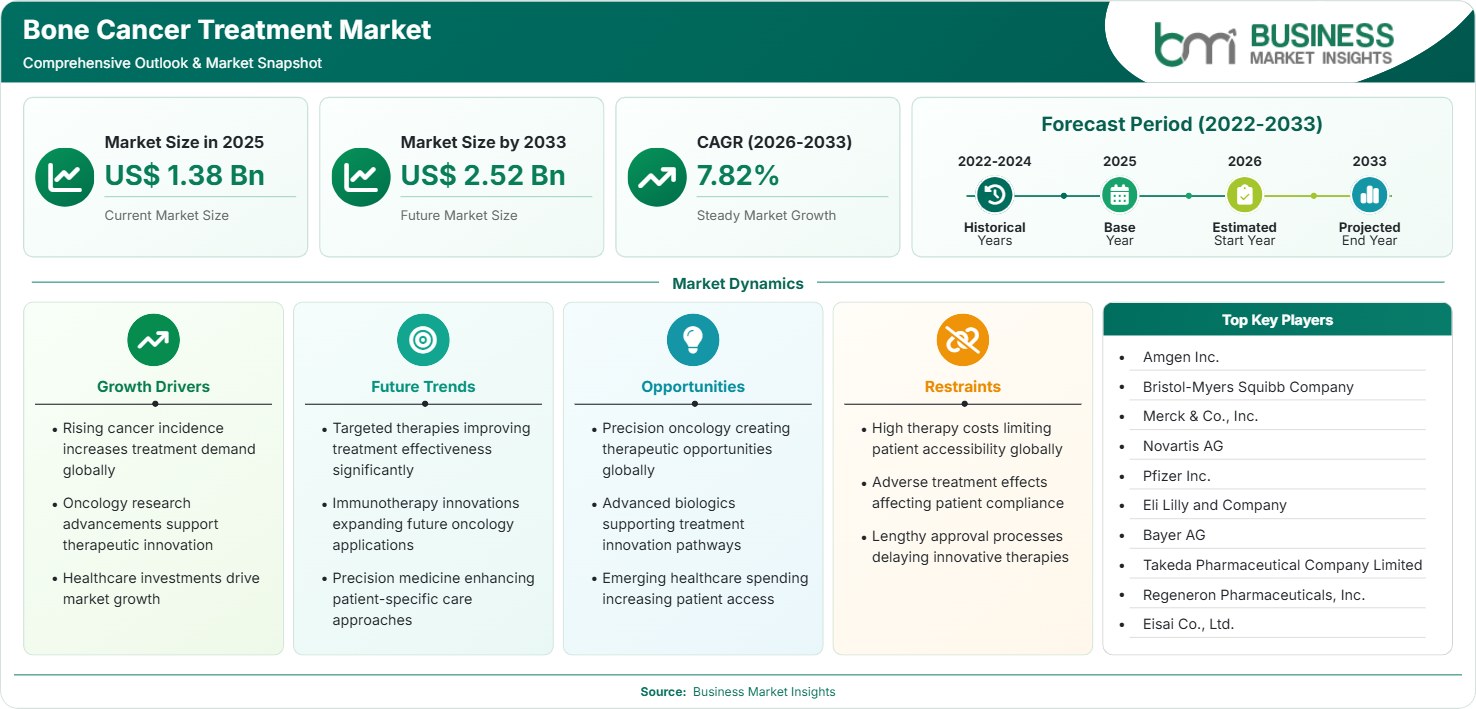
The Bone Cancer Treatment Market size was valued at US$ 1.38 Billion in 2025 and is projected to reach US$ 2.52 Billion by 2033, growing at a CAGR of 7.82% during 2026–2033. Rising incidence of rare bone malignancies, expanding precision oncology adoption, growing immunotherapy utilization, increasing orphan-drug investments, and broader access to specialized cancer centers are creating significant growth opportunities.

Report Coverage
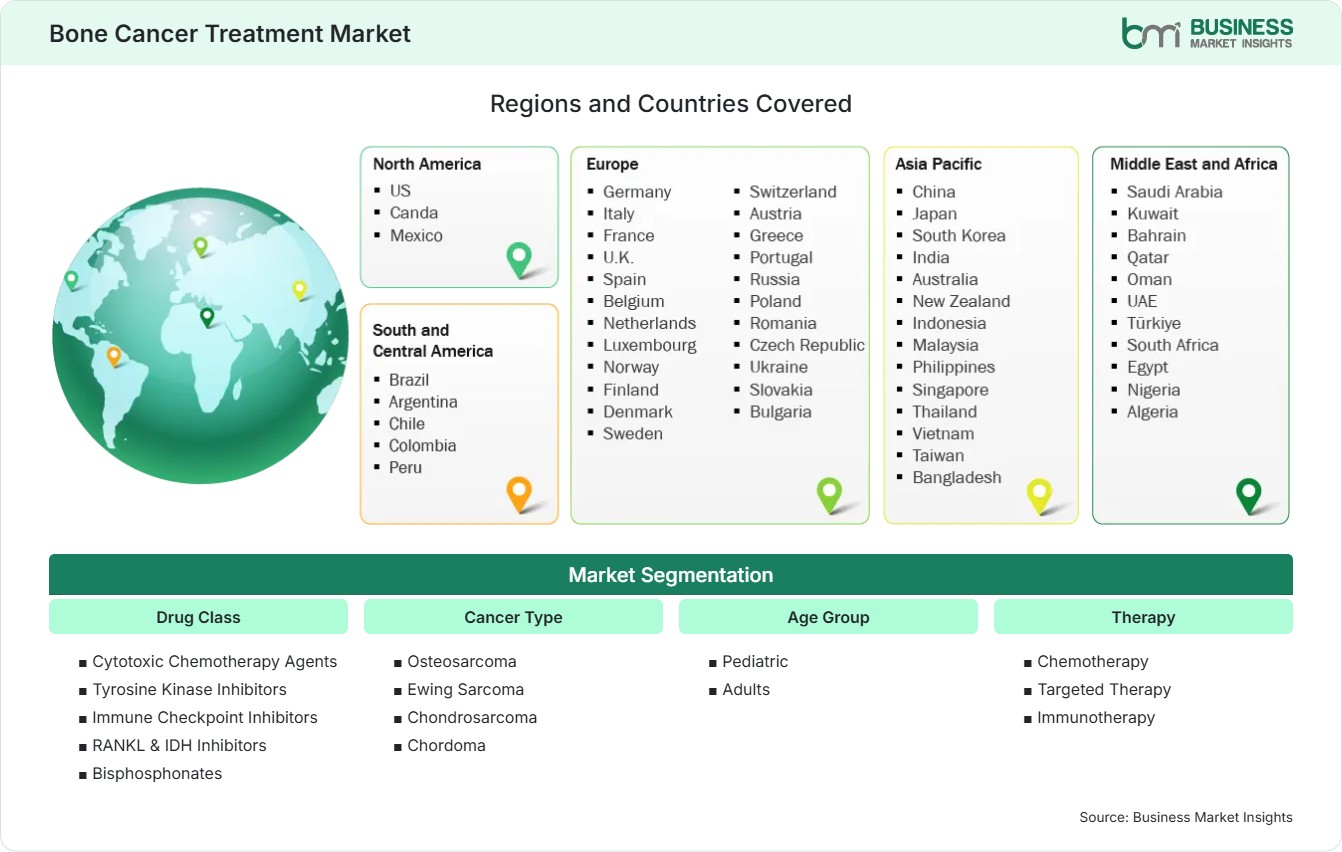
  • Drug Class: Cytotoxic Chemotherapy Agents, Tyrosine Kinase Inhibitors, Immune Checkpoint Inhibitors, RANKL & IDH Inhibitors, Bisphosphonates
  • Cancer Type: Osteosarcoma, Ewing Sarcoma, Chondrosarcoma, Chordoma
  • Age Group: Pediatric, Adults
  • Therapy: Chemotherapy, Targeted Therapy, Immunotherapy
  • Route of Administration: Oral, Parenteral
US$ 1.38 Bn Market size in 2025
US$ 2.52 Bn Market Size by 2033
7.82% CAGR, 2026 - 2033
2026-2033 Forecast Period

AI Overview

Bone Cancer Treatment Market Summary

  • North America Region: North America holds a market share of 38%–42% in 2025, growing with a CAGR of 7.1%–7.6% during 2026–2033. Growth is supported by advanced oncology infrastructure, extensive clinical trial activity, favorable reimbursement, increasing precision medicine adoption, growing survivorship programs, and strong regulatory support for rare cancer therapies. The U.S. market benefits from leading sarcoma treatment centers and innovative oncology pipelines, expanding at approximately 7.2%–7.7% CAGR through 2033.
  • Fastest Growing Region: Asia Pacific accounts for 24%–28% share in 2025 and is expected to advance at 8.8%–9.5% CAGR during 2026–2033. Expanding healthcare expenditure, greater oncology screening access, strengthening specialty hospitals, rising awareness of rare cancers, and increasing biopharmaceutical investments continue supporting regional expansion.
  • Leading Segment: Chemotherapy holds approximately 42%–46% share in 2025 and is projected to grow at 6.8%–7.3% CAGR through 2033. Established treatment protocols, broad clinical acceptance, combination therapy utilization, perioperative applications, extensive physician familiarity, and inclusion within standard care pathways sustain segment leadership globally.
  • High Growth Segment: Immunotherapy represents 14%–18% Bone Cancer Treatment Market share in 2025 and is anticipated to expand at 9.8%–10.6% CAGR during 2026–2033. Advancements in checkpoint inhibitors, biomarker-driven treatment selection, ongoing clinical research, orphan oncology investments, emerging combination regimens, and improving patient outcomes accelerate adoption.
  • Key Market Opportunity: Development of targeted therapies and biomarker-guided treatment platforms offers significant opportunities by improving efficacy, reducing toxicity, supporting personalized care models, expanding eligible patient populations, and increasing treatment accessibility worldwide.
  • Major Market Players: Amgen Inc., Bristol-Myers Squibb Company, Merck & Co., Inc., Novartis AG, Pfizer Inc., Eli Lilly and Company, Bayer AG, Takeda Pharmaceutical Company Limited, Regeneron Pharmaceuticals, Inc., Eisai Co., Ltd.
Strategic Insights

Bone Cancer Treatment Market: Strategic Insights

Bone Cancer Treatment Market Strategic Framework
FREE PDF
Request your free sample
Request free sample
Stakeholder View

Key Takeaways

  • The value chain increasingly revolves around specialized oncology centers, molecular diagnostics providers, academic research institutions, contract research organizations, and pharmaceutical innovators focused on rare cancer therapies.
  • Targeted therapies and immunotherapies offer the highest long-term commercial upside due to increasing biomarker utilization, expanding clinical evidence, and growing demand for precision treatment approaches.
  • Innovation is shifting toward combination regimens integrating checkpoint inhibitors, kinase inhibitors, genomic profiling platforms, and advanced companion diagnostics to improve efficacy and treatment personalization.
  • Asia-Pacific presents one of the strongest investment cases due to accelerating healthcare modernization, expanding oncology infrastructure, increasing clinical trial participation, and supportive government healthcare initiatives.
  • Strategic partnerships, licensing agreements, and acquisitions targeting oncology pipelines continue reshaping competition as companies seek differentiated therapies addressing unmet clinical needs in sarcoma treatment.
  • Growing adoption of real-world evidence and patient registries is improving treatment optimization, facilitating regulatory submissions, and supporting outcomes-based healthcare decision-making.
Geographic Outlook

Bone Cancer Treatment Market Regional Highlights

North America Bone Cancer Treatment Market

North America accounted for approximately 38%–42% of global revenue in 2025 and is expected to expand at a CAGR of 7.1%–7.6% through 2033. Strong healthcare spending, extensive oncology research infrastructure, and broad access to advanced treatment modalities support regional leadership. Academic institutions collaborate closely with pharmaceutical companies to accelerate rare cancer research. The region maintains robust reimbursement systems and access to innovative therapies, supporting continued adoption across specialist cancer care networks. The Bone Cancer Treatment Market share remains highest within this regional cluster.

  • Strong concentration of comprehensive cancer centers supports multidisciplinary treatment pathways, advanced diagnostics utilization, and broader access to clinical trials evaluating emerging therapies for complex skeletal malignancies.
  • The United States drives regional demand through significant oncology expenditure, strong orphan-drug development activity, and continuous investments in precision medicine programs.
  • Canada benefits from expanding access to specialty oncology services and increasing participation in international clinical studies targeting rare cancers.
  • Growing incorporation of AI-supported imaging and molecular diagnostics improves treatment planning and patient stratification across leading healthcare institutions.
  • Pharmaceutical partnerships with academic centers continue strengthening translational research focused on novel therapeutic approaches.

US Bone Cancer Treatment Market

The United States Bone Cancer Treatment Market represents approximately 78%–82% of North American revenue in 2025 and is projected to grow at 7.2%–7.7% CAGR through 2033. Advanced clinical infrastructure, strong reimbursement coverage, and a high concentration of sarcoma treatment centers support market expansion. Continuous innovation in immunotherapies and targeted therapies contributes to favorable adoption patterns. Strong regulatory support for orphan conditions further strengthens therapeutic development and commercialization opportunities across specialized oncology settings.

  • National Cancer Institute-supported research programs continue accelerating therapeutic innovation and expanding evidence generation for rare bone cancers.
  • Precision oncology initiatives increasingly integrate genomic diagnostics into treatment workflows, enhancing patient matching for targeted interventions.
  • Major pharmaceutical companies maintain extensive clinical trial networks evaluating next-generation therapies and combination approaches.
  • Academic medical centers remain critical hubs for advanced treatment delivery and translayer research collaborations.

Europe Bone Cancer Treatment Market

Europe accounted for approximately 27%–31% of global revenue in 2025 and is projected to grow at a CAGR of 7.4%–8.0% through 2033. Strengths of the region include well-established cancer therapy infrastructure, growing use of precision medicine, and the presence of orphan drug programs. Collaborative research projects across borders will further increase the availability of novel treatments. Germany remains the dominant market, while Spain shows one of the highest growth rates, driven by investments in specialty oncology and clinical trials for rare cancers.

  • Germany maintains regional leadership through robust pharmaceutical research activity, extensive oncology infrastructure, favorable reimbursement systems, and increasing adoption of precision diagnostics supporting advanced treatment selection pathways.
  • France benefits from strong academic research networks and government-backed rare disease programs that facilitate earlier diagnosis and improved access to evolving therapeutic options.
  • Spain is emerging as a high-growth market with estimated expansion exceeding regional averages due to oncology modernization initiatives and expanding participation in international clinical studies.
  • Growing European Medicines Agency support for orphan oncology products encourages innovation, accelerates development pathways, and stimulates investment into specialized therapeutic areas.
  • Rising collaboration between biotechnology companies and academic institutions continues improving translational research capabilities focused on sarcomas and other rare skeletal malignancies.

Asia Pacific Bone Cancer Treatment Market

Asia Pacific accounted for approximately 24%–28% of global revenue in 2025 and is forecast to grow at 8.8%–9.5% CAGR through 2033, making it the fastest-growing regional Bone Cancer Treatment Market. The development of healthcare infrastructure, enhanced cancer awareness, and increased accessibility of advanced treatments contribute to growth momentum. Significant investments are being made in oncology by the governments of all major countries. China leads the region in revenue, while India shows high growth potential due to healthcare expansion and improved treatment accessibility.

  • China remains the dominant regional contributor through large patient volumes, expanding biopharmaceutical investment, and continued healthcare modernization initiatives supporting oncology treatment accessibility.
  • India records significant momentum through increasing specialty hospital capacity, broader insurance penetration, and rising availability of advanced cancer therapies in metropolitan markets.
  • Japan continues demonstrating strong innovation adoption supported by sophisticated healthcare systems, active research programs, and favorable treatment reimbursement frameworks.
  • Regional pharmaceutical companies increasingly participate in oncology research collaborations, accelerating access to targeted therapies and immunotherapeutic solutions.
  • Government programs aimed at strengthening cancer care infrastructure continue fostering demand across emerging and developed Asia-Pacific healthcare systems.

Rest of World Bone Cancer Treatment Market

The Rest of World region accounts for approximately 7%–11% of global Bone Cancer Treatment Market revenue in 2025 and is anticipated to expand at 7.7%–8.4% CAGR through 2033. South and Central America benefit from improving oncology care infrastructure, increasing healthcare expenditure, and growing access to specialty medicines. Brazil remains the largest regional market, supported by expanding cancer treatment capabilities.

Middle East and Africa markets are gradually strengthening through healthcare modernization programs, rising oncology awareness campaigns, and strategic investments in specialized treatment facilities. Saudi Arabia demonstrates notable growth potential due to ongoing healthcare transformation initiatives.

  • Brazil leads regional demand through expanding oncology networks, increasing biologic medicine adoption, and strengthening partnerships between healthcare providers and pharmaceutical organizations.
  • Mexico benefits from improving healthcare access and increasing investments in specialized cancer treatment services across major urban centers.
  • Saudi Arabia continues investing in advanced healthcare infrastructure, strengthening rare disease treatment capabilities and facilitating access to innovative oncology medicines.
  • United Arab Emirates healthcare institutions increasingly adopt precision medicine and genomic testing programs to enhance treatment decisions.
  • International partnerships and healthcare modernization efforts continue improving diagnosis rates and treatment accessibility throughout developing markets.
Global Market Geography
FREE PDF
Request your free sample
Request free sample
Segment Analysis

Bone Cancer Treatment Market Segmentation

Drug Class

The Drug Class component generated the highest revenue share among treatments, with cytotoxic drugs and biological treatments showing the highest adoption. The Drug Class component captured a market share of about 30%-34% in 2025 and is forecast to register a CAGR of 7.9%-8.5% by 2033. Increasing focus on the development of targeted cancer medicines, advanced diagnostic methods, and changing treatment practices is expected to influence Bone Cancer Treatment Market trends.

  • Cytotoxic Chemotherapy Agents: Continue serving as foundational therapies for osteosarcoma and Ewing sarcoma management due to established clinical evidence, extensive physician familiarity, and integration into multidisciplinary treatment regimens.
  • Tyrosine Kinase Inhibitors: Adoption increases through targeted intervention strategies, improving disease control capabilities and supporting personalized treatment approaches within selected patient populations.
  • Immune Checkpoint Inhibitors: Clinical research expansion and encouraging response outcomes support growing utilization across advanced disease settings and combination treatment protocols.
  • RANKL & IDH Inhibitors: Emerging targeted options address specific molecular pathways associated with skeletal tumors, enhancing precision medicine opportunities and therapeutic differentiation.
  • Bisphosphonates: Frequently utilized to manage skeletal complications, reduce bone-related events, and support symptom control among patients receiving comprehensive cancer care.

Cancer Type

Cancer Type Segmentation results from differences in disease prevalence, treatment requirements, and treatment difficulty. This segment accounted for approximately 26% - 30% of the market in 2025 and is projected to grow at a CAGR of 7.4% - 8.1% over the forecast period. Increasing diagnostic sophistication and specialized treatment pathways are improving outcomes while broadening the Bone Cancer Treatment Market scope across distinct tumor categories.

  • Osteosarcoma: Represents the most common primary malignant bone cancer, driving substantial treatment demand through multimodal therapeutic approaches involving surgery and systemic therapies.
  • Ewing Sarcoma: Strong clinical trial activity and evolving treatment combinations continue enhancing management strategies for this aggressive cancer subtype.
  • Chondrosarcoma: Increasing focus on molecular characterization supports development of targeted approaches addressing therapeutic limitations in conventional treatment pathways.
  • Chordoma: Rare disease status promotes orphan-drug research initiatives and specialist treatment programs focused on improving long-term patient outcomes.

Age Group

The Age Group Segmentation has been found to have significant variations in diagnosis rates, treatment procedures, and the need for supporting treatments. The age group segment is estimated to account for 17%-21% of market share in 2025 and is expected to grow at a CAGR of 7.5%-8.2% through 2033. Improved survival rates and specialized treatment programs continue supporting demand across pediatric and adult populations.

  • Pediatric: High treatment intensity and multidisciplinary management approaches characterize this segment, particularly across osteosarcoma and Ewing sarcoma patient groups.
  • Adults: Growing diagnosis rates, expanded therapeutic options, and broader access to precision oncology services support continued segment expansion.

Therapy

Therapy-based segmentation continues to play an integral role in clinical decision-making and income generation. This segment accounted for around 42%–46% of the Bone Cancer Treatment Market share in 2025 and is expected to grow at a 6.8%–7.3% CAGR by 2033. Treatment customization is becoming increasingly important in deciding on treatments.

  • Chemotherapy: Continues dominating treatment protocols due to established efficacy across major indications and widespread incorporation into standard clinical pathways.
  • Targeted Therapy: Strong pipeline development and biomarker-based treatment strategies continue driving utilization among eligible patient populations.
  • Immunotherapy: Expanding evidence generation, checkpoint inhibitor adoption, and combination therapy development support rapid uptake across selected disease settings.

Route of Administration

Route of Administration Segmentation considers trends in ease of administration, patient compliance, and resource allocation in the healthcare industry. It held around 11% - 15% market share in 2025 and is expected to grow at 7.8% - 8.4% by 2033.

  • Oral: Increasing preference for convenient administration and outpatient treatment models supports expanding utilization across targeted therapy categories.
  • Parenteral: Remains essential for chemotherapy delivery, biologic administration, and advanced treatment regimens requiring controlled clinical supervision.

Distribution Channel

The Distribution Channels performance is affected by the complexity of treatment, reimbursement modalities, and patients' accessibility requirements. The segment's market share was estimated at 12%-16% in 2025 and is forecast to grow at a CAGR of 7.6%-8.3% through 2033. The share of the Bone Cancer Treatment Market in specialty distribution channels continues to grow as advanced therapies require specialist handling and monitoring.

  • Hospital Pharmacies: Remain the primary distribution pathway due to integration with oncology treatment centers and complex therapy administration requirements.
  • Specialty Pharmacies: Increasingly important for managing high-value oncology medicines, patient support programs, and adherence services.
  • Drug Stores: Provide selected supportive medications and approved oncology products through established pharmaceutical retail channels.
  • Retail & Online Pharmacies: Expanding digital healthcare adoption and prescription fulfillment capabilities support gradual segment development.
Market Forces

Bone Cancer Treatment Market Dynamics

Key Market Drivers

Increasing Incidence of Primary Bone Malignancies

Increases in the number of diagnoses of osteosarcoma, Ewing sarcoma, chordoma, and chondrosarcoma keep justifying the need for their treatments in health care systems around the world. Based on results from studies using cancer registries and rare disease surveillance systems, advances in the diagnostic process have been associated with an increase in undiagnosed cases. Early diagnosis will lead to earlier treatment, thereby increasing the use of systemic therapies. Osteosarcomas and Ewing sarcomas mostly affect young people, making the need for chemotherapy, surgery, and even new forms of treatment continuous. Health care practitioners and patients are making it easier for more people to be referred to cancer hospitals. These epidemiological factors continue to serve as a fundamental catalyst for long-term therapeutic adoption and revenue expansion.

Advancements in Precision Oncology and Targeted Treatment

The use of molecular diagnostics by oncologists in treating rare cancers is changing how treatment decisions are made. Genomic profiling makes it easier for physicians to identify actionable mutations. Drug makers are developing new drugs, including kinase inhibitors, RANKL inhibitors, and other agents that can target specific disease pathways. Increased biomarker testing programs will improve patient stratification and lead to better patient outcomes. The innovations are helping advance Bone Cancer Treatment Market trends toward personalized treatment. Medical facilities are still investing in genomics, and through research collaborations, more innovations are being achieved.

Expanding Clinical Research and Orphan Drug Incentives

Government agencies across major healthcare economies continue supporting rare cancer research through orphan-drug programs, grants, regulatory incentives, and accelerated review mechanisms. Both pharmaceutical and biotech companies are leveraging these opportunities to develop new pipelines focused on sarcomas and to identify new therapeutic targets. The increased number of trials gives patients access to experimental treatments and helps generate data on their efficacy and safety. Universities and cancer institutes play an increasingly important role in conducting multicenter trials, which will help treat difficult cancers. Research and development continue to provide diversity of therapies, more choices for physicians, and substantial contributions to commercial growth worldwide.

Key Market Opportunities

Expansion of Immunotherapy-Based Treatment Strategies

Immunotherapy continues to be one of the most exciting fields for future developments. Different approaches to immune checkpoint inhibitors and their combinations with other treatments in immuno-oncology are currently being explored across various sarcoma subgroups, and the results could lead to improved survival and disease control. Development of predictive markers could broaden patient inclusion criteria and improve success rates. The search for alternative ways of treatment apart from chemotherapy becomes more urgent due to concerns about side effects. It all stimulates research into developing a new generation of immunotherapy drugs. The adoption possibilities are likely to grow significantly as the evidence accumulates.

Emerging Markets Creating Untapped Revenue Potential

Healthcare modernization in Asia-Pacific, Latin America, and some Middle Eastern nations is rapidly expanding access to sophisticated oncological services. Most healthcare systems have been making increased investments in diagnostics, specialist care centers, and reimbursement mechanisms that promote the use of new medicines. Growing recognition of rare cancers is leading to earlier detection and treatment. Pharmaceutical companies are expanding their businesses by forming alliances, entering into distribution agreements, and investing in neglected patient segments. The Bone Cancer Treatment Market Forecasts are bright, driven by increasing healthcare budgets, oncology infrastructure development, expansion of physician-specialist networks, and the availability of valuable medicines.

Development of Biomarker-Guided Therapeutic Platforms

The growing availability of molecular diagnostics creates opportunities for biomarker-guided treatment pathways capable of improving efficacy and reducing unnecessary therapy exposure. Precision medicine platforms enable the identification of patient segments who could benefit more from targeted treatments. Companies working in biotechnology are now researching novel biomarkers for skeletal tumors and their responses to treatment. Companion diagnostics are being developed in parallel with treatment innovations. With the shift in the healthcare system towards value-based care, biomarker-based treatment methods would be more widely accepted by healthcare professionals, payers, regulators, and pharmaceutical manufacturers operating across oncology markets.

Market Restraints and Challenges

High Treatment Costs and Reimbursement Limitations

Factor: Advanced treatments, biological agents, immunotherapy, genomics, and other oncology-specific treatments usually entail high treatment costs. Impact: Higher costs may limit access, especially in poor areas and healthcare systems with less comprehensive reimbursement policies. Patients often need long-term treatment, a multidisciplinary approach, and continuous monitoring; hence, higher costs. There are also financial constraints on the part of healthcare providers that prevent them from including advanced treatments in the regimen. Even though the reimbursement policy is improving, the gap between developed countries and emerging countries still exists. Such factors may hinder the adoption of new treatment modalities and limit market access.

Limited Patient Population and Clinical Trial Complexity

Factor: Primary bone cancers are uncommon cancers, thus creating a small pool of potential subjects for studies and business purposes. Impact: Difficulty recruiting subjects will delay clinical trials and drug development by pharmaceutical firms. It will be difficult to collect statistically valid data on various types of diseases due to limited patient availability. Patients being scattered geographically makes the trial even harder. Regulations remain stringent despite incentives to develop drugs for orphan diseases. These challenges may slow therapeutic innovation, delay market entry for promising candidates, and constrain revenue generation opportunities compared with more prevalent oncology indications.

Company Analysis

Competitive Landscape

The competitive environment is characterized by innovation-driven pharmaceutical companies investing heavily in rare oncology indications, targeted therapies, immunotherapies, and supportive care solutions. Current Bone Cancer Treatment Market analysis highlights growing emphasis on precision medicine, orphan-drug development, strategic collaborations, and expanded clinical research activities.

Company Name

Overview

Products and Services Relevant to This Market

Amgen Inc.

Global biotechnology leader with strong oncology presence and extensive experience in supportive cancer care treatments.

Denosumab-based therapies, oncology biologics, research programs, and skeletal complication management solutions.

Bristol-Myers Squibb Company

Major oncology innovator focused on immunotherapy development and advanced cancer treatment research.

Immune checkpoint inhibitors, combination immunotherapy platforms, and oncology clinical development programs.

Merck & Co., Inc.

Global pharmaceutical company recognized for oncology innovation and precision medicine initiatives.

Checkpoint inhibitors, oncology research platforms, biomarker-driven treatment development, and cancer therapies.

Novartis AG

Diversified pharmaceutical company with extensive oncology portfolio and targeted medicine expertise.

Targeted therapies, precision oncology programs, innovative cancer treatments, and clinical research initiatives.

Pfizer Inc.

Leading healthcare company investing in oncology therapeutics and next-generation treatment technologies.

Targeted cancer drugs, oncology pipeline products, supportive care medicines, and clinical trial programs.

Eli Lilly and Company

Pharmaceutical manufacturer expanding oncology capabilities through innovation and strategic investments.

Precision oncology research, targeted treatments, and advanced cancer therapy development programs.

Bayer AG

Multinational life sciences company with growing focus on targeted oncology treatments.

Precision medicine products, oncology therapeutics, and research collaborations supporting cancer management.

Takeda Pharmaceutical Company Limited

Global biopharmaceutical organization with expertise in rare diseases and oncology segments.

Rare cancer therapies, targeted drug development, and oncology clinical research services.

Regeneron Pharmaceuticals, Inc.

Biotechnology innovator emphasizing biologics and immune-based cancer treatment strategies.

Immunotherapy candidates, oncology antibodies, and precision treatment development programs.

Eisai Co., Ltd.

Research-oriented pharmaceutical company involved in oncology innovation and specialty therapeutics.

Oncology medicines, targeted therapy research, and cancer treatment commercialization activities.

Trust & Transparency

Research Methodology

The market analysis combines proprietary research with secondary data from government agencies, company disclosures, regulatory filings, industry databases and expert interviews. Market estimates are validated through data triangulation, cross-market benchmarking and analyst review.

View Full Research Methodology

Questions Answered

Frequently Asked Questions

Why are targeted therapies attracting increasing investment?

Targeted therapies offer improved treatment precision by addressing specific molecular pathways associated with disease progression. Their potential to enhance efficacy while reducing systemic toxicity makes them attractive for developers, clinicians, and healthcare systems.

What insights does the Bone Cancer Treatment Market Report provide for stakeholders?

The Market Report evaluates industry structure, competitive positioning, therapeutic innovations, regional performance, market opportunities, key growth drivers, challenges, and segment-level strategic developments influencing future investment decisions.

Which region is projected to grow the fastest during the forecast period?

Asia Pacific is expected to demonstrate the strongest expansion due to increasing healthcare expenditure, expanding oncology infrastructure, larger patient populations, growing awareness, and rising investments in innovative cancer therapies.

How is immunotherapy influencing treatment strategies for skeletal malignancies?

Immunotherapy is creating new treatment pathways by activating immune responses against cancer cells. Ongoing research into checkpoint inhibitors and combination regimens may improve outcomes for patients with advanced or treatment-resistant disease.

What factors are supporting long-term demand for bone cancer therapies?

Demand is supported by increasing diagnosis rates, advancements in molecular diagnostics, growing adoption of precision medicine, expansion of immunotherapy research, and greater access to specialized oncology treatment centers worldwide.

Access the Full Bone Cancer Treatment Market Report

Get segment-level forecasts, regional estimates, competitive benchmarking, company profiles and downloadable Excel datasets.

Access the full Bone Cancer Treatment Market Report
350 pages PDF & Excel | 2026-11-03
Similar Research

Related Market Reports