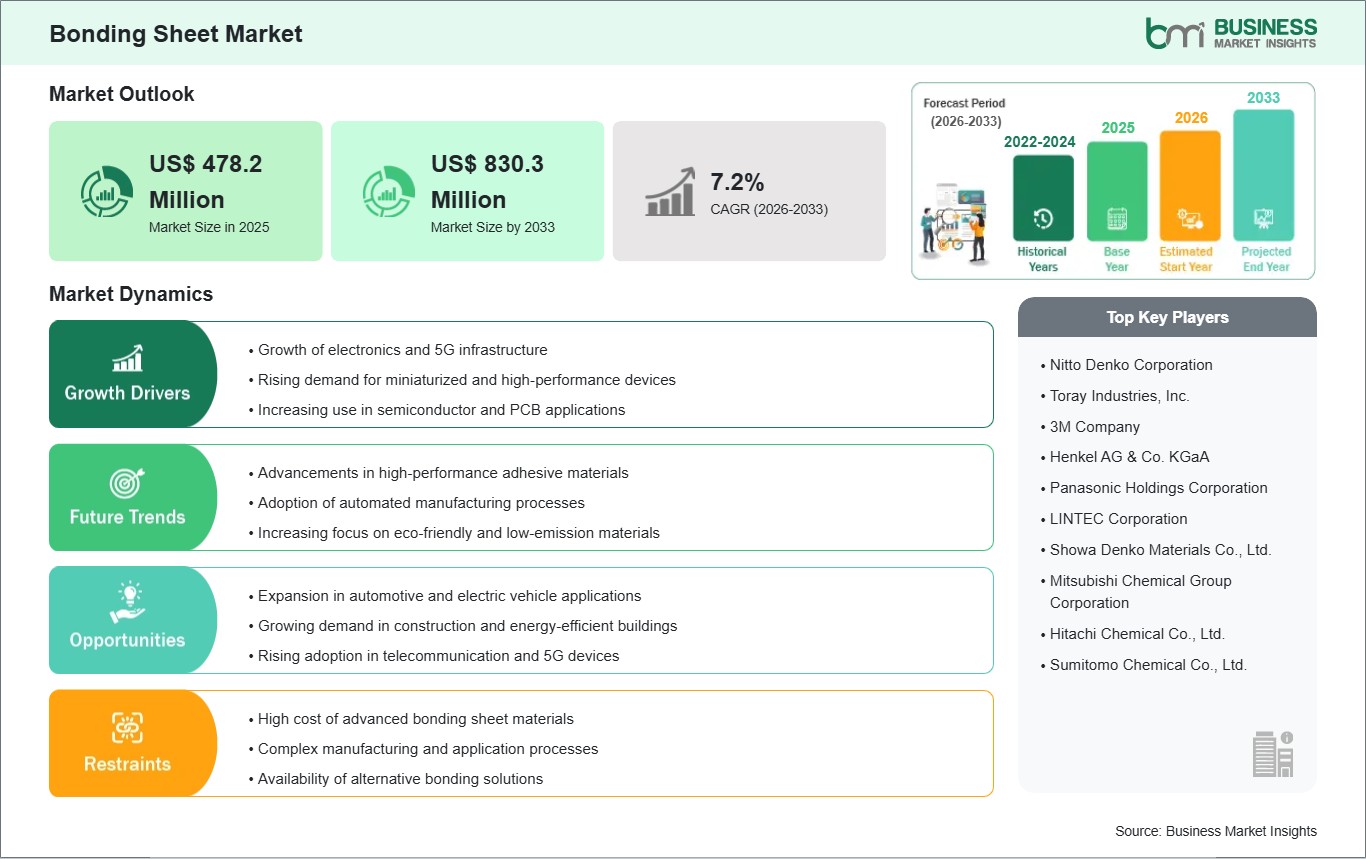
Growth of Electronics and 5G Infrastructure
The rapid growth of the electronics market along with the global roll out of 5G communication infrastructure are key drivers for the bonding sheets market. The rapid growth of the electronics industry and 5G rollouts require smaller lighter and higher performance devices thus requiring exact and dependable bonding solutions. Bonding sheets consist of a uniform adhesive thickness, have excellent thermal properties, and electrical properties, making them ideal for printed-circuit boards, semiconductor packaging, and display assemblies. The increase in the number of smartphones, wearables, and IoT-connected devices has resulted in manufacturers focusing on miniaturisation and optimising performance; bonding sheets are essential to maintaining structural integrity of the densely packed electronic devices along with dissipating heat effectively. Bonding sheets also have the capability to maintain constant performance in all environmental conditions, furthering their usefulness for future high-tech electronic applications.
The advent of 5G will greatly increase the demand for high frequency and high-speed electronic components and therefore the bonding sheets used in 5G base stations, antennas and other communication modules will provide both a reliable bond between components and also ensure the integrity of the signal between components.
As telecom companies continue to roll out 5G infrastructure around the world, the requirement for advanced bonding materials will continue to grow significantly. The semiconductor industry is also experiencing substantial growth; driven by the rapid increase in need for computing power.
Advancements in Automotive and Construction Applications
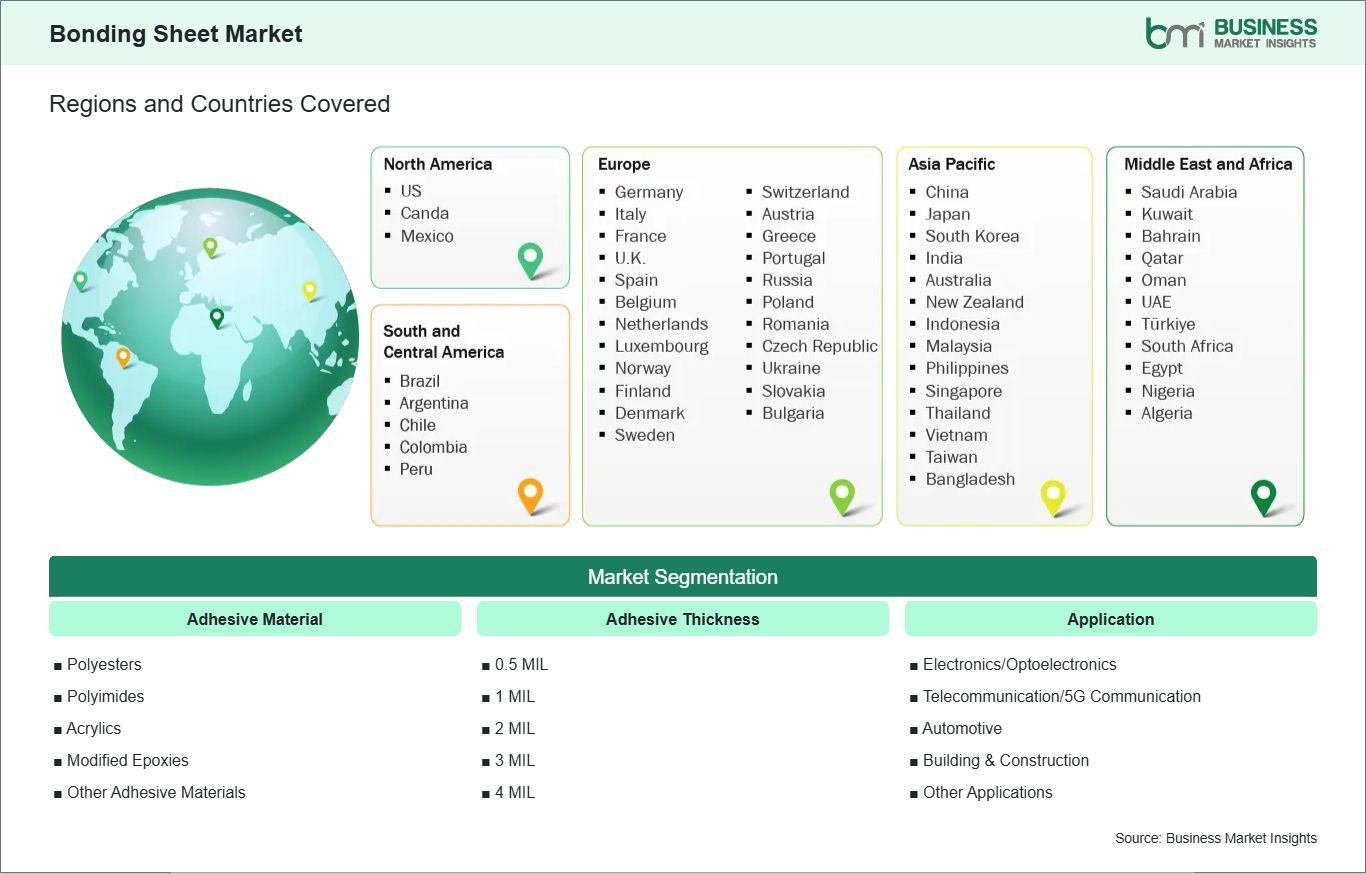
The automotive and construction sectors present numerous opportunities for bonding sheet market growth as long as there is above-average growth in the demand for high-performance/high-strength/best-value (HPHSBV) lightweight durable materials. In automotive applications, bonding sheets are utilized for interior/exterior component assembly, electronic module assembly, and structure assembly. In comparison to traditional fastening solutions, they provide high-strength adhesion properties while providing weight savings with a single application.
The transition to electric vehicles (EV) is quickly accelerating the use of bonding sheets in many different EV applications such as battery systems, electronic control units, and thermal management applications due to the need for advanced materials and as a result they will require bonding materials with excellent thermal stability and electrical insulation properties. As the global demand for EVs continues to increase, so will the demand for HPHSBV bonding materials.
In the construction industry, bonding sheets are being utilized for insulation, panel bonding, and supporting structural reinforcement applications as well as offering ease of application, consistent performance and the capability of meeting modern construction practices focused on efficiency and durability. Furthermore, bonding sheets help to create more energy-efficient buildings through their usage in insulation systems to eliminate thermal losses.
Sustainability is another factor driving the demand for bonding sheets in numerous industries. Manufacturers of bonding materials are producing a greater number of eco-friendly adhesive products. The continuing shift towards eco-friendlier products within the manufacturing sector is also leading to significant increases in the sales volumes as well.